Ten Movies For Independence Day Weekend

fireworks

I wasn’t going to do this until I ran across a few lists of “Most Patriotic  Films” that made me fear for the taste and the values of my fellow citizens. “Independence Day” ? “Armageddon”? “Rocky IV”?  When did “patriotic” start meaning “crappy”? “Born on the Fourth of July”? If Oliver Stone is your idea of patriotic fare, you and I are going to have a problem.

Here is my very personal list of ten favorite films that bring a patriotic lump to my throat and a remind me of how lucky I am to be born and raised in the U.S.A. Don’t mind the order: it was hard enough narrowing the list down to ten.

1. Apollo 13  (1995)
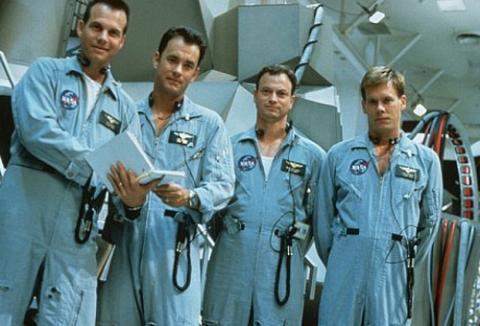
The only one of the movies on my list that I saw on the others today. Like many of the films here, it makes me wistful for American boldness and confidence that seem to be in retreat today. When the  Apollo re-emerges from radio silence, and Tom Hanks says, with perfect inflection, “Hello, Houston. This is Odyssey. It’s good to see you again,” I lose it, every time.

2. Mr. Smith Goes to Washington (1939)
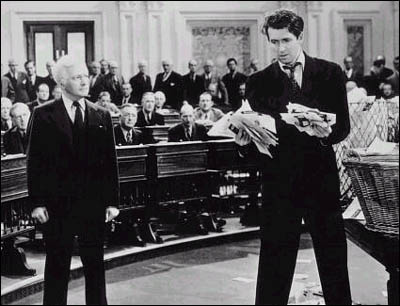
Yes, this is Capra-corn at its corniest, but from Harry Carey Sr.’s sage and heroic Vice -President, to the power of the people triumphing, to the press trying to expose corruption rather than abet it,  this film reminds us of the best ideals of our government. When we get too cynical to enjoy Jefferson Smith’s struggle to make Washington work the way its supposed to, it will be time to pack it in.

3. The Longest Day (1962)

Longest Helm

Yes, it’s not just about Americans, but it is a great film about one of our country’s  finest achievements, all true, and inspiring without a lot of flag waving and sentiment. Best war movie ever—and my Dad’s favorite. Continue reading


Political Correctness Files: X-Men, People Magazine And The Case Of The 6’4″ Dwarf

"Hey, look! It's Tom Selleck!"

“Hey, look! It’s Tom Selleck!”

Apparently political correctness in the media now requires affirmative misrepresentation.

The People Magazine review of “X-Men: Days of Future Past” contains this sentence:

“You’ll understand her motivation when you meet Dr. Bolivar Trask (Peter Dinklage), a government type who creates the sentinel project, and is even more sinister than his Magnum P.I.-by-way-of-IBM looks would suggest.”

For anyone who has seen the movie, or even anyone familiar with the (excellent) actor, Peter Dinklage, I have this question: What is odd about that quote?

For it is extremely odd. Continue reading

ALL ABOARD! The Elliot Rodger Ethics Train Wreck Is Leaving Rationality Station!

trainwreck6

Wait…I think I’ve seen this wreck before!

Richard Hernandez’s enraged rant at the National Rifle Association for getting three people stabbed to death by Elliot Rodger signaled that this mass killing would  be exploited to the max by a succession of unscrupulous and/or irrational activists, social critics, and pundits, and, as my son used to say before he stopped respecting the French, “Voilà!

The burgeoning ethics train wreck looks like it might be even more infuriating than most, though nothing, ever, will be able to top the Trayvon Martin-George Zimmerman Ethics Express for pure, widespread, unethical lunacy. Early indications are that the usual suspects will try to wring lessons from the crazed acts of a very unusual, spectacularly deranged, unsympathetic creep as if the fair and obvious answer isn’t there for all to see who are objective and smart enough to perceive it: this one mad act proves nothing. Not about the U.S., men, not about whites, not about guns, not about law, not about Hollywood. Nothing.

It’s a big country, and there’s lots of time before climate change destroys us all or something else does first. The attack of Elliot Roger is the opposite of signature significance, an utterly meaningless convergence of factors with fewer lessons to teach than other odd but deadly events, like the Great Boston Molasses Disaster of 1919, or the St. Pierre Snake Invasion of 1905. He means nothing, and should be shunted aside to obscurity as quietly and quickly as possible, so his undeserved notoriety doesn’t set off differently motivated but similarly unhinged sociopaths who are teetering on the brink. Unfortunately, that would require journalists, politicians and single-issue fanatics to be fair, logical and responsible. Continue reading

The “Bernie” Sentence’s Message: The Lives Of Mean People Aren’t Worth As Much As Those Of Nice People

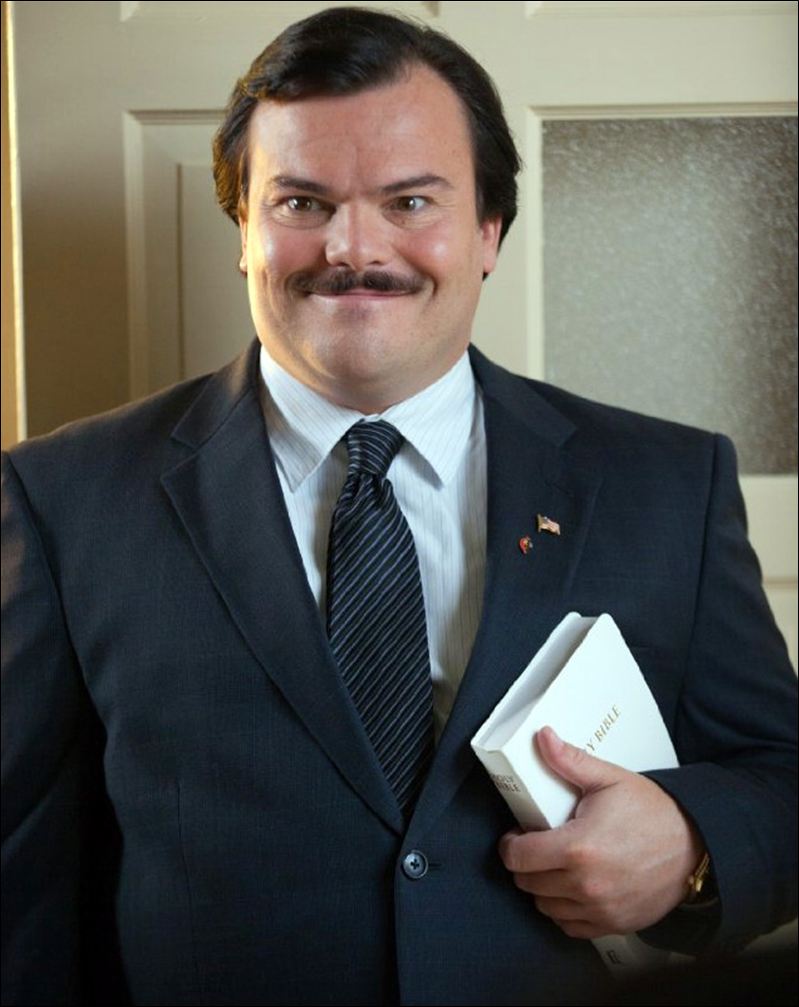
Jack Black as Bernie, the nicest murderer you'd ever want to know.

Jack Black as Bernie, the nicest murderer you’d ever want to know.

“Bernie” is a quirky 2011 movie telling a strange and true story. Jack Black plays Bernie Tiede, an oddly cheery mortician who became a small town community favorite for his kind deeds and upbeat manner. Bernie even befriends the town pariah, a mean, rich old woman named Marjorie Nugent (played by Shirley Maclaine) whom he managed to reform–slightly–until she finally became even too much for him to bear, and in 1996 he shot her dead.

He was loved, she was hated, and the community (Carthage, Texas) rallied behind the murderer even though he hid his friend’s body in a freezer for nine months and spent about 2 million dollars of her money.  The pro-Bernie bias was so strong  prosecutors had to seek a change of venue, since no local jury would convict him. They got it, and a jury that knew neither charming Bernie nor his nasty victim found him guilty (because he was) and sent him to jail for life in 1997.

After the film was released, however, attorney Jodi Cole took up Tiede’s appeal. She discovered that he had a collection of books aimed at survivors of sexual abuse, and got Bernie to admit, for the first time, that he was abused as a child. Cole hired a psychiatrist who testified that Tiede’s abuse probably influenced the murder and his willingness to endure an abusive relationship with Nugent, until he finally snapped. This changed the mind of Panola County District Attorney Danny Buck Davidson, who told a judge Tuesday that he supported reducing the sentence to time served. State District Judge Diane DeVasto agreed. Bernie is now a free man, living in the apartment over the garage of the man who directed the film about him.
Continue reading

The Washington Post, Faking it.

This one’s for you, Bob Hoskins.

You deserved better.

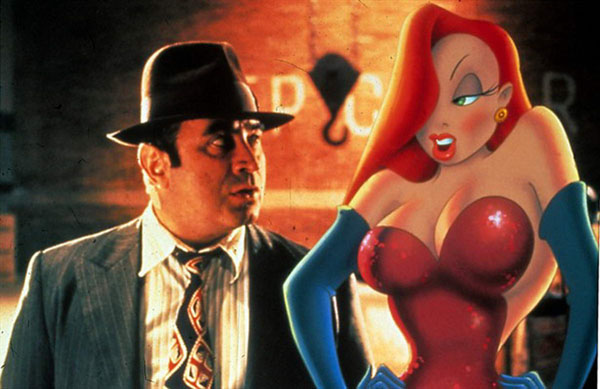
Who-framed-roger-rabbit-Jessica-RabbitIf you come here frequently, you know that I deeply resent lazy, inadequate or inaccurate obituaries of famous and accomplished figures. Obituaries are the beginnings of their legacies, and set the foundations for how, and even if, they will be remembered. Not fairly representing these lives is lousy and lazy journalism, and worse, it is disrespectful to the deceased and contemptuous of history.

Bob Hoskins, the superb and versatile British actor, died this week. He was one of my personal favorites—a better, cockney version of Joe Pesci—but even if he meant nothing to me, the Washington Post’s sloppy and factually wrong obituary today would have been inexcusable. I liked Hoskins’ various tough guys and mobsters, but the film role that blew me away was his amazing portrayal of the human detective trying to unravel a cartoon mystery in the 1988 Disney classic, “Who Framed Roger Rabbit?” Hoskins, in addition to wielding a perfect American accent (he was really a Cockney), was intense, funny, moving and entracing while interacting with characters that were drawn into the scenes long after he performed them. He made the complex conceit of the movie work, and I would rank it among the most impressive acting turns of all time.

Here is how obituary writer Adam Bernstein described Hoskins’ most famous role in the print version of the Post today:

“(He) won over American audiences as a detective who falls in love with a voluptuous cartoon character in “Who Framed Roger Rabbit?”‘

and

“Mr. Hoskins was a boozing detective who falls for Jessica Rabbit, a cartoon human of pneumatic proportions who can’t help but bewitch men. “I’m not bad,” insists Jessica (voiced by Kathleen Turner). “I’m just drawn that way.””

Continue reading

Ethics Quiz (Movie Division): “The Impossible,” Whitewashing, and Betrayal

"Bennett" and Belón

“Bennett” and Belón

I suppose some of you may have thought about this two years ago, when the Spanish film “The Impossible” was first released. I, however, take a while to catch up with my movie-viewing, and though the film was much praised by critics and got Naomi Watts an Academy Award nomination, I had not seen the film until recently. “The Impossible,” about as accurately as a motion picture can, tells the amazing story of how Spanish physician María Belón, her husband Enrique Álvarezs, and her three young sons miraculously  survived the 2004 Indian Ocean earthquake and tsunami when the family was on vacation in Thailand.

It is an engrossing, harrowing movie. I was surprised to find out, however that the family’s name wasn’t “Bennett,” and that they weren’t British, as the movie presented them. Apparently to maximize box office receipts, the film makers decided to take the heroic story of a real family and make the characters “more relatable” by recasting them as English-speaking Brits. There was a minor controversy about the film “whitewashing” the story*, but not much of that made it into the mainstream media. Belón, after all, is white. She was an active participant in the appropriation of story and that of her husband and sons, and they all profited from it, at least financially. Still, the movie’s point of view left a bad taste in the mouths of some international critics. Here is Australian critic Ruby Hamad:

“Based on the true story of a dark haired and darkish-skinned Spanish family, the filmmakers admitted to changing their nationality and casting lily-white actors in order to make the story ‘universal’. In other words, only white people can stand in for the human race as whole. For this reason, Thailand and its people are mere backdrops for the story of a Caucasian family who learn the hard way that even western privilege is no match for the brute force of mother nature.”

Your (two-year late) Ethics Alarms Ethics Quiz, therefore, is:

Is “The Impossible” unethical”?

Continue reading

What Is An Ethical Tiger Lily?

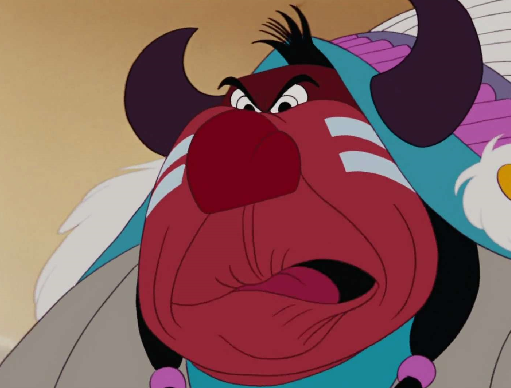
Believe it or not, this is Disney's version of an Indian chief.

Disney’s version of an Indian chief.

I recently watched the Disney “Peter Pan,” long my favorite of the classic animated films, which I had not seen from beginning to end in decades. I was genuinely shocked at the portrayal of the Indians, which would make the average movie Western seem politically correct and the Washington Redskins seem like a compliment. I know the story is a fantasy; I know that these are not supposed to represent real Native Americans, but a Victorian child’s visualization of the villains of their games. Nevertheless, it is hard to imagine the effect of such a film on a Native American child as being anything but devastating. The Neverland Indians, and their heroine, Tiger Lily, have been a human relations problem since at least the civil rights era, and the provocation is legitimate: did you recall (I had forgotten) that Tiger Lily belonged to the “Piccaninny tribe”? That James Barrie was a funny guy. Continue reading

Caring Letter From A Child Star

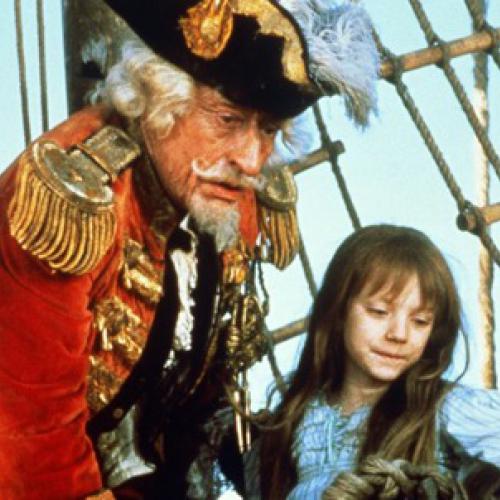
Sarah and the Baron.

Sarah and the Baron.

This remarkable letter is old—2005—but I just became aware of it, and it is an important document in the ongoing problem of the mistreatment of child performers.

I am a fan of film director (and Monty Python member) Terry Gilliam, and a great admirer of Canadian actress/director/political activist Sarah Polley. So naturally I love “The Adventures Baron Munchausen,” Gilliam’s epic fantasy that starred Polley when she was the tender age of 9, and gave one of the most impressive performances of any juvenile actress, ever. In 2005, Gilliam was filming another movie with a young star, and 17 years after working with him, Polley felt obligated to write this letter, which speaks for itself, and eloquently too:

Hi there, Terry.

Continue reading

The Academy’s “In Memoriam” Snubs: Much Better This Year—Thanks, Oscar

The great Jonathan Winters in the not-so-great "It's a Mad, Mad, Mad, Mad World"

The great Jonathan Winters in the not-so-great “It’s a Mad, Mad, Mad, Mad World”

In past years I have taken the Academy of Motion Picture Arts and Sciences to task for the ethical breach of ingratitude and disrespect, as the honor roll of the year’s deceased film notables have omitted important figures who deserved their final bows. Omissions are inevitable, I suppose, but some of the past examples were unforgivable—last year alone, for example, the Academy snubbed Ann Rutherford, Andy Griffith, R.G. Armstrong, Russell Means, Harry Carey, Jr., and Susan Tyrell. 2012 was worse.

2013, however, shows that the Academy is being more careful, and Oscar deserves credit for cleaning up its act. I have ethical and historical objections to bestowing the prestigious final slot on actor Phillip Seymour Hoffman, dead prematurely of self-inflicted drug abuse, when a genuine, bona fide Hollywood legend, Shirley Temple, was on the list. I understand the thinking: Hoffman had friends and colleagues in the room, and Temple is of another generation; his premature death was a tragedy, and she lived a long and productive life. Still, the priorities and relative values such a choice exemplifies is disturbing. Great actor that he was, Hoffman was a criminal, an addict, and left his children fatherless. Shirley was the greatest child star who ever will be, a ray of sunshine in the dark days of the Depression, a one-of-a kind talent and icon, and later a lifetime public servant who raised a family. She represented the best of Hollywood and the profession; Hoffman represents its dark side. Naturally, he’s the one who received the greatest recognition. I will suppress my dark suspicions that Shirley was docked because she was a Republican. A  Facebook friend actually wrote that Shirley deserved to be penalized because some of her movies were racist. My response to this slur was not friendly. Continue reading

Ethics Quiz: “12 Years A Slave” Plays The Racial Guilt Card On Oscar Voters

12_years_ad_2.jpeg

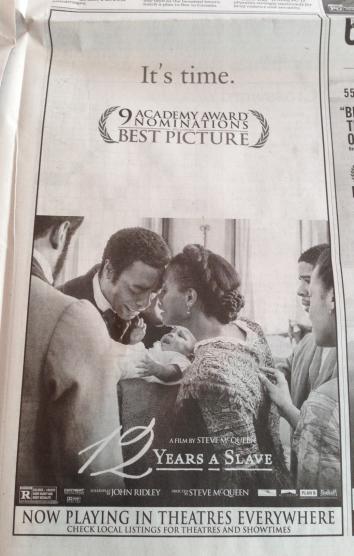
“It’s time.”

This is the  tag line in the post-Oscar nomination ads being prominently run in New York and California for  “12 Years A Slave,” a strong Academy Award contender (nine nominations, including best film).

Although there is room for disagreement, and the ad has the virtue of all clever advertising that it conveys different messages to different markets—Haven’t seen the film yet? “It’s time!”  Desperate to see the best movie you saw in 2013 finally get its due? “It’s time!”  When will the question of whether the most honored film of the last 12 months will win the biggest honor of them all be answered? “It’s time!”…or almost time, as the Oscar ceremonies are coming up on March 2—the consensus is that “It’s time” is mainly aimed at Oscar voters, and the message it conveys is, as Slate puts it, “it’s time for a movie about slavery, and with a significantly black cast and crew, to be recognized by the Academy of Motion Picture Arts and Sciences.” Film critic Phil Hammond puts it slightly differently:

“The ad not only can be interpreted as shining a light on a very dark period in American history, it also shines a light on the Academy’s fairly dismal record of awarding its top honor to any movie about the black experience. In fact there has been only one Best Picture winner in the 85 years the Academy of Motion Picture Arts and Sciences has been handing out Oscars that even remotely qualifies in this regard. In 1968, In The Heat Of The Night, a murder mystery set against the racial divide in a small Southern town, won Best Picture and four other Oscars just a few days after the assassination of Martin Luther King (the ceremony was even postponed two days out of respect). The votes were in before the King assassination, but it seemed then that “It’s Time” would have been an appropriate way to describe that victory. However, outside of lead actor Sidney Poitier — who also co-starred in another racially themed Best Pic nominee that year, Guess Who’s Coming To Dinner —  this movie  featured a largely white cast, white producer, screenwriter and director (Norman Jewison).”

If so many in the industry are interpreting the ad this way, it is fair to assume that this was at least one of the ad’s objectives, and on the assumption that it was an objective, your Ethics Alarms Ethics Quiz today is this:

“Is appealing to Oscar voters on this basis fair and ethical?”

I can see strong arguments for each position. Continue reading