Ethics Alarms’ Annual Holiday Re-Posting Of The Complete “It’s A Wonderful Life” Ethics Guide, Updated And Reconsidered, With A New Introduction

Clarence

2020 Introduction

There is no better year to watch Frank Capra’s masterpiece “It’s a Wonderful Life.” I sincerely hope that President Trump screens it again, assuming he has ever seen it.

“It’s A Wonderful Life,” as I wrote last year, “would be an excellent basis for a middle school ethics course. I haven’t seen a better, richer film for that purpose come along since, and I’ve been looking. Despite the many ethics complexities and nuances that the film glosses over or distorts, its basic, core message is crucial to all human beings, and needs to be hammered into our skulls at regular intervals, far more often than once a year.”

But in addition to being a movie about ethics, it is also a movie that is itself a result of an ethical instinct.

Director Frank Capra was already known as Hollywood’s master of celebrating common Americans doing extraordinary things, the nation’s families, the power of love and American exceptionalism. They called his movies “Capra Corn”: “Mr. Smith Goes To Washington,” “Meet John Doe,” and other critical and box office hits. He spent World War II making inspirational documentaries about the war effort. When the war was over, he sensed the dark mood in much of the nation, despite the exhilaration of victory. Returning soldiers found the culture changed and their emotions raw. Families whose .loved one had died or returned with disabling wounds struggled to believe that their sacrifices were justified. The atom bombs that ended the war also opened up a dangerous new era of paranoia and fear.

The post-war movie that seemed to capture the mood of much of the nation was William Wyler’s “The Best Years of Our Lives,” a film my World War II veteran father refused to watch for fear that it would send his mind and memories to dark places he struggled not to go.

Capra had a new production company, and decided that “It’s A Wonderful Life,” based on an idea by author Philip Van Doren Stern. Unable to get his short story published, he had sent it to friends as a 21-page Christmas card. Film producer David Hempstead read it, and bought the movie rights for Capra’s company. The story was just what America needed, Capra reasoned, to restore its belief that what the nation had accomplished was worth the pain, loss and sacrifice, and that the nation itself had led a “wonderful life.” The new film could restore the nation’s flagging optimism, pride and hope.

Capra immediately thought of actor and now war hero James Stewart to play protagonist George Bailey. Three years of flying bombing raids against the Nazis in the US Air Force had left the the 37-year-old suffering from post traumatic stress syndrome. He returned home in 1945 to find that everything had changed: his contract with MGM had run out, his agent had retired, and other stars had taken his place. He trusted Capra, even though the story he described sounded depressing. Stewart signed on.

Production finally began on the film in April of 1946, and the cast and crew felt they were making an important movie. Bedford Falls became one of the largest American film sets ever created to that point at four acres, with 75 fake stores and buildings, a three-block main street, and 20 full-grown oak trees. To avoid the traditional problem of fake-looking snow, the special effects department invented a new and more realistic process.

The story also touched the cast, especially Stewart, who was still suffering from the effects of the war and at times was close to quitting. In the scene where George, in a roadside bar, desperate and defeated, is praying to a God he doesn’t believe in. He rubs a trembling hand against his mouth, and starts to cry. The gesture wasn’t in the script, or requested by Capra. It was real.

Stewart explained years later,

“I felt the loneliness, the hopelessness of people who had nowhere to turn, and my eyes filled with tears. I broke down sobbing. That was not planned at all.”

Stewart felt it was his best performance (it is) and Capra believed he had made his best film. “I thought it was the greatest film I ever made,” he said later. “Better yet, I thought it was the greatest film anybody ever made.”

But it was a catastrophic flop. The New York Times critic Bosley Crowther wrote that “the weakness of this picture is the sentimentality of it”, describing George Bailey as “a figment of simple Pollyanna platitudes”. The New Republic’s Manny Farber accused Capra of taking “an easy, simple-minded path that doesn’t give much credit to the intelligence of the audience”. The movie lost money and crippled Capra’s production company. His career never retained its former status, and what he believed was his greatest work was forgotten for decades. Republic Pictures, which owned the film’s copyright, didn’t bother to renew the rights in 1974. It was essentially free to local television channels, and they began showing it constantly.

Well, all you have to do is see it. Capra was right, Stewart was right, the cast and crew were right. It is a classic. The story accomplishes just what Cara intended it to accomplish. In a Times piece about the movie by a self-professed cynic, Wendell Jamieson wrote about seeing the movie for the first time as teen in a classroom showing, and confessed,

It’s something I felt while watching the film all those years ago, but was too embarrassed to reveal.

That last scene, when Harry comes back from the war and says, “To my big brother, George, the richest man in town”? Well, as I sat in that classroom, despite the dreary view of the parking lot; despite the moronic Uncle Billy; despite the too-perfect wife, Mary; and all of George’s lost opportunities, I felt a tingling chill around my neck and behind my ears. Fifteen years old and imagining myself an angry young man, I got all choked up.

And I still do.

Yeah, me too.

  In an earlier version of The Guide I described the message of the film this way:

Everyone’s life does touch many others, and everyone has played a part in the chaotic ordering of random occurrences for good. Think about the children who have been born because you somehow were involved in the chain of events that linked their parents. And if you can’t think of something in your life that has a positive impact on someone–although there has to have been one, and probably many—then do something now. It doesn’t take much; sometimes a smile and a kind word is enough. Remembering the lessons of “It’s a Wonderful Life” really can make life more wonderful, and not just for you.

Lets’s try to make what’s left of the holiday season as epiphenal and joyous foreveryone in our lives as it was for George Bailey.

And away we go…

Continue reading

Cat Hands Ethics

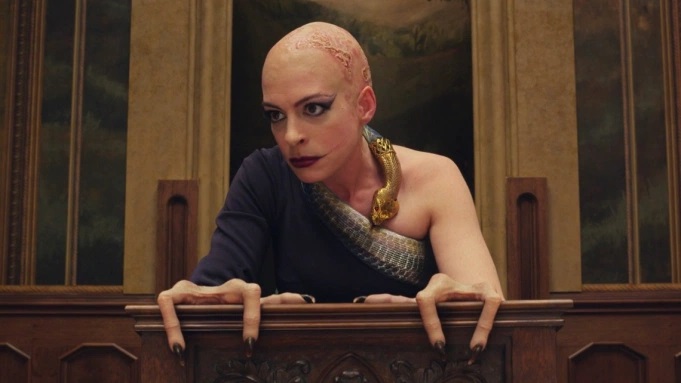
witches hands

Having gone to great lengths to make comedy impossible, the political correctness police are now working to make drama impossible as well. Yesterday Ethics Alarms again visited this issue as it considered the brain-meltingly idiotic demands by progressives and group identity activists that only autistic performers should be cast as autistic characters. This is a subset of the disingenuous, contradictory and pragmatically impossible demand by the Army of the Woke that only performers with the same physical, gender, racial and ethnic characteristics should be cast in movies, plays and TV productions as characters with those traits….although minority actors should be cast as characters written as or traditionally played by whites whenever possible.

This nonsense has received new gusts of wind beneath its wings in The Great Stupid, which descended upon out culture hand-in-hand with the George Floyd Ethics Train Wreck. It is old nonsense, though. The white cartoon voice actors who announced this year that they wouldn’t give voice to cartoon characters of color hailed from the same progressive nut house as those who criticized the “Lord of the Rings” movies (and others) for using special effects to allow actors of normal height portray fantasy dwarves, or who chased Dwayne Johnson away from his planned “John Henry” film because he’s not black enough.

Critics of film remake of “The Witches” have even bigger and more stupid metaphorical fish to fry, it seems. Now the attack is focused on the tendencies of human beings to be frightened or wary of those who look or act different from what they are used to, and, by extension, artists’ exploitation of that hard-wired human reaction to move, entertain, and communicate with audiences.

Continue reading

Nicely Timed Ethics Quote Of The Month: John Cleese

Screen-Shot-2020-11-22-at-10.39.25-AM

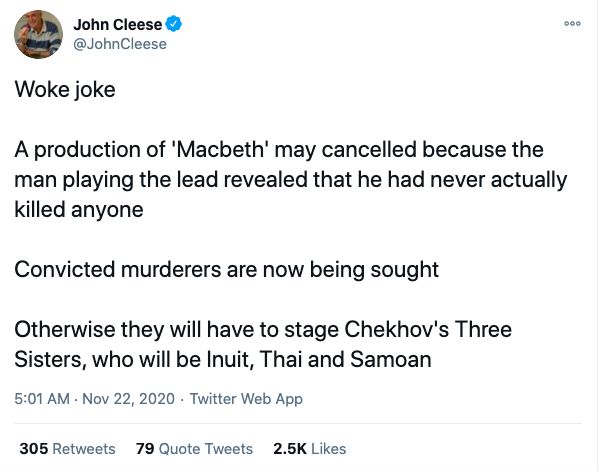
Monty Python legend John Cleese apparently has decided that to hell with it, he’s going to get himself canceled, and he doesn’t give a damn if he is. The tweet above was part of a long string of them tweaking transgender activists, J.K. Rowling haters and more, but his “woke joke” was especially apt.

The Australian singer Sia (never heard of her—you?) wrote and directed an soon-to-be released movie titled “Music” about a young woman with autism. Music is played by actress Maddie Ziegler, who is apparently not on the autistic spectrum.

The Horror.

The cyber-mob, almost all of which have never directed or cast anything, were outraged, with reactions like this from Irish actress Bronagh Waugh:

Continue reading

Saturday Ethics Aftermath, 11/14/2020: Art And Ethics

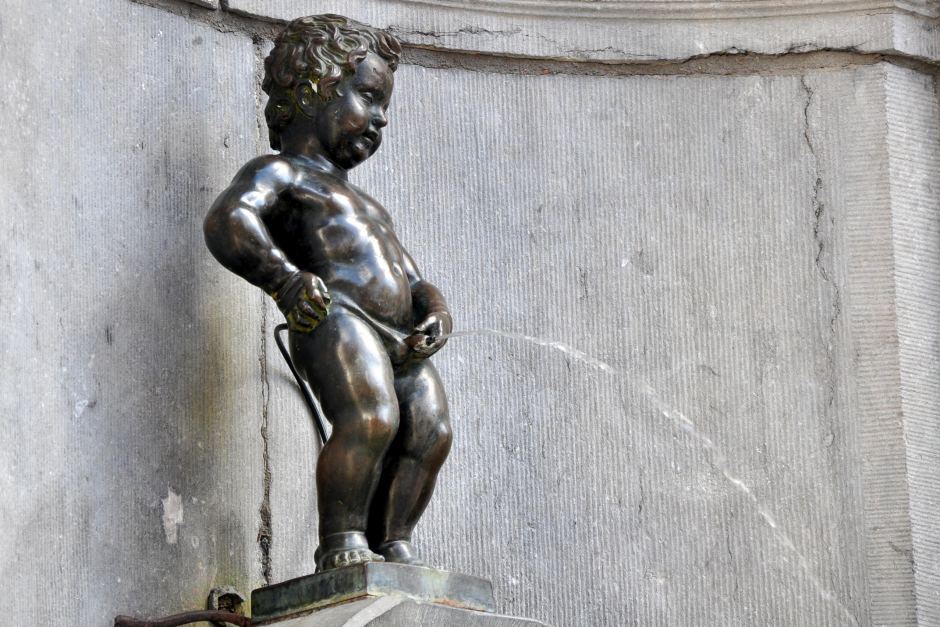
Brussels statue

1. Movie plot ethics. It’s clear that I have watched far too many movie and TV programs. I am now at the point where certain routine plot and directorial devices not only annoy me, they insult me. I regard these now as disrespectful and incompetent, and in that sense, unethical. I’m not talking about the cliches that still work with the young and uninitiated, like how the apparently dead/injured/ betrayed/ rejected or abandoned character you forgot about is always the one who shows up to save the day. (Among the reasons I love the “Magnificent Seven” so much is that when the one member of the team who had quit shows up to rescue his pals in the final gun battle, he is shot and killed immediately.) I’m referring to tropes that are self-evidently stupid and should seem so for any viewer over the age of 12.

For example,  if there’s a vicious, murdering psychopath chasing you, and you knock him cold with a steel pipe or incapacitate him in other ways, you don’t assume he/she/it is dead and leave the killer there to revive and slaughter you. You make sure the manic/monster is dead. Beat his head to a pulp; heck, cut it off.  This is often paired with another idiotic scene, the ill-timed hug. The world is going to blow in seconds, zombies are coming, crazies are beating down the door: save that passionate embrace for later, you morons! The same applies to long, emotional conversations in the midst of disasters when every second counts. Which is worse, I wonder: the long debate in “Armageddon” between Bruce Willis and Ben Affleck when they have literally seconds to save the Earth from an asteroid apocalypse, or the even longer argument among three fire fighters in the middle of a burning building?  That was in “Backdraft,” and I never quite felt the same about director Ron Howard after that.

2. Statue ethics again.  A new London  sculpture dedicated to Mary Wollstonecraft, the 18th-century writer and feminist hero (and the mother of Mary Shelley) is attracting much hate from art critics and the public.

MW memorial

The work by the British artist Maggi Hambling features a small, naked woman standing on a pillar silvered bronze, set on a cube of dark granite. The overall form is just larger than an average person, and sits well with the park: “Why is Mary naked?” critics are demanding. One Twitter user said: “I had no idea Mary had shredded abs.”

Morons. Read the statue’s base: “For Mary Wollstonecraft, 1759-1797.”  This is not intended to be a likeness of, but a tribute to,Wollstonecraft, whose most famous quotation from her “A Vindication of the Rights of Woman,” published in 1792, appears on the other side of the base:  “I do not wish women to have power over men; but over themselves.”

Before one starts criticizing anything, it is essential, fair and responsible to know what one is talking about. Every day I send to Spam Hell comments from Ethics Alarms critics who obviously didn’t read the post they are commenting on. I once went to great lengths to get a local theater critic fired who reviewed a show I directed after I saw her walk out before the second act.

On the other side, as a stage director who made being clear my prime directive, I hold the artist partially responsible when a large proportion of viewers don’t understand what is being communicated.

3. Then there is this:

Continue reading

Monday Ethics Warm-Up, 11/9/2020: A Bad Date, Pseudo Blackface, Harvard Being Harvard, And Short-Lived Integrity At The New York Post

  1. I was just checking this date in history. Wow. As if Kristallnacht wasn’t bad enough all by itself, the date November 9 seems to have been cursed. Other events on this date include:
  • Lincoln appointing the incompetent General Burnside as commander of the Union Army in 1862. Burnside made George McClellan look like military genius by comparison. He was responsible for the slaughter at Fredericksburg, where he ordered charge after futile charge up a kill into Confederate artillery. He was responsible for the blood mess resulting from a battle for a useless bridge during Antietam (anyone could easily walk across the river at that point), and was the idiot responsible for the crater fiasco at Petersburg, where a great plan was transformed into a disaster because Burnside replaced trained clack troops with untrained white troops, who promptly charged into the hole made by the Union’s underground explosion.
  • The Supreme Court refused to hear a challenge by the state of Massachusetts regarding the constitutionality of the undeclared  Vietnam War by a 6-3 vote.
  • A Sunday school teacher and Boy Scout troop leader Westfield,, New Jersey father John Emil List slaughtered his entire family,  his mother Alma, his wife Helen (in the side of the head), and two three children He then left the murder weapon alongside their carefully laid-out corpses. This was premeditated:  List had  cancel newspaper, milk, and mail delivery to his home in the days leading up to the murder, and called the children’s schools to say that the family was going to visit a sick relative out of town. By the time the bodies were, List had vanished, and he stayed missing for 18 years.

2. Well you know…Harvard. Harvard College undergraduate Joshua Conde, and editor of the school paper and a Government major (like me!)  argued in the Harvard Crimson that the school must fire professors who hold “unacceptable views” and “controversial beliefs.”

Continue reading

Morning Ethics Shout-Out, 10/28/2020: “And Tyler Too…”

I am ashamed: when I listed my anti-depression playlist, I somehow managed to leave out one of the best and most exhilarating songs of the group: The Isley Brothers’ “Shout.” I apologize profusely.

1. Self-delusion is not ethical. When Ben Ferencz, the last surviving lead prosecutor at the Nuremberg trials, finally leaves us (he’s in his nineties now and still going strong), I will make him an Ethics Hero Emeritus. As the new Netflix documentary about his astounding and ethics-focused life makes clear, few have devoted the time and energy to the cause of human rights and justice any more intensity or longevity than Ferencz. My admiration of him is only marred by his advocacy for pacifism, which the last portion of the film highlights. Ferencz was instrumental in the creation of the World Court, a kind of standing extension of the Nuremberg Trials which the U.S. has, wisely, refused to participate in. The legal scholar speaks passionately for the  cause of eliminating war by substituting law and international tribunals. The idea is delusional on its face, and also cynically exploited by those who know the idea is impossible, but who support it as a way to impose world government, and the concomitant reduction in individual liberty that would necessarily entail.

As Ethics Alarms has discussed many times, one great weakness of ethics as a discipline is its drift toward utopianism, and its persistent destruction of its own credibility by advocating goals and standards that cannot be achieved, indeed, that defy history and common sense. Has anyone asked Ben Ferencz if he really believes that Nazi Germany, Imperial Japan, the USSR or current day North Korea and Iran would voluntarily submit to the edicts of a World Court? If he has, it did not make the documentary. One can understand why a man who has seen and experiences why Ferencz has during his long life would cling to the hope that some day war will be eradicated and peace will reign forever, but rejecting reality for comforting idealism does not, and never has, advanced the cause of ethics.

2. This would seem to be an easy topic for a bipartisan bill. (Why isn’t it?) Democrats introduced legislation making it illegal for banks and other financial firms to discriminate against their customers because of their race, religion, sexual orientation and other characteristics. I thought this was illegal already, but the absence of any mention of financial services constitutes a loophole in the Civil Rights Act. Thus “The Fair Access to Financial Services Act,” introduced a week ago by members of the Senate Banking Committee, would explicitly outlaw discrimination against bank customers. Right now, it is legal for banks and other financial businesses to treat some customers differently based on race as long as the services aren’t denied entirely. Banks can legally use racial profiling to delay customer transactions, or require extra steps to prove their legitimacy.

Continue reading

Now I’ve Actually SEEN “Cuties,”So I know What I’m Writing About…

What does Barbara Streisand have to do with “Cuties,” you ask?

And, from my perspective, I have been taught, once again, that I should not rely on the opinions of others. Why is that such a difficult lesson to process? I bet I’ve “learned” it a thousand times, and yet here we are.

I initially wrote about pundit Rod Dreher’s angry assessment of the Netflix hit (it is one of the most streamed productions in its history) in this post. I think it was clear that I hadn’t seen “Cuties” myself, but I should not have written that he was disgusted “with good reason.” Veteran commenter Humble Talent provided Ethics Alarms with his critical assessment of “Cuties” in his Comment of the Day; it was negative as well. Having now watched the film with my wife last night (I regarded the session as work, not recreation), I understand what Dreher’s perspective was, and  I cannot say that Humble’s critique is “wrong.”

I disagree with both of them, however.

My thoughts on “Cuties”:

1.  I did not enjoy the movie. I would not watch it again. I would watch “1918,” “Parasite,”The Circle“…even “JFK,” “Ghost” and “La La Land,’  all movies I felt were at best disappointing and at worst ridiculously over-hyped, before I would sit through “Cuties” again. (I would rather watch “Cuties” than revisit “The Deer Hunter,” but then I would rather have my fingernails  pulled out than revisit “The Deer Hunter.”)

2. That doesn’t not mean I think “Cuties” is a bad movie. It’s a very good movie, for the audience it was made for. (“Ghost” is not a good movie, and anyone who thinks so is a tasteless sap.) This isn’t just a “chick flick,” it is a flick that men should be warned not to see, and possibly banned from trying.

3. As a man, I felt like a voyeur watching these semi-pubescent girls try to navigate their emerging sexuality and the corrosive influence of the culture. It’s not that I’m uninterested in this aspect of a reality I didn’t experience, it’s just that…ick. My wife, on the other hand, who grew up with three sisters, kept asking, “So what was supposed to be so objectionable about this?”

4. If art is supposed to convey truth, “Cuties” succeeds, I suspect. Of course, just because a story is true or embodies truth doesn’t mean it needs to be made into a movie. This precise topic has been dealt with before, but never so directly, at least in any movie that has been widely publicized.

5. I agree with Humble’s complaint that the director—a woman, of course—focused the camera on the girl’s bodies as they gyrated and twerked to the verge of salaciousness. I’m sure she would have a good answer for why she made this choice, and why it was artistically valid, but it was still a troubling choice.

6. I thought the girls were all excellent, and several were remarkable. That does not mitigate one of my ethical objections to the film, which is that juveniles were given this kind of material to absorb and experience. It doesn’t matter that they performed it well, and it doesn’t matter that the movie could only be made with pre-teen actresses. Nor will it change my view if they all grow up to be well-adjusted and happy adults: that’s moral luck. The actresses were below the age of consent, and should not be asked to/ compelled to perform such material. The parents who consented for them are irresponsible and unethical, just as Dakota Fanning’s parents were unethical to allow her to be in a  graphic rape scene in “Hounddog,” just as Brooke Shields’ parents were unethical to allow her to appear as a pre-teen prostitute in “Pretty Baby,” just as Linda Blair’s parents were unethical to allow her to play the possessed girl in “The Exorcist.” I  may ask child performer advocate Paul Peterson to author a guest column on his view of “Cuties.” I think I know what he will say.

7. One of the major complaints about the film is that it will appeal to pedophiles. That’s an unfair reason to criticize a movie: the fact that sick people will like it for the wrong reasons. I refuse to believe that pedophiles are the intended audience, nor that either the director or Netflix were seeking to entertain men who have a sexual fixation on little girls. I’m sure “Seabiscuit” titillated some people who fantasize about having sex with horses.

8. The runaway success of “Cuties” is as fine an example of “The Streisand Effect” as we are likely to find. The only reason a film like this, focusing on a Muslim pre-teen coping with her family stresses by becoming obsessed with sexually provocative dancing that is rampant among girls just slightly older, becomes an cultural phenomenon is if it is controversial. Critics like Dreher guaranteed that many more people would watch “Cuties” than the subject matter would normally draw. It’s not titillating or enjoyable to watch 11-year-olds get into sexually provocative costumes and make-up and act like go-go dancers in a cage. It’s creepy, and it’s supposed to be creepy. But Dreher and the other would-be conservative cultural gate-keepers made sure that the pervs would find “Cuties” and settle down to watch with their lotion handy. Good job, everybody!

Observations On “The Circle” (2017)

The best thing about “The Circle,” the dystopian social media-on-steroids drama starring Emma Watson and Tom Hanks, is that you now can watch it as part of a double feature with Netflix’s new “The Social Dilemma,” and consider how much of the movie is coming horribly true. Without offering too many spoilers, the film is the story of a young woman (Watson) who believes she has found her dream job working for an Amazon/Facebook-like Big Tech company run by creepily a slick and charismatic Tom Hanks. He is the prophet of over-sharing, developing and peddling products that will feed every aspect of everyone’s life into Big Data-storing and manipulating computers and banish privacy forever, all for the Greater Good, of course. The young woman, Mae, is quickly corrupted, and soon a force within “The Circle,” as Tom’s creation calls itself, to expand and use the company’s power to facilitate universal, indeed mandatory voting, for example. Law enforcement! Social control!

Mae’s epiphany is that secrets are bad, the equivalent of lies. She decides to become the first person to share every waking moment—except three minutes to use the toilet—with Hanks’ ubiquitous social network.

The movie, which is basically a long “Dark Mirror” episode, was panned by critics for its predictability, lack of originality and unambiguous ethical issues. They were right. (The movie was a box office success anyway, because apparently fans of Harry Potter will watch anything with Emma Watson in it. Watson has even less screen presence as an adult actress than fellow ex-child star Natalie Portman, something I wouldn’t have believed possible.) Continue reading

The “Around The World In 80 Days” Curse, Or How Good Things Can Lead To Bad Results, Cont.: The Worst

I won’t keep you in unnecessary suspense. The worst of the “Around The World In 80 Days” -spawned monstrosities is, by far, 1967’s “Casino Royale,” the most misbegotten movie in history. In fact, it was  finally seeing this film all the way through that inspired the post. I had avoided the film in 1967, because I followed movie reviews scrupulously then and “Casino Royale,” was panned by almost every critic. In the intervening years, I attempted to watch the movie, or parts of it, at least four or five times, in each instance abandoning the effort after 15 minutes or less. Finally, this week, TCM ran it, so I resolved to stick it out.

The movie was even worse than I had thought it would be. It is unimaginably incompetent, and I would have said unwatchable, except that I watched it.

BUT the film includes in its cast (among others), David Niven, Peter Sellers, Ursula Andress, Joanna Pettet, Woody Allen, Barbara Bouchet, Terence Cooper, Deborah Kerr, Orson Welles, William Holden, Charles Boyer, John Huston, Kurt Kasznar, George Raft, Jean-Paul Belmondo, Jacqueline Bisset, Peter O’Toole, Stirling Moss, and Geraldine Chaplin.

What’s so horrible about the film? It was made because the production company had acquired the rights to the single Ian Fleming James Bond novel not sold to the Broccoli group, then in the middle of making the first wave of wildly successful James Bond films starring Sean Connery. Unable to squeeze enough money out of Broccoli to satisfy their greed, and knowing that the public would not accept heroic James Bond who wasn’t named Connery, the Agent/Producer Charles Feldman and his partners resolved to use the title to trash the franchise it couldn’t be a part of. “Casino Royale” is a film version of vandalism. The idea was to make “Casino Royale” into a spoof, and apparently their idea of a spoof was chaos. Continue reading

The “Around The World In 80 Days” Curse, Or How Good Things Can Lead To Bad Results

Movie impresario Mike Todd’s greatest legacy is the 1956 film adaptation of Jules Verne’s novel, “Around the World in 80 Days.”  The movie was a cultural phenomenon: the title song was inescapable, it was a “must see” for everyone, it dominated the Academy Awards the following year. Todd’s brilliant innovation was that he stuffed the movie with celebrity cameos. Current and past stars showed up in tiny bits and appearances. It was a clever gimmick: in a long, leisurely film, it gave the audience a “Where’s Waldo?” game to play, and the raft of VIPs provided a sense of grandeur and importance. Some of the appearances were inside jokes; some completely gratuitous. The effect, after one has seen, for example, Buster Keaton, Frank Sinatra and Edward R. Murrow show up in the same movie, was to wonder, “Who will be next? Donald Duck? Harold McMillan?” (No, but Noel Coward arrived.) It was like a party.

Since the trick worked (ATWIED was a huge hit), the obvious drawbacks of the concept were not considered, prime among them being that focusing attention on actors as actors rather than the roles they are playing risks destroying the crucial suspension of disbelief. The other problem is that playing the star game tempts film-makers into using the gimmick as a substitute for making a good movie.

In fact, an argument could be made that this is what Mike Todd did. Today, it is almost inconceivable that “Around the World in 80 Days” was regarded in its time as a great movie, or that audiences would sit still for it. Personally, I find it nearly unwatchable, and I recognize all of those stars, The average viewer under the age of 80 will not. Mike’s innovation has a limited shelf-life.

Ah, but “Around the World in 80 Days” not as unwatchable today as some of the movies it spawned, not even close. After Todd’s triumph, the idea that having many famous performers in small parts was a formula for a hit took root. It worked sometimes, in cases where the story was an epic or particularly important, as in “How the West Was Won” and “the Longest Day.” It created a fun “Which celebrity will die next?” game in the better disaster movies of the Seventies. However, the legacy of “Around the World In 80 Days” includes several of the worst big budget Hollywood films ever made, with some of the most stellar casts ever. Continue reading