Ethics Dunce: National Public Radio

…or maybe I’m the Ethics Dunce: I assume that NPR’s management cares whether half the country sees it as progressive cant parrot and a water-carrier for the Democratic Party. Maybe they don’t; maybe they have assumed deplorables don’t listen to “Marketplace” and “Fresh Air,” and certainly don’t contribute much during radiothons. I know I don’t touch the local NPR stations (there are two of them) ever since the “Car Talk” guys ended up in the garage for good and after I was dumped as NPR’s ethics guy because I was insufficiently critical of Donald Trump.

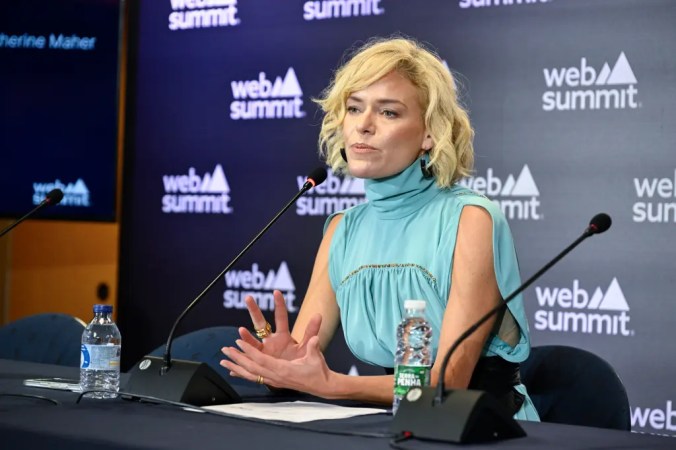
Where was I? Oh, right….National Public Radio appointed a new CEO, Katherine Maher, who had to hustle to scrub her social media record after the announcement because she periodically issued intemperate woke garbage in the past. Among the gems tracked down by reporter Shannon Thaler at the New York Post,

  • “Trump is a racist.”
  • “I mean, sure, looting is counter-productive. But it is hard to be mad about protests not prioritizing the private property of a system of oppression founded on treating people’s ancestors as private property”
  • “white silence is complicity”
  • “I grew up feeling superior (hah, how white of me) because I was from New England and my part of the country didn’t have slaves, or so I’d been taught.”

Continue reading

Good Elon, Bad Elon: Round And Round And Round Twitter Goes And Where It Stops, Nobody Knows…

I’m still hoping for the best with Elon Musk’s brave though chaotic attempt to rescue Twitter from the agents of progressive and Democrat propaganda….but I’m not going to spend a lot of time ramping up Ethics Alarms new presence on the platform until I am confident that I won’t have to quit in disgust again.

This week so far there have been two Twitter-related events that I view as ethically encouraging:

1. Musk tweaked National Public Radio as it so richly deserves by labeling it “state-affiliated media” on the platform. Trying to be nice, Musk changed the label to “government-funded media,” causing NPR promptly to throw a fit and quit Twitter, announcing that it would “no longer post fresh content to its 52 official Twitter feeds, becoming the first major news organization to go silent on the social media platform.” (Well, except for the New York Post when Twitter silenced it to keep the Hunter Biden laptop story from hurting Joe Biden at the polls.)

Amusingly, NPR puffed itself up with hot air, huffing that the network is protecting its credibility and its ability to produce journalism without “a shadow of negativity.” “The downside, whatever the downside, doesn’t change that fact,” NPR CEO John Lansing said, “I would never have our content go anywhere that would risk our credibility.”

I guess he means “other than NPR,” whose partisan toadying is legendary.

Lansing continued the hilarity by writing, “It would be a disservice to the serious work you all do here to continue to share it on a platform that is associating the federal charter for public media with an abandoning of editorial independence or standards.” Standards? Hmmm...I can’t recall the last NPR ethics story EA has posted; let’s see…HA! Just a week ago: NPR Wonders If Transgender Athletes Have A Physical Advantage Over Female Competitors. Before that: NPR Says There Are “Pros And Cons” Of A Candidate For Governor Calling Someone “Motherfucker” During A Speech…

Care to guess the party affiliation of the candidate NPR was defending? Tough one! Why, it was Beto O’Roarke, the Democratic candidate to unseat GOP Texas Governor Abbott. NPR described O’Rourke’s gutter language as a “snappy interjection,” though the snappy interjection was somehow not fit to print. The NPR headline used “f-bomb” while the text employed “motherf*****”. We pay taxes for this garbage “analysis”?

The indignant NPR excuse for objecting to “government funded” is also self-indicting. NPR’s own news story says,

Continue reading

New Rule! Only White, Straight Men Need To Be Civil

Last week, a looming $30 million budget shortfall prompted NPR to eliminate 10% of its staff across all its departments.  It killed several podcasts and so far, 84 employees are gone; more will follow.

One of the podcasts sent into the archives was “Louder Than A Riot,” which explored how hip-hop’s “Black women and queer folk have dealt with the same oppression [hip-hop] was built to escape.” So after getting the bad news, “Louder Than A Riot’s” staff took to Twitter and accused NPR of bias in its layoff decisions:

What support for that did the angry staff have? Oh, none. But NPR is a nest of progressives who don’t believe in ethics, so playing the discrimination card was a reflex, and Facts Don’t Matter. As it turned out, NPR did engage in discrimination, but the “good’ kind:  the layoffs had been  “structured in a way” so they would not disproportionately affect people of color and other marginalized groups. In other words, skin color and sexual proclivities were used to decide who to fire, and being white and non-LGTBQ was held against employees.

That’s unethical.

Also illegal.

Also “Diversity Equity and Inclusion” exemplified. Continue reading

NPR Wonders If Transgender Athletes Have A Physical Advantage Over Female Competitors

Huh! Good question, NPR! It’s a mystery! A real head-scratcher! Oh if only there were some convincing evidence that going through puberty as a male confers some kind of advantage for trans female athletes! When will we have such information?

Oh, I almost forgot: “Nah, there’s no mainstream news media bias!” Also: “We pay taxes to support this crap???”

The World Athletics Council, the governing body for international track and field, announced last week that it will bar transgender women athletes from competing in events with everyday, normal, biological women who have been so from birth. This isn’t rocket science. What is ridiculous is that so many organizations are so devoted in their loyalty to Woke World that they are still in denial. That’s trans Ivy League swimming cheat Lia Thomas above with one of the little women who finished second to her during the past year’s contests, and no, they are not standing on platforms.

Continue reading

Presidents Day Ethics Warm-Up: Sick Of Presidents Edition

Usually Ethics Alarms has a special Presidents Day feature, but not this year. I hope the mood passes, but right now I am thoroughly sick of the office. Three passions have driven the course of my life, beliefs, interest, pursuits, education, relationships and careers: baseball, Gilbert and Sullivan, and the Presidents of the United States. At this moment, I am disgusted with two of the three.

The accolades being heaped on Jimmy Carter as he has announced that he will wait to die with his family near rather than seek more medical care further sours my mood, because it cripples me with cognitive dissonance. All Presidents deserve the nation’s gratitude and respect, and Carter has led a life devoted to public service. Yet he was a terrible President, and did as much damage to the nation in his four years as any modern POTUS—at least until Joe Biden arrived.

1. “Red Joan” Not helping my mood was watching “Red Joan,” the 2019 British film celebrating the foolish Melita Stedman Norwood, a British civil servant who became a KGB spy in the post-war years. She was convinced that she was doing a good and ethical thing to send nuclear secrets to Stalin’s government so the USSR could develop its own atom bomb. The movie is fictionalized enough that Norwood, played by Judy Dench, is given a different name (Joan Stanley), but the beliefs she espouses are accurate representations of Norwood’s various explanations and rationalizations.

She thought Communism was the hope of the future; she thought the Russians “deserved” to have the nuclear advances developed by the U.S. and Great Britain shared with them; she thought the US using the atom bomb to end World War II was mass murder; and she believed that giving the Soviets the ability to wield nuclear power would prevent World War III—and continued to justify her treachery with the last excuse after she was exposed and caught in her 80s, taking credit for “saving millions of lives.”

My head exploded when the British nuclear scientist who was her lover erupted over learning that she had sent his work to the Soviets, telling her it was madness to give such secrets to a “ruthless dictator” like Stalin. “But we didn’t know that then!” Joan protests.

That’s what ethicists call “contrived ignorance.” Continue reading

What’s Going On Here? You Tell Me…[Corrected]

This isn’t an ethics quiz. It’s not ethics commentary. This is clearly an ethics episode, but, frankly, I’m exhausted. I’m fighting some kind of flu (no, not Wu-Flu); I have a pile of half-begun and half-thought out ethics stories on a cyber-pile, and I just feel overwhelmed and depressed. So I’m just going to present this weird event from the public [NOT ‘pubic,’ as I typoed once again] school chaos, and I invite readers to explain what ethics issues they see here.

Ready?

For  the latest edition of  the NPR’s podcast “Planet Money”,  Shale Meadows Elementary School third grade teacher Mandy Robek was scheduled to read books reading “The Sneetches” to her class as part of about the theme of economics education from in children’s books. Amanda Beeman, the assistant director of communications for the Olentangy Local School District (in Ohio) prepared for the segment by choosing books from the school’s library. The district had stipulated that politics were off limits for discussion. “Pancakes, Pancakes!” by Eric Carle; “Put Me In The Zoo” by Robert Lopshire; a poem from “Where The Sidewalk Ends” by Shel Silverstein, and “The Sneetches” by Dr. Seuss were ultimately read to the class. Well…almost.

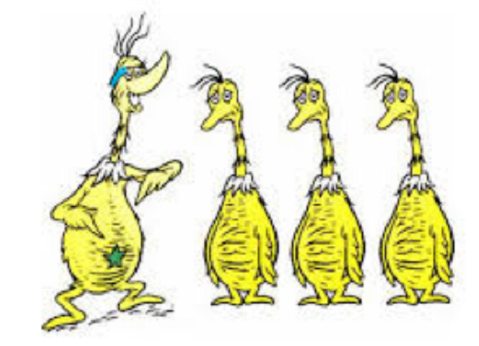
You know “The Sneetches,” right? Published in 1961, the story is about a community of long-necked birds that all look identical except that  some have stars on their bellies and some don’t. The Plain-Belly Sneetches are traeted by the rest as inferiors, so entrepreneur Sylvester McMonkey McBean sells them stars so they can aspire to be Star-Belly Sneetches.The Star-Bellied Sneetches, resenting the intrusion on their select domain, then succumb to a scheme to have them pay to remove their natural stars. Now the once- Star-Bellied Sneetches will be Plain-Belly Sneetches, and can look down on the former Plain-Belly Sneetches all over again. Meanwhile, supply and demand makes the local capitalist rich. 

“I don’t know if I feel comfortable with the book being one of the ones featured,” Beeman was heard saying on the podcast during the middle of “The Sneetches” reading by the teacher. “I just feel like this isn’t teaching anything about economics, and this is a little bit more about differences with race and everything like that.” As if on cue, a third-grade student soon piped up, “It’s almost like what happened back then, how people were treated … Like, disrespected … Like, white people disrespected Black people!” Continue reading

Observations On The Trans Dinosaur Emoji Appropriation Tragedy [Updated]

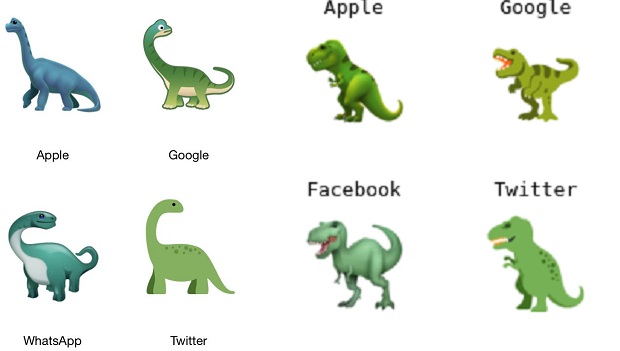
I guess Tucker Carlson does have his uses after all: somebody on his staff uncovered a head-explodingly silly NPR feature from January, and the topic was still so silly that it didn’t filter down into the rest of of conservative media until this week. What NPR felt was a matter worth spending taxpayer funds on and wasting listener’s ears on was this, and I am NOT kidding: in the words of a guest on the segment, “Many people who are queer, whether they are trans or some other form of genderqueer or whatever it is…We love dinosaurs.” Continue reading

From The “Nah, There’s No Mainstream Media Bias!” Res Ipsa Loquitur File…

Assassination attempt on Justice Kavanaugh? Who’s “Justice Kavanaugh”?

Yes, it’s a Jumbo. But it’s worse than that…

Newsbusters reporter Kevin Tober recorded the relative minutes of coverage on the Sunday news talk shows for the January 6 Capitol riots show trial and the attempted assassination of Justice Brett Kavanaugh. The totals:

ABC: Capitol riot: 19:11; Kavanaugh: 0:00

CBS: Capitol riot: 19:31; Kavanaugh: 0:00

NBC: Capitol riot: 36:25′ Kavanaugh: 0:00

CNN: Capitol riot: 18:10; Kavanaugh: 0:00

We already know that MSNBC wants Kavanaugh dead, so there is no need to include that network’s ration. NPR was little better, twice mentioning the Kavanaugh episode without actually reporting on it: “a man arrested near Justice Brett Kavanaugh’s house.,” and “we learned of the arrest of an armed man outside Justice Kavanaugh’s house.” That was it. This is what your tax dollars get you in timely news reporting. Continue reading

Comment Of The Day: “And Even More Ukraine Invasion Ethics Points” [#1]

As our final Comment of the Day from the weekend just past, here is sooner 8728’s neat explanation for why NPR felt it necessary to calm its listeners and readers by telling them that the wise response to concern over the Ukraine crisis was make lasagna or get a massage, as described in “And Even More Ukraine Invasion Ethics Points…”

***

The comment about NPR not seeing their audience as adults makes a ton of sense. Much of the modern Left isn’t like the old time Left. Americans used to be mostly united on the values of hard work, duty, faithfulness in marriage, etc. Political differences didn’t make a ton of difference in personal behavior. Now, the left is saying gender doesn’t exist, you can define your own existence any way you want, polyamory is good, there is no limit to welfare, and other types of ideas. They refuse to accept limitations on reality. Continue reading

Catching Up: Professional Ethics And The Challenger Disaster

Because of non-ethical matters in the Marshall household, I missed posting about the January 28 anniversary of the Challenger disaster, as it is labeled among the thousands of Ethics Alarms tags. I have written about and alluded to the completely avoidable explosion of the Space Shuttle in 1986 many times (you can check here), and there may be no other incident that so perfectly encapsulates the complexities of professional ethics, especially in a bureaucracy. In 2016, I offered an ethics quiz on the topic.

In 2020, Netflix presented an excellent, if extremely upsetting, docudrama on how the fiasco unfolded, “The Challenger Disaster.”

I have used the tragedy in my legal ethics continuing legal education courses to force attendees to consider what might make them decide to breach legal ethics and place their careers at risk when an organizational client is hell-bent on what the lawyer knows, or thinks he or she knows, will be disastrous. Legal ethics rules are different from engineering ethics, though the latter has caught up considerably since the Space Shuttle explosion, and in part because of it. However, I view the ethics conflict in parallel situations in both professions the same, as well as situations in medicine, organized religion, the military, and government. When would, and should, professionals decide to do everything in their power to stop the consequences of a terrible decision when it is outside their role and authority to do so?

In my legal ethics seminars, a majority of lawyers ultimately say they would have done “whatever it took” to stop the Challenger’s launch, whatever the consequences, if they knew what the engineers knew. They said they would go to the news media, or chain themselves to the rocket if necessary. Of course, saying it and doing it are very different things.

Here is the most recent incarnation of my Challenger disaster legal ethics question, which I presented to government lawyers a year ago. What would you answer? It is called “The Launch.”

***

In 1986, Roger Boisjoly was a booster rocket engineer at Morton Thiokol, the NASA contractor that, infamously, manufactured the faulty O-ring that was installed in the Space Shuttle Challenger, and that caused it to explode. Six months before the Challenger disaster, he wrote a memo to his bosses at Thiokol predicting “a catastrophe of the highest order” involving “loss of human life.” He had identified a flaw in the elastic seals at the joints of the multi-stage booster rockets: they tended to stiffen and unseal in cold weather.  NASA’s shuttle launch schedule included winter lift-offs, and Boisjoly warned his company that sending the Shuttle into space at low temperatures was too risky. On January 27, 1986, the day before the scheduled launch of the Challenger, Boisjoly argued for hours with NASA officials to persuade NASA to delay the launch, only to be over-ruled, first by NASA, then by Thiokol, which deferred to its client. Another engineer, Bob Ebeling, joined Boisjoly and begged for the launch to be postponed, only to be overruled.

That night, Ebeling told his wife, Darlene, “It’s going to blow up.”

Question 1Should one or both of the engineers have “blown the whistle”?

  1. They did.
  2. Only the engineer who was sure that it would be a disaster.
  3. No, that’s not their role, their decision, or their call.
  4. After the explosion, but not before.
  5. I have another answer.

 Question 2: How are the ethical obligations in such a situation different for government lawyers than engineers?

  1. Government lawyers have to disclose when human life is threatened, engineers don’t.
  2. Engineers have to disclose when human life is involved, government lawyers don’t.
  3. Lawyers get kicked out of their profession for blowing whistles, engineers just get blackballed.
  4. There is no difference.
  5. I have another answer.