Ethics Quiz: The Ferguson Settlement

News Item:

The parents of black teenager Michael Brown and the city of Ferguson, Missouri, have settled a lawsuit over his fatal shooting by a white city police officer in 2014, according to a court document filed on Monday. …Terms of the wrongful death settlement between Ferguson and Brown’s parents, Michael Brown Sr. and Lesley McSpadden, were not disclosed. U.S. District Judge E. Richard Webber approved the settlement and ordered it sealed.

“The gross settlement amount is fair and reasonable compensation for this wrongful death claim and is in the best interests of each plaintiff,” Webber wrote. Both James Knowles, the mayor of the blue-collar, largely black St. Louis suburb, and Anthony Gray, the lead attorney for Brown’s parents, declined to comment.

Wait, what?

A thorough investigation found Officer Wilson guilty of no crime, nor did the shooting appear to be the result of officer malfeasance or negligence. Brown’s parents, Michael Brown Sr. and Lesley McSpadden, meanwhile, took extraordinary measures to stir up racial hatred and anti-police sentiment, not just locally but nationally, sparking deadly riots in Ferguson and elsewhere, and leading to attacks on police. They even made a human rights complaint to the United Nations, based substantially on a lie (“Hands up! Don’t shoot!”) concocted by their son’s friend and credulously reported as fact by the news media. By what theory are Brown’s parents deserving of damages from Ferguson? By agreeing to this settlement, is not Ferguson setting the precedent that any time a black suspect is shot by a white police officer, it is a wrongful death mandating damages?

Your Ethics Alarms Ethics Quiz of the Day:

Was this settlement, whatever the amount, ethical?

I’ll launch the debate by saying that the city probably had no choice but to settle, as the sooner this whole catastrophe can get in the rear view mirror the better off the city will be. In the narrow sense, then, the settlement was in the city’s best interest and the responsible course.

Long term, however, I see nothing but bad results flowing from this result. If Wilson was not wrong, then Brown was at fault. If Brown was at fault, his family should not benefit. If Ferguson paid out a significant amount when its police officer behaved reasonably, then Ferguson just set a precedent that Black Lives Matter could have authored in its dreams.

If a black victim is shot by the police, it is  racism and a wrongful death per se, whatever the facts are.

Morning Ethics Warm-Up: 6/17/2017

1. If you haven’t yet read them, Steve-O-in NJ’s Comment of the Day on Chris’s brilliant Comment of the Day regarding ideological and partisan hate—plus Chris Bentley’s Comment of the Day on the same post, are all especially worth reading, not that all Comments of the Day by Ethics Alarms readers are not. I apologize for an unusually long intro to Steve’s post, but I had been holding on to a lot of related material from the day past on the topic, and it was either use them there or be redundant later. This meant putting Steve-O’s COTD after the jump, which is why I’m giving an extra plug to it now.

2. There were two significant criminal trial verdicts yesterday: the guilty verdict in the trial of  Michelle Carter, a Massachusetts woman charged with murder for using text messages to persuade her teenaged boyfriend to kill himself, and the acquittal of the Minnesota police officers who shot and killed black motorist Philandro Castile during a traffic stop. I’ll cover the Carter case later.

There were the obligatory riots after the verdict acquitting Jeronimo Yanez, the officer who fatally shot Castile in his car after he told the officer that he was carrying a legally registered firearm and then reached for his wallet to show the officer his license. This is just the latest cattle-car in the Ferguson Ethics Train Wreck, the familiar pattern of a badly-trained cop, a dubious police stop, poor judgment by a victim, and a needless death. I would compare it to the Tamir Rice shooting in Cleveland, where the officers involved weren’t even indicted.

Why in the world would a motorist tell a cop in that situation—Castile had been officially stopped for a broken tail light, but in reality because he was black, and the officers thought he resembled a suspect in a crime who was also black—that he had a gun? This could be interpreted as a threat, and obviously Yanez saw it as one. The verdict looks wrong at a gut level, but it is easy to see how the jurors were thinking: they placed themselves in the officer’s position. They would have been in fear of their lives, so they couldn’t find a way to pronounce Yanez a murderer for doing what they could see themselves doing under similar circumstances. This was a legitimate case for reasonable doubt under the law. Police officers, however, are supposed to be less likely to panic than a typical juror. Castile is dead because of incompetent police work, but the criminal laws don’t allow different standards to be applied  for different occupations, not should they. Continue reading

Ethics Quote Of The Week: Seattle Seahawks Defensive End Michael Bennett

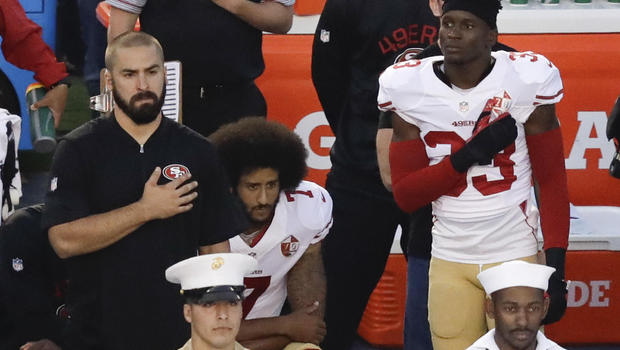
“Of course I think he’s been blackballed, obviously. Maybe the players agree that there’s a place for politics in sports, but I don’t think the teams, or the organization, or even the fans believe there’s a place for politics in sports. I think people want you to do your job and shut up — score a touchdown, dunk a basketball, hit a home run and call it a day. We’ll buy your jersey, and that’s it.”

—-Seattle Seahawks defensive end Michael Bennett, speaking about the current fate of ex-NFL quarterback Colin Kaepernick, who remains unsigned after spending much of last season refusing to stand for the National Anthem because the United States “oppresses black people and people of color.”  Bennett’s comments came during an event at the artsy social justice warrior hang-out Busboys and Poets in Washington, D.C.

It’s an admittedly perverse selection for the ethics quote designation, since Bennett meant the statement as criticism. He went on to say that he endorses professional athletes taking pubic stands on social issues to “inspire others” to engage in  mass action and demonstration. The 31-year-old defensive end, who makes about 10 million dollars a year, drew attention to himself in February when he opted out of an Israeli-government-sponsored trip to register his pro-Palestinian views, as if he actually knows enough the 80-year-old conflict to intelligently protest anything. This is about par for the course in the field of professional athlete off-the-field grandstanding.

Bennett was correct in his rueful description of the state of the culture, however. There is no place for politics in sport. Sport is entertainment, and fans follow sports to escape real world problems, not to be lectured on them by pseudo-educated celebrities with neither the training, skills or expertise to justify the giant megaphone celebrity affords them. Kaepernick’s stunt created a media circus around his struggling team, the San Francisco 49’ers, distracted its management fans and players, and cost the NFL viewers and advertising revenues. Since he was unable to articulate an intelligent rationale for his protest, it was also useless. Naturally, Kaepernick was cheered by the Left, and defended by many journalists as well as athletes who think their physical gifts should entitle them to social influence they don’t deserve. Continue reading

14 Ethics Musings On The Death Of Francisco Serna

keith-scott

Scott and Serna.

From The Washington Post:

Slightly after midnight on Monday, police in Bakersfield, Calif., received a call concerning a man thought to be brandishing a weapon in a residential neighborhood.

Shortly after police arrived, 73-year-old Francisco Serna — who family members said was suffering from the early stages of dementia — walked out of his home and into his driveway. When Serna, who was unarmed, did not comply with officers’ orders to remove his hands from his jacket pocket, one officer fired seven shots at him, killing him.

During a canvass of the premises that lasted at least until the following afternoon, police did not find a firearm on or near Serna. Instead, they found a crucifix.

Questions and Observations:

1. The shooting occurred two days ago, on December 12. There have been no organized protests, or community groups, family lawyers or anyone else suggesting that the shooting was murder, or an example of police animus toward the community. Why not?

2. The circumstances of the shooting were notably similar to the police involved shooting of Keith Scott in Charlotte, North Carolina, except that in the case of Scott, the officer believed the victim had a gun, and he did have a gun. Nonetheless, that shooting triggered two days of rioting. Why?

3. In the Scott shooting, both officer and victim were black. In the recent shooting in Bakersfield, officer and victim were white. Why did one shooting become a racial incident and the other not, when the conduct of the police officers were essentially identical, and the provocation for the shootings  were similar as well?

4. One difference in the two episodes is that in Charlotte, a false narrative was launched by a family member to make the shooting appear to be a case of excessive force with a police cover-up. Is it just felicitous that this did not occur in Bakersfield, or was the Charlotte episode different in some way that caused events to resemble the aftermath in the Ferguson and Freddie Gray police-involved deaths?

5. If Francisco Serna had been black and all other facts the same, is there any reason to believe that the aftermath, including recriminations, accusations and attacks on police, the justice system and the nation’s culture, would have been any different than they have been every time an unarmed black man, or a black man who was reported as being unarmed, has been shot by police? If there is not, what does that tell us? Continue reading

No Charges In The Keith Scott Shooting, And An Ethics Test For Black Lives Matter

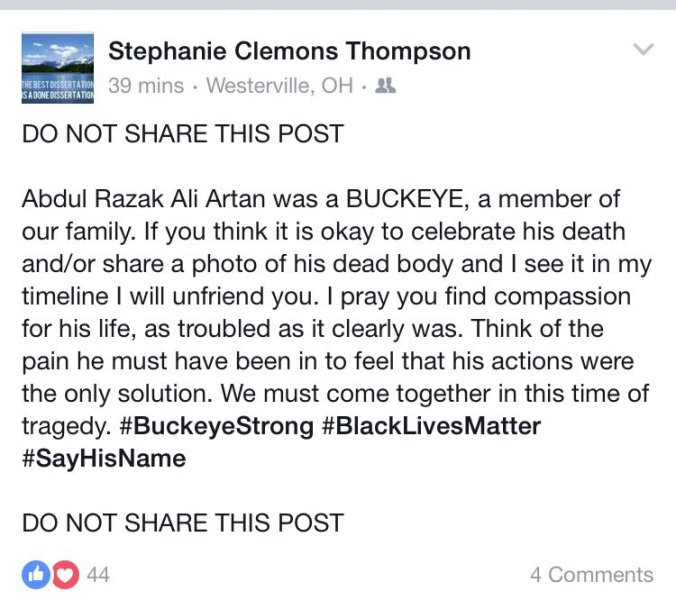
stephanie-clemons-thompson-fb-post

Yesterday,  Mecklenburg, North Carolina District Attorney Andrew Murray announced that the investigation into September’s fatal police shooting of Keith Lamont Scott had found no legal wrongdoing. This meant, in addition to the fact that officer Brently Jackson, who is black, would not face trial, that the two-days of riots inflicted on Charlotte after the Scott’s death were even more inexcusable than riots generally are. People who claimed on social media that they had seen the shooting and that Scott was unarmed admitted to investigators that they hadn’t seen what they said they saw. Evidence in the case showed that Scott stepped out of his SUV  holding a gun—his DNA was retrieved from the weapon found at the scene—and ignored at least ten commands from the five officers on the scene to drop it. Individuals who behave like that are likely to get shot, and deserve to be. No case, no outrage, no systemic racism.

Following the shooting, however, this was a Mike Brown encore, complete with angry, loud, false accounts and social media rumors focused on making Scott’s death another rallying point for race-hucksters, politicians who felt they could benefit from dividing the country by color, and irresponsible pundits.

From the Ethics Alarms post on September 21: Continue reading

The Michael Slager Trial: When The Ethical Course Is To Not Exercise a Right

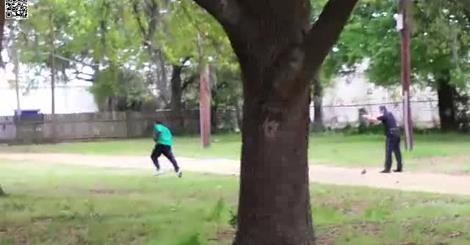
shooting_of_walter_scott

Michael Slager is the white North Charleston police officer who stopped African American Walter Scott for a taillight violation on April 4, 2015, and in the ensuing events, ended up fatally shooting Scott as he fled the scene, in the back, as recorded on a cell phone video. Of all the many police-involved shootings, this is the least equivocal. Slager is guilty of murder of one kind or another: in South Carolina, there is only one kind, and  mitigating circumstances are reflected in the sentence. He could receive life in prison, or much less time.

But every criminal defendant has the right to be tried by a jury of his peers before the law finds him guilty, and Slager is taking full advantage of the right. In doing so, he is forgoing his last clear chance at redemption. The former officer—he has already been fired for the episode and not just put on paid leave, as is usually the case—is understandably trying to avoid a conviction and jail time, even though, should he be acquitted by some miracle or act of mass hypnosis, it would be certain to provoke even more anger and distrust in the black community, and, I would hope, among non-African Americans as well. A justice system that finds, no matter how it reaches such a conclusion, that an officer who shoots a fleeing man dead like Slager did is not guilty needs to be blown up and seeded with salt. When Slager’s first lawyer saw the video, he quit.

Do you think an acquittal is impossible? Don’t. All that is needed is a jury full of people who “think,” and I use the word generously, like the signers of this petition. I’m pretty sure that there are more than twelve of them available. Continue reading

The Complete “It’s A Wonderful Life” Ethics Guide [UPDATED AGAIN! ]

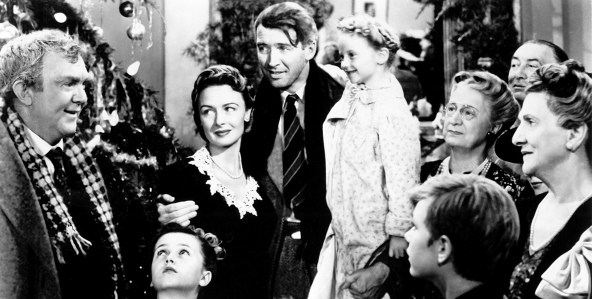
 Once again, Ethics Alarms re-posts its ethics guide to Frank Capra’s 1946 masterpiece “It’s A Wonderful Life,”one of the great ethics movies of all time. It was written in 2011, and revised regularly since, including for this year’s version. I suspect we need it more in 2016 than usual.

It is fashionable now, and was even when the film was released, to mock its sentiment and optimism. On one crucial point Capra was correct, however, and it is worth watching the film regularly to recall it. Everyone’s life does touch many others, and everyone has played a part in the chaotic ordering of random occurrences for good. Think about the children who have been born because you somehow were involved in the chain of events that linked their parents. And if you can’t think of something in your life that has a positive impact on someone–although there has to have been one, and probably many—then do something now. It doesn’t take much; sometimes a smile and a kind word is enough. Remembering the lessons of “It’s a Wonderful Life” really can make life more wonderful, and not just for you.

Here we go:

1. “If It’s About Ethics, God Must Be Involved”

The movie begins in heaven, represented by twinkling stars. There is no way around this, as divine intervention is at the core of the fantasy. Heaven and angels were big in Hollywood in the Forties. Nevertheless, the framing of the tale advances the anti-ethical idea, central to many religions, that good behavior on earth will be rewarded in the hereafter, bolstering the theory that without God and eternal rewards, doing good is pointless.

We are introduced to George Bailey, who, we are told, is in trouble and has prayed for help. He’s going to get it, too, or at least the heavenly authorities will make the effort. They are assigning an Angel 2nd Class, Clarence Oddbody, to the job. He is, we learn later, something of a second rate angel as well as a 2nd Class one, so it is interesting that whether or not George is in fact saved will be entrusted to less than Heaven’s best. Some lack of commitment, there—then again, George says he’s “not a praying man.” This will teach him—sub-par service!

2. Extra Credit for Moral Luck

George’s first ethical act is saving his brother, Harry, from drowning, an early exhibition of courage, caring and sacrifice. The sacrifice part is that the childhood episode costs George the hearing in one ear. He doesn’t really deserve extra credit for this, as it was not a conscious trade of his hearing for Harry’s young life, but he gets it anyway, just as soldiers who are wounded in battle receive more admiration and accolades than those who are not. Yet this is only moral luck. A wounded hero is no more heroic than a unwounded one, and may be less competent as well as less lucky.

3.  The Confusing Drug Store Incident

George Bailey’s next ethical act is when he saves the life of another child by not delivering a bottle of pills that had been inadvertently poisoned by his boss, the druggist, Mr. Gower. This is nothing to get too excited over, really—if George had knowingly delivered poisoned pills, he would have been more guilty than the druggist, who was only careless. What do we call someone who intentionally delivers poison that he knows will be mistaken for medication? A murderer, that’s what.  We’re supposed to admire George for not committing murder.

Mr. Gower, at worst, would be guilty of negligent homicide. George saves him from that fate when he saves the child, but if he really wanted to show exemplary ethics, he should have reported the incident to authorities. Mr. Gower is not a trustworthy pharmacist—he was also the beneficiary of moral luck. He poisoned a child’s pills through inattentiveness. If his customers knew that, would they keep getting their drugs from him? Should they? A professional whose errors are potentially deadly must not dare the fates by working when his or her faculties are impaired by illness, sleeplessness or, in Gower’s case, grief and alcohol.

4. The Uncle Billy Problem

As George grows up, we see that he is loyal and respectful to his father. That’s admirable. What is not admirable is that George’s father, who has fiduciary duties as the head of a Building and Loan, has placed his brother Billy in a position of responsibility. As we soon learn, Billy is a souse, a fool and an incompetent. This is a breach of fiscal and business ethics by the elder Bailey, and one that George engages in as well, to his eventual sorrow. Continue reading

In A Sufficiently Rational And Ethical Society, The Official Apology To African-Americans By The International Association Of Chiefs Of Police Would Begin A Productive Process Toward Healing Distrust Between Police And Black Communities. This Is Not A Sufficiently Rational And Ethical Society.

"Not a bad speech, Chief, but since we all know you and your kind are part of a racist conspiracy to murder unarmed black men, not nearly good enough."

“Not a bad speech, Chief, but since we all know you and your kind are part of a racist conspiracy to murder unarmed black men, not nearly good enough.”

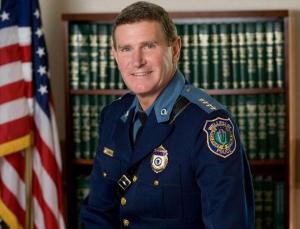
Terrence M. Cunningham, the chief of police in Wellesley, Mass, and the president of America’s largest police management organization, announced a formal apology to the nation’s minority population this week.

Cunningham delivered his remarks at the convention in San Diego of the International Association of Chiefs of Police, whose membership includes 23,000 police officials in the United States. He said in part:

There have been times when law enforcement officers, because of the laws enacted by federal, state, and local governments, have been the face of oppression for far too many of our fellow citizens. In the past, the laws adopted by our society have required police officers to perform many unpalatable tasks, such as ensuring legalized discrimination or even denying the basic rights of citizenship to many of our fellow Americans.

While this is no longer the case, this dark side of our shared history has created a multi-generational—almost inherited—mistrust between many communities of color and their law enforcement agencies. Many officers who do not share this common heritage often struggle to comprehend the reasons behind this historic mistrust. As a result, they are often unable to bridge this gap and connect with some segments of their communities.

While we obviously cannot change the past, it is clear that we must change the future. We must move forward together to build a shared understanding. We must forge a path that allows us to move beyond our history and identify common solutions to better protect our communities. For our part, the first step in this process is for law enforcement and the IACP to acknowledge and apologize for the actions of the past and the role that our profession has played in society’s historical mistreatment of communities of color.

At the same time, those who denounce the police must also acknowledge that today’s officers are not to blame for the injustices of the past. If either side in this debate fails to acknowledge these fundamental truths, we will be unlikely to move past them. Overcoming this historic mistrust requires that we must move forward together in an atmosphere of mutual respect. All members of our society must realize that we have a mutual obligation to work together to ensure fairness, dignity, security, and justice.

It is my hope that, by working together, we can break this historic cycle of mistrust and build a better and safer future for us all.

Continue reading

Unethical Quote Of The Week: Martina Navratilova

"Hey, Kershaw! Martina wants to know why you're afraid to give us your position on fracking!"

“Hey, Kershaw! Martina wants to know why you’re afraid to give us your position on fracking!”

“So many athletes are afraid to use their platform to do the right thing and speak what they feel, and that’s very depressing.”

Tennis legend Martina Navratilova to approving New York Times sports reporter Juliet Macur, as the former tennis great prepared for her keynote speech at a human rights event at the Department of State.

Wrong, Martina. There is no “platform.” You earned credibility and influence regarding social and political issues by intelligently and boldly standing up for your own rights and privileges, on issues that affected you directly and about which you had an important perspective and a legitimate reason to speak out. Female athletes. Discrimination. Gay rights. Feminism. You had credentials and authority in all of those areas, and using your status as a sports star to spark intelligent debate was responsible and fair.

Once you had established your credibility, analytical abilities and skill at articulating issues while taking informed positions on them, then you had earned added legitimacy separate from your athletic prowess and stardom. You’re a smart person: smart people’s informed opinions should be listened to and considered no matter what the topic. Many other athletes have expanded their legitimate authority and influence this way. Muhammad Ali. Kareem Abdul Jabbar. Ted Williams. Billy Jean King. Bill Bradley.

Athletic stardom, however, confers no more assumed expertise regarding issues unrelated to sports than being a paper-hanger or a busboy. The difference is that famous athletes, like famous singers and actors, are admired and idolized by many people, especially among the young, who are incapable of resisting the siren influence of their heroes. There is nothing good about this, and everything wrong about it. Tom Brady supports Donald Trump, and the only reasonable reaction to that is to conclude that Tim Brady is a moron. However, that’s not how blank-slate sports fans react to his endorsement. For too many of them, the sequence is pure cognitive dissonance: Continue reading

Incompetent Elected Officials Of The Month: The Charlotte City Council

ziannaoliphant

Awww!

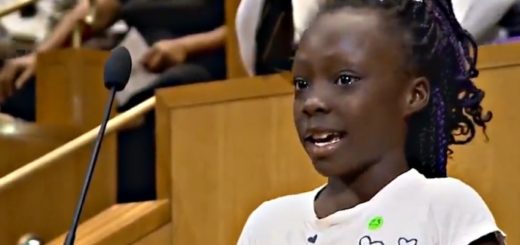
 9-year-old Zianna Oliphant spoke at a Charlotte City Council meeting about race, police violence, and reform. Tears streamed down her cheeks, and, of course, the video “went viral.” She has kept talking, expert on urban governance and law enforcement that she is, since she earned her fifteen minutes of fame. “I was just feeling like what the police are doing to us, just because of our skin, is not right,” the fourth-grader told NBC.

Of course, she knows absolutely nothing about the issues involved. She has no idea whether what happened to Keith Lamont Scott was ” done to us, just because of our skin” or done to him, because he threatened a police officer. (It was done to him, by a black cop, who, if he was doing it because of the color of Zianna’s skin needs to be put on a suicide watch.)

All Zianna knows is what she has been taught, and based on what she said, she has been indoctrinated by her family and community into be a police-fearing, anti-white racist. Now that this is happening to the black children of Charlotte and elsewhere is important information that should be part of the discussion, but that’s not how her statements are being used. She is being exploited by adults who know that their opinions become more persuasive coming out of the mouths of babes, and she is being accorded undeserved  moral authority because she is young and innocent. Zianna also has a fourth grade education and maybe six years of life experience. Wow.

What can such an individual contribute to a public policy debate so complex that elected officials, scholars and public policy experts don’t know how to proceed? Nothing. N-O-T-H-I-N-G. A nine year-old girl, even the most brilliant nine-year-old girl who has ever lived, is useless. A City Council that would waste deliberation and consideration of  critical issues on the testimony of children, however moving,  should just hand in their resignations en masse. They are incompetent and a disgrace.

In the alternative, Charlotte should give voting privileges to anyone over the age of five. Maybe they will. Continue reading