Mid-Day Ethics Warm-Up, May 1, 2018: Generally Disgusted

Good day to all, I guess.

Me, I feel like quitting.

1.  Basic ethics blindness regarding the White House Correspondents Dinner. The ethically obtuse responses I am reading in columns and blogs regarding the self-defining journalism ethics event–you know, as in none—doesn’t bother me too much. I assume these people have the ethics of jackals. The similar responses I am reading here from intelligent readers who have been supposedly paying attention, however, discourage me greatly. Really: why bother writing a couple thousand words a day about ethics when  your readers react to a high profile, unequivocal act of disrespect and rudeness by resorting to “I don’t like the guy, so I’m glad,” “he started it!” and “they had it coming”?

Or, my personal favorite, “this one insult everyone is talking about isn’t one if you spin it hard enough, so the other 30 insults don’t matter”?

There is no ethical defense whatsoever for inviting individuals to a formal dinner and intentionally making them feel like they are being singled out for abuse. Ever. Period. No exceptions. This is so obvious and uncontroversial that it prompt debate in a civilized society.  That anyone is trying to defend the association, and its hired gun, Ms. Wolf, simply validates my two years-and-running correct prediction that electing Trump as President will turn this into a nation of assholes, though I was expecting those transformed to be primarily young, shallow and easily influenced. I did not expect so many professionals to re-enact the donkey-scene in “Pinocchio.”

And yes, as far as I’m concerned, Wolf, with the journalists’ consent, insulted the President of the United States and his daughter to their virtual faces. It is just moral luck that Trump did not attend, and there is no reason to believe that Wolf changed her act one iota because he wasn’t there. She was prepared to call the President of the United States a pussy, a monster and a Nazi to his face, with him a captive audience member. The ethics-free, rationalized justification I am reading on this blog is , “Yeah, well he made fun of a disabled man in 2016!”  Wow. I really am wasting my time, I guess. How else can I interpret that?

Off the blog, some other ethically dim justifications have surfaced, like today’s New York Times column absolving Wolf from all responsibility because she performed the same kind of anti-Trump material that she always did. Funny, nobody gave Don Imus, the briefly ascendant shock-jock, that easy out when he embarrassed President Bill Clinton by calling him a “weasel,” among his less offensive terms, when he entertained the same group. Hey, protested the I-Man, I call Clinton a lying weasel every day on my show, why would anyone expect me to do any differently at the dinner? Why? Because professional entertainers have calibrated the appropriate content of their performances to their audiences’ tastes and sensitivities forever, that is why, and professionals are expected to be professional, which includes responsible. Go ahead, look me in the eye and tell me that Wolf would have made equally denigrating jokes if Obama was the President. Jokes about his flirtation with being gay. Jokes about eating dog. Jokes about him being a weenie with Putin and the “red line.” Jokes about the most “transparent” administration ever. Jokes about Joe Biden feeling up women during photo ops. About the IRS. About “you can keep your plan.”  No, the association always assumes that its entertainers would keep their material appropriate to the venue and the event. The argument being used to excuse Wolf would be like excusing infamous “blue” material comics like Buddy Hackett, Redd Foxx and David Brenner if they made dick jokes on “The Ed Sullivan Show.” No, they toned down their material, out of respect for the audience. Respect. What a concept. And this was an audience of middle class Americans, not the President of the United States.

Of course, Wolf easily could have assumed that she was expected to be uncivil, cruel and offensive, since she knew that her hosts, like her and her fellow professional Trump-bashers, constituted the “resistance’s” Agents of Presidential Destruction. That doesn’t relieve her of ethical responsibilities, though. The association was irresponsible to hire someone with her proclivities, and she is accountable for her own disgusting, divisive conduct. Continue reading
Morning Ethics Warm-Up, 4/18/2018: The Bad, The Beautiful, And The Stupid

Good morning, everyone…

1. Tales of the King’s Pass. Fox News put out a statement saying that Sean Hannity had its “full support.” We can assume that means no punishment, no sanctions, not even any public regrets, despite the fact, and it is a fact, that the right-wing talk-show host-turned-Trump propagandist went on the air and defended Trump’s fixer, Michael Cohen, without mentioning the fact that Hannity was Cohen’s client. Thus Fox is announcing, in effect, that undisclosed conflicts of interest are just fine and dandy if your ratings are good enough. This also means that Fox News is admitting that it really doesn’t care about candor, honesty, and objectivity, since it will ignore blatant violations of all three if the profit is sufficient.

In fairness to Fox, Hannity’s blatant biases toward all things Trump are no more egregious than the open Obama bias displayed across the mainstream media’s full spectrum of journalists and pundits; it just stands out more because he has less company. However, this is a specific conflict of interest, with Hannity having undisclosed connections to a newsmaker that could reasonably affect his commentary. The closest parallel would be ABC’s George Stephanopoulos reporting on the Clinton Foundation’s dubious activities without telling viewers that he was a $75,000 donor. ABC didn’t discipline him, either, but at least he made a public apology on the air.

To make the King’s Pass case even stronger, after Politico reported this week that dinnertime news anchor Bret Baier played nine holes of golf with President Trump over the weekend, Fox News acknowledged that Baier was admonished by the president of the network.  I don’t agree with the reprimand at all. The opportunity to spend that kind of time with a President is invaluable, a rare opportunity to acquire insight and access over an extended period of time. The idea, I assume, is that it creates the illusion of chumminess. It’s a dumb illusion. If I were a journalist,  I would play golf with anyone if it allowed me to learn something. If I were president of a network, I’d reprimand a reporter for turning down such an opportunity.

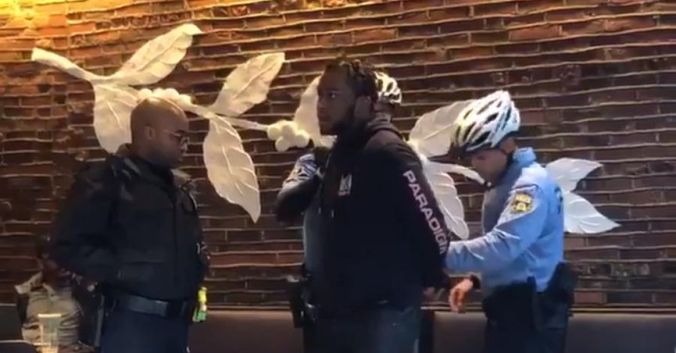
2. The Virtue-Signaling Hall Of Fame. Starbucks is reacting to the PR nightmare arising out of the arrest of two black men for refusing to order anything while waiting for a companion in a Philadelphia Starbucks by a grand gesture: it will close all U.S. stores and corporate offices on the afternoon of May 29 for “employee racial bias training.” I suppose this is good crisis management, though cynical and non-substantive. It also permanently tars as a racist the Starbucks ex-manager, who says she was following a locale-specific company policy in an area that had experienced problems with loitering. Continue reading

Ethics Observations On The Philly Starbucks Ethics Train Wreck

The now viral Starbucks incident that took place in Philadelphia last week is a genuine ethics train wreck.

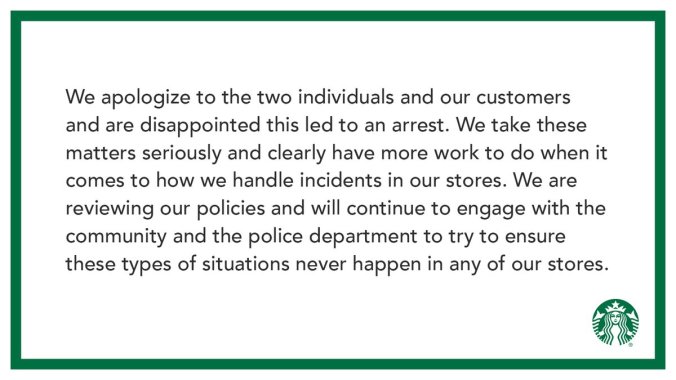
Two days after two men were arrested while waiting for their friend at a local Starbucks, the company has issued an apology.

Police were called to a Starbucks after two men, who were African Americans, refused to leave the coffee store after they were told that they needed to buy something in order to stay there.  The men were waiting to meet a companion to have a meeting. The store management then summoned the police.

The men now have an attorney, Lauren Wimmer, who says that her clients were waiting in the Starbucks  for less than 15 minutes. “These guys were doing what people do every day, they were having a meeting and they were undoubtedly singled out because of their race, ” she says.

The company tweeted the apology yesterday:

Ethics Observations: Continue reading

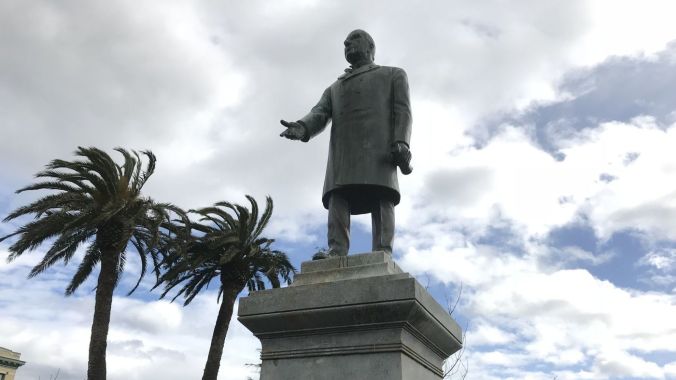
President McKinley’s Statue And Revisiting The Newlands Fountain Principles

The statue-toppling mania as a part of the Left’s cultural revolution and determination to remake history in its own image—a form of thought-control–hasn’t abated; it’s just been eclipsed in the news cycle. For the record, 28 cities have removed close to a hundred statues of Confederate figures alone. Meanwhile, the statue topplers, flushed with victory, are raiding their sights to include Founders like Washington, Jefferson and Madison, politically-incorrect Presidents like Andrew Jackson, Woodrow Wilson and Teddy Roosevelt, and others. You can read, if you have lots of time, most of the Ethics Alarms posts on this topic here and here.

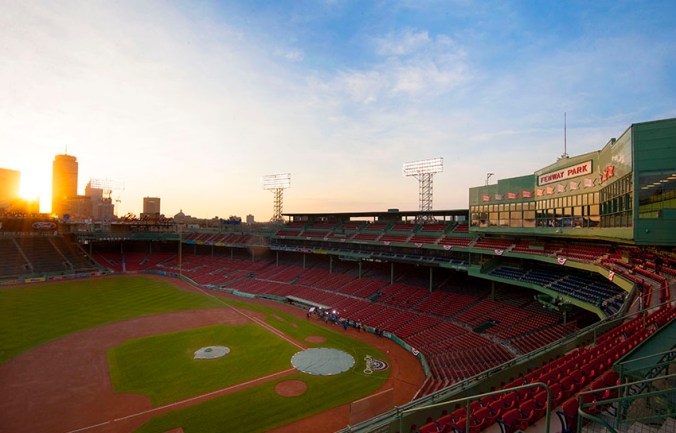
It isn’t just statues, of course. It is honors of every kind: university dining halls and dorms, Democratic party annual dinners, and much more. The Boston Red Sox have petitioned the city to retract the honor of a having a street by Fenway Park named after the man who made the team the regional institution is is today, and who was primarily responsible for the team remaining in Boston.

The latest mutation of the culturally-rotting virus has Native Americans demanding that memorials and honors to any figure whose legacy offends them must be eliminated. Five years after President William McKinley was assassinated,  George Zehnder presented the Northern California city of Arcata with an 8.5-foot-tall statue honoring him.  Arcata home to Humboldt State University, placed it in the city’s main square.

McKinley was no Confederate: he was a Union war hero at the Battle of Antietam. He was also a popular and effective President. He was elected in 1896 while the nation was in a serious depression, and was successful enough in getting the economy back on its feet that he was re-elected in 1900, the first Republican to get a second term since Grant.  He, not Teddy Roosevelt, led the U.S. into international significance, winning the Spanish-American War, and acquiring Puerto Rico, Guam and the Philippines. He also gave his life for national service, as have all our Presidents who died in office. Ah, but President McKinley also oversaw federal policies that continued the decline of Native American tribes in the U.S., and reservation lands were reduced by as much as 90 million acres. during his administration. Now the Tribal Council of the Wiyot Tribe in Northern California senses a chance at revenge.  It is demanding that the statue of McKinley be removed.

Almost four years ago, before the din of falling statues became a faint hum, like locusts, across the land, I wrote about a controversy in Chevy Chase, Maryland, where a fountain at the center of Chevy Chase Circle honored Francis Griffith Newlands,  a U.S. Senator who also founded the Chevy Chase Land Co., which in turn created neighborhoods on the Washington and Maryland sides of the circle. Senator Newlands also was a racist, and a proactive one. He was a white supremacist who even attempted to have  the 15th Amendment, which granted voting rights to African American men, repealed.

To assist in the analysis of when and whether any honor to a historical figure should be withdrawn, I offered a series of seven guiding principles: Continue reading

An Ethics Alarms Challenge: Defend Criticism Of The Brooklyn Museum’s Hiring Of Two White Curators Of Its African Art Collections Without Endorsing Racism

The Ethics Alarms verdict is that such a defense is impossible. Asks the Huffington Post in its “Black Voices” section, “People Want To Know Why Brooklyn Museum’s New African Art Curator Is White.” Why are they asking this? The answer is obvious and backed by the curriculum vitae of the two (not one) scholars hired, Drew Sawyer and Kristen Windmuller-Luna. They are eminently qualified for their new jobs, and the color of job applicants is not, and never should be considered “a credential.”

From the museum’s release:

Windmuller-Luna will rethink the Brooklyn Museum’s extensive collection of African art, which is comprised of more than 6,000 objects, and organize a freshly conceived temporary installation showcasing the depth of the collection. Her focus will be to create a dialogue between the African art collection and other works within the museum’s holdings while also helping to develop educational programming.

As a curator and historian of African arts and architecture, with a specialization in the early modern period and Christian Ethiopia, her work counters myths about African civilizations and artistic production by focusing on cultural specificity, artistic diversity and global historical context. Windmuller-Luna received her Ph.D. and M.A. in Art and Archaeology from Princeton University and her B.A. in the History of Art from Yale University.

Drew Sawyer will reimagine the role of photography collection within the museum and explore ways to integrate it with other collection galleries and exhibitions.

Sawyer is currently Head of Exhibitions and the William J. and Sarah Ross Soter Associate Curator of Photography at the Columbus Museum of Art in Ohio. He is also a co-organizer of the upcoming historical survey Art after Stonewall, 1969 to 1989 which will tour during the 50th anniversary of the Stonewall Riots in 2019. Sawyer holds a Ph.D. in Art History and Archaeology from Columbia University, specializing in North American art and visual culture of the nineteenth and twentieth centuries.

“Kristen’s vision for a new permanent collection installation that transforms how viewers relate to the arts of Africa is tremendously exciting for us as we near the 100th anniversary of the Brooklyn Museum’s pioneering exhibition of African art in 1923, ”said Deputy Director and Chief Curator Jennifer Chi. “Drew’s deep expertise in social and experimental documentary practices during the twentieth and twenty-first centuries will significantly augment our strong collection and will contribute to our history of championing contemporary artists who continue in this vein.”

Continue reading

Morning Ethics Warm-Up, 3/19/18: Unethical Wedding Gifts, The Fairness Conundrum, What Really Makes Students Unsafe, And More

Good Morning!

1 A Not Exactly Hypothetical… A family member is getting married, and the social justice warrior spouse has decreed that no gifts should be sent, just contributions in the happy couples’ name to designated charities and causes, all political, partisan, and ideological. Does this obligate guests to give money to causes and organizations they object to or disagree with? One might be tempted to teach a life-lesson in abuse of power, and pointedly give a contribution to, say, The Family Research Counsel, the NRA, or Paul Ryan’s re-election campaign, but that would be wrong. Wouldn’t it?

2. “Progressive fines” poll update. The percentage of readers who regard so-called “progressive fines” as fairer than fining all law violators the same amount regardless of resources is about 6%, in contracts to 40% who think this is less fair. As I suspected, the schism is driven by the long-standing (and resolvable) arguments over what constitutes “fair” government policies, and whether it is the government’s job to try to make life less unfair. Is it “fair” to treat everyone the same, when we know that life doesn’t treat everyone the same? Are those who argue that life’s unfairness should be addressed by individuals, not society, taking that position because they are winners in life’s chaotic lottery? Can society and governments be trusted to address “unfairness” and inequality without being influenced by the conflicts and biases of the human beings making and carrying out laws and policies. I don’t generally care to spend a lot of Ethics Alarms time or space on abstract ethics questions, but some of them can’t be avoided. You can take the poll, if you haven’t already, here.

3. On the topic of fairness, here is a study that will make you bang your head against the wall: Following on the heels of this discouraging study I posted about on March 3 is this report by researchers at Stanford, Harvard and the Census Bureau, as described here by the New York Times. A taste sufficient to ruin your day: Continue reading

Windy Morning Ethics Warm-Up, 3/2/18: More Supreme Court Fun, Transparency Games, Ethical and Unethical Quotes Of The Day…

GOOD MORNING!

(Wind storms all over Virginia, knocking out power and my e-mail, and blowing over a tree that narrowly missed my son’s car!)

1 Lack of Transparency? What lack of transparency? During a lecture and moderated discussion at U.C.L.A. this week in which he was a a participant and invited guest, Treasury Secretary Steven Mnuchin was heckled with hisses, jeers, shouted insults and profanity from students and protesters, some of whom were ushered and even carried out by police officers. A programmed sixth grader in the audience even questioned him about the fairness of passing permanent tax cuts for companies and expiring cuts for individuals, because as we all know, 10-year-olds are well-versed in tax policy theory.

Afterwards, Mnuchin  revoked his consent for the official video of the event to be released, perhaps because he was flustered by the harassment and it showed. In response to criticism of this virtual censorship,

The Treasury Department, through a spokesperson, said that what the Secretary did wasn’t what he obviously did—a Jumbo, aka “Elephant? What elephant?”—saying,

“The event was open to the media and a transcript was published. He believes healthy debate is critical to ensuring the right policies that do the most good are advanced.”

He just doesn’t want anyone to see or hear the debate.

A related point: The protests were organized by Lara Stemple, a U.C.L.A. law professor, and students and faculty members participated. Protests are fine; disrupting the event is not. Faculty members who assisted in the heckling should be disciplined, and students who participated should be disciplines as well.  It’s an educational institution, and all views sgould be openly explored and heard without interference. No guest of the university should be treated this way. Ever. No matter who it is or what their position. The treatment on Mnuchin was unethical.

2. More Supreme Court fun with ethics! Minnesota’s law banning “political” clothing and buttons from polling places is being challenged as an affront to free speech. The law prohibits people from wearing a “political badge, political button or other political insignia” at a polling place on an election day, and a member of the tea party movement sued after his “Tea Party” message got him in trouble when he came to vote.

Here is Justice Samuel A. Alito’s exchange with Daniel Rogan of the Hennepin County Attorney’s Office, who was defending Minnesota’s law:

“How about a shirt with a rainbow flag?” asked Alito. “Would that be permitted?”

“A shirt with a rainbow flag?” Rogan repeated. “No, it would — yes, it would be — it would be permitted unless there was — unless there was an issue on the ballot that — that related somehow to — to gay rights.”

Justice Alito: Okay. How about an NRA shirt?

Mr. Rogan: An NRA shirt? Today, in Minnesota, no, it would not, Your Honor. I think that that’s a clear indication—and I think what you’re getting at, Your Honor—

A T-shirt bearing the words of the Second Amendment? Alito asked.

Probably banned because of the gun-control issue, Rogan said.

The First Amendment? Alito asked. Probably not, Rogan answered.

Got it. The First  Amendment isn’t a political statement, but the Second Amendment is. That led Justice Neil M. Gorsuch to observe: “Under your interpretation of ‘political,’ it would forbid people from wearing certain portions of the Bill of Rights into a polling place but not other portions of the Bill of Rights. And I guess I’m just wondering what compelling interest Minnesota has identified that requires a statute that goes so much further than the vast majority of states?”

In contrast, Justice Anthony M. Kennedy asked J. David Breemer, a lawyer for the Pacific Legal Foundation, representing the challengers, “Why should there be speech inside the election booth at all, or inside the what you call the election room? You’re there to vote.”

This is a problem requiring an “all or nothing” solution. Either all forms of political speech must be allowed, or no speech at all. In a sick time where citizens honestly argue that a MAGA cap or a picture of a gun makes them feel threatened and “unsafe,” the ethical option would seem to be Justice Kennedy’s. No speech, messages, no logos, no photos, no American flags. Last fall I voted wearing my Red Sox jacket.

Uh-uh. Continue reading

Ethics Warm-Up, Valentines Day, 2018: Of Mummies, Mockingbirds, Hunchbacks, And Sperms….

Happy Valentines Day!

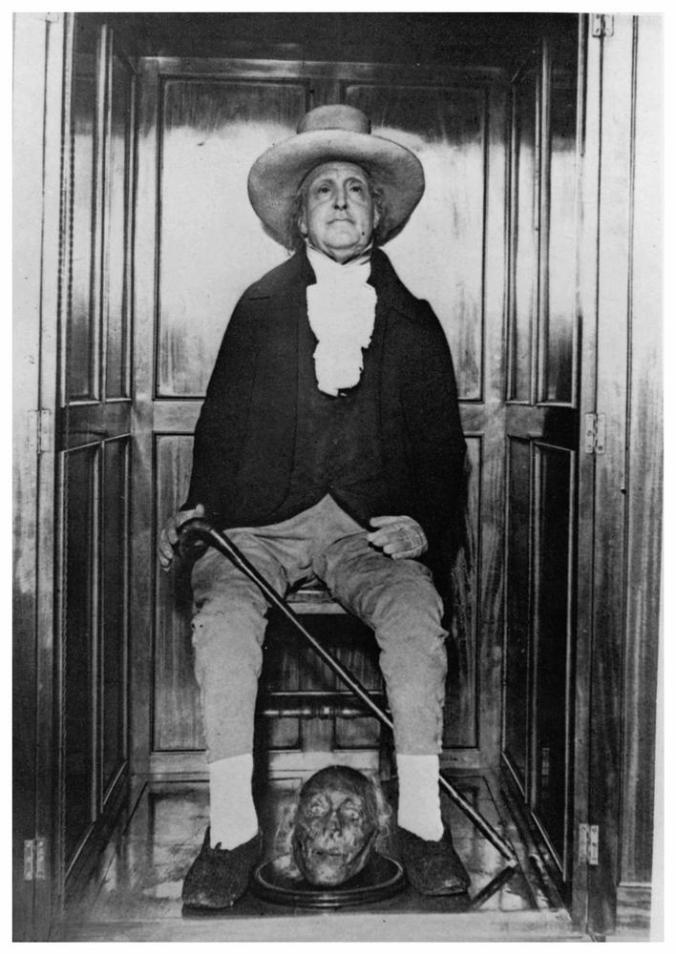
1 Jeremy gets a vacation! As some of you may know, philosopher Jeremy Bentham, John Stuart Mill’s mentor and the founder of utilitarianism, has been stuffed and kept in a glass case at the College of London since his death in 1832 as a condition of his will. I’m not kidding! (A photo has appeared periodically in the Ethics Alarms header from the blog’s first day.) Here he is…

That’s Jeremy’s real head on the floor: the one on top of the stuffed body around his skeleton is wax. Jeremy still attends all meetings of the school’s board, wearing his own clothes.  Now he’s visiting the U.S., something he always wanted to do when he was alive.

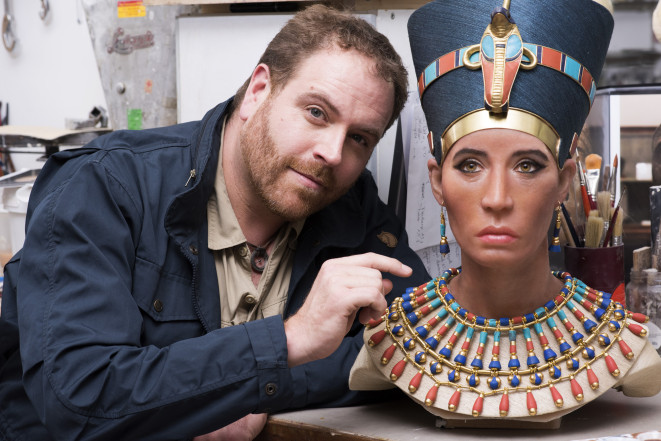
2. The message is increasingly clear: everything is racist. Got it, thanks! Working from her mummy, scientists from the University of Bristol reconstructed the face of 3,400-year-old queen Nefertiti, King Tut’s mother, using 3D imaging technology. The process required more than 500 hours. Nefertiti was Egypt’s queen alongside Pharaoh Akhenaten from 1353 to 1336 BC. Heeeeeeere’s  NEFI!

Now the project is under attack on social media because the reconstructed Nefertiti face isn’t dark enough, not that anyone has a clue regarding how dark or light anyone who lived over 3000 years ago was.

This is the kind of gratuitous race-baiting that causes well-deserved backlash.  It’s also redolent of an old whitewashing theme, dating back to the “Cleopatra was black” and “Jesus was black” claims of activists in the 1970s.

3. Segue Alert! And speaking of stupid whitewashing controversies, the cancellation of that high school production of “The Hunchback of Notre Dame” because the student cast as the gypsy ingenue Esmeralda was “too white” provoked a backlash….from Nazis.

Naturally, this means that the race-based attack on the innocent student cast because she was the most qualified to play the part was justified, thanks to the trampoline effect when a bad idea is attacked by even worse extremists.  (Don’t make me put the cognitive dissonance scale up twice in one day.) The New York Times reports that the students who intimidated school administrators into cancelling the show “are now besieged by an online mob targeting them with threats and racial epithets after the incident was reported in right-wing publications like Breitbart News, then spread to the neo-Nazi site The Daily Stormer. Via Facebook, the students received pictures of themselves with swastikas plastered on their faces. One parent had what was thought to be her home address (it wasn’t) posted online with a comment seeming to encourage harassment: “Do your thing social media.” Another parent received a profane email, assailing her for embracing “anti-white racism,” adding: “I feel sorry for your brainwashed child.” The way this phenomenon works is that now, when someone legitimately objects to the unethical handling of this episode by the school, they can be portrayed as agreeing with white supremacists.

We saw this effect in full bloom in Charlottesville. Tearing down statues of Robert E. Lee is a form of historical airbrushing and censorship, and principled, objective critics (like me) condemned the statue-toppling mania. Then the alt-right and the white nationalists marched against the removal of a Lee statue, and suddenly if you objected to a memorial to a major figure in American history and a bona fide military hero whose life is a wealth of lessons for all of us, it meant you were siding with racists.  President Trump was effectively trapped by this Catch-22. Continue reading

Observations On The La Jolla High Cartoon Controversy

I was going to make this an Ethics Quiz, but category that  can’t quite encompass the issues involved, and the more I considered it, the more certain I became of what should have happened. Here is the story:

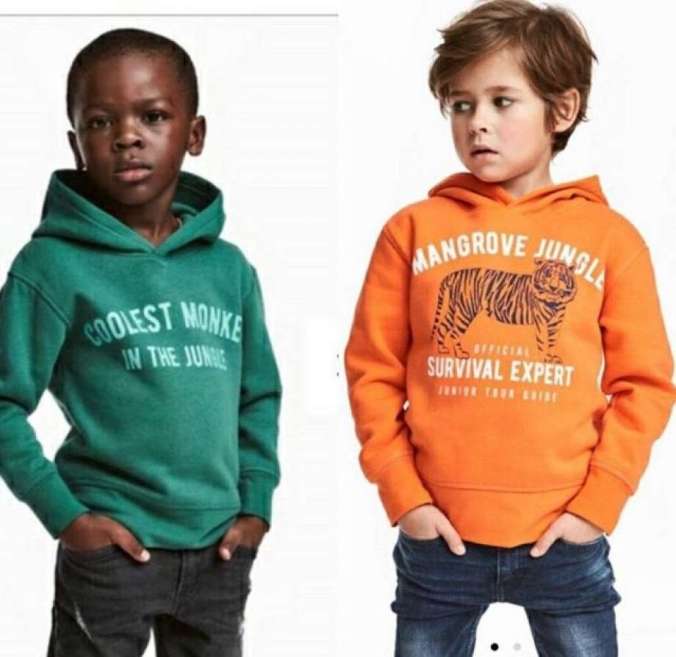
A student-drawn cartoon was  published last month in the La Jolla High School’s “Hi-Tide” newspaper. It depicted eight ethnic groups in a blatantly stereotypical manner ( which is to say, it was a cartoon), with each figure pictured wearing T-shirts with messages  reinforcing the stereotypes. The cartoonist’s purpose was to lampoon the controversial H&M ad that caused the company to pull the ad and apologize:

Here was the student’s cartoon…

The requisite number of sensitive students and /or their sensitive parents complained about the cartoon to compel the school principal to grovel an apology, saying that the decision to publish the cartoon was an “error in judgment and a breach of all the values we hold dear at La Jolla High School,” since the cartoon depicted multiple ethnic groups as “ugly racial stereotypes.”

Observations: Continue reading

Comment Of The Day: “KABOOM! So It Has Come To This: The Book-Of-The-Month TV Commercial”

The recent post about Madison Avenue continuing its effort to coarsen the popular culture and society with gratuitously vulgar commercials, in this case Book-Of-The-Month Club believing that it is hilarious to fake out viewers into thinking they are watching a tampon commercial, was not one that I felt would ignite much controversy or varied comment. As is often the case, I was wrong. The essay generated several surprising threads, including a comment by prolix, controversial blog warrior Alizia, whose commentary here ranges all the way into another post, the article about a high school musical casting controversy and the school’s unethical response to it.

She also raises the question of whether Ethics Alarms should engage more frequently in meta-ethics and philosophy. One reason I selected her comment as a Comment of the Day is that I’m interested in other readers’ views on that topic, not that I’m interested in turning in that direction. My focus as an ethicist has always been practical ethics, and the posts here about grand ethics issues of the sort that have been debated to no productive end for centuries have been incidental and few. Frankly, those topics don’t interest me very much; certainly not enough to devote the blog to it. About a year ago an erudite young woman briefly submitted some provocative comments here but want to argue about competing philosophical theories. She was shocked, indignant and angered when I refused to engage, and after yelling at me for a while, left the forum.  For those seeking what she sought, I recommend going here.

Abstract and scholarly ethics have undermined the subject of ethics to the degree that it is not one  most people can tolerate or understand, effectively removing ethics from public education and general discourse, and thus undermined the goal of an ethical society as well. They are still relevant to the discussion; I just know from hard experience how philosophy tends to send normal people fleeing like the Tokyo crowds in a Godzilla movie.

Here is Alizia’s Comment of the Day on the post, KABOOM! So It Has Come To This: The Book-Of-The-Month TV Commercial:

One things I noticed and have mentioned a few times in respect to the Ethics Alarms blog and, naturally, the people who participate in it, is that it often clearly distinguishes a situation or event in which an ethical issue is brought out and then it successfully and interestingly provokes an examination of the problem or issue. Yet what I notice as well is that the issue is not brought out in a larger context. Or, the larger context is rarely explored. The reason why it is not explored is more interesting and it seems to me more important than what is allowed to be explored or what is acceptable. I can think of two instances and I will mention them.

In this present instance it is noticed that advertising is incorporating vulgarity. But it is really far more than that, at least as I see things. What is the real issue? The real issue is the pornographication of culture. It is, I think this is true, coming about because this is the sort of things you-plural have allowed to go on. It is certainly true (as I have scoldingly said) that ‘it is your generation that has allowed these levels of moral and ethical corruption to creep in’ and I think that this is a necessary stance to take. In my view, though it is not appreciated much here, ‘the pornographication of culture’ connects to sexual expression of many sorts and also extends to ‘the homosexualization of culture’.

There is an active agent, either in the business culture itself, or perhaps in academic culture, that has set in motion these pornographic processes. And just as media culture and Hollywood has gotten continuingly infected with this material (which I assume *you* find titillating and exciting and do not oppose), similarly one can now notice the insinuation of homosexuality into the culture-productions. It becomes visible, included, and influential thereby. Normalized. But behind these appearances, behind this increasing in-flux, stands something far more raw, far more brutal, far more elemental, far more powerful and influential, and that is ‘the pornographic’, a truly ugly and vile *world*. And what *you* do has world-scale ramifications. Continue reading