Encore: On the Importance Of Christmas To The Culture And Our Nation : An Ethics Alarms Guide

[As promised, here is the Ethics Alarms Christmas package, lightly revised, last posted three years ago]

I don’t know what perverted instinct it is that has persuaded colleges and schools to make their campuses a Christmas-free experience. Nor can I get into the scrimy and misguided minds of people like Roselle Park New Jersey Councilwoman Charlene Storey, who resigned over the city council’s decision to call its Christmas tree lighting a Christmas Tree Lighting, pouting that this wasn’t “inclusive,” or the  CNN goon who dictated the bizarre policy that the Christmas Party shot up by the husband-wife Muslim terrorists had to be called a “Holiday Party.”  Christmas, as the cultural tradition it evolved to be, is about inclusion, and if someone feels excluded, they are excluding themselves.  Is it the name that is so forbidding? Well, too bad. That’s its name, not “holiday.” Arbor Day is a holiday. Christmas is a state of mind. [The Ethics Alarms Christmas posts are here.]

Many years ago, I lost a friend over a workplace dispute on this topic, when a colleague and fellow executive at a large Washington association threw a fit of indignation over the designation of the headquarters party as a Christmas party, and the gift exchange (yes, it was stupid) as “Christmas Elves.” Marcia was Jewish, and a militant unionist, pro-abortion, feminist, all-liberal all-the-time activist of considerable power and passion. She cowed our pusillanimous, spineless executive to re-name the party a “holiday party” and the gift giving “Holiday Pixies,” whatever the hell they are.

I told Marcia straight out that she was wrong, and that people like her were harming the culture. Christmas practiced in the workplace, streets, schools and the rest is a cultural holiday of immense value to everyone open enough to experience it, and I told her to read “A Christmas Carol” again. Dickens got it, Scrooge got it, and there was no reason that the time of year culturally assigned by tradition to re-establish our best instincts of love, kindness, gratitude, empathy, charity and generosity should be attacked, shunned or avoided as any kind of religious indoctrination or “government endorsement of religion.”  Jews, Muslims, atheists and Mayans who take part in a secular Christmas and all of its traditions—including the Christmas carols and the Christian traditions of the star, the manger and the rest, lose nothing, and gain a great deal.

Christmas is supposed to bring everyone in a society together after the conflicts of the past years have pulled them apart. What could possibly be objectionable to that? What could be more important than that, especially in these especially divisive times? How could it possibly be responsible, sensible or ethical to try to sabotage such a benign, healing, joyful tradition and weaken it in our culture, when we need it most?

I liked and respected Marcia, but I deplore the negative and corrosive effect people like her have had on Christmas, and as a result, the strength of American community. I told her so too, and that was the end of that friendship. Killing America’s strong embrace of Christmas is a terrible, damaging, self-destructive activity, but it is well underway. I wrote about how the process was advancing here, and re-reading what I wrote, I can only see the phenomenon deepening, and hardening like Scrooge’s pre-ghost heart. Then I said… Continue reading

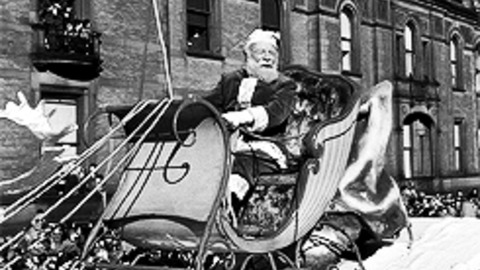
“Miracle On 34th Street”…An Ethics Companion, Chapter One: “Meet Kris Kringle!”

The Introduction is here.

The movie tells us right at the start that 1) the charming old man in the white beard can’t possibly be Santa Claus, and 2) that he’s nuts. That is, he tells adults who are paying attention this as soon as he starts complaining to a New York City storekeeper that his window display has the reindeer mixed up: “You’ve got Cupid where Blitzen should be. And Dasher should be on my right-hand side. And another thing…Donner’s antlers have got four points instead of three!”

Let’s see:

  • No Christmas display has ever distinguished between Santa’s reindeer (except for Rudolph), because the individual reindeer have never had any identifying characteristics in reality or myth. Are we to assume that there are name-tags on the models? If so, why wouldn’t Kris be complaining about the features of all of them, not just “Donner’s” antlers?
  • The names of the reindeer, even if there are flying reindeer, were 100% the invention of the poem “A Visit from St. Nicholas,” or “The Night Before Christmas,” originally published in 1823.  No one has ever claimed that the author had some kind of special info on the actual names of the reindeer when he wrote,

    More rapid than eagles his coursers they came,
    And he whistled, and shouted, and called them by name;

    “Now, DASHER! now, DANCER! now, PRANCER and VIXEN!
    On, COMET! on CUPID! on, DUNDER and BLIXEN!

    …and anyway, if he did, those were their names 120 years before the movie takes place. Nobody has ever claimed the reindeer were immortal, either. I suppose Santa Claus, in a nod to the poem’s popularity (it has been called the most famous poem of all time), could have adopted the practice of always having the reindeer named after the poem’s versions, and when one Vixen dropped of old age, the young reindeer that took her place became the new Vixen.

I suppose. Continue reading

The “White Christmas” Ethics Guide (REVISED And UPDATED)

I’m looking at some holiday movies to add to the Ethics Alarms library of annotated classics—no, ethics and “A Christmas Story” are irrelevant, it being a child’s remembrance and hardly literal–but I might as well begin with  revising and revisiting the “White Christmas” guide, which first appeared in 2012. 

I still like the film—my wife hates it—being a fan of all four stars, especially Bing and Danny, as well as the director, Michael Curtiz.  I do like it a bit less each time I see it, mostly from an ethics perspective, and the successive revisions reflect that.

I still get misty when the old general, played by Dean Jagger, gets saluted by his reunited army unit, which has gathered at his struggling, snowless, Vermont inn on Christmas Eve to remind him that he is still remembered and loved. Nonetheless, “White Christmas” is by far the strangest of the Christmas movies, and also the most unethical. Though everything works out in the end, the characters in the sloppy plot spend the whole movie lying, extorting, betraying, manipulating and generally mistreating each other, always with no recriminations at all, and usually with no consequences either.

In his addendum last year to my original post, Michael West found the film foundering from the second the opening credits ended. He began with the script for the opening scenes—General Waverly* is played by Dean Jagger; Captain Bob Wallace is Bing Crosby, and Private Phil Davis is Danny Kaye:

Opening Scene in the Jeep as they hear the Entertainment show.

GEN CARLTON (To Adjutant): What’s this all about, Captain?

ADJUTANT: A little entertainment for the men, sir. Tonight’s Christmas Eve.

GEN CARLTON: These men are moving up tonight, General Waverly. They should be lined up for full inspection!

GEN WAVERLY (To Carlton): You’re absolutely right. (To Adjutant): There’s no Christmas in the Army, Captain.

ADJUTANT: Yes, sir.

GEN WAVERLY (To Carlton): There’s always a slip-up or two during a change in command. The men get a little loose. But I know I’m leaving them in good hands.

GEN CARLTON: (To Waverly): Thank you, General. (To Driver): Sergeant, take me to headquarters immediately! We’ll have those men turned out on the double!

The Sergeant looks at General Waverly.

GEN WAVERLY: Goodbye, Sergeant. Take the short cut.

SERGEANT: Yes, sir!

The jeep pulls off and makes a half circle. The Adjutant makes a gesture, as if to stop it. Waverly stops him. The Adjutant turns to him.

ADJUTANT: That’s not the way back to headquarters!

GEN WAVERLY: Joe, you know that, and I know that, but the new General doesn’t know it. Or he won’t for about an hour and a half.

ADJUTANT: That Sergeant’ll be a private tomorrow!

GEN WAVERLY: Yes… isn’t he lucky?

SCENE CHANGE TO ENTERTAINMENT SITE:

CAPTAIN BOB WALLACE and PRIVATE PHILIP DAVIS are doing a number on stage to entertain a mass of 200 or so soldiers. GENERAL AND ADJUTANT just starting to take seats, off to one side where they are not noticed by the performers. ABOUT 6 SOLDIERS seated in audience. They look off, see General, start to rise. The General notices them – motions for them to sit down again, indicating he doesn’t want attention called to himself. Captain Wallace sings “White Christmas”.

CPT WALLACE: Well that just about wraps it up, fellas. It’s certainly too bad General Waverly couldn’t be here for this little yuletide clambake ’cause we really had a slam bang finished cooked up for him. I guess by now you know the Old Man’s being replaced by a new Commanding General fresh out of the Pentagon…it’s not a very nice Christmas present for a division like us that’s moving up. The Old Man’s moving toward the rear. That’s a direction he’s never taken in his entire life. Well all I can say is we owe an awful lot to General Waverly and to the way…

GEN WAVERLY: ATTENTION!

Every man is at attention and every head has turned to where General Waverly has taken up a position near the front of the platform.

GEN WAVERLY: Captain Wallace, who’s responsible for holding a show in this advanced area?

CPT WALLACE: Well sir as a matter of fact it was…

PVT DAVIS: …me Sir! It was my idea sir. Uh, I mean when you gotta entertainer sir of the caliber of Captain Wallace, sir…I mean sir…it’s Christmas Eve, sir. And well, sir, I mean that if you were in New York, Sir, you’d have to pay six sixty or even eight eighty to hear a great singer like Captain Wallace, sir.

GEN WAVERLY: I’m well aware of Captain Wallace’s capabilities. Who are you?

PVT DAVIS: Er…Phillip Davis, sir. Private First Class, sir.

GEN WAVERLY: Well, at ease, Davis.

DAVIS: Yes, Sir!

WAVERLY: I said, At Ease!

DAVIS: Oh, uh, Yes, sir, thank you sir.

WAVERLY: This division is now under the command of General Harold G. Carlton, and I don’t want anyone to forget it — not that he’ll let you. He’s tough — just what this sloppy outfit needs. He’ll have you standing inspection night and day — you may even learn how to march. And if you don’t give him everything you got, I may come back and fight for the enemy. Merry Christmas!

ASSEMBLED MEN: Merry Christmas!

GEN WAVERLY: Well, I guess, all I can say is, how much I…what a fine outfit…How am I going… (to Wallace) don’t just stand there, how am I going to get off…?

CPT WALLACE: We happen to have a slam-bang finish…He turns to the musicians, gives the downbeat.

They play “THE OLD MAN,” which is sung by the entire outfit.

ARTY FALLS IN VICINITY…Soldiers crouch…then finish singing.

GENERAL AND ADJUTANT DEPART.

MORE ARTY FALLS, ON SITE…Men scatter. Captain Wallace and Private Davis try to get men to cover. Private Davis man handles the Captain to cover as a wall collapses where he had just been standing.

For starters, we see a mass of soldiers in an open air situation within effective range of enemy artillery fire. A single well-placed artillery round could eliminate approximately 200 soldiers — more than an entire World War 2 Infantry Company (whose authorized strength is about 190-195 men; but given this stage of the war and attrition, this could easily be 2-3 companies of EXPERIENCED soldiers). Someone in the chain of command KNOWS this to be true and authorized this gathering despite the obvious danger. We know for certain that the Adjutant knows what the gathering is, as he answers in line #2 precisely what is going on. But an Adjutant has no command authority, so someone else authorized the gathering. We have to assume General Waverly didn’t know until the Adjutant answered General Carlton’s inquiry based on General Waverly’s later questioning of Captain Wallace. We can’t ever be sure who actually made the decision to have the entertainment occur at that location since Private Wallace, breaking an incredible number of military bearing protocols, interrupts a Captain, to answer a General. This Private, Private Davis, accepts all responsibility for the decision to expose upwards of 2 companies-worth of men to devastating artillery fire.

This information leaves us with two options: Either it really was Private Davis’s idea to have the venue at that location, in which case, Private Davis’s commanding officer and the various commanding officers AND EVERYONE ELSE in their chain of command are colossally INEPT for agreeing to the idea. The second option is that Captain Wallace DID indeed make the decision to have the venue at that site, and now he’s standing there like a lump allowing a subordinate to cut him off mid-sentence, a military no-no, and then allowing the subordinate to take the heat of any potential censure that was forthcoming. Of course, since he’s a Private trying to cover for his boss, he’ll say anything, so I won’t even ding him for the horrible excuse that 200 men should be exposed to German artillery fire because CPT Wallace is a famous singer – we all know it’s worth dying to hear Bing sing…

But of course, even General Waverly doesn’t seem to mind that 200 of his soldiers are idling around with a population density rivaling that of Bombay, just one artillery strike away from having more in common with mist than with humanity. When HE discovered what was going on by the Adjutant’s answer in line #2, he should have immediately ordered the soldiers disperse and had about two dozen commissioned officers who had every ability to stop the farce standing in his headquarters receiving the most royal dressing down of their careers and maybe a few firings.

What possibly does General Waverly think outweighs the need to disperse a mass of soldiers within effective range of artillery? Why, a Christmas music concert of course! It is Christmas Eve, after all!  Now, the Army does a really good job bending over backwards for the morale, welfare, and recreation of soldiers, much more than was ever considered a military precedent. BUT, we learn from the dialogue, the entire division is on orders to “move up tonight.” This somewhat vague description could range anywhere from simply occupying a section of the line to relieve a unit coming back or it could mean they are initiating a major offensive operation. We learn, however, that this movement, whatever it is, is occurring in mere hours. Having experienced large movements of soldiers myself, I know that if a Division is stepping off in a few hours, the men down to the platoon level are ALREADY in their assembly areas doing final preparations. This is apparent to the new commander, General Carlton, who is astonished that the men aren’t doing their final checks of equipment and gear.

Which leads us to the next bit: General Waverly is none too concerned about the unjustifiable exposure he’s tolerating of his…well, now General Carlton’s men…as we know Waverly has just been replaced by General Carlton, who, trope-tastically, we learn is one of those wretched new leaders who is probably horribly incompetent. The movie lets us know early on that he’s a despicable piss-and-vinegar type when he is mad that the men are having Christmas entertainment. Never mind that we now know that Carlton is severely concerned about a huge mass of men within artillery range open and exposed as well as not anywhere near where they ought to be to initiate movement of the entire Division.

The movie also lets us know he’s a jerk because it pushes the whole “fresh out of ________” trope. The usual way this plays out is the “fresh out of West Point” or “fresh out of ROTC” smear applied to new Lieutenants who assume Platoon Leadership with little to no actual experience. Unfortunately, this doesn’t exactly play out on the General level. Yes, the General ranks expanded rapidly during World War II, but an individual didn’t become one by being a complete buffoon (and yes there are always exceptions — but General Carlton, who seems to have a sense of urgency that no one in Waverly’s sphere of influence seems to possess, does not seem to be the exception).

Never mind, we’ll go on with the traditional “smearing of the new guy who replaces the beloved experienced leader.” In the original script I copied and analyzed, the dialogue was OVERTLY insubordinate and actively undermining of the men’s confidence in their new commander. In the corrected dialogue, though cleaned up a lot, there are still hints of undermining the new guy’s authority before he even makes a decision as the commander. There’s General Waverly’s smart-ass “There’s no Christmas in the Army” jab as a response to Carlton’s concern about the location and timing of the entertainment event — which he says “knowingly” to the Adjutant, who, we must remind ourselves no longer works for the Waverly but for Carlton.

There is the extra-rotten move when Carlton, recognizing the imminent danger as well as the horrifying breach of schedule in implementing the plan of operations, indicates he plans to move to Headquarters immediately to begin rectifying the situation and is undermined either by the Sergeant driving Carlton or by General Waverly himself. The driver decides to undermine Carlton’s ability to fix the problem by taking an extra long route back to headquarters. Between a driver and a singing-private, this division is apparently full of the lowest-ranking guys thinking they know best when to leave a behind-the-schedule division exposed to enemy fire just so they can catch a few tunes from Bing. The only other possible explanation is that General Waverly, himself, with a nod-nod wink-wink, authorized the driver to follow the reckless plan to take an hour-and-a-half detour, which we assume will require another hour-and-a-half correction before Carlton can get to Headquarters. Just as with the Adjutant before, let’s again consider that this driver no longer works for Waverly, but for Carlton The Sergeant is being openly insubordinate.

Even if Waverly was not responsible for the three-hour diversion, he immediately became complicit when the Adjutant, in an apparent realization who his new boss is (Carlton), moved to correct the driver but was stopped  from doing so.by General Waverly

The last bit of insubordination and undermining  the chain of command comes from the subtle digs Captain Wallace makes during his speech. His “Fresh out of the Pentagon” disdain undermines faith that Carlton may be a good commander, followed by the snide “not a nice Christmas present” for the division is enough to get any soldier censured. Soldiers and peers WILL whisper about their leaders, but an open act of insubordination like that? Stamped out like a spark in a dry forest… I won’t even address the fact that it’s a COMMISSIONED OFFICER making the openly insubordinate comments and a CAPTAIN no less. He would be dismissed and transferred immediately.

But hey, I suppose Waverly recognized all their rotten conduct when he feebly tried to make things right by saying “hey guys, he’s a good commander, never mind all the stuff we said before and our attitudes we displayed before!” A few moments later, just to do Carlton some justice, the artillery shelling arrives.

Then the movie moves into its funny guilt extortion phase. Army private Phil Davis (Danny Kaye) rescues his smooth-singing captain, Bob Wallace (Bing Crosby) from being crushed by a falling wall in a World War II bombing raid, and injures his arm in the process. (It’s not a plot feature, but the battlefield set for the entire opening sequence is itself unethically unprofessional by being chintzy even by musical standards: it looks like they are filming a skit for a Bob Hope Christmas Special.  I thought it was lousy when I saw it as a kid. Michael Curtiz deserved better; the man directed “Casablanca.” Show some respect.) Phil then uses Wallace’s debt of gratitude to coerce him into accepting the aspiring comic as a partner in Wallace’s already successful civilian act. This is obviously unfair and exploitative, but Bing accepts the ploy with good spirits, and the next we see  the new team of Wallace and Davis knocking ’em dead and rising in the ranks of stage stars.

The act looks terrible. Bing was never much of a dancer, a game hoofer at best, and you don’t feature the greatest voice in the history of American popular music by having him sing exclusively duets. Nevertheless, all we see of the team’s rise is both of them singing and corny dancing inferior to what Bing did with Bob Hope in the “Road” movies.

Never mind. They have a show on Broadway, and as a favor to a mutual army buddy, they agree to watch the boonies nightclub act of “The Haynes Sisters” (Rosemary Clooney as Betty, and Vera-Ellen, of wasp-waist fame, as kid sister Judy. Did you know that in the “Sisters” number, Clooney sang both parts? ). Bing is immediately smitten with older sister Rosemary, but there is a tiff over the fact that younger sister Judy fooled them into seeing their act: she, not her brother, had sent the letter asking for a “favor.”

This is the first revealed of many lies woven into the script. This one is a double beach of ethics: Judy uses her brother’s name and contacts without his permission or knowledge, and lures Wallace and Davis to the night club under false pretenses.

Bing dismisses Judy’s cheat by noting that everyone “has an angle” in show business, so he’s not angry. Rosemary is, though, and reprimands Bing for being cynical. That’s right: Vera/Judy uses their brother’s name to trick two Broadway stars into watching their little act, and Rosemary/ Betty is annoyed because Bing/Bob (Bing’s bandleader, look-alike, sound-alike brother was also named Bob) shrugs off the lie as show business as usual. True, Betty is technically correct to flag the Everybody Does It rationalization, but shouldn’t she be grateful that Bob isn’t reaming out the Haynes sisters and leaving the club in a huff? OK, nice and uncynical is better than nice and cynical, but Bob is still giving her and Judy a break. As the beneficiary on Judy’s angle, Betty is ethically estopped from complaining that Bing/Bob’s reaction was “I don’t expect any better.” I can, she can’t. He should expect better: accepting unethical conduct allows it to thrive.

As we soon find out, however, Betty often flies off the handle.

Continue reading

Morning Ethics Warm-Up, 11/23/18: (It’s My 38th Wedding Anniversary)

Good Morning!

1. A Thanksgiving Story. Yesterday, as we have in recent years since our available family has been inexorably shrinking or moving away, Grace and I, plus my son and his girl friend, went out to a favorite D.C. restaurant for our celebration. A very large party was next to our table, and when I overheard a comment or two, I figured out who it was. The extended Dole family, headed by former Senator Liddy Dole and former Senate Majority Leader, Presidential candidate and Vice-Presidential candidate Bob Dole, now 95, was having a holiday gathering with at least three generations on hand. My Dad deeply admired Dole’s military sacrifices in World War II as well as his wit, and both Doles had spent a lifetime in public service, so I decided to send the table a bottle of champaign with the Marshall family’s regards.

I expected at most a smile and a wave. Liddy Dole, however, came immediately over to our table, and chatted for quite a while, energetically expressing her  and Bob’s gratitude for the gift. Later a Dole niece came over to do the same, and I got a handshake and some nice words from Bob as we left. I would have assumed that lots of tables at the packed eatery would have sent some token of appreciation the Dole’s way, but we seemed to be the only ones. Indeed, we seemed to be the only ones who knew who they were. “Sic transit gloria mundi.”

It was funny: Liddy Dole did a wonderful job covering with opening comments that could have suggested that she had met us before, a skill anyone in public office must master. I managed to make it clear in my remarks that we hadn’t met, but her gratitude appeared genuine rather than formal.

So the Marshall family had a memorable collision with political history and Washington royalty! Best bottle of champagne I ever bought…

2.  If Obama wants to protect his own legacy and project a positive image of the Presidency, he really should shut up. During a summit this week for the Obama Foundation in Chicago, former President Barack Obama said,

“Climate change, we’re going to have to come up with some new technologies to solve the problem as much as we need to. Although even on something like that, right now I could take off the shelf existing technologies, we could reduce carbon emissions by, let’s say 30 percent, without any, you know, it’s not like we would have to go back to caves and, you know, live off, you know, fire. We could have electricity and smartphones and all that stuff, which would buy us probably another 20, 30 years for that technological breakthrough that’s necessary. The reason we don’t do it is because we are still confused, blind, shrouded with hate, anger, racism, mommy issues. “I mean … we are fraught with stuff.”

Stuff like, oh, reality. The U.S. is deeply in debt, in no small part due to Obama’s own mismanagement of the budget, and a trillion dollar infrastructure bill is overdue. Estimates—and on climate change, all we have is estimates, of what it would cost to reduce carbon emissions by 30% range from another 1.7 to 3 trillion dollars, and many estimates tell us that even that wouldn’t do enough, whatever “enough” is. “It’s not like we would have to go back to caves and, you know, live off, you know, fire’ is a masterpiece of “It’s not the worst thing” duplicity. OK, Big Shot, what would it mean? Of course, Obama has no idea. He’s just blathering, and at a level not much superior to the blathering President Trump gets regularly skewered for. Yes, we are indeed confused, because climate change research and hype are now indistinguishable thanks to messengers like Obama, but how the hell do “hate, anger, racism, (and) mommy issues” have anything to do with the issue other than to serve as standard left-wing insults at anyone who doesn’t agree with them?

The use of racism as a default explanation for any and all opposition has reached the point of self-parody. I wonder when the half the country not being victimized by it wakes up and sees how unfair and destructive this is… Continue reading

Presenting Two (Terrific) Baseball Ethics Comments Of The Day By Slickwilly

I apologize for combining these two deserving comments into a single post, but the baseball season is over, and as much as I try to make the case that readers who are tragically immune to baseball’s charms should still read and ponder the ethics posts this most ethically complex of sports inspires, most don’t, and I also have a backlog of Comments of the Day that feels like a 400 lb monkey on my back.

First is Slickwilly’s Comment of the Day on the Halloween post, Unfinished World Series Ethics Business. He is discussing this iconic moment, when a crippled Kirk Gibson limped to the plate as a pinch-hitter against the best closer in the game at teh time, Dennis Eckersley:

Used a clip from one of your posts to teach my kids last night: Game 1 of 1988 World Series last at bat.

The mental aspect of Baseball was NEVER more apparent than in that at bat. The names and teams are irrelevant. Dangerous runner at first as the tying run, two outs, bottom of the ninth inning. Crippled power hitter is substituted to bat for the bottom of the lineout, in hopes of a base hit.

Pitcher, a professional at the top of his game, has not allowed a home run since late August: a powerful matchup indeed!

First two pitches are fouled away. Pitcher starts messing with the batter by throwing to first (where there was no chance of an out.) Two more foul balls and the count is still 0-2. Pitcher continues to throw to first, where the runner is taking progressively larger leads.

Batter hits almost a bunt down the first base line: foul. However, we see how badly the batter is hurt: he is almost limping and could never reach first base on an infield hit. Indeed, he is so banged up he did not take the field during the warm ups: a sign that the manager never expected to play him. (One suspects that a pinch runner would be used, should a base hit occur.)

The mental game continues with the pitcher, way ahead in the count, throwing hard-to-hit pitches in an attempt to make the batter strike out. The batter gets a hold of a pitch: foul ball. Pitcher throws outside again. Now the count is 2-2. More throws to first, and the runner is a legitimate threat to steal second as the count evens up.

The pitcher throws way outside, and the runner steals second, getting into scoring position. Now the count is 3-2, and the advantage goes to the batter: a base hit can tie the game!

The batter hands some of the crap back to the pitcher: calls time out just as the pitcher has his mental focus for the deciding pitch. The batter takes his stance, and HIS focus is unshaken: you can see it in his stance, how he holds his head, how he holds his bat, everything. This man suddenly exudes confidence, and the pitcher can see it. Everyone in the ballpark can see it!

Sometimes, in Baseball, a thing is meant to be. I cannot explain it, but there are moments where you know you are about to see greatness, where all of the little factors are lining up to produce a great play. There is a feeling in the air at such times, and it is palatable even on video and across decades of time. For those who worship at the altar of Baseball, these are the moments that make the game great.

Pitcher throws a low slider (betting on a junk pitch!) and as a result, hangs out what Baseball fans affectionately call ‘red meat’ for the batter, who gets EVERY BIT OF THAT PITCH AND SENDS IT ON A TOUR OF THE RIGHT FIELD BLEACHERS!

The second of Slickwilly’s CsOTD came in response to Question: You Are Offered 300 Million Dollars To Do What You Want To Do Where You Say You Want To Do It For The Next Ten Years. Why Would You Say, “No”? Continue reading

Comment Of The Day: “Ethics Quiz: The Good Hoax?” (2)

rape-on-campus


I still can’t sleep.

This is the second Comment of the Day on this October 18 post, a surprise one for Pennagain, since I didn’t even flag it at the time. Again, I’m sorry. I don’t know what was up in October; it also ended with the worst traffic here of any week for more than two years. Obviously, it was a protest over my dilatory posting of the fine work by my commenters.

This one is a triple COTD, made up of three by Penn, who properly raised the specter of Samantha Erdly in the context of hoax research. Erdley is the Rolling Stone journalist who inflicted the “Jackie” tale of an imaginary gang rape at the University of Virginia, an earlier assault of truth and due process by the “believe all women” crowd. (Ethics Alarms covered the episode in a series of posts.). I just re-read Pennagain’s comments, made in a discussion with Alizia Tyler, who earns an assist. Excellent observations, and a valuable assist in making sure this journalistic outrage is never slipped down the memory hole, as so many would love it to be.

Here is Pennagain’s Comment of the Day on Ethics Quiz: The Good Hoax?:

As far as hoax articles appearing in either reputable journals or popular publications (rarely the same thing), if I weren’t an atheist, I would damn them all to hell. What I have in mind as an example that should need no further elucidation here is the piece knowingly published by Rolling Stone that included the false rape stories and statistics responsible for poisoning much of a culture, not to mention its politics….

“In November 2016, a federal court jury found Samantha Erdely was liable for defamation with actual malice” and that “Erdely and Rolling Stone failed to engage in “basic, even routine journalistic practice”

Her background reveals a start in college, when her colleague Stephen Glass ‘threw a righteous fit’ after she and a another student “concocted a funny and obviously made-up travel story” for the school magazine.” [Glass, you may not know, later became nationally notorious for inventing false stories published as factual journalism in the highly respected The New Republic, seriously harming its reputation.] Erdely was obviously already toxic before she left school. If you’re curious, her Wikipedia bio contains descriptions of six other major rape stories she invented out of whole cloth and used to smear real people and institutions, articles that in at least two cases went up for major journalism awards. As a self-appointed expert in rape and bullying, her work went into GQ, The New Yorker, Mother Jones, Glamour, Men’s Health, Philadelphia, among other lesser magazines. She was believed. The more she got away with, the greater the lies she invented … until, after twenty wonderful years of conning millions of people, she got over-confident and lazy, and plagiarized a previous article of her own. Until someone finally noticed that the Rolling Stone piece bore too many similarities to another one to be coincidental.

For twenty years, from Philadelphia to Los Angeles, Seattle to Florida, she built a reputation for being the go-to journalist on the subject of rape. No one doubted her. Witnesses later spoke out using her writing as statistical evidence — women (and so many men who had been falsely accused) and feminists in particular — had absorbed every precious word – even against the evidence of their own knowledge and experience in the times and places Erdely was writing about.

A month ago, September 21, 2018, Rolling Stone was also found “liable for defamation.” It was noted in the case against Erdely that the magazine hadn’t been doing too well before they glommed onto that gem of Samantha, aka “Jackie,” the fictional rapee.

Last week’s headline: WaPo Reporter Is Tired of Being Reminded He Fell for Sabrina Rubin Erdely’s Hate Hoax So Badly He Called for Burning Down UVA Frat Houses

I now amend my description of the poisonous piece: It is a “hate hoax.”

No, Alizia, poisons do not, in general, lead to death. They lead to minor discomfort in some, and major permanent damage in others; some knock you on your ass right away, and some creep insidiously into your brain over months or years. The public remembers things they read and hear. They (I won’t say “we” because I became skeptical reader at the age of 12 after a defamatory article was published in a local newspaper concerning a friend of my family concerning something that happened while I was present and knew to be a lie. I had been visiting one of their children, a classmate, at the time the incident took place, or rather, didn’t take place. My testimony was taken down, along with his, not discounted, but the editor of the paper would not print a retraction because, he said, “we don’t want to confuse our readers; they expect the truth, and that is what we give them.” Our parents wanted that in writing; naturally, he refused.

I am convinced that what is presented in a plausible manner from an authoritative source (which could be the 10 o’clock news or a magazine with a reputation for having its journalistic thumb on the pulse of young America) is frequently taken in without the auditor, viewer or reader later recalling the source. If they didn’t question it in the first place, they not only don’t question it later, but, when challenged, they will deny or dismiss any correction out of sheer embarrassment, egotism, mental laziness or, in the case under discussion, because they want to believe it.

As has been pointed out in Ethics Alarms before, the left, on the whole, has taken the anomalous position of being at once both victim and dictator. Thus, the concept of a Rape Culture is heaven for them: they are, collectively, the injured parties … and the ones who injure, including any who are capable of doing injury, are now at their mercy — via 30-year-old wisps of memory, anonymous join-the-conga-line #MeToo-ers, a casual touch on the shoulder, or a dirty-dirty word in their ears. They feed on lies more than on facts – the truths are painful, but the lies are more … emotional, memorable, dramatic, arousing . . . . They need to feed the addiction even when they know it is poison…

The fact in this matter is that Erdely, falsely or idiotically or crazily or not, believed she was doing something fine and high-minded “for women,” and to alert a deaf public (and via that route influence authorities) that there was “a rape problem” that needed to be addressed. In her mind, the ruining of a single man (or a whole college fraternity) was insignificant in terms of getting her message “out there.”

In other words, her cover (if you will) was in presenting these gross exaggerations as hoaxes. I may have taken you in the wrong direction by quoting the court decisions concerning malicious intent. The articles undoubtedly did “malicious” damage. So where am I? What Erdely believed (and apparently still does) has been shown to be shared by much of the public touched by it — including a proportion of men who don’t understand they are simply seeing themselves as heroic exceptions, or else thinking they are disguising themselves to live in the midst of an Amazonian tribe that wants to cut their balls off (that was an irrelevant side-bar, sorry, I do that a lot, letting off steam). Here’s what happens when someone with a cause and a vague concept of how bad the situation is gets hold of what she thinks are solid statistics, intended as a righteous hoax: https://www.realclearpolitics.com/video/2014/12/06/msnbc_panelist_we_live_in_a_culture_that_hates_women.html

I rest my case.

Morning Ethics Warm-Up, 11/1/2018: Battling Toddlers, Racist Lemons, And Justices In Love

Welcome November!

1. Warm-Up musings…I suspect that the Warm-Up format costs the blog traffic, potentially a lot of traffic. If each was broken into components and posted individually, there would be a lot more clicks. Of course, I wouldn’t have time to post each separately—I estimate that a single post adds 15 to 20 minutes to the process—and there would be fewer issues covered. Capturing more of the events and issues that get into my files is one of the main reasons I started this. A better blog but less appreciated? Nah, I’m not going to measure success by traffic, as tempting as it is. I resist click-bait—there are topics that guarantee flood of comments—and don’t resist posting analysis that I know will cost me followers: I literally watch the numbers go down. And, of course, there are once regular readers who have fled because I have been consistent in my approach to the Trump Presidency, and regard his treatment by the “resistance,” Democrats, progressives and the news media as a national ethics catastrophe, irrespective of his own neon flaws. They fled, in part, though they will not admit it, because they simply could not muster valid arguments for why this President did not deserve the same presumptions of good will, good effort and public loyalty as every other President, traditional benefits that are essential to the office working and the nation thriving. What they represented as arguments were really presumptions of guilt and the byproduct of hateful group-think magnified by confirmation bias. I hope they eventually get well, and that when they do they aren’t too remorseful for being appropriated by an angry mob.

In the subsequent items, I’ll briefly explain why they are here rather than in a full post.

2. Unethical quote of the week: Don Lemon. Again. Earlier, Lemon said on his CNN platform,

“We have to stop demonizing people and realize the biggest terror threat in this country is white men, most of them radicalized to the right, and we have to start doing something about them. There is no travel ban on them. There is no ban — you know, they had the Muslim ban. There is no white-guy ban. So what do we do about that?”

Like so much Lemon says, this was incoherent, biased, and intellectually lazy. He said to stop demonizing people, and demonized a gender and race in the same sentence. “Start doing something” is typical political humming: do what, exactly? Lock them up? What? Any fool can say “Do something!”, and Lemon is just the fool to say it.  The travel restrictions are a non-sequitur, the kind of lame-brained argument that social media advances in memes and “likes.” Those restrictions involve non-citizens and their ability to immigrate. It was not based on race or ethnicity, but nation of origin. It’s an ignorant and misleading statement. “There is no white-guy ban. So what do we do about that?” is flat out racist, and intended to be—unless Lemon can’t speak clearly, which you would assume is a job requirement. A responsible news organization would have fired him, but he’s black and gay, so that’s not going to happen.

Then he came back and said this:

“Earlier this week, I made some comments about that in a conversation with Chris [Cuomo]. I said that the biggest terror threat in this country comes from radicals on the far right, primarily white men. That angered some people. But let’s put emotion aside and look at the cold hard facts. The evidence is overwhelming.”

Continue reading

Unfinished World Series Ethics Business

Today the victorious Boston Red Sox took their now traditional duck boat parade through Boston and down the Charles River, so even for the Sox, the 2018 season is officially done.  My job isn’t however, because there were two striking examples of moral luck and consequentialism during the World Series, and apparently I was the only one who noticed.

I. The “Bad News Bears” moment.

When Red Sox Game 4 starter Eduardo Rodriguez surrendered what seemed at the time to be a decisive three-run homer to Yasiel Puig, putting the Sox behind in the 6th inning 4-0, he angrily hurled his glove to the mound. Commentators joked about how he resembled the Bad New Bears’ combative, potty-mouthed shortstop Tanner in the Little League classic, but other than the ribbing, nobody criticized “E-Rod.” Indeed, his manager, Alex Cora, exonerated him for the home run, saying that he, the manager, screwed up by letting his tiring pitcher face the dangerous Puig.

Yet earlier this season, Boston reliever Carson Smith, regarded as an important member of the Red Sox relief squad, threw his glove in the dugout after giving up a home run, and partially dislocated his shoulder. He was lost for the season, and both team officials and Boston sportswriters blamed Smith for his injury. He injured himself you see. It was stupid and selfish, and showed him to be unprofessional and untrustworthy. Many thought Smith should be fined, or even released. Yet it was a completely freak injury. It wasn’t as if Smith had punched a wall or a water cooler. Baseball players throw their gloves all the time, and I’ve never seen it injure anyone. So why was Carson Smith treated as a pariah for throwing his glove, but Eddie Rodriguez doing the same thing shrugged off? The only reason is that Smith’s angry gesture happened to injure him , which nobody, including Smith, could have predicted. In fact, Rodriquez was more, much more, irresponsible than Smith, because he knew throwing a glove could cause an injury. He knew, because it happened to Smith. Continue reading

Unethical Quote Of The Month, And Also KABOOM!: Pope Francis

“Because of our sins, the Great Accuser always takes advantage – we read in the first chapter from Job – he roams looking for someone to accuse… he is accusing us strongly, and this accusation becomes persecution as well. …And there is also another type of persecution, of continuous accusations to dirty the Church: the Church must not be dirtied. The children yes, but not the mother, and the mother defends herself from the Great Accuser with prayer and penance. That’s why I asked to pray the Rosary, Our Lady, Saint Michael the Archangel. It’s a difficult moment because through us, the great accuser wants to attack the mother. And you don’t touch a mother”.  

—- Pope Francis, addressing the closing session of a synod of bishops at the Vatican yesterday, claiming that the Catholic Church has been persecuted through accusations related to the clerical child sex-abuse scandals that have undermined the credibility of the papacy and church hierarchy.

I’m really mad at my head for exploding over this. Surely it isn’t a surprise, not after the ongoing accountability-ducking and finger-pointing the Pope and his Church have been engaged in while innocent children are buggered by priests worldwide. Yet somehow I did not, and apparently my head did not, believe that the Pope would be so callous, tone-deaf and, frankly, stupid as to play the victim card when it is not only invalid but guaranteed not to work. “How dare anyone accuse us of covering up child abuse when we have been covering up child abuse for decades, and probably centuries! How dare anyone imply that the Church is accountable when its priests molest children and its leadership choose to protect the molesters instead of the victims!” This is essentially what the Pope is saying (it sounds different in Italian), and he really seems to be oblivious to how awful it not only sounds, but is. Continue reading

Comment Of The Day: “The Attack Of The Unethical Women”

Here is William Gauci’s Comment Of The Day, his first, on the post, The Attack Of The Unethical Women: 

“Still Spartan” on September 20, 2018 at 9:26 am: quoting you: “Imagine someone you may have harmed.”

“Exactly, imagine someone YOU may have harmed. The onus is on YOU to apologize — not on her to come forward and make you apologize. And even if you think you did nothing wrong, hey just an indiscretion, she wasn’t into it — if a girl runs away you, jumps out of the car, starts crying, etc. then every single alarm bell in YOUR head should go off that maybe you did something wrong and that you need to make amends. Or, even if you think you did nothing wrong, it’s probably safe to check with her because that is what a decent human being does. And if you don’t do that out of fear that you might go to jail, get suspended, or heck — mommy and daddy might ground you for underage drinking or trying to have sex with a younger girl, then no sympathy.”

In a perfect and enlightened world where everyone is self aware and able to view the world through many different lenses, I could agree. But in reality, I don’t think you’ll frequently see this scenario happening in practice, especially with younger people who tend to not be as able to see the long term consequences of their actions.

Also we have the issue of perception. The recent fictional series “13 Reasons Why” was a good example of this. The underlying premise I got from watching it, was how very different each person can perceive and be effected by a single or series of events. For the now grown Professor Ford in this scenario, it may well have been a traumatic and life affecting episode. For the young man who could very well be a self centered, egotistical jackass at the time, just another night out partying and trying to have some fun. No more memorable than that. So both of these people may very well be telling their perception of the truth, and how very different they remember or don’t remember the very same event. Continue reading