I Worry About Cary Grant [Updated]

…and James Cagney. And Kirk Douglas. And Bette Davis. And Rita Hayworth.

Seeing Kirk Douglas at the Golden Globes revived the concern that every Christmas season intensifies for me, when I realize that it is only Christmas that keeps such giants of entertainment past as Gene Autry, Bing Crosby and Dean Martin from fading into permanent obscurity.  The cultural figures who we remember are mostly the beneficiaries of moral luck, not a fair merit-based calculation. It is a random process, and culture, which is significantly defined by who and what we remember and who and what we forget, should not be shaped by coincidence, chance, and random amnesia.

It should not be, but it is. A classic example outside the realm of entertainment is the strange case of  Col. Joshua Lawrence Chamberlain, the hero of Little Round Top in the Battle of Gettysburg, and by some assessments the savior of the Union itself. When the story of Gettysburg was assembled by the battlefield commission, plaques erected and statues placed. Chamberlain’s desperate stand protecting the Union army’s flanks on Day Two of the battle didn’t make the cut. Despite as remarkable a career as anyone from Maine could have, and more than one shining moment of distinction during the Civil War, he was forgotten for more than a century. Then a brilliant, best-selling historical novel, “The Killer Angels,” recounted his heroics leading the 20th Maine so vividly that Chamberlain memory was re-animated, and began receiving the attention from historians that it deserved from the start.

In popular culture, whether a performer’s unique talents and contributions are remembered after more than a generation is now almost entirely dependent on whether there is a film featuring them that is regularly presented on television. Only a handful of performers who have permanently entered iconic status avoid that standard: I’d include Charlie Chaplin, Marilyn Monroe, Fred Astaire, Judy Garland, Shirley Temple and John Wayne in this category, with a few debatable others. (And even the Little Tramp, MM, Fred, Judy and The Duke aren’t necessarily  safe: once Rudolf Valentino, Laurel and Hardy, Lon Cheney, Greta Garbo, Boris Karloff and James Dean could be safely called icons. I doubt one Millennial in a hundred could identify any of them. Marlene Dietrich has a thumb-hold on her iconic status only because of  Madeline Kahn’s film-long send-up of her in “Blazing Saddles.”) Continue reading

Morning Ethics Warm-up: 8/16/17

GOOD MORNING!

1. I’m heading to Boston and Fenway Park in a few hours to meet with two of my high school classmates and together pay our respects to the 1967 Boston Red Sox, the spiritual beginning of Red Sox Nation, and a group of men, then barely more than boys, who had as profound an effect on my life and view of it as anything I have ever experienced.

It’s the 50th Anniversary of that amazing team and the heart-stopping pennant race it won against all odds, in a four team race that came down to the final game of the regular season. I mean heart-stopping literally: the team wasn’t called “The Cardiac Kids” for nothing. TWO of my father’s colleagues at the Boston Five Savings Bank died of heart attacks while attending Red Sox games, during one of the 9th inning desperation rallies for which the team was famous. The only reason I didn’t perish in like fashion is because I was just 16 years old.

Why was this team, and that summer 50 years ago, so important to me? I don’t have time or space to answer that question well, and you’d probably wonder what I was babbling on about anyway. A 2017 film by Major League Baseball called “The Impossible Dream” does a fair job of explaining it, but it’s too short to do the job right.

I had listened to, watched or attended every Boston Red Sox game for five years, as the team lost and lost. From those bad teams, followed weakly by the city in those days, in a crumbling old park that seemed destined to be abandoned and torn down, I learned that winning wasn’t everything, that loyalty wasn’t easy, that Hemingway was right, and that baseball was about courage, humility, perseverance, doing your job every day, sacrifice, and hope, as well as usually losing at the end. That summer of 1967 taught me that hope is worth the effort even though hope is usually dashed by the ice water of reality, that you should never give up, that miracles do happen, and that nothing is as wonderful as when a community is united in a single, inspirational goal, no matter what that goal might be…and that you should never be afraid to give everything you have in pursuit of a mission, even when it is likely that you will fail.

I learned difficult, discouraging lessons, too. When an errant pitch hit Red Sox right-fielder Tony Conigliaro in the face on August 18, 1967, it was the beginning of a lesson that revealed its tragic last chapter 23 years later. That one taught me that life is horribly, frightening unpredictable, and that we envy others at our peril. It taught me that we need to do what we can to accomplish as much good as we can as quickly as we can, because we may lose our chance forever at any moment.

Tony C, as he was and is known as, was a beautiful, charismatic, local kid, the idol of Boston’s huge Italian-American community,  in his fourth season with his home town team at the age of 22. He dated movie stars; he recorded pop songs; he had a natural flair of the dramatic, and was destined for the Hall of Fame. One pitch took it all away. Although he had two comebacks and played two full seasons facing major league fastballs with a hole in his retina and his field of vision, Tony was never the same. After his final attempt to keep playing failed at the age of 30, he became a broadcaster, and at 37 was seemingly on the way to stardom again in 1982 when he suffered a massive, inexplicable heart attack—Tony  did not smoke, and had no family history of heart problems– that left him brain damaged until his death in 1990.

As Henry Wiggin, the star pitcher protagonist of the novel, play and movie “Bang the Drum Slowly” observes as he  reflects on the death of his catcher and roommate, everyone is dying, and we have to remember to be good to each other. But it’s so hard. Ethics is hard. The ethics alarms ring faintly when we are about the task of living, or not at all…

At the end of the story, the narrator, the best friend of the catcher (but not really that close a friend) recalls how quickly everyone on the baseball team went back to their selfish ways after their teammate went home to die Even the narrator, who was the leader of the effort to make the catcher feel loved and appreciated in his last days, ruefully recalls his own failing. The catcher had asked him a favor, just to send him a World Series program (the team won the pennant after he had become too ill to play), and he had forgotten to mail it until it was too late. How hard would it have been, the narrator rebukes himself, to just put it in an envelope and mail it? Why are we like that, he wonders?

1967 was the beginning of my exploration of that mystery too.

So I am going to Boston for the 30 minute ceremony. I can’t even stay for the game; I have a seminar to teach tomorrow morning, and the last flight out of Logan is at 9 PM. There will probably be just a small contingent from the Cardiac Kids: most of them are dead now, or too infirm even to walk onto the field. But Yaz will be there, and Gentleman Jim Lonborg; Rico Petrocelli, Mike Andrews, and maybe even Hawk Harrelson  and Reggie Smith. I will be there to say thank-you, that’s all.

And to show that I remember. Continue reading

Al Luplow And The Duty To Remember

http://www.youtube.com/watch?v=3tSrUvkVUoY


A culture is defined by what it chooses to remember and what it chooses to forget. Ideally, a culture would remember everything, because knowing the past, as Santayana famously observed, was insurance against repeating its mistakes.  But time is a huge eraser, as Shelley told us:

I met a traveller from an antique land,
Who said—“Two vast and trunkless legs of stone
Stand in the desert. . . . Near them, on the sand,
Half sunk a shattered visage lies, whose frown,
And wrinkled lip, and sneer of cold command,
Tell that its sculptor well those passions read
Which yet survive, stamped on these lifeless things,
The hand that mocked them, and the heart that fed;
And on the pedestal, these words appear:
My name is Ozymandias, King of Kings;
Look on my Works, ye Mighty, and despair!
Nothing beside remains. Round the decay
Of that colossal Wreck, boundless and bare
The lone and level sands stretch far away.”
This is why historians have such a crucial role to play in preserving our culture, by preserving stories, lives and memories along with the inspiration and wisdom they can provide.Sometimes a lost memory is rescued from neglect. Today we remember Colonel Joshua Chamberlain as one of the central heroes of the Battle of Gettysburg for his desperate stand with the 20th Maine Volunteer Infantry Regiment at Little Round Top, culminating in his using his knowledge of military history (he was a college professor) to improvise the bayonet charge that held his position and turned defeat into victory. That was not the case for almost a century, however, until the historical novel “The Killer Angels” retold the story so vividly that Chamberlain’s entire career became the object of new scholarship and admiration. This was truth emerging, but it was also justice. Chamberlain deserved to be remembered.

Unfortunately, Chamberlain is an exception. Once a life, a deed, a remarkable moment is forgotten, it is usually gone. That is a tragedy for the culture. The duty to remember, which I have discussed here before, is the duty to protect the culture and its riches. It is also based on the Golden Rule. We all would like our lives to be remembered as long as possible, especially when we accomplished something that future generations could and would appreciate or benefit from recalling.

This brings us to Al Luplow.

Two nights ago, in an outrageously antic and entertaining game between the Cleveland Indians and the Boston Red Sox, Indians outfielder Austin Jackson robbed Hanley Ramirez of a home run by leaping in the air at the right centerfield bullpen fence reaching over it mid-air to catch the ball, and tumbling over it. He still held on to the ball—he could have easily broken his neck—and the home run became an out.

Although outfielders have fallen over that fence from time to time, notably in the 2013 play-offs…

Continue reading

Morning Ethics Warm-Up: 7/9/17

GOOD MORNING!

1. The Pope gave an interview saying, in Italian of course, that the United States of America, which he offensively grouped with Russia, China, North Korea and Syria, have “a distorted vision of the world.”

The Pope, who has spent the bulk of his adult life seeing the world through the narrowly focused lense of the Catholic Church, and who hails from a South American leftist state, thinks that the United States has a distorted view of the world. Wow. Besides the stunning hubris of this pronouncement, the Pope is engaging in an abuse of position and influence, and a remarkably short-sighted one. If he wants to exercise any influence at all over citizens of the world who have not been indoctrinate since childhood to regard him as a godly sage by virtue of a secret political vote by a bunch of superannuated Cardinals, he has to earn credibility by the evident quality of the statements he makes. Later on, in the same interview, the Pope made it clear that his  undistorted vision of the world involves endorsing open borders.

I think the Pope has a distorted view of the trustworthiness of celibate men who have access to young boys, so I really couldn’t care less what he thinks about U.S. policies when he can’t objectively and responsibly process the terrible realities in his own organization.

2. I’ve been reading and  listening to sportswriters since I was ten, and I have to say that I have little respect for the critical thinking skills of most of them. I was gobsmacked by an example of why this morning, as Steve Buckley, a long-time baseball reporter for the Hub’s #2 paper The Boston Herald, opined in a virtue-signaling mess of a column that “War heroes, not David Ortiz, deserve streets named after them.” David Ortiz, in case you live in a fallout shelter, is the recently retired iconic slugger of the Boston Red Sox. The team recently retired his number, and in a related honor, the city of Boston re-named a small street near the park after him. It had earlier named one of the many bridges in the city after him.

“We should reserve the streets, the corners, the squares, the playgrounds, to remember the men and women who died serving our country.” Buckley writes. Why? He never really gives a reason, he just tells us that this is the way it should be.  Why are the veterans who die in military service more honor-worthy than those who risked their lives but survived? Since when are society’s only real heroes military heroes? Is he a time-traveler from Ancient Sparta? Do contributions to society during peacetime or on the home front matter less to a community than what happens on a foreign battlefield?

What about fallen police officers and fire fighters? Not worth a street name? Philanthropists, inventors and innovators who made life better for all, launched businesses, created jobs, helped families and neighborhood thrive—these don’t warrant a little bit of  local immortality?  David Ortiz made millions of people happy. In a racially divided city, Ortiz, a black man, became the face of Boston sports, at least for those who were nauseated by Tom Brady’s smug countenance.  That was as important as his clutch home runs. Trivializing Ortiz’s contributions to Boston (the relationship of Bostonians to their infuriating baseball team is too complex to explain quickly to anyone who hasn’t been part of it) is trivializing the importance of entertainment and popular culture, which is nothing short of ignorant, especially in the United States. In the District of Columbia, a school is named after Duke Ellington. Good. In Los Angeles, for decades until California leftists finally removed it, a major airport was named after John Wayne. Excellent. And in Boston, the largest tunnel is named after Ted Williams, but maybe Buckley thinks that’s OK because Williams was a combat flier in two wars. (Pssst! Ted’s tunnel isn’t bearing his name because he crash-landed that jet, Steve!)

As a society and a species, we have a duty to remember those who have contributed to the culture we enjoy. There aren’t enough streets, schools, bridges and parks to honor them all, but they all deserve to be honored. Continue reading

Willful Amnesia And The Great Cat And Dog Massacre

Did you know that animal-loving British families killed an estimated 400,000 household pets—cats and dogs—in the first week after Great Britain declared war on Germany in September, 1939? Neither did I, and now a new book by Hilda Kean, “The Great Dog and Cat Massacre,” sets out to remind us of that ugly episode.

As the New York Times review of the book notes and Kean explains, the mass euthanasia was “publicly lamented at the time,” but has since been erased from memory.  But why has it been erased from memory, and how? This is a disturbing cultural phenomenon that Ethics Alarms has covered before, notably in the post about dance marathons in the U.S. during the Depression. One of the definitions of culture is what we choose to remember and what we choose to forget. Forgetting, however, while often psychically soothing and an easy way to avoid guilt and accountability, is a pre-unethical condition. That which has been forgotten can no longer teach us, and a society that collectively decides to pretend something cruel, horrible or traumatic didn’t happen risks allowing it to happen again.

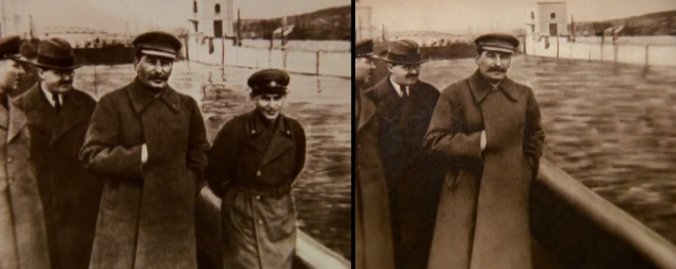
This, of course, is one more reason why the recent progressive mania for historical airbrushing is dangerous, irresponsible and unethical. Keep that statue of “Joe Pa” on the Penn State campus. Leave  King Andy on the twenty dollar bill.  Don’t take down that bust of Bill Cosby in the TV Hall of Fame. All civilizations have fallen heroes, moments of panic, times when they forget their values and betray their aspirations. Of course it is painful and embarrassing to remember these things, but also essential if human ethics are going to progress instead of stagnating, or even going backwards. We associate the elimination of cultural memories with totalitarian regimes, and for good reason, for they are blatant and shameless about it.

No nation is immune from the process’s appeal, however. When I was going to grade school and studying the Presidents of the United States, Jackson and Woodrow Wilson were routinely hailed by (mostly Democratic) historians as among the greatest of the great. The first Jackson biography I read barely mentioned the Trail of Tears. I read four well-regarded biographies of Wilson that ignored his support for Jim Crow, and the degree to which he deliberated reversed advances in civil rights, being an unapologetic white supremacist. The influenza epidemic that killed millions was excised from my school’s history books. Thomas Jefferson’s concubine, Sally Hemmings? Who? Continue reading

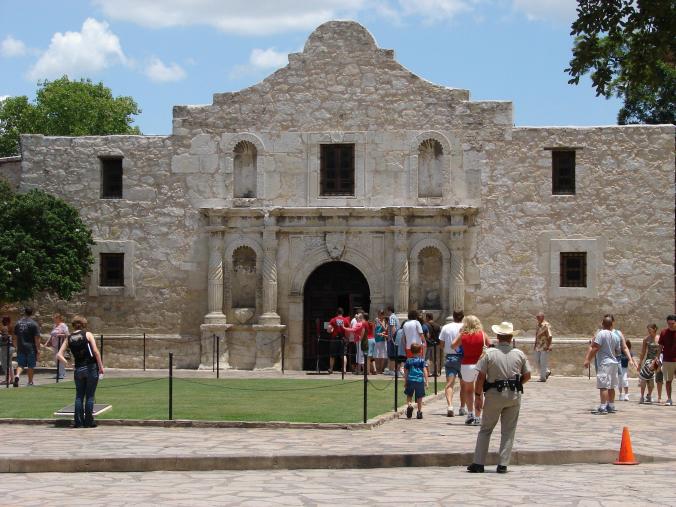
Ethics Dunce: Me. I Forgot The Alamo

It is now April, and though I vowed at the end of February to finally post a thorough essay on the significance of the Alamo to U.S. culture, ethics, traditions and ideals at some point during the dates corresponding to the fort’s siege and fall on March 6, 1836.

I never did.

I thought I had posted an earlier essay about the Alamo. No, I haven’t. This is as inexplicable as it is inexcusable. The Alamo is by far my favorite historical landmark, and one of the events in American history that most inspires and fascinates me, beginning from when I looked on in horror as Fess Parker, as Davy Crockett, desperately clubbed Mexican soldiers as the last Alamo defender standing, and hundreds more charged toward him, as I heard on the soundtrack,

His land is biggest an’ his land is best, from grassy plains to the mountain crest

He’s ahead of us all meetin’ the test, followin’ his legend into the West

Davy, Davy Crockett, king of the wild frontier!

I learned all about Davy, of course, the real Davy, America’s first pop culture celebrity who created a legend about himself and by fate, irony or justice, inadvertently placed himself in a situation where he had to live up to his own hype—and by all accounts,did. Then there was Jim Bowie. I had seen several dramatized versions of his famous last stand, fighting off soldiers from his cot, finally dispatching one last attacker with his Bowie knife. It is one of the great examples of a scene so good it should have been true, though it wasn’t: Bowie was dead or unconscious by the time the Mexican burst into his sick room. Never mind: that’s how an American hero goes down, fighting. “Print the legend.” Later I learned how Bowie really was one tough, brave SOB, the perfect man for the Alamo, if he hadn’t been dying of cholera.

My impression of William Barrett Travis was biased by Lawrence Harvey’s portrayal of him as a martinet (with a British accent that supplanted his Southern one after the first scene) in the John Wayne film “The Alamo”, my favorite movie as a kid. The real Travis was a pefect example of someone who had failed in everything, including as a father and a husband, but redeemed himself magnificently at the end. His final letter to the world is one of the great proclamations of defiance, dedication and courage in all of history.

I will never forget my first visit to the Alamo, and seeing Texans weeping, openly, proudly, as they read the plaque with Travis’s words engraved on it:

Commandancy of the Alamo
Bejar, Feby. 24, 1836

To the People of Texas & All Americans in the World

Fellow citizens & compatriots

I am besieged, by a thousand or more of the Mexicans under Santa Anna I have sustained a continual Bombardment and cannonade for 24 hours & have not lost a man The enemy has demanded a surrender at discretion, otherwise, the garrison are to be put to the sword, if the fort is taken I have answered the demand with a cannon shot, and our flag still waves proudly from the walls. I shall never surrender or retreat. Then, I call on you in the name of Liberty, of patriotism and everything dear to the American character, to come to our aid, with all dispatch. The enemy is receiving reinforcements daily & will no doubt increase to three or four thousand in four or five days. If this call is neglected, I am determined to sustain myself as long as possible and die like a soldier who never forgets what is due to his own honor & that of his country VICTORY OR DEATH.

William Barret Travis.

The story of the Alamo isn’t taught in schools outside of Texas. It wasn’t taught in my school, either: like most American history, I learned about the event though a thick mixture of pop culture, reading (Walter Lord’s “A Time To Stand” was a birthday present in 1961) and ongoing research. I recently completed “Texas Rising,” which was also just broadcast on cable as a mini-series starring the late Bill Paxton as Sam Houston. Historian Stephen Moore is a plodding writer, but he nicely puts to rest the currently popular politically correct slander that the defenders of the Alamo and the Texas rebels were fighting to keep their slaves, and trying to steal Mexico’s land. The Texians were opposing a dictator who had changed the terms under which they had come to the territory, and anyone familiar with the American character could have predicted what would happen when a despot demanded that they submit to unelected authority. The Alamo was a fight for liberty and democracy, and its martyrs exemplified sacrifice for principle and country.

I let them down. The story of the Alamo should be told and retold, with its ethics lessons made clear and bright. Next year, on March 6. 2018, Ethics Alarms will honor Davy, Bowie, Travis, Bonham, Almaron Dickinson and the rest of the 220 or so heroes who died that day, and do it the right way, not as an afterthought.

Don’t let me forget.


Maybe The Best Reason To Remember April 15…Number 42

jackie-robinson

A lot has happened on April 15.

Leonardo De Vinci was born…Abraham Lincoln died…Apollo 13 had the accident that almost destroyed it, but that triggered one of the great triumphs of the space program…Lee surrendered, ending the Civil WarThe Beatles disbanded…I didn’t get my taxes in on time….

I would argue however, and will, that as culturally important as any of these events was that sixty-eight years ago, in 1947, Jackie Robinson became the first black man to play major league baseball in the modern era. This represented a cultural change that allowed the United States to take a giant step forward toward healing the self-inflicted and almost fatal wound of slavery, and it took a man of surpassing courage and character to do it. (Two men, really: the other was Dodgers GM Branch Rickey.)

Today all MLB players will wear Robinson’s number 42 to honor him. If you haven’t seen the movie “42, or if your children haven’t seen it, this is a good day to get a sense of what Jackie went through as he broke the color line.  You can check out Robinson’s baseball stats here,  and learn about the civil rights work he did after his playing career, in the too-short life that was left to him here. He’s in the Ethics Alarms Heroes Hall of Honor, of course, and his entry there has more about his life as well as some good links.

The main thing is, remember him.

Many years ago, I had a conversation with a close friend—smart, accomplished, engaged, educated, about 26 years old at the time. She had no idea who Jackie Robinson was. Nobody, then, now or ever, should reach adulthood in the United States without knowing and understanding what Robinson did, and our nation’s debt to him. There is an ethical  duty to remember, and to respect.

Thank you, Mr. Robinson.

Thank you.


April 19, 1943: The Warsaw Ghetto Uprising

Warsaw uprising

A fortuitous confluence of events, dates and topics: following yesterday’s discussion of an absurd and passive application of a warped “love your enemy” approach to school bullying and the week’s earlier explication of the importance of using Nazi comparisons when they are appropriate as well as the problems arising from the rampant historical ignorance and apathy in the U.S, we arrive at April 19. I doubt that one citizen in a thousand could identify or explain the significance of today’s date in world history, but we all should; it is the essence of our duty to remember. For on this date in 1943, the residents of the Warsaw ghetto in Poland, realizing that they were in the process of being liquidated, fought back against their Nazi captors, and for almost a month, despite being outnumbered and outgunned, disrupted the extermination and, though they were ultimately defeated (most of the leaders committed suicide with cyanide as the Germans began to round them up), their courage sparked other uprisings in the ghettos in Bialystok and Minsk, and the Treblinka and Sobibor death camps.

The Germans had planned to begin the final elimination of the Warsaw Jews on the eve of Passover, so the anniversary of the beginning of the revolt is perfectly placed. Make sure you quiz the Palestinian cause fan in your life regarding the Warsaw ghetto revolt, and see if it rings any bells—it probably won’t. Learning the history may help you explain to them why the state of Israel will make no deals until the nation’s right to exist is acknowledged and unequivocal.

They, and you, can read about the Warsaw ghetto uprising here.

The Cruelest Month And The Duty To Remember

sultana-ablaze

If we have the education, curiosity, perspective and respect for our origins and those who have gone before us, the calendar is a source of constant reminders of what matters in life, and how we can be better citizens and human beings. It is a common belief among Millennials, and a lot of older Americans too, that history is irrelevant to their lives, and this is both a fallacy and a self-inflicted handicap. Not that keeping history in mind is easy: in this month, which T.S. Elliot dubbed “the cruelest,” paying appropriate respect by remembering is especially difficult.

Still, respecting history is our duty. It won’t be remembered, perhaps, but in April, 2012, a 23-year-old drunken fool named Daniel Athens was arrested for climbing over a barrier to urinate on a wall at the Alamo. Monday, a Texas judge threw the book at him, sentencing him to 18 months in state prison for vandalizing a National Monument and a shrine. The sentence seems extreme, and is a good example of how the law is a blunt weapon with which to enforce ethics. The Alamo has near religious significance in Texas, brave men died there, and the ruins serve as a symbol of critical virtues like loyalty, sacrifice, dedication, courage and patriotism. Athens, himself a Texan, defiled the memory of the fallen and symbolically rejected the values and heritage of his community and fellow citizens. Unfortunately, the harshness of the sentence will create sympathy for him: 18 months for peeing? But how else does a culture reinforce the importance of respect for the past? I don’t have an answer. Perhaps I would have sentenced him to take an exam on the lives of Travis, Crockett, Bowie, Seguin and the rest, as well as the siege itself, and imposed the jail term only if he flunked.

Yesterday, Major League Baseball celebrated the heroism and transformative life of Jackie Robinson, who broke baseball’s color barrier on April 15, 1947 by becoming baseball’s first black player, setting in motion powerful forces that propelled the cause of civil rights. Every player wore Robinson’s now retired uniform number 42, and there were commemorative ceremonies in the ball parks where it wasn’t too cold and wet to play ball. This remembrance had a difficult time competing with tax day, as history usually does when our immediate life concerns beckon.

Other important historical events deserving reflection, however, were more or less ignored entirely, for April 15 is a historically awful day: Continue reading