On Dress Codes, Modesty, Utilitarianism, And The Golden Rule [CORRECTED]


There were a lot of ethical considerations being ignored or scuffed in a strange conflict in Utah County, Utah.  Rebecca Ortinez, a regular plasma donor to BioLife Plasma Services, was told by managers at the facillity that she could not donate and had to leave the premises because of her immodest attire. According to Ortinez, who issued a detailed account of her treatment on social media, she was told, “We have a lot of RMs [Mormon Returned Missionaries] that donate and how you’re dressed is very distracting, so you are going to have to leave.”

Ortinez added a selfie of her outfit, chosen, she said, because she expected to have to wait outdoors and it was “95 degrees in the shade”:

When she was told she had to leave, Ortinez refused and demanded that the request be put in writing, which the manager refused to do. Then the manager elaborated on her objections to Oridnez’s appearance: she informed Ordinez she was distracting because her “nipples were poking out” and added  that she should be ashamed of herself. Ortinez reacted to that by refusing to leave unless the objections were put in writing and she could see the plasma center’s dress code provisions. The managers threatened to call the police and did so, telling them that they wanted Ortinez banned for life from all Biolaife Plasma Centers

After she finally left the property and received a copy of the police report, Ortinez sent out a Facebook post “For Donors, ACLU, ACLU Utah, Fox News, KSL 5 TV, KSL Newsradio, KSL.com, KUTV 2News,” telling the tale and announcing,  “Now I’m blasting BioLife on my extensive social media platforms!”

You go girl!

Analysis: Continue reading

Ethics Encounter In The CVS Parking Lot

My local CVS on Quaker Lane in Alexandria, VA, scene of many human dramas….

The errand I tried to complete this afternoon (resulting in my hearing the most outrageous comedy act I have encountered  since Red Foxx and Buddy Hackett were in their vulgar primes) failed, so I had to return to my pharmacy to get four refills of various drugs. As I was getting out of the car, I heard a loud voice shouting “God DAMN you!” and realized that the expletive came from behind the mask of large African-American man  of indeterminate age. I had to ask, “Was that directed at me?”

He immediately shook his head vigorously and walked over to me, saying, “No no! I’m so sorry, I was yelling at myself! I’m so damn mad—I locked myself out of my car!”

He continued, “Hey, maybe you’re my guardian angel.” He started handing me his IDs and wallet, and showed me the pills he had just received from the same pharmacy where I was headed. The man was sweating hard.  “I’m not some gangster or anything, I swear—I’m just hot, and tired, and I have prostate cancer…” I interrupted him.

“Just tell me how I can help. Do you need a ride home?” Continue reading

The Ethicist Apparently Endorses Discrimination As Ethical

, the New York Times Magazine’s ethics columnist, just opened a can of metaphorical worms, and I’m going to spread them around a little. It may get messy.

A woman—actually, now that I re-read the post, we don’t know it’s a woman— wrote to be reassured that he or she wasn’t a bad person for wanting to dump a man she had engaged in a nascent romantic relationship after discovering that he had Crohn’s Disease. “I know I’m being selfish, but is it unethical to not date him because of it?” she wrote. ” I don’t know what to do to support him, and I am worried about the future. He said it’s very likely his intestinal issues could get worse, and his life expectancy may be shorter. I want to shield myself from the pain, but I also feel like a terrible person for even thinking about it.”

Hey, don’t feel bad,  sayeth “The Ethicist”:

“Once someone is truly a friend or a lover, you have all kinds of responsibilities to them that you didn’t have before. So for example, it would be deplorable to abandon a spouse because he or she has become seriously ill. That’s part of what’s meant by saying a marriage is to endure “in sickness and in health.” Of course, this can turn out to be a promise someone can’t keep. But precisely because a partnership is for the long term, you can appropriately consider what your lives together would be like before you enter into one. When a potential partner is already seriously ill, committing to this person may be committing to a life as a caregiver. (The specific condition you mention has a wide range of severity; it can be mild and well controlled or genuinely debilitating.) You don’t owe it to anyone to accept that burden; indeed, if you think you don’t want such a life, you have a good reason not to enter into the relationship. It doesn’t make you a terrible person to think about the issue. The terrible thing would be to make the commitment and then to be unable to keep it.”

Oddly for “The Ethicist,” he ducked the main question that was asked, and instead answered what he thought was an easier one.   The questions he answered were ” Is it wrong to reject a commitment to someone because that commitment may be too burdensome?,” and “Is it wrong to think about the issue?” (It isn’t wrong to think about anything, regardless of what Black Lives Matter says. They should see what I think about them.)

What the inquirer was asking, however, is whether she should end a casual relationship—she had only known the guy through Zoom, after all—because he had Crone’s Disease, before she could form an attachment to him and might decide that he was worth the trouble…make that  potential trouble.

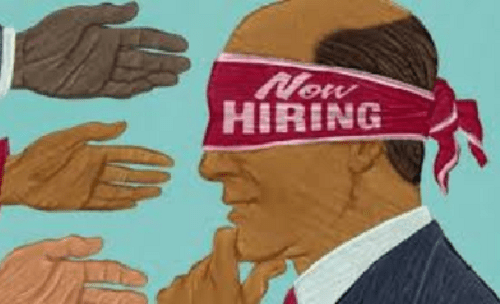
I see no distinction between what she wants to do and invidious discrimination in any other relationship, like employment. Discrimination is when you treat someone worse than someone else because of who they are and  features they have no control over, rather than what they do, have done, or “the content of their character.” It is also discrimination to make judgments about someone based on assumptions about people “like” them—profiling, essentially. “I don’t want to date him, even though I really like him, because he has a handicap” is,  as I see it, indistinguishable from saying, “I don’t want to hire her because she has a handicap/ is likely to become pregnant/ is old/ is black.”

That’s discrimination, and that’s wrong. Continue reading

The New McCarthyism Of The Left And The Destruction Of Hartley Sawyer

Hartley Sawyer is, or was, a Hollywood actor. 35 years old with many credits, he had hit the big time, and big money, with a regular role on the CW series “The Flash.” He played the superhero “The Elongated Man.” Today he’s unemployed, and likely to remain so. He was fired from the series yesterday.

Was he hard to work with? No. Did he harass cast members? No.  Did he come to the set drunk, or masturbate in front of  female crew members, or attack a writer, like Thomas Gibson did on “Criminal Minds”?  No, no and no. Sawyer wasn’t fired for doing anything illegal, disruptive or even recent. He was fired because someone searched his social media record, and released tweets he made between 2009 and 2014. All the stories about his firing reference “racist tweets,” but the only ones published have been…

  •  “The only thing keeping me from doing mildly racist tweets is the knowledge that Al Sharpton would never stop complaining about me.”
  • “Enjoyed a secret boob viewing at an audition today.”
  • “Date rape myself so I don’t have to masturbate.”

The first isn’t racist, or even legitimately offensive. To claim the second would be taboo in Hollywood is so ridiculous it boggles the mind. The third, described in various accounts as being about sexual assault, is an obvious joke. Saying you “date rape” yourself is not advocating sexual assault.

Never mind. In the crazed grip of George Floyd mania, people with empty lives and cruel dispositions are itching to show their power to destroy others by crying “Witch!,” knowing that most of those in authority, any authority, lack backbone, integrity or a working knowledge of the Golden Rule. Continue reading

Fortunately, The Ethics Argument Regarding The Riots Is A Slam Dunk. Unfortunately, An Astounding Number Of People Don’t Care Enough About Ethics To Acknowledge This.

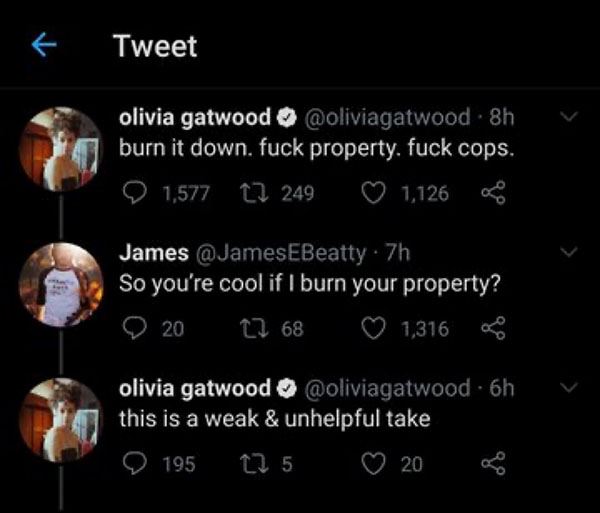
Olivia Gatwood, the woman who wrote that provocative tweet, is a Los Angeles feminist poet who, presumably, has never heard of the Golden Rule, nor any other ethical system. Yet her analysis is hardly an outlier. In fact, it is a fair summary of the ethical basis of anyone’s position who accepts, excuses, or “understands” the behavior of the George Floyd insurrectionists. They don’t even have the old, perverted utilitarianism stand-by, “the ends justify the means” to claim as justification. What ends? As I am sure I have noted too many times here already, they have no serious or practical answer to the 13th Question: “What is the “systemic reform regarding race in America” that the George Floyd protests purport to be seeking?” I think it is fair to say that if the enablers of the rioters had a legitimate answer to that question, or indeed if they had even given it serious thought, we would have heard or read it by now. “End racism!” isn’t an answer. Neither is “End white supremacy (as we choose to describe it to bootstrap our political objectives.” Nor is “End over-incarceration without addressing the disproportionate criminal activity that creates it.”

Thus all the injuries, deaths, property damage and social division accomplish nothing, except emotional release. Emotional release is not an ethical objective—not at these prices.

Let’s  look at the just the attacks on police and law enforcement and the injuries they caused; this is the “fuck police” section of Gatwood’s exhortation.  Listing property damage in detail is too complicated. The list below comes from Fox News; you wouldn’t expect any other news source to compile such a list, would you? It’s also two days old, so you can assume a current list would be even worse. Continue reading

Comment Of The Day: “Friday PM Ethics Discoveries, 5/15/2020: … Reasonable Discrimination Opposed [Item #5]” [Corrected]

The 5th item in yesterday’s Warm-Up sparked a lot of debate, and a number of Comment of the Day candidates (another is on the way.) That was the post about the white police officer suing on the basis of employment discrimination because his superior told him that the community controversy over the police-involved shooting of a black man had made it essential to hire a black police chief.

Here is Glenn Logan’s Comment of the Day on Item #5 in “Friday PM Ethics Discoveries, 5/15/2020: A Coup Option On The Way Out, A Narrative Reappears, Trump Tweets, Reasonable Discrimination Opposed, And More}:

You said: The community has a potentially explosive race problem, and hiring O’Toole would exacerbate it. They need a qualified black officer in the job. If that violates the Missouri Human Rights Act as O’Toole’s lawsuit claims, the Act needs to be fixed.

Tools of ethical decision-making: Continue reading

Exactly How Much Are We “All In This Together”? The Golden Rule Vs. “Look Out For #1”

Well it’s 4:30 am again, and once more an issue encountered right before bedtime has pushed me into insomnia.

I wish I could blame Philip Galanes, as it was a question in his advice column Social Q’s that got my ethics alarms ringing, but I should have been thinking about this one as soon as the pandemic response entered the social isolation phase. It’s not only a difficult ethics issue but an important and a classic one.

In “The Diary of Anne Frank,” we learned that the four member Frank family hid from the Nazis in a two floor secret annex in  Otto Frank’s office building. Soon after going into hiding, the group almost doubled with the addition of three members of the van Pels family, and still later, a dentist, Fritz Pfeffer, called Albert Dussel in the diary, was admitted to the group. Pfeffer was a stranger to the Franks, but the family dentist of Otto Frank’s employee Miep Gies (the heroic caretaker of the Franks and their secret ally)  and the van Pels. Adding Pfeffer strained the food supply and the living arrangements as well as increasing the risk to all, but nonetheless, the group accepted him.

An inquirer asked Galanes,

A couple of weeks ago, before Covid-19 exploded in New York, a close friend asked if she and her husband could leave Manhattan and stay with us at our home in Bergen County, N.J. It was a tough question to have asked of me, but I decided it was the right thing to do. I told my friend they could come. For other reasons, they didn’t. Now, she’s asked again. They’re really scared! I’m not sure what to do. My husband has asthma, they would have to share a bathroom with my cranky 19-year-old son, and I am helping my elderly mother who lives nearby (contact-free). Any advice?

His advice was to keep her out, and to expect the friends to be hurt by the decision.

There are missing details here, like the size of the house, which could make a huge difference in assessing risk. Some might ask other questions, like “Exactly how good a friend is this?” That would lead inexorably to other questions: “Would the answer be the same if it was a relative? An ex- lover? How about someone to whom the questioner owed a debt of gratitude? What if she offered to pay a lot of money? Would the same answer be as justified if the couple want to send  only their child? Two children? Continue reading

Ethics Hero: Mario Salerno

Not all the people giving lip service to “we’re all in this together” are virtue-signaling hypocrites. Some really mean it.

Surveys conducted last month estimated that 40 % of renters in New York City, if not more, would not be able to pay their April rent, which was due  last week.

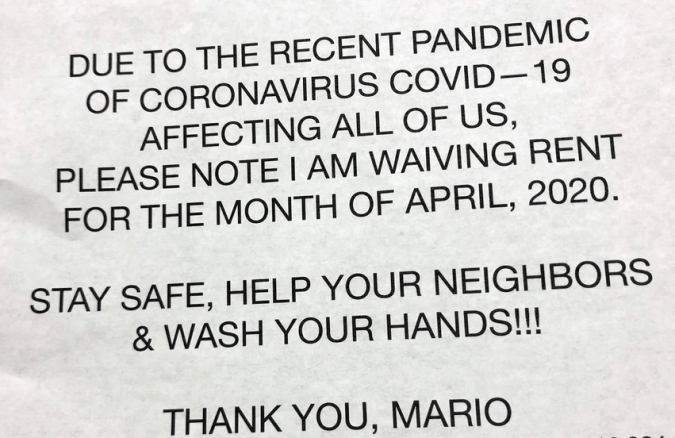
This threatens landlords as well, as the shortfall will make it difficult for them to pay their own water and sewer bills at their buildings, not to mention taxes,  The 200-300 tenants in Mario Salerno’s properties, however, found a version of this sign taped up in the halls:


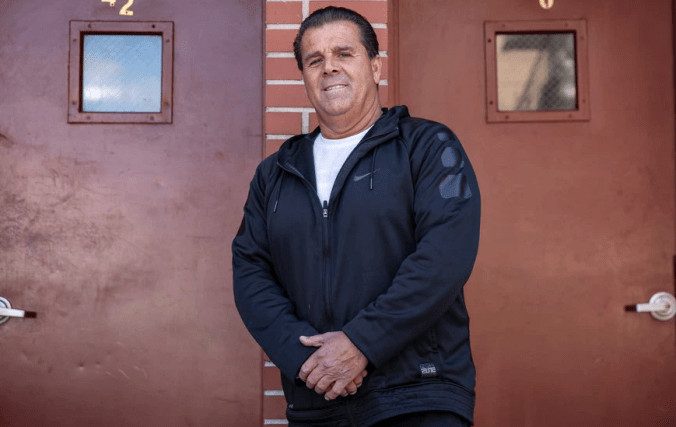
Mario Salerno said in an interview that he did not care about losing his rental income in April, nor care what the exact amount was that he would not be collecting from his 80 apartments.  He will be losing hundreds of thousands of dollars by canceling the month’s rent, but his sole concern, he said, was trying to make life a little easier for his renters. He is even forgoing rent for those who kept their jobs and are working from home.

“My concern is everyone’s health,” said Salerno. “I told them just to make sure that everyone has food on their table.”

He’s not exactly Michael Bloomberg. During the day, he runs the Salerno Auto Body Shop and gasoline station, which his father opened in 1959.

In the 1980s Salerno bought vacant lots across Brooklyn to store cars damaged in accidents before they were repaired, and eventually turned 18 of the lots into apartment buildings. He’s counting on the auto business to keep food on his own table until conditions improve for his renters.

“I say, don’t worry about paying me, worry about your neighbor and worry about your family,” he told reporters.

Comment Of The Day: “From Australia, A Cancel Culture Chapter That I Don’t Understand At All”

Reader JP, who is a minister, had a fascinating reaction to the post about the Australian cartoonist in the process of being “canceled” because he had the audacity to mock mothers who pay more attention to their cell phones than their infants. Australians, especially mothers and feminists, are furious…because he criticized conduct that nobody denies occurs.

Here is his Comment of the Day on the post, “From Australia, A Cancel Culture Chapter That I Don’t Understand At All”:

“Is guilt driving the attacks on Michael Leunig? Is that it? They are punishing a truth-teller for using satire and humor to hold a mirror up to their faces like satirists and social commentators are supposed to do? If that cartoon sparks such anger, what would these people have done to Swift, Voltaire, Gilbert, Shaw, Parker, Wodehouse, Vidal, or even Dave Barry?”

A few years ago,  I was teaching this class on 1 Corinthians. It had been going on for about a month at this point where we got to the section on marriage, divorce, and adultery. Most of the class focused on the marriage part. Very little was said about divorce and adultery. I didn’t focus on it too much. In a class like this, I tend to let discussion stay with the interests of the class. I did address divorce and adultery as real problems of the church and  said they should not be ignored.

After class, a women came up to me and let me have it.  According to her, divorce and adultery were “none of the church’s business.” She was pretty passionate about it, so I let it go. She wasn’t at the next class  I assumed she was making a point because she thought that I would never agree with her.

A month later, her husband dragged her into my office, saying she been committing adultery. He wanted to know what he should do about it. She wouldn’t look a me. I suggested a professional counselor, and that was the last time I saw either of them. Continue reading

Pandemic Ethics Observations, Part 2: Reality

(Part I is here.)

I’m going to try to keep this chapter as free of politics as possible for as long as possible.

It won’t be easy.

In general, the unprecedented society-wide obsession with the Wuhan virus pandemic in the U.S. is a product of mass media and social media as much as the virus itself. One could almost call it a parallel epidemic here, one of distorted behavior and social norms rather than illness. The question is whether that behavior and those norms are ethical in nature or if they are propelled by non-ethical considerations—fear, for example; not just fear for one’s own welfare being threatened, but fear of being made a pariah. It also matters if they work. Ethical requirements that are certain to be futile in practice because of well-known aspects of human nature are not ethical. They are delusional and harmful.

For the short term, one could give everyone the benefit of the doubt and call this mass Golden Rule behavior: each of us would like to have everyone else behave so as to minimize the likelihood that we would be infected, right? However, like so often is the case with the Golden Rule, this calculation only works in an imaginary vacuum that ignores the complex systems that are society, culture and civilization.

Do we really want “everyone” to behave in this extreme risk-averse manner if it crashes the economy? If it puts friends, neighbors and loved ones out of work? If it makes day to day life impossible? This is why Absolutism and Reciprocity fail so often as ethical systems, and why Utilitarianism is required in some measure to temper their effects and distortions.

However, in the outrageous scaremongering we are witnessing, some of it simple hysteria, some ignorance, and much of it motivated by that which I am going to try not to talk about until Part III, the real trade-offs are being obscured or missed. This is, to name  a single ethical breach, incompetence. I actually read several pieces yesterday that argued that to understand how the pandemic spreads, one should consider “World War Z,” the graphic novel-turned Brad Pitt horror movie. I understand the narrow point being made, but it’s still an irresponsible and stupid thing to say or write. “World War Z,” is dystopian future film in which a rampaging virus turns most of the world’s population into mad, speedy, flesh-craving zombies. It is the likely end of the world, with everyone doomed to a horrible death.  That is not what faces the United States, or anyone, with this virus. Shut up! Continue reading