The Controversial Birthday Toast: If Artists Have An Obligation To Avoid Harming Their Art By Being Jerks (Or Worse) In Public, Does The Same Principle Apply To Scientists?

The title refers to this post, which preceded the surprising development of iconic movie mensch Morgan Freeman being exposed as a workplace harasser (alleged, that is) and suddenly seeing his image degraded to Dirty Old Man, and his movies devalued as “Ew!”  Now even his voice-over work is in peril.

A famous scientist is a different kettle of fish, however.

At a genomics meeting at the Cold Spring Harbor Laboratory in New York,  the attendees gathered to listen to the keynote speech in an auditorium, where a large painted portrait of  scientist James Watson–who lives in Cold Spring Harbor— hung. It was also Watson’s 90th birthday. Eric Lander, the director of the Broad Institute of MIT and Harvard, lifted a glass of champagne in hand to toast the famous co-discoverer of the DNA molecule.  Watson has “inspired all of us to push the frontiers of science to benefit humankind,” he said in part.

You would think, would you not, that simply recognizing a giant of science and a crucial and transformative figure in these scientists’ field would be able to escape political correctness and social media controversy, wouldn’t you? Nah, why would you think that, silly? This is 21st century America.

Watson, to catch you up quickly, began tarnishing his reputation years ago with a series of gaffes. Notably, he opined that there was no way to avoid the conclusion that African-Americans weren’t as intelligent, on average, as whites. The furious public backlash sent him into retirement. But he still couldn’t avoid inserting his foot in his mouth: speaking before he was to receive an  Honorary Doctorate from University College Cork (in Ireland) in 2010, Watson told journalists that cancer research was being unnecessarily held back by an obsession with ethics.

So the man has some theories in common with Josef Mengele and David Duke. He also has made some jaw-droppingly sexist comments in his dotage….some that even Morgan Freeman might blanch at.

After the meeting, Caltech’s Lior Pachter  led a furious repudiation of Eric Lander’s toast with a series of tweets documenting various sexist and racist comments by Watson. He later told industry reporters, “That people are willing to celebrate this individual in public was a moment of truth for me of what things actually look like in our community and what might be then happening in nonpublic venues behind closed doors when hiring and other important decisions are being made.”

Lander, since scientists have no more backbone than actors, politicians, comedians and bakery owners, immediately capitulated and grovelled for forgiveness. In an email addressed to the Broad Institute community, Lander wrote that  his brief  comment about Watson being ‘flawed”  to introduce the toast “did not go nearly far enough.”

“I reject his views as despicable,” he wrote. “They have no place in science, which must welcome everyone.”

An article about the foofaraw in the The Scientist amply demonstrates why scientists are no more adept at drawing ethics lines than junior high school students. In the various accounts and arguments, Watson’s legitimately offensive statements are conflated without distinction with more ambiguous ones. For example, he once said, “Should you be allowed to make an anti-Semitic remark? Yes, because some anti-Semitism is justified. Just like some anti-Irish feeling is justified. If you can’t be criticized, that’s very dangerous. You lose the concept of a free society.” What is that? Is he talking about criticism of Israel’s policies, or is he supporting the First Amendment? As I reviewed the debate over Watson along with his own statements, one conclusion was unavoidable. A lot of scientists, including Watson, don’t communicate very clearly. Is that a surprise? They didn’t major in Literature and English for a reason. They are about as skilled at clear, unambiguous expression as I am at quantum physics. Continue reading

Review: Ethics Alarms Concepts And Special Terms

Recently updating the Ethics Alarms list of concepts and frequently used terms reminded me that I had been meaning to post them for review and assistance to those relatively new here. Of course, the link has always been right there at the top of the home page, but I have this sneaking suspicion that it isn’t visited very often.  Here, then, is the up-to-date list.

CONCEPTS

Non-Ethical Considerations: Defined above, non-ethical considerations are important because they are often the powerful impediments to ethical conduct, and the cause of many conflicts of interest. Non-ethical considerations are many and diverse, and include:

  • The need and desire for shelter, health, wealth, fame, security, self-esteem, reputation, power, professional advancement, comfort, love, sex, praise, credit, appreciation, affection, or satisfaction
  • The desire for the health, comfort, safety, welfare and happiness for one’s family, loved ones, friends, colleagues, an co-workers
  • The pursuit of vengeance or retribution
  • Hunger, lust, pain, ambition, prejudice, bias, hatred, laziness, fatigue, disgust, anger, fear
  • …and many more

Ethical Dilemma: This is an ethical problem in which the ethical choice involves ignoring a powerful non-ethical consideration. Do the right thing, but lose your job, a friend, a lover, or an opportunity for advancement. A non-ethical consideration can be powerful and important enough to justify choosing it over the strict ethical action.

Ethical Conflict: When two ethical principles demand opposite results in the same situation, this is an ethical conflict. Solving ethical conflicts may require establishing a hierarchy or priority of ethical principles, or examining the situation through another ethical system.

Ethical Gray Area: Gray areas are situations and problems that don’t fit neatly into any existing mode of ethical analysis. In some cases, there may even be a dispute regarding whether ethics is involved.

Reciprocity: The ethical system embodied by The Golden Rule, and given slightly different form in other religions and philosophies. It is a straight-forward way of judging conduct affecting others by putting oneself in the position of those affected. Reciprocity should always be available in any ethical analysis, but it is frequently too simple to be helpful in complex ethical situations with multiple competing interests.

Absolutism: Absolutist systems do not permit any exception to certain ethical principles. The champion of all absolutists, philosopher Immanuel Kant, declared that the ethical act was one that the actor was willing to have stand as a universal principle.

One principle of absolutism is that human beings can never be harmed for any objective, no matter how otherwise worthwhile. Absolutism has the advantage of making tough ethical calls seem easy, and the disadvantage of making debate impossible. One sees absolutism reflected today in the controversies over war, torture, abortion, cloning, and capital punishment.

Utilitarianism: Utilitarianism accepts the existence of ethical conflicts and the legitimacy of some ethical dilemmas, and proposes ethical analysis based on the question, “Which act will result in the greatest good for the greatest number of people?’ It entails the balancing of greater and lesser goods, and is useful for unraveling complex ethical problems. Its drawback, or trap, is that utilitarianism can slide into “The ends justify the means” without some application of absolutist and reciprocity principles.

Consequentialism: In formal ethics, utilitarian schools of philosophy are sometimes lumped together as “consequentialism,” in that the ethical decision-making is based on seeking the best result. Here we just uses the above term, utilitarianism.  Consequentialsm, in contrast, is the flawed belief that the rightness or wrongness, or even wisdom, of chosen conduct is measures by its actual results rather than its intended results. If “if all worked out for the best,” in other words, the conduct that created the desirable result most have been ethical, whatever its intent or however the conduct was determined to be necessary or desirable. This is a fallacy.

Cognitive Dissonance:
Cognitive dissonance is a psychological phenomenon first identified by Leon Festinger. It occurs when there is a discrepancy between what a person believes, knows and values, and persuasive information that calls these into question. The discrepancy causes psychological discomfort, and the mind adjusts to reduce the discrepancy. In ethics, cognitive dissonance is important in its ability to alter values, such as when an admired celebrity embraces behavior that his or her admirers deplore. Their dissonance will often result in changing their attitudes toward the behavior. Dissonance also leads to rationalizations of unethical conduct, as when the appeal and potential benefits of a large amount of money makes unethical actions to acquire it seem less objectionable than if they were applied to smaller amounts.

Moral Luck: The common situation where an unethical act is only discovered, noticed, or deemed worthy of condemnation due to unpredictable occurrences that come as a result of the act or that affect its consequences. Moral luck is the difference, for example, between two mildly intoxicated drivers, one of whom arrives home without incident, while the other has an unwary child dash in front of his automobile, leading to a fatal accident that he couldn’t have avoided if completely sober. Yet the unlucky driver will be a pariah in the community, while the more fortunate driver goes on with his life.

SPECIAL TERMS USED ON ETHICS ALARMS

Continue reading

The Unabomber, The Red Light, And Me [UPDATED!]

I ran a red light last night, and I’m feeling bad about it. Ted Kaczynski made me do it.

It was after midnight, and I was returning home after seeing the pre-Broadway production of the musical “Mean Girls,” based on the cult Lindsay Lohan comedy. I was late, my phone was dead, I knew my wife would be worried, and I was stopped at an intersection where I could see for many football fields in all directions. There were no cars to be seen anywhere.

Ted, , aka “The Unabomber” or “Snookums” to his friends, cited my exact situation as an example of how we have become slaves to our technology. Why do we waste moments of our limited lifespan because of a red light, when there is no reason to be stopped other than because the signal says to. Admittedly, this had bothered me before I read Ted’s complaint. Stop lights should start blinking by midnight, allowing a motorist to proceed with caution, as with a stop sign.  If one isn’t blinking, we should be allowed to treat it as if it is.

Last night, I ran the light. With my luck, there was a camera at the intersection, and I’ll get a ticket in the mail. But..

…whether I do or not doesn’t change the ethical or unethical character of my conduct. That’s just moral luck.

…it was still against the law to run the light, even it I was treating it as a blinking light, because it wasn’t

…breaking the law is unethical, even when the law is stupid, and

…there was no legitimate emergency that could justify my running the light as a utilitarian act.

So I feel guilty. Not guilty enough to turn myself in, but still guilty, since I am guilty.

But Ted wasn’t wrong.

Update: Let me add this; I was thinking in the shower.

On several occasions in the past, I have found myself stopped by a malfunctioning light that appeared to be determined to stay red forever. Is it ethical to go through the light then? The alternative is theoretically being stuck for the rest of my life. So we run such lights, on the theory the frozen stop light is not meeting the intent of the law or the authorities who placed it there, and to remain servile to the light under such circumstances is unreasonable. Yet running it is still breaking the law, and isn’t stopping for a light in the dead of night with no cars to be seen also not consistent with the intent of the law and the light? What’s the distinction?

A Kevin Spacey Update, The Sexual Harassment Feeding Frenzy, And A Guide To Sexual Harassers In The Workplace

This photo seemed appropriate somehow…

Kevin Spacey, it is now fair to say, has been a habitual sexual harasser.

We did not know that when Anthony Rapp made his accusation against the actor in a Buzzfeed interview. I would be very interested in knowing whether Rapp knew that. The posts here (this, and this) began with the assumption that Rapp’s motivations were as he stated them, and he did not say or suggest that Spacey was, like Harvey Weinstein, an active predator.

But in the ensuing days,  the pattern typical of accused harassers who really are harassers has emerged regarding Spacey. Other alleged victims came forward with their accounts.  Next  the employees on Spacey’s hit Netflix series “House of Cards” expanded the narrative…from CNNMoney:

Spacey made the set of Netflix’s “House of Cards” into a “toxic” work environment through a pattern of sexual harassment, eight people who currently work on the show or worked on it in the past tell CNN. One former employee told CNN that Spacey sexually assaulted him.

That, as they say, is the ball game for Spacey. He has even followed the hackneyed script for so many celebrities caught in misconduct: he’s getting “treatment.” Well, he doesn’t have many options. His show has been cancelled; his agency has dropped him. Spacey is very talented, but it will take him a long, long time to even partially recover from this, if he can.

I am going to write this anyway even though it won’t register on most people: the fact that Spacey turned out to be a lot more than a guy who got drunk and treated a 14-year old actor inappropriately at a party three decades ago doesn’t retroactively make the way Rapp’s ambush accusation fair or right. If he knew that Spacey was a present day harasser and made the accusation to break the dam, that’s something else, but again, he didn’t suggest that.

I’d guess that he’ll say that now, whether it is true or not.

Since Spacey was accused, several other celebrities, including Dustin Hoffman, have been fingered. The latest development is that several female members of Congress have said that they have been sexually harassed by their male colleagues, and of that I have no doubts whatsoever. Nonetheless, we are still in the witch hunt yellow zone, creeping into the red.

Here is part of a cautionary LA Times op-ed  by Cathy Young:

The fallout from the Harvey Weinstein scandals and the ripples from the “#MeToo” movement are having indubitably positive effects — above all, exposing and bringing to account predators who have enjoyed impunity due to their power and status. But there are some pitfalls. Many people — not just men with skeletons in the closet — fear that careers may be destroyed over minor misconduct and ambiguous transgressions. Troubling rhetoric abounds, condemning all sexually tinged dynamics in the workplace, stereotyping men as abusers and women as perpetual victims in need of quasi-Victorian protections.…Concerns that the post-Weinstein climate may lead to witch hunts against any man who flirts with a female colleague have been met with angry comments along the lines of “flirting in the workplace IS HARASSMENT.” A tweet by singer/songwriter Marian Call that got more than 2,000 retweets and nearly 6,500 “likes” asked, “dudes are you aware how happy women would be if strangers & coworkers never ‘flirted’ with us again … this is the world we want.”

But is it? It’s certainly not the world I want: Except in college, nearly every man I have ever dated was either a co-worker or, once I switched entirely to free-lancing, someone I met through work. This is not unusual, even in the age of dating websites and apps.

This has always been the aspect of sexual harassment law that renders it inherently unfair and to many, incomprehensible. In many cases the exact same conduct is harassment if unwelcome, and successful mating strategy if welcome.  Don’t bite my head off, but this was what Donal Trump was alluding to in his repulsive conversation with Billy Bush. He was claiming  that women like being sexually assaulted by the rich and powerful. In many cases, he may be right. Legally, when he’s right, it may not be sexual harassment. Ethically, it is still wrong. If the women feels compelled not to object to the sexual overtures because of an inequality of power, it is very wrong, and illegal. Continue reading

Further Ethics Observations On The Kevin Spacey Scandal [Part 2]

[Continuing the reflections on the accusation against Kevin Spacey and its aftermath…Part One is here.]

I have always assumed that Spacey had endured some kind of serious trauma that explained his aversion to confirming that he was gay, since, really, it was so, so obvious. Many actors become actors because of familial abuse and self-loathing: if you think about it, it makes sense. They don’t like who they are and what real life has been, so they seek the fantasy life of being someone else on stage, films and TV.  Maybe Spacey’s long obsession with performer Bobby Darrin provided a clue. (Spacey eventually played Darrin in his own vanity film project. “Beyond the Sea.”) You have to be really unhappy with yourself to fantasize being in the shoes of Darrin, the talented, troubled heterosexual  actor-singer who died before he turned 40. Thus I was not surprised when Spacey’s brother Randall Fowler, 62, a limo driver and professional Rod Stewart impersonator, described the home in which he, Kevin and their sister were raised as resembling the plot a  horror movie.

  • Fowler says he and his brother were both sexually abused by their father, Thomas Geoffrey Fowler (whom the children called “The Creature”), and that their mother knew about their treatment at his hands. Their older sister, Julie, was also abused before she fled home when she was 18. In a 2004 interview, Spacey’s brother described how their ultra-right-wing father was a member of the American Nazi Party. He was so enamored with Adolf Hitler, Fowler claimed, that he trimmed his mustache to resemble Der Fuehrer’s.

“I grew up in a living hell. There was so much darkness in our home it was beyond belief. It was absolutely miserable,” Spacey’s brother said then. “Years later, our mother actually wrote a letter to all three of us, trying to justify what had gone on by saying she was abused as a child and so was our father. Kevin tried to avoid what was going on by wrapping himself in an emotional bubble….He was so determined to try to avoid the whippings that he just minded his Ps and Qs until there was nothing inside. He had no feelings.”

Fowler described his younger brother was an “empty vessel” who had never been in a real relationship with anyone. “Neither of us had a chance growing up with two such damaged parents, ” he concluded.

No, I don’t know that what a Rod Stewart imitator and publicity-seeking sibling of a famous actor says is completely true, exaggerated, or a fabrication.  But it fits. Spacey should be given the benefit of the doubt, and accorded some compassion. We all deserve that. Continue reading

Further Ethics Observations On The Kevin Spacey Scandal [Part 1 of 2]

The comments regarding yesterday’s ethics quiz have been varied and vigorous. As to the quiz question itself,

Is [Anthony] Rapp’s public accusation [against actor Kevin Spacey alleging that Spacey sexually assaulted him 30 years ago when Rapp was only 14] fair, responsible, and ethical?

I have arrived at my answer, and am abashed that I didn’t see it immediately.

No, the accusation was not fair, and it was unethical. It fails all ethical systems. It is a Golden Rule breach: What Rapp did to Spacey is not how he, or anyone would want to be treated. The fair and decent thing would have been to confront Spacey privately.  Maybe Rapp has distorted the incident over time; maybe Spacey is as remorseful and embarrassed by the incident as Rapp has been traumatized by it. All of us would want at least a chance to explain or make amends before being exposed…in Buzzfeed(!?).

Other observations, as Spacey is being metaphorically disemboweled by an angry mob…

  • Rapp also stomped on Kantian ethics, which forbids using human beings as a means to an end. Rapp says his goal was “to try to shine another light on the decades of behavior that have been allowed to continue because many people, including myself, being silent.” Wait: is there a shred of evidence that Spacey engaged in such conduct over “decades”? Is there any indication that Rapp is protecting future teens from his assaults? No, he’s just jumping on a train, joining a virtue-signalling mob engaged on what appears to be a scalp-hunting expedition. His late hit on Spacey didn’t stop a predator (as with Weinstein), didn’t report a crime to authorities (the statute of limitations is long past), didn’t accomplish anything postive and productive involing Spacey at all. I was just symbolic, and Kant, correctly, holds that it is unethical to destroy real human beings to make a political, social or culotural point, in this case the point being, “Don’t stay silent for 30 years if you have been abused, harassed or molested!”

This also fails any Millsian or Benthamist test of utilitarianism. The ends accomplished by Rapp’s accusation consist almost entirely of destroying Kevin Spacey. What else? I suppose its a warning too: anything you did that society will regard as worthy of making you a pariah can be revealed by an angry, vindictive or politically motivated alleged victim at any time, and you will have no recourse. Call it the Anita Hill Principle. That’s not enough of a “benefit” to society to destroy someone’s life. We have the Weinstein example, and the Bill Cosby saga. They were–are?—both serial offenders. Taking out Kevin Spacey based on one very old incident is not a means justified by any end.

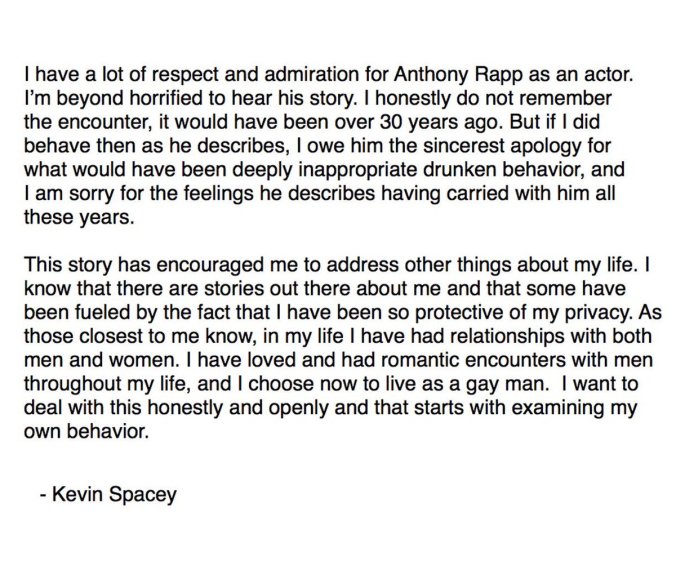
  • Upon examination, Spacey’s response was a mistake and an ethics botch on multiple levels. Here it is again:

First, here we have another example of why Twitter is dangerous. Spacey is a smart guy, yet he foolishly, in his rush to deal with this crisis, authored his own rapid response on social media. In the old days, as my late friend Bob McElwaine, Hollywood publicist for Danny Kaye, Dean Martin, Robert Mitchum and many other stars, told me, he job was to make sure nothing attributed to his Hollywood clients was authored by them. Continue reading

Another Harvey Ethics Quiz On Looting….

The comments on the Ethics Quiz on shooting looters was edifying. Now let’s examine the question of “legal looting,” according to a Yale Law School professor.

In a post for Bloomberg, Stephen L. Carter argues that “Peacefully taking what you need from a supermarket isn’t the same as looting.” he writes in part,

Should we conclude that people taking food from an empty store during an emergency are not committing a crime? That’s exactly what we should conclude — they are not lawbreakers — but it’s important that we understand exactly why.

Let’s start by considering our own instincts. If I were trapped and my family was starving, I would grab the food; I suspect most readers would too. Already our instincts tell us, then, that the moral situation in which we find ourselves is different when a disaster has struck. I believe, very deeply, in the importance of strong property rules. In an emergency, however, we should interpret the rules differently…. A well-known example in the Model Penal Code posits a hiker who, trapped by a blizzard, breaks into a cabin and eats the food to survive. The hiker has taken both food and shelter without the permission of the owner. By choosing to violate a property rule rather than starve to death or die of exposure, the hiker has selected the lesser of two evils. This is one form of the defense known as “necessity,” and is generally considered to mean that there is no crime.

(You need to read the whole post to fairly consider Carter’s argument.)

Your Ethics Alarms Hurricane Harvey Ethics Quiz of the Day is…

Is looting an abandoned supermarket for food still a crime?

Continue reading

Ethics Quiz: Looters

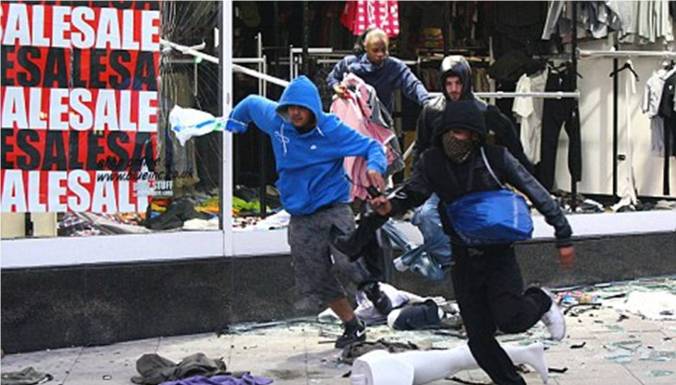
Looting has been reported in Houston. There are not too many species of human detritus lower than those who take advantage of natural disasters to prey on their neighbors, so the question arises, is it ethical for a city government to order police to shoot them?

This question usually arises in the context of martial law. A curfew has in fact been declared in Houston to minimize the looting; presumably an announcement that looters will be shot on sight will be even more effective deterrence. There are good reasons to discourage looting with strong measures. The conduct threatens civilized society itself, because it is not civilized conduct. If looting becomes widespread, the rule of law is suspended, and worse crimes may follow. In a situation like Houston’s, looting also forces law enforcement to choose between rescuing property and rescuing people. If police openly make the choice to let looters loot while they devote their attention elsewhere, then Looting Season has been declared officially open.

Over the years we have occasionally heard that orders were given to shoot looters on sight, but few looters have been shot. Usually the order is enough, which suggests that the order to shoot is a bluff, but usually an effective one.

Police shoot unarmed citizens alarmingly frequently already, however: that’s one order that shouldn’t be given in jest. Presumably most looters are unarmed; I’m not going to concern myself with the question of whether armed looters can be ethically shot. The answer to that is yes, especially when they shoot at rescuers, as apparently some have in Houston. No, your Ethics Alarms Ethics Quiz of the Day is this:

In a natural disaster, is the order to shoot looters on sight ethical?

Continue reading

Ethics Quiz: A Police Hypothetical From, Of All Places, “Diagnosis Murder”

Hallmark has launched an all-mystery channel, moving into the territory NBC’s Cloo cable channel abandoned when it went belly-up in February. (The name should have doomed it anyway.) The mainstays of the new channel are a fleet of “Murder She Wrote” rip-offs starring a string of female C-list stars TV and has-beens: Allison Sweeney, Candace Cameron Bure, Kelly Martin and Courtney Thorne-Smith so far. The flagship show is the real McCoy, Jessica Fletcher herself. Take it from me: there is no current scripted drama as trite, predictable or badly acted or written than “Murder, She Wrote”—the closest in years would be Debra Messing’s  idiotic “The Mysteries of Laura,” but that was officially a “comedy.”

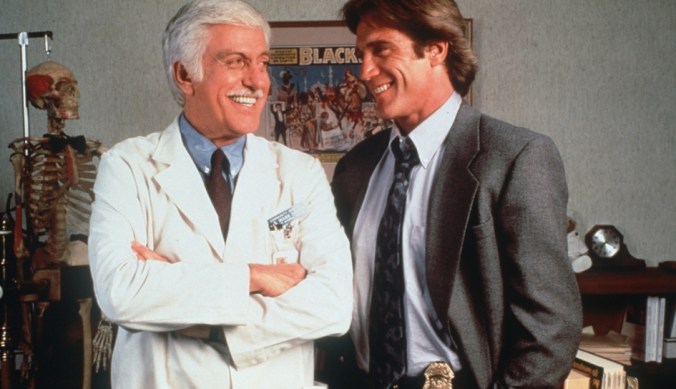
Another mainstay on the channel is “Diagnosis, Murder,” which is marginally less terrible than watching in Angela Lansbury collect a check for doing the same thing over and over, in part because I am entertained by Dick Van Dyke doing anything.  ( “Diagnosis, Murder” was a drama, yet still about ten times funnier than “The Mysteries of Laura.” ) Still, I don’t expect thought-provoking episodes on the Mystery channel.

Two nights ago, I was surprised. The episode showed Dr. Dick’s police detective son (played by Van Dyke’s real son Barry, who sounds just like Dad) chasing a perp he had stopped while the man was roughing up a woman in  the park. Barry was chasing him on foot, gun drawn, and in the shadows (it was evening), the suspect quickly turned, stopped and pulled something metallic from his pocket. The officer fired, killing him. Barry’s troubled partner shows up (he had been backing up Barry) and checks the scene as police sirens are heard. He finds a flashlight, not a gun, right by the unarmed deceased man, and Barry says, mournfully, “I though the had a gun” His partner (played by Joe Penny) pulls a revolver out of his  own pocket, wipes it, and places it in the dead man’s hand as he pockets the flashlight. “Don’t worry,” he tells distraught Barry, contemplating his career going down the drain, “It’s clean,” meaning “It can’t be traced.”

The police arrive, and Joe quickly tells them that it was a good shooting, that the victim was armed. Barry knows that his partner has strikes against him already for substance abuse, and to rat him out about the flashlight would end his career for certain, and maybe Barry’s as well. He doesn’t say anything, thus becoming complicit in the cover-up.

Tough one! Continue reading

From The “Saint’s Excuse” Files:The Catholic Church, Penn State, and Now Choate…What Have We Learned?

Protect the hive. Always protect the hive…

The renowned private boarding school school Choate Rosemary Hall, alma mater of such luminaries as John Dos Passos, Edward Albee, Glenn Close, multiple Kennedys and dozens more of the rich, famous and powerful, , just revealed that at least twelve former teachers had sexually molested, and in one case, raped, students without the crimes being reported to police. The pattern continued over decades. In some cases, teachers were allowed to resign after being confronted with evidence of abuse, and administrators wrote still letters of recommendations for them after they were fired. The predators then went to other schools, sometimes in positions of power and authority.

After the similar institutional conduct revealed by the Catholic Church and Penn State, does anyone believe that this is a rare occurrence in institution, including the most prestigious—and virtuous!—ones? The lesson is that established, powerful, iconic institutions are programmed to protect themselves above others, and regard their own missions and continued vitality more precious than any single individual, even a child.

Revisiting one of the most important of the Ethics Alarms’ 92 rationalizations:

13. The Saint’s Excuse: “It’s for a good cause”

This rationalization has probably caused more death and human suffering than any other. The words “it’s for a good cause” have been used to justify all sorts of lies, scams and mayhem. It is the downfall of the zealot, the true believer, and the passionate advocate that almost any action that supports “the Cause,’ whether it be liberty, religion, charity, or curing a plague, is seen as being justified by the inherent rightness of the ultimate goal. Thus Catholic Bishops protected child-molesting priests to protect the Church, and the American Red Cross used deceptive promotions to swell its blood supplies after the September 11, 2001 attacks. The Saint’s Excuse  allows charities to strong-arm contributors, and advocacy groups to use lies and innuendo to savage ideological opponents. The Saint’s Excuse is that the ends justify the means, because the “saint” has decided that the ends are worth any price—especially when that price will have to be paid by someone else.

Continue reading