What possible excuse can there be for this? There is none.
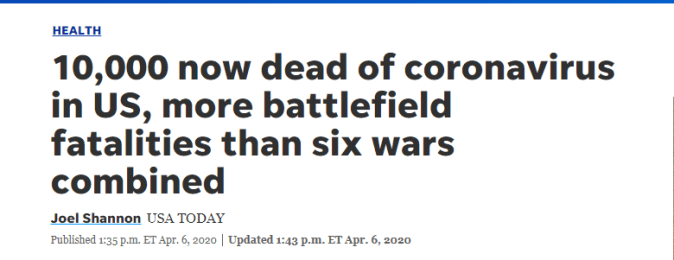
Let’s start with the “six wars combined” stat. That doesn’t count the top six wars in US history in combat deaths, each of which also happen to have had more than 10,000 deaths. The “battlefield” modifier is also a cheat: the headline actually calls deaths from the disease “battlefield deaths”! They aren’t battlefield deaths. Meanwhile, the two earliest major wars in our history both had more than 10,000 military deaths, which is the usual way we tote up such things. The next three combined, The Iraq War (#9), the Philippine-American War (#10), and the Spanish American War (#11) add up to more than 10,000, so to get to six you have to carefully work around the list and drop in some wars nobody remembers.
But who thinks like that? We have have over 40,000 suicides every year. Almost 40,000 die ever year from car accidents. About 35,000 die every year from falls. 10,000 is less than the typical year’s deaths from fire, choking and drowning, and so what?
The headline is yet another cognitive dissonance trick: war is something we regard as especially horrible, so the idea is to get the public to associate the epidemic with wars, which involve violent death. Yeah, let’s really scare them .But the Wuhan virus has nothing to do with wars. The comparison doesn’t belong in the story, much less the headline. Comparing it with other pandemics and epidemics would be misleading enough.
The news media’s coverage of the Wuhan Virus epidemic has been uniformly despicable: sensational, politicized, unreliable. At a time when a competent, objective press and broadcast media is essential—it always is, but in a national emergency especially so—journalism has dived to a new low. None of the news media is beyond reproach: Fox News has frequently taken the opposite approach to the rest, hyping skepticism about the seriousness of the outbreak and various doomsday models, and spreading rumors and speculation as fact. Continue reading