Unethical Quote of the Week: Rep. Elijah Cummings

“Mr. Chairman…This has been very interesting because one member on your side, the gentleman, I don’t know his name, said that the man was under investigation…”

—-Rep. Elijah Cummings (D-Md), ranking Democrat on theHouse Oversight and Government Reform Committee  revealing that he hasn’t bothered to learn the names of his own committee’s members.

The House Oversight and Government Reform Committee, through the eyes of Rep. Cummings.

The House Oversight and Government Reform Committee, through the eyes of Rep. Cummings.

The dysfunction in Washington, D.C., and particularly in Congress, could not have a better or more discouraging  illustration than this. You can argue that not knowing the names of your colleagues is no big deal, but it is. It is proof of a lack of interest in cooperation and collegial relations. It is evidence of the absence of basic civility and respect. It demonstrates that Cummings is not interested in contributing to the mission and objectives of the committee, but rather obstructing them.

Continue reading →

The Progressive Clown vs. The Apoplectic Conservative Radio Host On Gaza: Jon Stewart, Funny But Irresponsible…Mark Levin, Uncivil But Right

Jon Stewart’s “Daily Show” riff on the Gaza conflict was praised to the skies by anti-Israel pundits, like MSNBC’s Cenk Uyger and the Daily Beast’s Dean Obeidallah as providing some kind of much needed moral clarity. In truth it was exactly the opposite, with the Obeidallah column unintentionally showing exactly what’s wrong with Jon Stewart.

Knowing that a disturbing number of Millennials (and an even more disturbing number of ignorant, impressionable older viewers who should know better) see the comedian as a truth-teller, Stewart makes no allowances in his comic routines for that fact. He intentionally encourages the idea that he is a legitimate pundit, then retreats to the convenient bunker of “Come on! I’m a comedian! Don’t take me so seriously!” when he is called out for lazy, misleading and biased—but funny! commentary. (Stewart criticizes Democrats with approximately the frequency of a lunar eclipse, which would be just fine for a comedian who didn’t pose as an objective critic of American politics.) Continue reading →

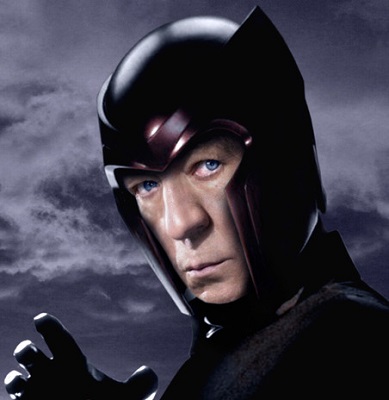
Great, Now Magneto Wants To Wipe Out Professional Theater…

Magneto McKellen

Maybe he should run for Vice-President on a ticket with Elizabeth Warren.

Quoth revered British actor Ian McKellen, Magneto (and Gandalf ) in the flesh:

“The one thing you can ask, I think, is that actors get paid a living wage. I would like it if all the repertory theaters that currently exist could do that. It would make a huge difference.”

It sure would. It would put most small professional theaters out of business, make theater unaffordable for any but rich theater-lovers, and eliminate a huge number of acting jobs. It is an idiotic, ignorant, irresponsible, but very, very nice, liberal, compassionate, well-intentioned and Elizabeth Warrenish suggestion that willfully ignores reality and basic economics—in other words, it is consistent with progressive mythology. We owe the Magster a debt of gratitude for illustrating exactly what is wrong with blanket endorsements of minimum wage increases and “living wages.” Continue reading →

Now THIS Is An Unprofessional Actor

Even John would have a problem with this actor's "method"...

Even John would have a problem with this actor’s “method”…

The 8th Circuit has ruled that actor Paul Doering was justly sentenced for his conduct during a 2011 theatrical event in which he was performing. What did he do?

For a Western-themed charity event in Hill City, South Dakota,  Doering portrayed an outlaw in a shootout.Stage actors using guns shoot blanks, of course. For some reason—extreme method acting? Bad reviews? That ineffable something that makes a star?—Doering used live rounds, real bullets, wounding three spectators.

And they say the theater is dull.

You can read about the case here; that’s of secondary interest. What I find fascinating is that this might be the most unethical performance by an actor in a theatrical performance ever.

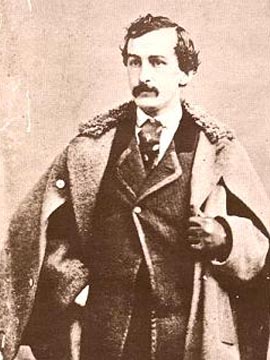
John Wilkes Booth doesn’t qualify: he wasn’t in the cast when he shot Lincoln during “Our American Cousin.” I’m pretty sure he would have found Doering thoroughly unprofessional.

Ethics Lessons From An Ethical Life: James Garner, 1928-2014

Brett_Maverick_-_James_Garner

To me, James Garner will always be Bret Maverick, his black hat worn girlishly on the back of his head, or “The Scrounger” in “The Great Escape,” a role modeled after Garner’s real-life exploits in the military. For some reason Garner’s aging through the years—his health issues ranged from a heart by-pass to knee replacements and several strokes—bothered me more than that of most stars from my youth. His death bothers me more. James Garner always struck me as a someone who should be perpetually young. Of course, I feel the same way about myself.

By all accounts from contemporaries, fans and colleagues, he was a decent, fair and usually amiable man who never let stardom turn him into a monster, as so many do. He had a single, long-lasting marriage and a stable family; he was not fodder for tabloids with affairs, illegitimate children, drug abuse or DUI arrests. He did apparently have a penchant for punching people in the nose who insulted him to his face, a habit about which he was unapologetic. Continue reading →

John Travolta, Carrie Fisher, and The Ethics of Outing

Mr. and Mrs. John Travolta

Mr. and Mrs. John Travolta

Should it matter if John Travolta is gay? It shouldn’t, no. To say it shouldn’t, however, is not to prove that it doesn’t. In his industry, for all its liberal and progressive grandstanding, the perceived sexuality of leading men does matter, because it is believed that it affects the bottom line. Most important of all, John Travolta doesn’t want the public to know/believe/think that he’s gay.

That alone ends the story, in ethics terms. Revealing this aspect of a private life that the actor has chosen to keep private is entirely his decision to make, and nobody should force him to make it, or make it for him. Therefore, what did actress Carrie Fisher, Hollywood kid, writer, “Star Wars” icon, and former bride of a gay man, think she was doing when she told the Advocate, in response to a question about Travolta’s legal maneuvers against a website that published a story about his alleged gay lifestyle…

“Wow! I mean, my feeling about John has always been that we know and we don’t care. Look, I’m sorry that he’s uncomfortable with it, and that’s all I can say.”

Continue reading →

Adam Wainwright’s Foul All-Star Ethics

"Boy, I'm  glad Wainwright threw me a pitch a Little Leaguer could hit, because I'm just about done. I sure hope he tells everyone about it,.."

“Boy, I’m glad Wainwright threw me a pitch a Little Leaguer could hit, because I’m just about done. I sure hope he tells everyone about it,..”

St. Louis Cardinals pitching ace Adam Wainwright lost MLB’s 2014 All-Star Game for the National League (though he was not the official losing pitcher). He gave up three quick runs in the first inning, and his squad never overcame the deficit, losing 5-3. As a result, his league’s champion at the end of the season, which could conceivably be his own team, will labor at a disadvantage: the league that wins the All-Star game get the home advantage, which recently, at least, has been decisive.

None of that reflects poorly on the pitcher. He got hit hard by a group of likely Hall of Famers (Derek Jeter, Mike Trout, Robinson Cano and Miguel Cabrera) in an exhibition game that doesn’t count in the standings. So what?

This, however, does reflect poorly on Wainwright:

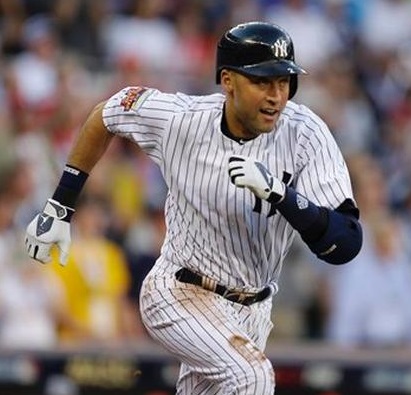
The game began with a long ovation for AL lead-off batter Derek Jeter, the Yankee shortstop who is retiring after this season following a storied career. Wainwright, in what appeared to be a class move, placed his glove and the ball on the mound in Minnesota’s Target Field and  stepped off to applaud, becoming, for a moment, just another fan giving a well-earned tribute to an all-time great. Then, three pitches into Jeter’s at bat, the living legend lined a ringing double to right field as if scripted, giving the crowd another chance to cheer, and triggering the American League’s winning rally. Later, in the dugout being interviewed on live TV, Wainwright announced that he had given Jeter “a couple of pipe shots”—that is, grooved his pitches so Jeter could get a hit.

Horrible. This is wrong in every way, no matter how you turn it—poor sportsmanship, disrespectful to Jeter, damaging to the game, and dumb: Continue reading →

A Proposed Guide To Spoiler Ethics

"It SINKS??? You spoiled the ending!!!"

“It SINKS??? You spoiled the ending!!!”

I was just admonished on Facebook by a friend (a real friend, not just the Facebook variety), for referencing the end of the last episode of Season One of “Orange is the New Black.”  He hadn’t finished viewing the season yet, and this was a breach of spoiler ethics. Or was it?

Ever since I encountered for real someone who was angry with me for “spoiling” the end of “Thirteen Days,” ( “Yes, World War III started and everybody died”), I have been dubious about spoiler etiquette. The advent of DVDs and Netflix has made this all the more annoying. If I’m in a group of five, and one individual hasn’t kept up with “House of Cards,” are the rest of us obligated to censor our discussion? As a devotee and fanatic devourer of popular culture, I admit that my first instinct is to say, “Keep up, get literate, or pay the price.” If I actually live by that rule, however, I will be a walking, talking, writing, spoiler machine.

Chuck Klosterman, “The Ethicist” in the world of the New York Times, recently pronounced himself an anti-spoiler absolutist:

“I’m an anti-spoiler fascist. I don’t believe that any conversation, review or sardonic tweet about a given TV show is more valuable than protecting an individual’s opportunity to experience the episode itself (and to watch it within the context for which it was designed). I’ve never heard a pro-spoiler argument that wasn’t fundamentally absurd.”

Even Klosterman, however, excepted sporting events (the question posed involved mentioning World Cup scores to a friend who was annoyed that the game had been “spoiled” for him) from his fascism, writing, reasonably:

“I must concede that live, unrehearsed events are not subject to “spoiler” embargoes A live event is a form of breaking news. It’s not just entertainment; it’s the first imprint of living history. …Because this guy is your buddy, you might want to avoid discussing the games’ outcomes out of common courtesy — but not out of any moral obligation. It’s his own responsibility to keep himself in the dark about current events.”

For once I agree with Chuck. But what are reasonable ethics rules for dealing with the other kind of spoiler, involving literature and entertainment?

Luckily, this is not new territory, though it is evolving territory. The underlying ethical principles include fairness, trust, consideration, compassion, and empathy, which means that the Golden Rule is also involved.

Back in 2010, an erudite blogger calling himself The Reading Ape proposed a draft “Guide to Responsible Spoiling.” That blog is defunct; the promised successor is not around, and so far, I haven’t been able to discover who the Ape is. Whoever he is (Oh Aaaaape! Come back, Ape!) , he did a very good job, though some tweeks might  improve his work, especially in light of the emergence of Netflix.  (I have edited it slightly, not substantively…I hope he doesn’t mind, or if he does, that he’s not a big ape.) His approach is to frame the problem as an ethical conflict, in which two competing ethics principles must be balanced. I think that’s right.

Here is his “draft”—what do you think?

“A Brief Guide to Responsible Spoiling”

by The Reading Ape (2010)

The objective is to balance two ethical principles:

I. The Right to Surprise: The inherent right of any viewer or reader to experience the pleasure of not knowing what’s
going to happen next.

II. The Right to Debate: The inherent right of any viewer or reader to engage in public discourse about the content of
a given work of narrative art.

Part 1: When Spoiling is Fair Game

In the following circumstances, one can discuss crucial plot details and reveal endings with a clear conscience. Continue reading →

Emmy’s Transgender Nomination: Important, Inspiring, and a Breach of Integrity

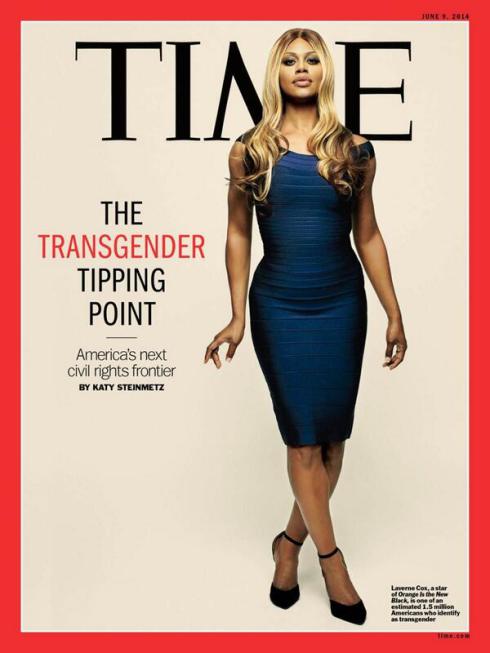
laverne-cox-timeThe Emmys made cultural history yesterday, nominating Netflix’s “Orange Is the New Black” actress Laverne Cox, who plays Sophia Burset in the prison drama, in the category of outstanding guest actress in a comedy series. It is the first time an openly transgendered actress has been nominated for an Emmy.

She joined several of her colleagues  on the show who were also recognized in various acting categories: stars Taylor Schilling, Kate Mulgrew, Uzo Aduba and Natasha Lyonne.

The problem is that Cox received the nomination for political and social reasons unrelated to her performing skills. This will be denied, of course, and since all awards are subjective, no one will be able to prove this is the case. It is, however. In the large, uniformly superb ensemble cast, Cox’s role is relatively minor, and I have a difficult time believing that anyone would objectively identify her as a standout in the show based on her acting. (In the current season, which I have seen in its entirety, her character is almost invisible). This isn’t intended to diminish Cox in any way, for in the role she plays, I cannot imagine it being played better. Nevertheless, there are many un-nominated actresses in that show—as well as other shows— whose characters are more vivid, who have to show more range, and who are more deserving of a nomination once the process is stripped of irrelevant political baggage. Among them: Taryn Manning, whose transformation into the complex religious fanatic Tiffany “Pennsatucky” Doggett is frightening; Yael Stone, as the heartbreaking stalker Lorna Morello; Samara Wiley, as te alcoholic moralist Poussey Washington, and several others.

Everyone is thrilled for Cox, with Cox, reasonably, leading the way. “I’m on cloud nine. I’m through the roof,” said the actress, whose path to an award was  paved when she was featured on the cover of Time magazine.“What a wonderful, wonderful day for “Orange” and for black trans-women,” she said.

Undoubtedly. It’s not such a great day for the acting profession generally, the Emmys, or the principle that awards based on merit should be decided based on merit, and not social and political agendas. I would say, “But that’s Hollywood,” except that it isn’t just Hollywood. Continue reading →

The Obama Outhouse Float: Not Racist, Just Wrong

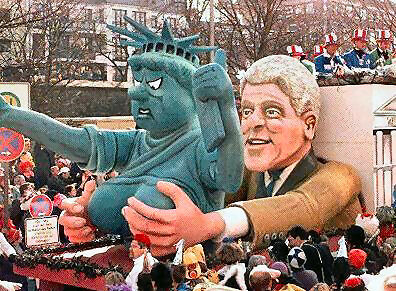
Racist float? Why not? Well, a) Bill Clinton's not black b) it's not a 4th of July parade, c) this is in Germany and d) it's not Obama.

Racist float? Why not? Well, a) Bill Clinton’s not black b) it’s not a 4th of July parade, c) the parade is in Germany and d) most important of all, it’s not President Obama.

It was almost a year ago that a rodeo clown donned an Obama mask, and the NAACP demanded that the Secret Service investigate him, and the clown lost his job. It is considered acceptable that in the nation’s capital, five people in  big-headed costumes depicting the Mt. Rushmore Presidents (and William Howard Taft) race around a baseball stadium as the crowd laughs at their antics, but any mockery of the current President of the United States will be immediately attacked as “racist.”

Thus an appallingly stupid, tasteless and inappropriate float in a Norfolk, Nebraska Independence Day parade is further straining already damaged race relations in this country, because it depicted a distressed man coming out of an outhouse labelled the  “Obama Presidential Library.” The Norfolk Odd Fellows Lodge, which coordinates the annual parade, is defending the float, which was entered as political satire (it even won an award). Others, however, have condemned it as, you guessed it, racist.  Here it is:

Obama float

It isn’t racist. Although many media reports have described the zombie-like figure exiting the outhouse as a representation of the President, it clearly isn’t. Does President Obama use a walker for support? The float’s designer, Dale Remmich, who does use a walker and dresses like the figure on the float, explained that the figure was meant to be Remmich himself, tinged green out of disgust for, among other things, the Veterans Administration fiasco. As for portraying Obama’s future library as an outhouse, that’s not racial imagery, though it is obviously a statement communicating criticism and disrespect. The same imagery would not have puzzled anyone if it had been used to criticize any other recent President; nobody would have looked at the exact same float except with the label “George W. Bush Presidential Library” on the outhouse and said, “I don’t get it. Bush isn’t black.” That’s because it isn’t the design of the float that makes it racist, just as it wasn’t the use of a mask that made the rodeo clown’s act racist, in the eyes of those making the accusation. What makes it racist is the criticism and the mockery, its target. Criticism and mockery of other Presidents went with the territory. Criticism of the first black President is by definition racist. Continue reading →