Clark Gable, Loretta Young, and the Betrayal of Judy Lewis

Clark Cable is the one on the right.

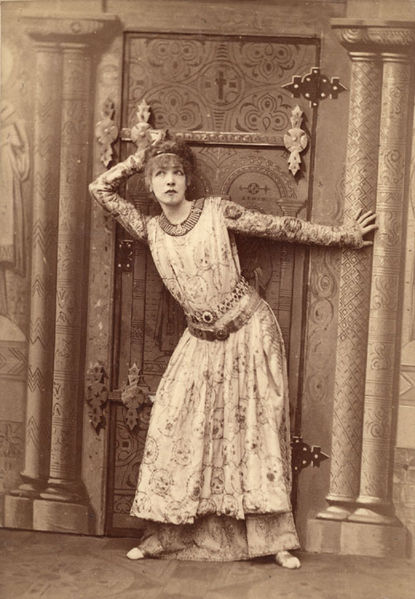
Judy Lewis died this week, at the age of 76. She survived and flourished despite being brought up in a community that conspired to hide the truth from her, and famous parents who refused to acknowledge her as their own. The community was Hollywood, and its treatment of Judy Lewis demonstrates the depth of its ethical failings. Her parents were Clark Gable and Loretta Young, and it is difficult to look at them the same way once you have learned what they did to their daughter.

Lewis was a love child, conceived during a movie set fling in 1935 when Gable, married at the time, and the single Young co-starred in “The Call of the Wild”. When Young became pregnant, she hid herself away, had her child, and entrusted her to a nunnery until the little girl was two. Then Young faked an adoption. Throughout her childhood, Lewis (the last name she took from Loretta Young’s first husband, who refused to adopt her) did not know the true identity of her famous parents, or why Gable, then known as “The King” of Hollywood, mysteriously showed up at her boarding school one day for an unannounced visit—the only time she ever saw him in person. Continue reading

Ethics Dunce: Sports Grid Blogger Dan Fogarty

Civility is doomed. Civilization is doomed. Propriety is doomed.

What's the concerned father of the injured cheerleader thinking about? Why, what any cool dad would think about---how good her butt looks!

And Taylor Young, a cheerleader for the Michigan State Spartans, may well be doomed, as it is impossible to tell how badly her character, values and common sense have been warped by being brought up in a household containing her father, Charles. After Young took a hard fall during the halftime show in a game against Florida State, requiring her to receive medical attention (she was OK), her father posted this astounding Facebook comment, which, naturally, has gone viral:

“I’m glad to see your booty isn’t gettin big ….. no one likes a chick with a big butt ….. love you.”

Idiotic? Check. Sexist? Check. Insulting to women? Check. Embarrassing to his daughter? Double check. Demonstrating a stunning lack of understanding of the internet? Check. Displaying a disturbing tendency to sexualize his own daughter?

Check, and Yuck.

But to Dan Fogarty, writing on Sports Grid, this offensive post proves that Young is a “cool Dad,” and Young goes on to cite other “experts” who believe this is “quite possibly the funniest ‘Dad Moment’ in Facebook history.”

Really? Is this really the current state of the culture? A father makes salacious comments about his daughter’s “booty,” suggests that “chicks” without similar booty quality are unloved and unlovable, and that’s cool?

If Fogarty is in step with the culture and I’m not, 1) then American society is coarsening faster than I thought, and 2) which way to Mars?

My condolences to Taylor Young for the boorish conduct of her father, and if she sees nothing wrong with it either, she has my intense condolences—because she has been severely damaged.

As, perhaps, have we all, if Fogarty is right.

Ethics Hero: Martin Scorsese

One of the most respectful and compassionate acts a human being can perform is to rescue the memory and achievements of a great man or woman from obscurity. Not only does this confer deserved longevity on the legacy of someone who has contributed something good and lasting to civilization and culture; it also is a gift to the rest of us, enriching our knowledge and perhaps providing us with inspiration as well.

This is what Martin Scorsese does for the early French film pioneer Georges Méliès in his new movie, “Hugo.”  The film is a fictionalized account of how Méliès, a producer, director, actor and special effects innovator, was rediscovered by film-lovers and his countrymen after years of discouragement and depression. In a nice piece of irony and symmetry, Scorsese’s film duplicates the phenomenon his movie describes. Forgotten after World War I, Méliès and his work were celebrated late in the 20’s, and he received long overdue acclaim and recognition, including France’s Legion of Honor. After his death in 1938, his contributions to the art and craft of cinema faded from public awareness a second time. Once again, thanks to “Hugo,” the public is learning Méliès’s name and being delighted and inspired by his creations. Continue reading

Now Here’s A Terrible Idea: Mandated Disclosures for Photoshopped Images of Celebrities!

And if you look real closely at the lower left corner, you'll read, "The model for Venus was a short, middle-aged bald man named Gino. His appearance was altered by the painter in the creation of this painting."

Here is another candidate for enshrinement in the Pantheon of Well- Intentioned But Terrible Ideas.

In an article published Monday in the journal “Proceedings of the National Academy of Sciences,” Dartmouth researchers Hany Farid, a professor of computer science, and Eric Kee, a doctoral student, propose a rating system of publicly displayed photographs of models, actors and celebrities to let viewers know exactly how and how much an image has been altered by photoshopping, airbrushing or other means.

“Impossibly thin, tall, and wrinkle- and blemish-free models are routinely splashed onto billboards, advertisements and magazine covers,” the two write. “The ubiquity of these unrealistic and highly idealized images has been linked to eating disorders and body-image dissatisfaction in men, women, and children.” In the interest of limiting the damage caused by unrealistic images of human beauty, the researchers argue that graphic images should include labels that disclose  “geometric adjustments” such as slimming legs, hips and arms, as well as adjusting facial symmetry—reducing a nose in size, or slightly enlarging eyes.  Users of such photos should also flag photometric adjustments that change the appearance of skin tone, blemishes and texture, such as wrinkles, dark circles under the eyes or cellulite, say the researchers.

Please, for the love of God, nobody introduce these guys to Sarah Deming and her lawyer, who are suing the distributers of the film “Drive” because the trailer was more exciting than the movie. And let us all remember this proposal when we are tempted to pooh-pooh accusations that the government is regulating creativity, commerce, art and enterprise right out of existence, and with them, individual liberty as well.The tea parties should use Farid and Kee’s article for recruitment. Continue reading

Ethics Dunce: Jimmy Fallon and The Roots

Why is this Be Unfair To Michele Bachmann Month? Because everybody knows when you don't agree with someone, its OK to be unfair to them..

Late night NBC talk show host Jimmy Fallon’s band, The Roots, has developed a habit of choosing “walk-on music” for Fallon’s guests that contain editorial comment on the guests themselves. The practice is not original, but the degree to which The Roots choose titles that are direct insults is, and it’s an unethical practice. Guests are guests, and playing the music of a song with lyrics that intentionally insult a guest is still atrocious manners, not made any less rude because only those who know the song get the message.

When Rep. Michele Bachmann came on Fallon’s show this week, the band played Fishbone’s “Lyin’ Ass Bitch.” Foul. In ethical terms, this is the equivalent of the band standing up and shouting insults at Bachmann on camera, except that it’s more cowardly. Bachmann didn’t know that she was being insulted, and it was a sure bet that she wouldn’t: I doubt anyone expects Fishbone to be on Michele’s playlist.

Kimmel’s band was proud of itself; Roots drummer Questlove alerted his followers  on Twitter before the ambush, tweeting:

   “Aight late night walkon song devotees: you love it when we snark: this next one takes the cake. ask around cause i aint tweeting title.”

Fallon owes Bachmann an apology, and The Roots need to have basic professionalism explained to them.

UPDATE: Fallon and Questlove both apologized over Twitter.

Margaret Ann Haring Would Have Sent Elliot To Guantanamo Bay

Quick...call 911!

Luckily, when Elliot had that weird mind-link thing with E.T. while the little alien was watching “The Quiet Man” on TV, and not only let all the frogs loose in his biology class but planted a major league lipper on a pre-teen classmate played by Erika Eleniak (later to prove Elliot’s exquisite taste by becoming a “Baywatch” pin-up) when the Duke smooched Maureen O’Hara, it was before the days of “no-tolerance” policies, and Ms. Haring wasn’t his teacher.

Not so lucky was the female student in a real life elementary school, who impulsively kissed a boy during a physical education class at Orange River Elementary School in Fort Myers, Florida. Haring saw her student’s vicious sexual assault, and called child welfare officials, who, rather than telling her she was out of her frickin’ mind, directed her to contact the sheriff. The school then reported the pre-teen moment of passion as a possible sex crime, according to the Lee County Sheriff’s Office. Continue reading

Ethics Quiz: “Ethics Dunce: An Unknown Diner”…. Just Desserts?

What would Jesus do if he got a crappy card like this instead of a fair tip?

The tale of the diner who left a pre-printed proselytizing card, disguised to look like a $10 bill, in lieu of a tip has attracted a surprising amount of interest on other sites. (The card began, “Some things are better than money…like your eternal salvation,” and went on to extol the benefits of religion.) Some of the comments raise ethical issues of their own. On Reddit, this interesting exchange occurred:

First Commenter: “I had a table of four leave me one of these and sixteen cents on their $40+ bill. The next time that they came in, which was the next Sunday after their church service they were completely ignored by all staff including managers. Forty minutes for their drinks, an hour and a half for their food, and a swift walk-by to throw the bill on their table was their service from then on.”

Second Commenter: What you SHOULD have done is this: Made their order, brought it to them, then, just as they were about to start eating, you should’ve taken the food away and replaced it with a piece of paper that said SOME THINGS ARE BETTER THAN FOOD…

Third Commenter: And did that make you feel good? Why not just refuse them service?

 First Commenter: Couldn’t actually refuse service for corporate bullshit reasons. This was a chain restaurant. Trust me we all wanted to tell them to GTFO and take their proselytizing bullshit with them. And yes it made every employee feel good to treat them like shit. Servers work for less than half of minimum wage, and a religious pamphlet does not help pay the bills.

Your Ethics Quiz to begin Thanksgiving week is a multiple choice: Which of the responses to the card is the ethical one?

Possible Answers:

1. Giving the group lousy and rude service.

2. Leaving the ironic message after taking awy their food.

3. Refusing them service.

4. None of them. Continue reading

“Walking Dead” Ethics

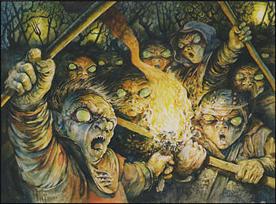
American Movie Classics’ excellent, if harrowing, zombie apocalypse drama “the Walking Dead” finally raised the ethical issue looming like a zombie Woolly Mammoth over all zombie films: Is it ethical to kill zombies? Are they still human beings?

Nobody seriously disputes that killing a zombie who is about to eat you or your compatriots is self-defense, justifying deadly force. But what about the common practice in every George Romero-inspired zombie epic: shooting the shambling things (or the sprinting variety, as featured in the re-make of “Dawn of the Dead”) on sight—in the head, naturally? Is it murder? Euthanasia?

The issue was raised in this Sunday’s episode of “The Walking Dead,” as it was revealed that the prickly doctor who presides over the remote farm where our zombie-fleeing heroes are currently taking refuge keeps a batch of captive “walkers,” including his rotting wife, locked in a barn. He feeds them chickens, which are presumably finger-lickin’ good. The doctor regards zombie killing as an atrocity, the equivalent of killing a sick person. “They are humans,” he says. Continue reading

Wild Card Ethics and Cultural Expectations

Bad ideas are contagious, especially popular ones.

Major League Baseball just expanded the number of teams that qualify for post-season glory from eight to ten. Yes, there are ethical calculations involved in this, whether baseball cares or not. Supposedly, questions of fairness were part of the reason for the change, though I doubt it—in pro sports, the engine of change is always profit. And whether the change results in more fairness or less depends on what you consider fair—or perhaps whether you are sleeping intents in various U.S. cities.

Sports is such a big part of our cultural consciousness that what the National Pastime calls fair and just cannot help but influence cultural standards. Before 1969, there were two leagues of eight, then ten, Major League teams, and the two teams with the best records in each league met in the World Series. It was a simple meritocracy, with just 10% of the teams being allowed to advance after the regular season. Oh, there was always complaining about how the rich Yankees got into the Series more often than not, while the Senators, Phillies, Astros and A’s never did, but nobody camped out in the middle of Manhattan to protest baseball talent disparity. If you lived in one of the smaller Major League cities you just scaled back expectations, that’s all. And if, by some miracle, you won, then victory was all the sweeter, because you had bucked the odds by being harder working, stronger, better. Continue reading

Ethics Quote of the Week: Charlie Chaplin

I’m heading to New York City shortly, and will make an effort to check out first hand the state of Occupy Wall Street. The nationwide protest seems to be waning in both intensity and public support, despite some hopeful, futile voices (like the New York Times editorial page) who persist in claiming that its message is “important.”

I’m not denying that it could be. At this point, however, it is in danger of redefining itself as (or, in my case, confirming the diagnosis) a self-indulgent, expensive mess that never succeeded or even tried to articulate its goals clearly enough to avoid overtaken by the worst side-effects of such protests: violence, damage to property, threats to safety, and harm to innocent bystanders. Yesterday, for example, having failed to disrupt the operations of Wall Street, the New York contingent decided to disrupt the subway system—the mode of transportation overwhelmingly used by “the 99%.”

Stupid.

Words and clear thinking are not only helpful, but an obligation for those seeking social change.  As an example of how words can inspire, I offer this, the speech that Charlie Chaplin wrote and delivered at the end of his film, “The Great Dictator.” I am far from four-square with Chaplin’s politics, but he knew how to craft an inspiring rally to change—exactly what the “Occupy” should have done. Then, at least, we would recall it for what it aspired to, rather than all the annoyance and cynicism it launched. Here is a link to an editorially enhanced version of the scene and here is the text: Continue reading