Ethics Quote Of The Month: Tech Dirt’s Mike Masnick On The Internet Privacy Bill

“We don’t solve problems by misrepresenting what the real scenario is. It’s true that ISPs have way too much power over these markets, and they can see and collect a ton of information on you which can absolutely be misused in privacy-damaging ways. But let’s at least be honest about how it’s happening and what it means. That’s the only way we’re going to see real solutions to these issues.”

Mike Masnick on Techdirt on the ignorance of  supporters, critics, and the public regarding consumer broadband privacy protections, which were just repealed by straight party line votes in Congress, as part of the Congressional Review Act, which allows the legislative branch to eliminate regulations and limits an agency’s ability to issue similar rules to the ones being struck down. President Trump is expected to sign the bill.

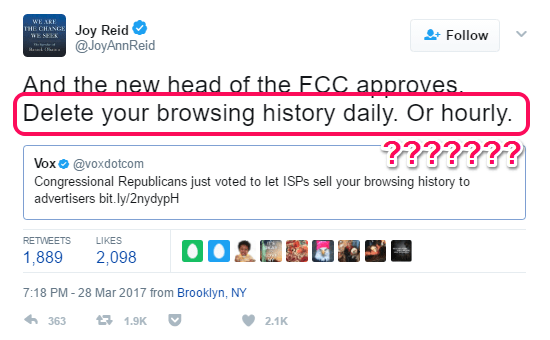
I can see both sides of the Internet “privacy” debate. All I ask is that the average screaming head on TV knows what she’s talking about, and that the news media try to educate citizens on the issue, not portray it as another Obama did it so it’s wonderful, Trump is overturning it, so it’s the end of the world. This morning I watched Morning News Babe Robin Meade roll her eyes while “describing’ what the bill does completely inaccurately. The bill, her unhappy face broadcast is baaaad like everything the Trump Administration and Republicans do is baaaaad. Then she explained that the bill would allow internet service providers, browsers and “search engines” to take your internet history and sell it to big corporations.  Then she giggled about how Max Temkin, inventor of some card game* I have never heard of, promised in a tweet…

“If this shit passes I will buy the browser history of every congressman and congressional aide and publish it.”

Robin, not having the foggiest idea what the bill really did, thought this was so funny and cool. She did not inform her audience, some of whom were actually seeking reliable information and not just tuning in to ogle, that..

  • The bill only undoes the Obama FCC regulations that stopped ISPs from gathering data on its customers’ internet use, and they hadn’t taken effect yet. In other words, it changes nothing.
  • Google, Amazon, Facebook, and other browsers and internet services still can gather anything they get their grubby cyber paws on. The FCC doesn’t regulate them.

You can’t buy Congress’ internet data. You can’t buy my internet data. You can’t buy your internet data. That’s not how this works. It’s a common misconception. We even saw this in Congress four years ago, where Rep. Louis Gohmert went on a smug but totally ignorant rant, asking why Google won’t sell the government all the data it has on people. As we explained at the time, that’s not how it works*. Advertisers aren’t buying your browsing data, and ISPs and other internet companies aren’t selling your data in a neat little package. It doesn’t help anyone to blatantly misrepresent what’s going on.

When ISPs or online services have your data and “sell” it, it doesn’t mean that you can go to, say, AT&T and offer to buy “all of Louis Gohmert’s browsing history.” Instead, what happens is that these companies collect that data for themselves and then sell targeting. That is, when Gohmert goes to visit his favorite publication, that website will cast out to various marketplaces for bids on what ads to show. Thanks to information tracking, it may throw up some demographic and interest data to the marketplace. So, it may say that it has a page being viewed by a male from Texas, who was recently visiting webpages about boardgames and cow farming (to randomly choose some items). Then, from that marketplace, some advertisers’ computerized algorithms will more or less say “well, I’m selling boardgames about cows in Texas, and therefore, this person’s attention is worth 1/10th of a penny more to me than some other company that’s selling boardgames about moose.” And then the webpage will display the ad about cow boardgames. All this happens in a split second, before the page has fully loaded.

At no point does the ad exchange or any of the advertisers know that this is “Louis Gohmert, Congressional Rep.” Nor do they get any other info. They just know that if they are willing to spend the required amount to get the ad shown via the marketplace bidding mechanism, it will show up in front of someone who is somewhat more likely to be interested in the content.

That’s it.

Got that, Robin?

Probably not. Continue reading

Ethics Dunces: The Academy Of Motion Picture Arts And Sciences

The Academy Awards announced that it will allow PriceWaterhouseCoopers to continue to represent the Oscars’ integrity as well as the organizations pledge that the results aren’t being, will not be, cannot be and haven’t been rigged, misread, wrongly tallied or mistakenly announced.

This, despite the fact that the firm proved beyond a shadow of a doubt that it cannot be trusted to do this, by either the Academy or the Oscar viewing audience, because it did not do it, exposing its carelessness and incompetence on national TV.

This is NASA letting Morton Thiokol continue to build space shuttles. This is the federal government re-hiring the same IT firm that made Healthcare.gov. This is Wesley Snipes rehiring the tax expert who told him he didn’t have to pay income taxes.

In addition to complete failure of management that the Academy’s decision to let bygones be bygones represents, it also has cultural consequences. As a culture, the United States has become allergic to accountability in all sectors. Over at Wells Fargo, where management presided over a nation-wide conspiracy to defraud depositors,  CEO John Stumpf opted for early retirement after the scandal, and is walking away with around $130 million, according to SEC filings.  Unless further action is taken by Wells Fargo’s board, which looks increasingly unlikely, Stumpf will leave with a fortune made up of stocks, cash payouts and other compensation. The Obama Administration, as documented here, repeatedly refused to hold incompetent agency heads accountable for fiascos, notably both of its Attorney Generals, and all three of its White House spokesmen. University president after university president disgraced their institutions by capitulating to racist, anti-speech, anti-education demands by students without consequence to their tenure. In journalism, Brian Williams remains on NBC’s payroll and the TV screen, despite having proven himself to be a habitual liar. Continue reading

Portrait Of A Really, Really Stupid Ethics Train Wreck

This is the incredibly ridiculous United Airlines/dress code/ leggings story. I don’t want to write about it: there are no good guys, lots of miscreants, and I have a well-earned bias against United already.

Fortunately, the travel site One Mile At A Time did a thorough and ethically astute analysis, here, ending like this:

I see non-revenue passengers asked to follow different rules nearly every time I fly — you probably do too. Nothing about two non-revs being asked to change clothes and/or take a later flight is shocking or newsworthy or even interesting to anyone with an ounce of perspective.

Exactly: not even interesting. So how did this become a hot story on cable news and social media? Well..

1.  Two employees of United didn’t follow company policy regarding proper dress when they fly free. They were Wrong.

2. A family behind the two employees in line and who didn’t understand what was happening leaped to conclusions, and made their daughter change what she was wearing too, completely unnecessarily. They were Wrong.

3. A prominent  publicity-seeking social justice warrior, Shannon Watts, was an observer of all this, and began furiously tweeting, misrepresenting what was going on, and claimed that United was engaged in sexist and discriminatory conduct, when it was not.  She was Wrong.

4. United’s Twitter team responded by referencing the §21 of the company’s Contract of Carriage, stating that passengers can be denied boarding for being “barefoot or not properly clothed”. This was confusing, since that provision had nothing to do with why the two non-revenue passengers were told to change. Typical of the crack United staff, however. Incompetent. Also Wrong. Continue reading

Oh, Great: 21% Of Lawyers Are Stealing From Their Clients.

This should be a shock, but it isn’t. When the screenwriters for the film adaptation of “The Firm” changed the ending to focus on the fact that the mob’s law firm was over-billing clients, lots of lawyers and legal ethics specialists squirmed. Widespread over-billing in the legal profession has been a scandal waiting to break for decades.

The ABA journal reveals that a recent study by  CEB Inc. and Wolters Kluwer NV’s ELM Solutions, companies that work with corporate legal departments to manage their budgets, examined legal invoices from about 100 companies, and found that 21% of lawyers “upbilled” for their time in 2015. Upbilling is the practice of rounding up legal hours hours worked to the next hour or half hour. This could raise the annual legal bill for a partner billing 2,000 hours a year by about $29,000. Spread over all the clients and all the lawyers charging by the hour, the 21% figure translates into millions of dollars taken by fraud, and maybe billions, every year. You can read summaries of the reports  here and here. Continue reading

Ethics Dunce: Treasury Secretary Steve Mnuchin


Treasury Secretary Steve Mnuchin has pledged “not participate personally and substantially in any matter that has a direct and predictable effect on the financial interests” of his financial holdings, without obtaining an official waiver for doing so. He also had advance notice of how a Trump administration figure could breach ethics rules when Kellyanne Conway, in the course of criticizing organized boycotts of First Daughter Ivanka Trump’s merchandise line, blurted out  “Go buy Ivanka’s stuff!” during an interview on “Fox & Friends.”  The Office of Government Ethics and members of   the House Oversight Committee urged disciplinary action for Conway’s clear, if probably inadvertent, ethics violation. (None occurred. It should have.)

Never mind. During a C-Span broadcast interview last week, Secretary Mnuchin was asked for a movie recommendation (this was a set-up, but an easy one to duck), and said,

“I’m not allowed to promote anything that I’m involved in. So I just want to have the legal disclosure, you’ve asked me the question, and I am not promoting any product. But you should send all your kids to ‘Lego Batman.’ “

HAHAHAHAHA!!! ‘I’m not supposed to do this because it’s unethical, but I’ll do it anyway, because ethics rules are silly, the President doesn’t care about them, and besides, Kellyanne got away with it, and so will I!’ Continue reading

Today’s Weasel Words, Courtesy Of Big Pharma: “Have Happened”

Hi!

Some time in the recent past a memo went out, and as a result virtually all the TV ads for new drugs now include the deliberately awkward and puzzling phrase, “have happened,” or sometimes “have occurred.” First the ad ends with all the possible side effects of the drug and what conditions make it dangerous. Then we hear the list of all the maladies the drug “can cause.” Last of all, we learn that other undesirable things like early onset dementia, a taste for human brains or the dreaded ass-fall-off syndrome “have happened.”

Wait, what? Have happened why? Tornadoes, plagues and firebombings have happened too: why are these things that have happened mentioned in the drug commercial?

Here’s why: the manufacturers are fighting lawsuits alleging that the drugs caused these things to happen, but the companies are arguing in defense that causation is uncertain. By using the vague, passive “have happened,” they aren’t conceding that the drugs caused the problem, but it will still claim in later law suits that the customer was warned, and thus assumed the risk.

It’s double talk, essentially, and deceit. You are warned, but by warning you we aren’t admitting that there is anything to be warned about.

I hate this stuff.

Just thought I’d mention it.

Ethics Dunce: The Maryland State Bar Association

Do you know what legal ethics opinions are? Many lawyers don’t know, or barely pay attention to them, but the opinions are important. They are written when bar associations have to decide how to handle the gray areas of professional ethics, and believe me, there are more gray areas in legal ethics than the profession likes to admit. Some jurisdictions churn out lots of important and useful legal ethics opinions all year long; others barely bother with them. (Idaho simply stopped issuing such opinions decades ago.) Still, the LEOs, as they are called, are essential when one of the many legal ethics issues crop up that a jurisdiction’s rules themselves don’t cover.

Although bar associations do a terrible job making their legal ethics opinions’ availability known to the general public, LEOs have invaluable information to convey about how lawyers are ethically obligated to serve their clients. They are also essential if people like me are going to be able to remind Maryland’s lawyers about their ethical duties as part of continuing legal education seminars and expert opinions.

So why is it that Maryland, alone among the 51 U.S. jurisdictions, refuses to allow the public access to their legal ethics opinions? All right, neither does Arkansas, but nobody can read in ArkansasKIDDING!!! I’M KIDDING!

In order to find out what the Bar Association has decided regarding specific legal ethics conundrums, or whether the state has any position at all, one has to be a dues-paying member of the Maryland Bar. Never mind that Maryland lawyers, who, like most lawyers, often are subject to the ethics rules of other jurisdictions, can access neighboring bar association LEO’s with a couple of clicks on their computers. Never mind fairness or reciprocity.

Here’s how the question “Why do we hide our ethics opinions?” was answered by one Maryland lawyer online:

“Ethics opinions are MSBA work product: a benefit to members who pay their dues…An ethics opinion is a legal opinion about what it or is not permissible under the rules. If you want legal advice, pay for it. The “rules”, by the way, are published and are available to the public. As are the elements of negligence. Do you tell your clients for free how to prove their negligence cases?”

How’s that for a venal, snotty answer? In fact, there are no “hidden” laws or principles related to negligence, nor are the standards for what constitutes negligence and how it is proven in court only available for a fee. The legal ethics opinions, on the other hand, may be crucial to allowing non-lawyers  know when they are being victimized by unethical members of the Maryland bar. How convenient that the Bar hides these from the view of the group of citizens that have the most urgent need to know about them.

Continue reading

The NBA’s Unethical, Unavoidable, “Bait And Switch”

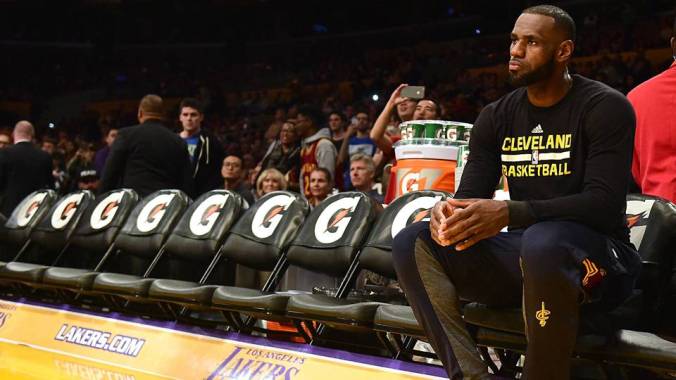
For a second consecutive Saturday, ABC’s  Saturday prime time NBA game was a pre-rigged dud. The LA Clippers blew out the supposedly star-studded Cavaliers, 108-78, as chants of “We want LeBron” echoed through the arena. The three super-stars that make Cleveland an NBA powerhouse,  LeBron James, Kyrie Irving and Kevin Love, were all kept out of the game, not because they were injured,  but because Cleveland coach Ty Lue had decided to rest his “Big 3” in the first of back-to-back games. Sure enough, all three played against the Lakers the next day.

It has become standard practice in the NBA for play-off bound teams to rest stars for “strategic purposes,” meaning that in a league where more than half the teams make the play-offs and the regular season is little more than an exhibition for most of them, it makes no sense to blow out the stars until a championship is on the line.  The NBA, in short, has no integrity. (Neither does the National Hockey League, for the same reason.) The previous Saturday, the San Antonio Spurs blew out the Warriors, 107-85,  as Golden State fielded a  JV team, with Stephen Curry, Draymond Green and Klay Thompson all on the bench. Yet NBA’s new nine-year, $24 billion media rights deal with ABC, Disney and Turner Broadcasting included Saturday Primetime along with  the TNT Thursday Night NBA game and ESPN’s Wednesday and Friday night broadcasts, to showcase the best of the NBA. (Most of the NBA teams never make it to the Saturday ABC game.)

Shouldn’t that kind of money guarantee that the teams put their best players out on the court? NBA fans also typically shell out three figures for tickets. Doesn’t the league pull what is in essence a bait and switch by allowing a game to be treated as a virtual forfeit? Continue reading

Pop Quiz: What Does U.S.A. Gymnastics Have In Common With The Roman Catholic Church?

Both are large, powerful organizations that facilitated the sexual abuse of children in order to protect their money and reputation.

Yes, you can add Penn state to that list too.

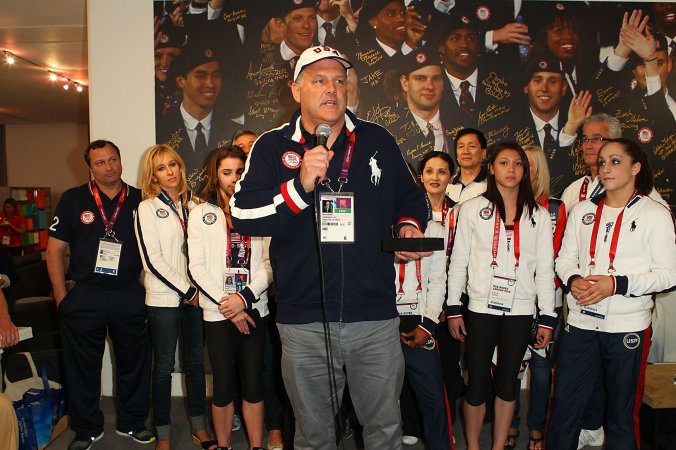
I’m really sick today, and it’s hard writing, thinking and especially typing, but maybe I don’t have to explicate this so much.  Larry Nassar, the national team doctor for USA Gymnastics, is accused of abusing dozens of female gymnasts. More than 80 victims have come forward to claim that he sexually assaulted them. Dr. Nassar was accused of 22 counts of first-degree criminal sexual conduct last month in Michigan. The scandal has also claimed Steve Penny (above), president of U.S.A. Gymnastics, who recently resigned after 12 years in the post.

A sport that has its priorities straight does not hire someone like Penny to lead it. He had been the director of media and public relations for U.S.A. Cycling in the early 1990s,promoting the sport and its superstar, Lance Armstrong. When he took the job at U.S.A. Gymnastics, one of his responsibilities there was to evaluate sexual assault accusations and determine if they warranted being reported to the police. Notes Juliet Macur in the New York Times,

“This is how the world of Olympic sports in the United States has operated for years: No one thought it strange that a sports marketer was in the role of sex crimes investigator.”

Is it any surprise that the culture of women’s gymnastics was poisoned with sexual predators? We had been told by Nadia Comenici that she had been abused, and the sport’s optics were, to use a technical term, oogie. All those tiny women-girls, their growth and maturation retarded by dieting and excessively rigorous training, being hugged repeatedly by bear-like coaches: I stopped finding the sport anything but disturbing years ago. (My feminist friends, who worshiped the little sprites—the ice-skaters too–told me I had a dirty mind.) Here is  a section of a recent column by former gymnastic champion Jessica Howard:

By the time I reached the World Championships in 1999, my hips hurt so badly that at times I could barely walk. That was the environment I trained in that I believe created an opening for Larry Nassar, the national team doctor for USA Gymnastics, to sexually abuse me…the first time I met “Larry” I immediately trusted him. He was the premier USA Gymnastics doctor with an international reputation, and I felt lucky to have been invited to the ranch to work with him.

For our first appointment, he asked me to wear loose shorts and no underwear. That seemed strange, but I obeyed. As in training, I wanted to be perfect. He began to massage my legs, and then quickly moved inwards on my thighs. He then massaged his way into me. I was rigid and uncomfortable, but I didn’t realize what was happening. I was confused, and thought that it must just be what had to happen. This scenario happened repeatedly over the course of my week at the ranch. At no time was there ever another adult in the room. Coming off of a difficult year of training, Dr. Nassar reached out as the good guy, supporting me emotionally and promising me relief from the pain. Now I know that in actuality he expertly abused me under the guise of “treatment.”

I trusted USA Gymnastics. But I was sexually abused, as were other elite athletes, including Jamie Dantzscher, a 2000 Olympian, and Jeannette Antolin, who was a U.S. national team member. And the abuse was not limited to Dr. Nassar. According to more than 5,600 pages of USA Gymnastics records released to the IndyStar on March 3 after a lengthy court battle, some of the 54 coaches with sexual abuse complaint files spanning 10 years weren’t banned from gymnastics until years after USA Gymnastics discovered they were convicted of crimes against children.

Other accounts tell how this was ingrained in the system: Continue reading

Ethics Dunce: Hawaiian Airlines

I find this story hard to believe, and yet it is consistent with the disturbing trend of people and businesses taking unfair advantage of captive audiences and markets—what I recently termed the “The Hamilton Effect.” The attitude is, “we have you, you’re trapped, and you have no choice but to accept what we give you.” It is a breach of respect, fairness, autonomy, and the Golden Rule.

Before I saw this story today—it is a few says old, but I missed it–I was going to write about a more mundane example I encountered at the airport in Sacramento. I was getting on a long flight and an early one, so I bought more items than usual at an airport news store: a large bottle of water, a granola bar, orange juice, some yogurt, two newspapers and a magazine. After I paid, I asked for a bag, as I always do, and was told that it would cost 25 cents. I never heard of such a thing. I literally had more than I could carry without a bag, and told the clerk that if they were going to change the rules, I should have advance notice. There was no real option, however, unless I wanted to be thirsty and hungry on the airplane for a couple of hours, as well as bored with nothing to read.

All of the airport is like that, of course. Commentators as diverse as Jerry Seinfeld and Ralph Nader complain about it: you are suddenly in some alternate universe where everything costs twice as much. I bought a large size bag of M&Ms in Chicago that cost over seven dollars. “We have you, you’re trapped, and you have no choice…”

A 66-year-old man on a Hawaiian Airlines flight that had just left the West Coast for Honolulu found the cabin temperature chilly, and requested a blanket. He was incredulous when he was informed that there would be a $12 charge. I wouldn’t buy a typical airplane blanket for that, and this was a rental! It’s gouging, plain and simple, and the passenger said so. He then demanded to talk to an airline official, and was given the corporate phone number. During his irate conversation, the man told the company representative, “I’d  like to take someone behind the woodshed for this.”  That’s an old, barely used term for reprimanding or punishing someone, but it apparently frightened a culturally ignorant flight attendant, who informed the pilot that a passenger was threatening the staff.Naturally, the only thing to do was to dump excess fuel in the Pacific, turn the flight around, and go back to LAX. This cost about $12,000, and delayed the flight for nearly four hours.

Continue reading