Comment Of The Day: “The Supreme Court Reinstated The Death Sentence Of Boston Marathon Bomber Dzhokhar Tsarnaev. Good.”

Certain themes and issues are certain to recur on an ethics blog and never be resolved. Among them are abortion, “hate speech,” illegal immigration, reparations for slavery, drug legalization, gun control, war (HUH! What is is good for?], climate change and capital punishment. From the captain’s chair at Ethics Alarms, some of these seem more difficult than others. Capital punishment is not among them. [Above is the sensational and illegal photo in 1925 of the first woman ever sent to the electric chair as the switch was pulled. Ruth Snyder, a housewife from Queens, New York, took a lover and recruited him in a plot that ended with her husband’s brutal death; a reporter had a secret camera device strapped to his leg. Her story was the basis of many fictionalized versions, including the classic film noirs “Double Indemnity” and “The Postman Always Rings Twice” and the brilliant expressionist stage drama “Machinal” by Sophy Treadwell.]

The recent SCOTUS decision restoring the death penalty sentence to Boston Marathon bomber Dzhokhar Tsarnaev (where it belongs) once again raised this issue, which has been taken up hear often. In Steve-O-in-NJ’s Comment of the Day on that post, he provides fodder for debate within the debate: as he delicately puts it, “how high should the bar be set before someone fries?” Steve offers his top 20.

I’ll play: I believe non-lethal crimes that ruin lives to the magnitude that Bernie Madoff did with his Ponzi scheme ethically support a death sentence. Last week the late investing whiz’s sister and her husband were found dead in an apparent murder-suicide that was probably another consequence of his crime.

Here is Steve-O’s Comment of the  Day on “The Supreme Court Reinstated The Death Sentence Of Boston Marathon Bomber Dzhokhar Tsarnaev. Good.”

***

I read the Bucklew case, where the SCOTUS decided, quite sensibly, that there is no right to a painless execution. What stuck out to me is the penultimate paragraph in Breyer’s dissent, in which he states that as we move forward there may be no constitutional way to implement the death penalty. That, I submit, is one more reason we needed to either get that sixth conservative justice on the Court or get Breyer out of there. Continue reading

Comment Of The Day: The Alamo, March 2, 1836

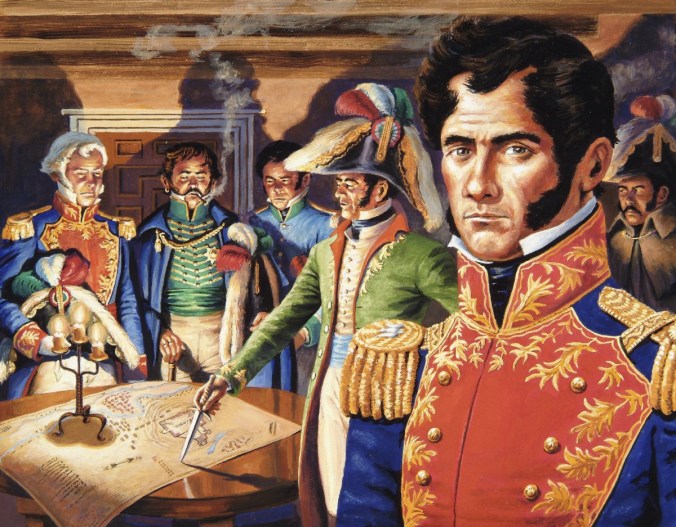
Michael West has been counting down the days of the Alamo Siege for us, which is generally regarded as beginning on February 3, 1836, and ending on March 6. That makes March 2, yesterday, the 9th day of the iconic historical event. (As Michael reminded us in an earlier post, 1836 was a Leap Year, so there’s an extra day in there.)

Reflecting on The Alamo is always appropriate, but perhaps more this year than usual. The siege of Ukraine has more than a little in common with the desperate stand of the Texans against another ruthless dictator, and the values at stake are the same. Travis, Bowie, Crockett, Dickinson, Bonham and the rest decided to stay and fight for what they believed in and also for those seeking to establish their independence, though they were outnumbered and surrounded. Ukraine’s president, Volodymyr Zelenskyy, resembles the Texas patriots in his determination to stay with his nation’s endangered citizens, because he knows his courage, sacrifice, and likely martyrdom, will be crucial in preserving his nation in the long run.

In many ways Zelenskyy resembles Davey Crockett, a celebrity known for his humor who found himself first thrust into politics and later in deadly fight that required him to rise to new heights of character.

My favorite Alamo history is “Three Roads to the Alamo” by William C. Davis, who makes the case that the mission’s story is a microcosm of the American saga. Each of the three major players in the drama, Travis, Jim Bowie and Crockett, embody an archetype of how the nation came to be. Crockett was the restless pioneer who ventured first into unsettled lands. Bowie, apart from being the bona fide frontier fighter that the public believed Crockett to be, was the land speculator, part of a group that brought business, finance, and corruption to the West. Finally, Travis was the law-maker and politician, who promised to build a civilized structure where families could thrive.

Indeed the Alamo and its participants would support a whole course that would teach young Americans about history, politics, war, human nature, ethics, economics, law and more. Teaching its many complexities and lessons would definitely be more enlightening and productive than focusing on slavery as the defining feature of U.S. culture.

Here’s Michael’s Comment of the Day on Day 9 of the Alamo story...

***

Continue reading

Comment Of The Day: “Ethics Quiz: The All-Black Sports Platform”

This Comment of the Day by Here’s Johnny on “Ethics Quiz: The All-Black Sports Platform” needs no introduction.

Here it is:

***

In my early years (40s, 50s), there was racism aplenty. The small community I lived in, the schools I attended, the activities I was involved in, all were white and as WASPish as they come. My parents didn’t seem to be especially racist, but one comment I do remember was my mother saying that Negroes (the accepted term way back then, although ‘colored people’ was also used) were okay so long as they “stayed in their place.” Their place was the segregated part of the nearby rather large city.

Fortunately for me, my career path took me away from both that mentality and that kind of segregation, via a military that was integrated and a second career in education in a community even more thoroughly integrated. Times changed. I changed. And, now, I am supposed to accept segregation once again? Well, count me out. Continue reading

Comment Of The Day: “And Even More Ukraine Invasion Ethics Points” [#1]

As our final Comment of the Day from the weekend just past, here is sooner 8728’s neat explanation for why NPR felt it necessary to calm its listeners and readers by telling them that the wise response to concern over the Ukraine crisis was make lasagna or get a massage, as described in “And Even More Ukraine Invasion Ethics Points…”

***

The comment about NPR not seeing their audience as adults makes a ton of sense. Much of the modern Left isn’t like the old time Left. Americans used to be mostly united on the values of hard work, duty, faithfulness in marriage, etc. Political differences didn’t make a ton of difference in personal behavior. Now, the left is saying gender doesn’t exist, you can define your own existence any way you want, polyamory is good, there is no limit to welfare, and other types of ideas. They refuse to accept limitations on reality. Continue reading

Comment Of The Day: “Sunday Morning Ethics Warm-Up, 2/27/2022…”[#2]

Few read Ethics Alarms on weekends (I guess I should write, “even fewer”), and I may start Mondays with more comment highlights from the Dead Zone past. This weekend was unusually lively. This Comment of the Day by Null Pointer took off from item number #2 of yesterday’s warm-up, regarding the GOP’s Rep. Marjorie Taylor Greene and Rep. Paul Gosar speaking at white nationalist event, in which I quoted The National Review’s David Harsanyi:

“ On social media, conservatives grouse that there’s a double standard. Democrats, they say, never condemn their extremists, they celebrate them. That’s a double standard worth living with. After all, any denunciation of Omar, Tlaib, or any other Squad member lacks credibility if House Republicans can’t publicly take the position that hanging out with (actual) white supremacists is deplorable.”

Here is Null Pointer’s Comment of the Day on “Sunday Morning Ethics Warm-Up, 2/27/2022…”:

***

White supremacy is bad. All forms of racial supremacy are bad. All forms of supremacy are bad.

Republicans need to jump on the “all forms of supremacy are bad” principle, hard. Otherwise you will see white supremacy taking off again.

No, you cannot have a double standard. If you have a double standard, you do not have a fair principle that addresses the problem equally across the entire spectrum of the problem. If you don’t have a fair principle, no one is going to listen to you. People will not agree to operate by unfair principles. Continue reading

Comment Of The Day: “Comment Of The Day: ‘Ethics Quote Of The Week: Naomi Wolf'”

Lest we forget about those truckers….

Vladimir Putin going nuts took an unwelcome spotlight off Canada’s Justin Trudeau, who had found himself in ethics zugswang while dealing with the popular “Freedom Convoy.” Feminist Naomi Wolf found his assumption of “emergency powers” to risk a slippery slope to a police state. Ethics Alarms commenter Glenn Logan, in his Comment of the Day, was more sympathetic to Trudeau’s plight (as am I), prompting a two-part lesson in Canadian democracy from one of the Ethics Alarms commentariat’s eminent Canadians, Humble Talent.

His Comment of the Day on Glenn’s Comment of the Day on Wolf’s newsletter essay is from two comments, offered in sequence.

***

“The First Amendment, and whatever the Canadian equivalent is (however weakly codified) does not protect actions that interfere with lawful commerce or disturb the peace to the point of mischief.”

Well I’m glad you asked!

Canada also has a constitution, although ours wasn’t predicated on the same base narrative as America’s. As an outsider looking in, America’s constitution is almost paranoid in nature, usually you don’t draft the founding documents to a nation’s governments under the auspices of governments being tyrannical and specifically with an emphasis on protection from that tyranny. I make no negative values judgement there…they work, in a stiffly rugged way. To highlight the differences between Canadian and American constitutional theory: Where the founders wrote “life, liberty and pursuit of happiness” in America’s declaration of independence, Canada’s founders instead wrote in “peace, order, and good governance”.

Our Canadian constitution is more malleable, and over the years, it’s been broadly re-imagined. Instead of enumerated amendments to the constitution, in 1982, Canada codified our rights in a portion of our constitution called “The Charter of Rights and Freedoms”.

Continue reading

Comment Of The Day: “Ethics Quote Of The Week: Naomi Wolf”

The caravan of protesting truckers is, we hear, now on the way to Washington, D.C., after thoroughly disrupting Calgary, Canada, and perceptions of Justin Trudeau as a relatively harmless boob. He is now being seen as a harmful boob. D.C., meanwhile, has established itself as a locale where disruptive and even violent protesters are honored by a giant painted endorsement on a public street by order of the mayor when their alleged cause is sufficiently “woke,” and violent protesters from the other side of the ideological spectrum are charged with felonies and held in prison for many months.

This should be interesting, in the old Chinese saying sense.

Here is Ethics Alarms veteran Glenn Logan’s Comment of the Day on the post, “Ethics Quote Of The Week: Naomi Wolf”

***

I think in the end, the best complaint available is the double-standards being applied. When protests are ostensibly in favor of a left-liberal position, they are protected speech no matter how much lawlessness is involved. That same protest involving the same level of lawlessness is considered worthy of an emergency act invocation if the protest is not favored by left-liberals.

I get your point about the trucks blocking traffic Jack, and I don’t disagree. I have always believed that interfering in lawful commerce is illegal (and tortious as well) and should be prosecuted both criminally and by civil action when it happens. The First Amendment, and whatever the Canadian equivalent is (however weakly codified) does not protect actions that interfere with lawful commerce or disturb the peace to the point of mischief. Continue reading

Comment Of The Day: “On ‘Decertification,’ Everybody’s Wrong (Or Lying)…”

Ethics Alarms is about ethics, not politics, but politics, especially in recent years, has increasingly been about the defining and flagging of unethical conduct. Typically elections have been an area in which both parties revel in accusing each other of dishonest and unethical conduct that they also engage in when it suits their needs; we recently saw, for example, the report on Democrats using “dark money” in the 2020 election cycle after condemning Republicans for their lack of transparency regarding campaign contributions, and either party climbing up on a metaphorical high horse over gerrymandering is laughable.

The accusations over the 2020 Presidential election are materially different, in part because 95% of the news media has taken a side the constitutes aggressive partisan activism: the claim that suspicions about the fairness and legitimacy of the vote count—in the absence of many safeguards that previous elections had made standard practice—were “disproven” and “groundless.” The use of ballot drop boxes, for example, raise the immediate specter of voter fraud, and one that is difficult to dispel. Did the actual voter drop off the ballot? Did that voter mark the ballot with his or her name on it? How secure is the box against tampering? The existence of such dubious devices in any close election guarantees public distrust, and should. Yet the news media is pushing the left’s false narrative that laws that ban drop-off boxes are “voter suppression.”

Here is Null Pointer on the matter, in the Comment of the Day on the post, “On ‘Decertification,’ Everybody’s Wrong (Or Lying)…”

One tip before you read: what is being described regarding elections is the condition Ethics Alarms dubs “Bizarro World Ethics.”

***

Let’s just look a some truths about the 2020 election and see if we cannot deduce what might be going on.

Truth #1: The Democrats got up to shenanigans in the 2020 election, and if the exact nature of those shenanigans were laid out to the people, the people would probably nearly unanimously agree the shenanigans amounted to cheating. The people would not unanimously ADMIT it was cheating, but they would know. The Democrats do not want the people on the left to know that they engaged in behavior that essentially amounts to cheating.

Truth #2: The election is not going to be undone. It was never going to be undone. Everyone who isn’t a complete moron knows it cannot be undone. Everyone who knows it cannot be undone is not going to admit that they know it cannot be undone, however, because a lot of people hate the Democrats and like to piss the Democrats off. Polling is useless.

Truth #3: The Democrats cheat. The Democrats have always cheated, at least at the regional level. Everyone on the right knows the Democrats cheat. Everyone on the left thinks a majority of people agree with them about everything, rendering cheating unnecessary. The people on the left would be shocked to find out that a huge percentage of the population does not agree with them.

Truth #4: The Republicans let the Democrats cheat. The Republicans have always let the Democrats cheat because political calculations produced an equation that said it was more politically expedient to let the Democrats cheat than to call them on it. The Democrats have escalated their cheating over time because they can. The Democrats accuse everyone else of cheating to keep the political calculations in their favor by confusing their base. Continue reading

Comment Of The Day: “Ethics Quote Of The Week: American Thinker…(With A Flashback And Regrets)”

Steve-O-in NJ’s Comment of the Day inspired by the discussion of “Black Lives Matter” (and Black Lives Matter without quotes, which thrives on the confusion) requires no introduction. Here it is, a comment on “Ethics Quote Of The Week: American Thinker…(With A Flashback And Regrets)”:

***

“There is no god but God, and Muhammad is His Prophet!”

“Deus vult!”

“Workers of the World, Unite!”

“The World Must Be Made Safe for Democracy!”

“Peace, Bread and Land!”

“Asia for the Asians!”

“Make Love, not War!”

“Give Peace a Chance!”

“Black Lives Matter!”

On their faces, all these slogans sound benign and inspirational. Maybe even the intent behind them was good, or at least the true believers thought so. Muhammad was looking to move the Arab world, forward, not back, when he introduced his own brand of monotheism, and I don’t doubt he thought he was creating a framework for a good and honest life when he wrote it all down and proclaimed this the complete record, with nothing more to come. However, there is no doubt he was also using it to cement his own power, and the evil that was later done in his name and that of his early slogan is history.

When Pope Urban shouted “Deus vult!” (God wills it!) on that hill outside Clermont, there is no doubt he thought that he was doing the right thing by rallying the attending nobles and knights to form and army and take back the Holy Land from the Muslims, who had stolen it away from the Byzantines and were not respecting the rights of Christians there. History also tells us what happened after that, and none of it is humanity at its best.

When Karl Marx wrote “Workers of the World, unite!” he probably meant it, but it was clear he hadn’t really thought it through. He himself was no working-class hero, just an expatriated writer and philosopher who avoided bankruptcy more than once because his well-to-do fellow traveler Friedrich Engels bailed him out. In 1848 he published the Communist Manifesto, fuel to the fire of the already smoldering problems that became the Revolutions of 1848, which you can look up. We all know what came later as a result of his crazy and unrealistic ideas.

“The World must be Made Safe for Democracy!” So shouted Woodrow Wilson to Congress as he led this country into a war that he had campaigned months before to keep it out of. I don’t doubt he really meant to do this world some good as a missionary for his rigid, hypocritical morality. I also don’t doubt that America’s contribution to WWI was a net positive for many people in Europe who would have suffered longer or more without it. However, it was also the first of a series of dominoes that led this world into a lot bigger problems later on, and arguably made the world less self for democracy in the long run.

Continue reading

Comment Of The Day: “Comment Of The Day: ‘Catching Up: Professional Ethics And The Challenger Disaster’”

Matthew B. scored a Comment of the Day by raising an issue I had never thought about before: how the misapplication of PowerPoint leads to inadequate training and information dissemination within organizations and bureaucracies. He also references the reluctance of managers to know when to hand over decision-making to subordinates. That is something I have thought about, a great deal.

Two of my favorite movies illustrate how competent leaders and managers know when to delegate a crucial decision down. “Topsy-Turvy,” the superb 1999 film depicting the creation of “The Mikado” by Gilbert and Sullivan, accurately depicts the real incident when, after the final rehearsal, W.S. Gilbert told the “Mikado” cast that he was cutting “My Object All Sublime,” also known as “The Mikado’s Song.” Gilbert was a tyrannical director, and the cast was terrified of incurring his wrath. This time, however, they stood up to him. The cast as one told him that he was making a mistake. The soloist, Richard Temple, they told their shocked and steaming director who also had conceived of the song, should have the chance to perform it in front of an audience. His fellow cast members  were certain it would be a hit. Gilbert, recognizing the certitude the cast must have had to risk his fury at being contradicted, decided that his performers might have a clearer understanding of the show even that he had, and relented. Temple would sing about letting “the punishment fit the crime” on opening night.

The song was an instant sensation, like “The Mikado” itself, and is still one of the most quoted of all G&S songs.

The other example is at the climax of “Hoosiers,” the great basketball film based on the true story of the miraculous Indiana state championship won by a tiny school from Milan, Ind. in 1954. During the last time-out before the team’s last chance to score, which would, if successful, give the team a one-point victory over their greatly favored competition in the championship game, the coach (Gene Hackman), who has led the ragtag group this far by emphasizing teamwork over individual achievement, lays out a play in which the team’s superstar, Jimmy Chitwood will be a decoy. He plans for another player to take the final shot, but the team doesn’t move. “What’s the matter with you?” he shouts as his players just stare, looking hesitant. “If I get the shot, I’ll make it,” Jimmy says, after a long pause. So the coach, who has insisted all season that his word was law, makes the same decision Gilbert did. When your subordinates are that sure, trust them. They know better than you.

Jimmy shoots and scores the winning basket as time runs out.

Here is Matthew B.’s Comment of the Day on “Comment Of The Day: ‘Catching Up: Professional Ethics And The Challenger Disaster’”:

Continue reading