Wait: Why Did It Take A Congressional Commission To Point Out That A KKK Plaque Wasn’t Appropriate At West Point?

[NOTICE: This post was materially wrong, based as it was on bad and incomplete information. An UPDATE is here]

This does not give me great faith in the military’s powers of observation and urgency.

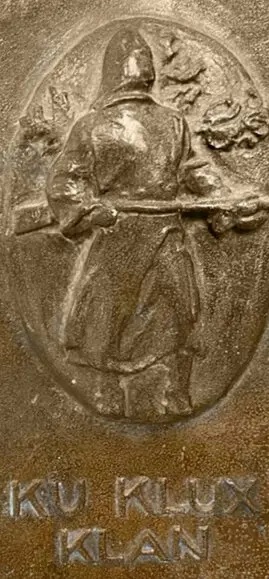
That bronze panel above is one of three mounted at the entrance of Bartlett Hall Science Center U.S. Military Academy at West Point in New York. It’s unclear how long it has been there (I bet Woodrow Wilson had something to do with it, KKK fanboy that he was) but it wasn’t exactly hidden from view for the decades cadets passed under it. Yes somehow, it wasn’t until the report released by a congressional panel this week pointed out the damn thing that West Point was moved to do something.

The panel, called the Naming Commission, was created by Congress to provide recommendations for the removal or renaming of Defense Department places, decorations and things that commemorate the Confederacy, including those that appear at the military academies. The commission flagged the KKK plaque but said that recommending the its removal fell outside of its scope because the Ku Klux Klan, though founded by former Confederate soldiers, doesn’t technically relate to the Civil War, but rather to Southern resistance to post-war Reconstruction. That still doesn’t explain why the plaque was still up at West Point. One can argue about the effort to erase Confederacy figures from the nation’s honors and memorials (although the military has the strongest argument for doing so: the other two bronze plaques honor Robert E. Lee and J.E.B. Stuart, who fought against the U.S. military), but the Klan is irredeemable, and has been an unambiguous symbol of hate, racism and evil at least since the 1950s. Finding out that a Klan plaque was on display all this time at West Point is like discovering that St. Paul’s Cathedral had a statue of Satan hanging around for centuries without anyone objecting.


Continue reading →

Prof. Volokh Demonstrates How University “Diversity Statements” Are Unconstitutional

They are, of course, also unethical unless you are a nascent totalitarian who believes that WrongThink should disqualify citizens for employment and influence.

Universities are increasingly requiring so-called “diversity statements”‘ from those seeking positions on their faculty. They are particularly crucial to white scholars, since potential “faculty of color” are diversity. The statements describing the hopeful instructor’s contributions to diversity, equity, and inclusion are however, being challenged, as well they should be. Apparently having faculties that usually have 5% or fewer members who confess to being conservative isn’t enough, so the requirements of what are essentially loyalty oaths to the Great Woke are being seen for what they are: efforts to eliminate diversity of thought on campus—all the better to ensure the effective indoctrination of students whose minds are properly vulnerable. . Criticisms first made in tweets and blog posts have expanded into prominent opinion pieces and, more recently, law review articles. These attacks are having an effect. There are now faculty-wide resolutions against (and for) mandatory diversity statements. Lawyers are recruiting plaintiffs to challenge diversity statement requirements in court.

Good.

The Federalist-Society recently held a webinar on the topic. Prof. Eugene Volokh, one of the panel participants, offered a “thought experiment” to demonstrate just how noxious “diversity statements” are.

Here it is:

Continue reading →

“Dear Pronoun Problems”…Here Is How I Would Answer The Lament Of A Teacher Whose Attempt to “Create An Inclusive Environment” In Her Class Went Horribly Wrong

Slate, the pioneering web magazine that once had an interesting balance of commentary, jumped the woke shark long ago; I almost never bother with it any more. It carries an especially annoying Social Justice Warrior family advice column, “Care and Feeding,” whose writer, Doyin Richards, founder of the Anti-Racism Fight Club, is obsessed with “diversity, equity and inclusion.”

A teacher calling herself “Pronoun Problems” wrote in part,

On my first day, in an attempt to create an inclusive learning environment, I passed out an icebreaker worksheet that asked several questions, including preferred pronouns. This ended up backfiring. I live in a blue state, but in a suburban area with plenty of conservatives. It’s not uncommon to see a house with a Trump sign right next to a house with a Black Lives Matter sign. Consequently, while I had plenty of students who answered the question honestly, I also had lots of students who wrote their pronouns as “nor/mal” or “attack helicopter.” I feel like it started things off on the wrong foot. It gave me a negative first impression about some of the students, which I don’t think is a healthy mindset for a teacher. Worst of all, I’m afraid I ended up only creating a more hostile learning environment for my trans and non-binary students. The students didn’t necessarily see each other’s answers, but I basically gave some students a platform to express their transphobic views. After my contract ended, I got hired by a different school district, this time teaching eighth grade. I’m worried that if I give out the same icebreaker worksheet, even more of the students will write transphobic “joke” answers. At the same time, I’m glad I was able to learn the correct pronouns for my students and avoid misgendering them in class. How should I go about this in the future? Should I scold them or call them out? Or should I just grin and bear it for the sake of the students who take pronouns seriously?

The reply from Doyin is what you would expect (it begins, You absolutely did the right thing by creating the icebreaker activity; your only errors were not setting ground rules and not explaining why this is important…”). If you want to read it, it’s here.

My answer would be the following:

Continue reading →

New Week Dawning Ethics Warm-Up, 8/29/2022: It’s Bernie Sanders Appreciation Day!

Before it is too far back in the rear view mirror, I must mention yesterday’s place among ethically momentous dates for both good and ill.

Most significantly, the ill comes to mind: it was on August 28 in 1955—the same date represented in “Back to the Future” as a time of innocence and naivete—that Emmett Till, a Black teen , was abducted from his uncle’s home in Money, Mississippi, by two white men after a white woman told her husband that he had whistled at her and brushed against her. The boy was brutally murdered, and his death has remained an iconic symbol of Jim Crow and American racism to this day. Also on the dark side of ethics, in 1968, police and anti-war demonstrators battled on the 28th in the streets of Chicago as the Democratic National Convention nominated Hubert H. Humphrey for President despite a popular upheaval seeking a peace-seeking alternative to the Lyndon Johnson administration. In my assessment, that rioting was far, far more threatening to the U.S.’s confidence in the health of its democracy than the antics of the middle-aged clowns who swarmed over the Capitol on January 6, 2020. Less earth-shattering but still the culmination of an ethics train wreck, on yesterday’s date in 1996 the 15-year marriage of Britain’s Prince Charles and Princess Diana officially ended. The ethics lesson is how important it is for leaders and admired role models to live up to the best standards of conduct, and when they don’t, the institutions they represent suffer, sometimes irreparably.

There is at least one shining ethics milestone to salvage August 28: in 1963, more than 200,000 people heard the Rev. Martin Luther King Jr. deliver his “I Have a Dream” speech in front of the Lincoln Memorial in Washington, D.C., which includes the perplexing statement his followers today want to wish away: “I have a dream that my four little children will one day live in a nation where they will not be judged by the color of their skin but by the content of their character.”

1. Wait; corporal punishment is still allowed in public schools? Tell me again: why do we have a Department of Education? About 70,000 public schoolchildren were abused with corporal punishment in the 2017-18 school year, which is the most recent year for which federal data is available. Nearly 4,000 schools reported using corporal punishment during that school year, and as children head back to classrooms, some teachers are dusting off their paddles. So I guess there were some positive aspects to remote schooling.

No wonder school boards assumed that parents would be supine in the face of critical race theory and transsexual propaganda, if they allow teachers to beat their children.

2. For today’s depressing example of the quality of reason, rhetoric and argument employed by high elected officials, I give you…Senator Bernie Sanders of Vermont! Asked by ABC “This Week” anchor George Stephanopoulos about complaints that Biden’s $300 billion giveaway to students owing payment on their student loans, Sanders’ replied, “I don’t hear any of these Republicans squawking when we give massive tax breaks to billionaires!” Yeah, and they don’t complain about the designated hitter, either!

Continue reading →

Ethics Dunce: The Denver Public School System

Oh yeah, our public school students are in the very best of hands.

Get this:

A video called “Don’t be a Bystander: 6 Tips for Responding to Racist Attacks,” was shown to Denver South High School students in their classes. The film explains that “in our current political moment, White supremacists and White nationalists have been emboldened, and as a result, public attacks are on the rise.”  Those tips for responding to “racist attacks” include do “not call the police” because it “escalates, rather than reduces” violence.  You see, “police have been trained to see people of color, gender-nonconforming folks, and Muslims as criminals, they often treat victims as perpetrators of violence. So, if the victim hasn’t asked you to call the police, do not — I repeat, do not — call the police.”

Apparently some parents had a problem with this particularly heinous example of indoctrination. Five law enforcement associations in Colorado also objected  to the video, warning that it would increase “negative perceptions of law enforcement and [hurt] our efforts to build trusting relationships within the communities we serve, including schools and student populations.”

Ya think?

Continue reading →

If The Public Cannot Trust Accountants To Be Ethical, Who Can They Trust? Answer: Nobody

Let’s begin with a confession and an apology. On June 28, the SEC announced that it had charged Ernst & Young LLP with extensive cheating by its employees on exams required to obtain and maintain Certified Public Accountant (CPA) licenses. Moreover the Big Five firm withheld evidence of this misconduct from the Security and Exchange Commission’s Enforcement Division during the SEC’s investigation. EY admitted the facts leading to the SEC’s charges and agreed to pay a $100 million penalty. [You can read the SEC’s press release here.]

I have no idea how I missed such a major and troubling ethics story. It’s my job to keep up on such matters; I teach accounting ethics, though I haven’t had a training assignment for that profession since the pandemic hit. I apologize profusely. I will work to do better. While the various breaches of government, journalism, legal and business ethics that occupy most of my attention on Ethics Alarms are important, none are more ominous than this story. It really feels like the canary dying in the mine.

Continue reading →

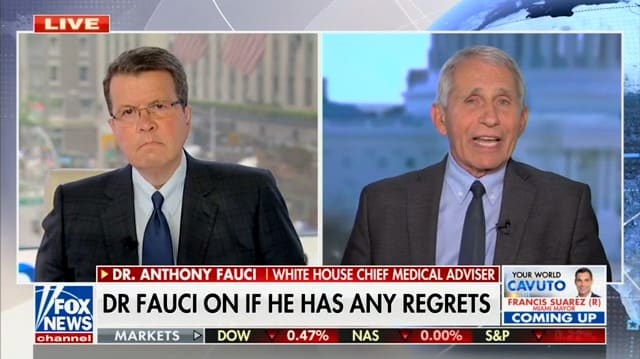
Unethical Quote Of The Month: Ethics Villain Dr. Anthony Fauci

“Well, I don’t think it’s forever irreparably damaged anyone.”

—Dr. Anthony Fauci, architect of the disastrous Wuhan virus response, to Fox News’ Neil Cavuto’s question, “In retrospect doctor, do you regret that it went too far? … Particularly for kids who couldn’t go to school except remotely, that it’s forever damaged them.”

How Clintonian of the good doctor, picking up on Cavuto’s awkward “forever” and adding “irreparably” to make it seem especially extreme. Maybe the lockdown forever damaged people, but it didn’t forever irreparably damage people. The lockdown caused more than 200,000 small busineses to shut down during 2020 alone. Gee, is that “forever enough”? It murdered the economy, the arts, and sports; it was significantly responsible for the George Floyd riots. The education and social development of young children were indeed retarded permanently by the isolating experience of remote schooling, as increasing numbers of assessments indicate. The corruption of US elections in 2020 arising out of the lockdown did long-term damage to the public trust in elections; whether it is “forever permanent” is yet to be seen.

It wrecked our small business, our savings, and our development permanently.

What an asshole.

An Abject Grovel That Explains So Much

Ethics Alarms has frequently discussed the ethical and professional deterioration of the historian profession, as it, like so many other professions and institutions, has given up integrity for ideology and political agendas. History itself is under attack as a result, with historical censorship and airbrushing increasingly being favored over objective and balanced examination that does not distort past figures and events by the viewing them through the lens of “presentism.”

In an essay on the website of the American Historical Association, the organization’s president, James Sweet, offered constructive criticism of the trend, writing in part,

Continue reading →

Ten Ethics Observations On This Head-Exploding Interview

The president and vice president of the Minneapolis Federation of Teachers gave us the gift of this KABOOM!-worthy interview in which they respond to a pandering interviewer on Good Morning America about the “controversial” provision in the new teachers’ contract that is racially discriminatory. Ethics Alarms wrote about it here,earlier this week. The provision isn’t controversial: there is no legitimate controversy. The contract requires that white teachers be laid off before “teachers of color” regardless of seniority or any other factor. That’s illegal. It violates the Civil Rights laws and the Constitution. No question, no argument. Can’t do it. No controversy about that at all.

The two union officials’ smug, intellectually dishonest and evasive comments in the interview, if nothing else, demonstrate that neither is qualified to teach any students anything. Since they are the leaders of the Minneapolis teachers, and they are, the interview demonstrates in great measure why public education is failing.

Watch the interview, if you can stand it, and consider:

Continue reading →

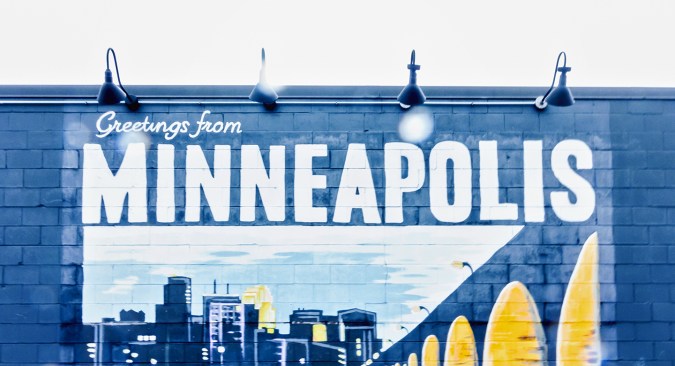
Case Study In Minneapolis: The Compensatory Racial Discrimination Slippery Slope

Or perhaps they just don’t believe in the Constitution in Minneapolis—you know, like in California. The Minneapolis Federation of Teachers struck a deal last March 25 with the Minneapolis Public Schools ending a teacher strike, and among the provisions was “educators of color protections.” If a non-white teacher is first on the list to be let go for budget reasons, the school system must fire a white teacher with the “next least” seniority instead.

Got that?

The agreement reads in part,

“Starting with the Spring 2023 Budget Tie-Out Cycle, if excessing a teacher who is a member of a population underrepresented among licensed teachers in the site, the District shall excess the next least senior teacher, who is not a member of an underrepresented population.”

Continue reading →