“It is time for our politicians to summon the bravery and determination of our American ancestors. It is time. It is time to plant our flag and to protect the greatest of this nation for citizens of every race in every city in every part of this glorious land. For the sake of our honor, for the sake of our children, for the sake of our union, we must protect and preserve our history, our heritage, and our great heroes. Here tonight before the eyes of our forefathers, Americans declare again, as we did 244 years ago, that we will not be tyrannized, we will not be demeaned, and we will not be intimidated by bad, evil people. It will not happen.”
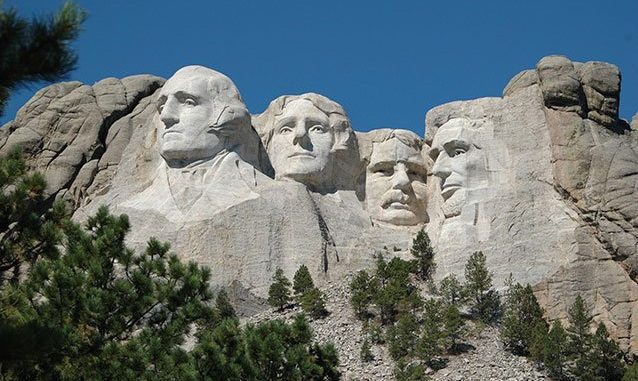
President Donald J Trump, speaking at Mt. Rushmore last night, and aggressively defending the United States of America, its Founders, its history and culture.
Bravo.
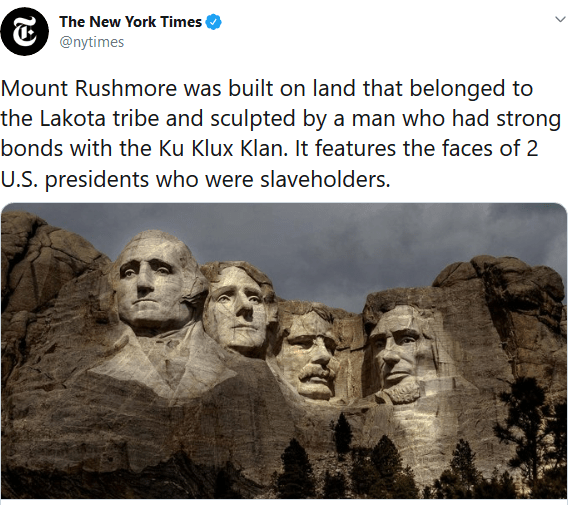
Last night’s speech, a ringing assertion of American greatness and a defiant condemnation of those who would topple it, despite the inevitable Trump flourishes of exaggeration, hyperbole, and deliberate provocation, was exactly what was needed, called for, and had to be said. It was inspiring, or should have been: I wonder about anyone who could read the transcript and not be stirred. I would ask, “What happened to you?” We also now know why it was appropriate to give that speech by Mt. Rushmore. The President extolled and defended our heroes, and devoted a section of the speech to each of the Presidents on the mountain, including, as CNN said last night to its damnation, “two slaveholders.”
There are about ten passages in the speech that I could have highlighted. I picked that one because it reminded me of this speech by a fictional President in a movie I detest, “Independence Day.” I would not be surprised to learn the speechwriter had that model in mind:
“President Whitmore” is talking about space aliens trying to destroys us. The mobs of America-haters who are attacking our core values and culture remind me of the aliens in “Invasion of the Body-Snatchers,” taking over the minds and bodies of one rational citizens, and terrorizing those who won’t submit to their “conversion.” Continue reading