Some Hillary E-Mail Ethics Test Results: Dowd, Carville, Maher, Whitehouse, Boxer, Huffington

F minusLast week I pointed out that the controversy over Hillary’s secret e-mail server and the various deceits and lies she has employed to justify is invaluable, not merely as further evidence of the character of the woman Democrats seem determine to stuff down America’s throat as the next President, but also as an integrity and values test for the politicians, elected officials, pundits and journalists who choose to publicly defend her…or not.

So it has been, and continues to be. Unfortunately, Republicans and reliably conservative pundits are disqualified from the test, as they would be condemning Hillary whether there was an ethical defense of her e-mails or not. They will end up on the right side of this issue by simply following their ideological proclivities, and thus deserve no credit for being incidentally correct.

Here is what you have to remember, however: the fact the Republicans and conservatives who reached their position on this issue without giving it any thought detest and distrust Hillary Clinton and are being, in some cases, unattractively gleeful about the scandal does not make Hillary’s defense any stronger. As I explained in the earlier posts, she has no legitimate defense, just spin, rationalizations and deceit. That’s why the e-mail incident challenges the non-Hillary haters to exhibit integrity.

I was tempted to exempt Democratic strategists and Clinton consultants from the test as well, since they are, in essence, paid liars. For anyone inclined to believe them, however, the fact that these people—Karen Finney, Donna Brazile, Lanny Davis, David Brock, James Carville— will go on national TV, look an interviewer and the American public in the eye and say what they know is false should prove that their level of trustworthiness is below sea level.

Carville, for example, gave a tour de force of rationalizations on ABC’s “This Week” yesterday, making the recently popular argument that the Clinton’s just can’t get away with fudges and sneaks that other politicians do, and that this is so, so unfair.  Let’s go to the Rationalizations List! This is the Golden Rationalization (“Everybody does it”) squared by the #39. The Pioneer’s Lament, or “Why should I be the first?” (That argument is disingenuous, because the Clintons are not like everyone else. They have a long, ugly record of deception and rule-breaking. At this point, they cannot credibly claim, “We just made a mistake” —# 19 and #20. There is a pattern. Once a pattern is established, you have to be especially careful not to repeat it, or there is a rebuttable presumption that you can’t help yourself. Is it unfair to an alcoholic to make a bigger deal out of him coming home drunk than when an occasional drinker does the same thing?) Continue reading →

Iran Letter Ethics Q and A: Senate Heroes, Blame, Trust And Captain Queeg

Question:  Are the seven GOP Senators who did not sign the Iran letter Ethics Heroes?

Answer: I almost designated them as such, but that would have been a mistake. There are too many non-heroic and even unethical reasons Sen. Lamar Alexander (R-Tenn.), Sen. Lisa Murkowski (R-Alaska), Sen. Dan Coats (R-Ind.) and Sen. Thad Cochran (R-Miss.), Sen. Susan Collins (R-Maine), Sen. Jeff Flake (R-Ariz.), and Sen. Bob Corker (R-Tenn.), Senate Foreign Relations Chairman might have chosen to refuse to go along with their colleagues. Based on the explanations I’ve read, that seems to be the case. Collins, for example, says that she didn’t think the letter would work. Wrong answer: the reason to reject the letter is because it’s a flat-out violation of legislative limits imposed on the Constitution. Similarly, Flake says that he didn’t think the letter was necessary, whatever that means. It is also likely that some of the seven felt they could have their cake and eat it too: they want the letter to undermine U.S. diplomacy, but don’t want to take the criticism that goes with signing it.

Question: Do I blame President Obama for the letter?

Answer: A friend who is such a knee-jerking Obama enabler and excuser that it’s a miracle he can walk posted yesterday’s  Thirteen Ethics Observations On The GOP’s Letter To Iran on his Facebook page, and one of his knee-jerking friends wrote, “Typical: blame Obama.” I did not and do not blame Obama for the fact that the Republican Senators engaged in a foolish, dangerous and bright-line violation of the separation of powers, and anyone who could read the post otherwise is so deranged by bias that their faculties are impaired…or they just aren’t very bright.

I did write, and it is true, that the President shares significant responsibility for the poisonous and dysfunctional relations with the Congress that led to this fiasco. He is at the top of the government; it’s ultimately his job to make the government and the system work. Obama and his enablers reject accountability at every turn, but the unavoidable facts are that he is in charge, he took the job voluntarily, and whatever doesn’t work, including the government itself, is on his record. He never made a good faith, sincere, dedicated effort to work with the Republicans in Congress; he never worked to develop the negotiation, compromise, horse-trading, cajoling, quid pro quo skills that successful, competent Presidents have used to deal with the same levels of political opposition that he has found impossible to cope with. He took no steps to build trust in Congress, and engaged in serial conduct that was guaranteed to destroy trust, and has.

Finally, his illegal immigration executive order (the illegal accurately modifies both “immigration” and “order”) and his unilateral alterations to his own, incompetent and sloppy, health care law showed exactly the same contempt for constitutional limits as the Senate letter.

Obama is not to blame for the letter. He is absolutely and ultimately accountable for the conditions that prompted the letter and the decision to send it.

Question: Is there an ethical justification for sending the letter? Continue reading →

Ethics Tales: How Julia Sand Saved A President And Changed The Nation

open book on concrete background

In my recent overview of the U.S. presidency (the four parts are now combined on a single page under “Rule Book” above), I noted that our 21st President, Chester A. Arthur, was one of my personal favorites and an Ethics Hero. He confounded all predictions and his previous undistinguished background, not to mention a career marked  by political hackery and toadying to corrupt Republican power broker Roscoe Conkling, to rise to the challenge of the office and to effectively fight the corrupt practices that had elevated him to power. Most significantly, he established the Civil Service system, which crippled the spoils and patronage practices that made the Federal government both incompetent and a breeding ground for scandal.

I did not mention, because I did not then know, the unlikely catalyst for his conversion. Recently a good friend, knowing of my interest in Arthur, his tragic predecessor, James Garfield, and presidential assassinations sent me a copy of Destiny of the Republic, the acclaimed history of the Garfield assassination and its aftermath by Candace Millard. It’s a wonderful book, and while I knew much of the history already, I definitely did not know about Julia Sand. Her tale is amazing, and it gives me hope. If you do not know about Julia and Chester, and it is not a well-known episode, you should.

Allow me to tell it to you?

James Garfield, an Ohio Congressman, had been the dark horse nominee of the Republican Party in 1880, foiling the ambitions of many powerful politicians, the most powerful among them being Sen. Roscoe Conkling of New York. In order to cement New York’s electoral votes, the convention gave the Vice Presidential nomination to Conkling’s lackey, the dignified-looking but otherwise unimpressive Chester A. Arthur, who may have been the least qualified individual ever to run for that office. The highest position he had ever held was Collector of Customs of the Port of New York, which had been handed to him by Conkling, and he was later removed from that post for incompetence and corruption.  He’d never been elected to significant office or been any kind of executive. Arthur’s career before becoming Vice President makes Sarah Palin look like Winston Churchill.

After the election, Arthur got to work being a disloyal Vice-President, acting as Conklin’s agent in the White House. (Arthur, a widower, even lived as a guest in Conkling’s Washington mansion.) He actively undermined Garfield’s efforts at government reform, at one point going so far as signing a petition supporting Conkling when Garfield refused to appoint only Cabinet members with the Conkling stamp of approval. Then,  on July 2, 1881, less than six months after taking office, the impressive Garfield was shot in Washington D.C.’s Union Station by Charles Guiteau, easily the craziest of the various crazies who have taken a shot at our leaders. (He was also the only lawyer in that group.)

Everybody was horrified, initially at the crime, but also at the prospect of Arthur becoming President. Some even suspected him of being complicit in the act; Guiteau didn’t help by writing Arthur a letter prior to his attack telling him what he needed to do as President.  Most, however, were just aghast at the prospect of the brilliant, courageous, skilled and honorable Garfield being replaced by this utter non-entity under Conkling’s thumb.

None were more aghast than Chester A. Arthur. He may have been a hack, but he was no fool, and he knew he wasn’t up to the job. It was reported that when he learned of Garfield’s shooting, Arthur began weeping like a child. During the nearly three months it took the hardy Garfield to die—he was killed by sepsis induced by the unsanitary prodding of his doctors as they searched for Guiteau’s bullet: the wound itself was probably survivable—Arthur descended into panic, shock, and depression.  For nearly two months, he stayed at home with the blinds drawn, fearing his own assassination. So invisible was he that there were  rumors that Arthur had poisoned himself.

Then Arthur received a letter, dated August 27, 1881, from a woman he did not know, Julia Sands. It immediately got his attention, for she addressed him in a manner he had never been spoken or written to before. The remarkable letter said in part… Continue reading →

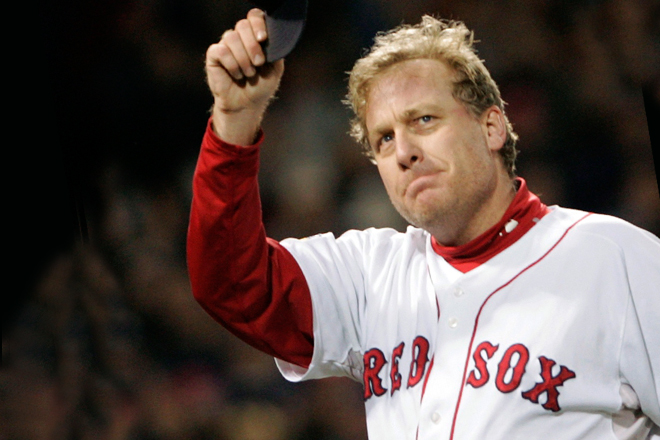
Ethics Hero: Former Red Sox Pitcher Curt Schilling

schilling_rect

No, this isn’t about “the bloody sock.”

When Curt Schilling found his teenage daughter the target of obscene tweets from anonymous Schilling haters —he annoys vengeful Yankee fans because he led the historic Boston comeback from a 0-3 deficit that humiliated their team in 2004, deranged Democrats because he is a Republican, anti-Christian bigots because he is openly devout, and there was that scandal involving his game company blowing through millions of taxpayer dollars bestowed on it by Rhode Island —he got both mad and even, tracking down their identities, and exposing them and their filthy cyber-bullying on his personal blog.  He apologized to his daughter for prolonging her embarrassment, saying,

P.S. Gabby I know you’re likely embarrassed and for that I apologize,” he wrote. “But as we have talked about, there is no situation ever in your life, where it’s ok for any ‘man’ to talk about you, or any other woman this way (and truth be told no real man would ever talk this way anyway). It truly is time this stopped.”

Several of Gabby’s tormenters felt her famous father’s wrath in substantive ways. In the aftermath of Schilling’s counterattack,  Adam Nagel  was suspended by Brookdale Community College, where he’s a student and a disc jockey, and Sean MacDonald was terminated by the Yankees, where he worked as a part-time ticket seller. The ex-pitcher noted that several athletes who slimed Gabby Schilling were punished by their coaches.

Wrote the avenging father on his blog, Continue reading →

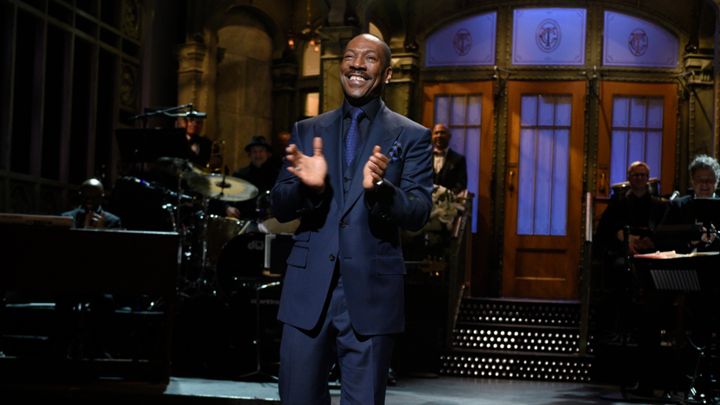
Ethics Quiz: Eddie Murphy’s Golden Rule Moment

Wait..that's all?

Wait..that’s all?

As the long, live, “Saturday Night Live” 4oth anniversary show was being aired on NBC, twitter and various websites gave moment by moment accounts of what was occurring. Everyone was puzzled by the much-ballyhooed appearance of Eddie Murphy, who had a returning hero’s introduction, and was on screen for about a minute, never to return. Why didn’t Eddie do anything funny? Later we found out, though backstage revelations by SNL mediocrity Norm McDonald.

From “Rolling Stone”:

At the tail end of the “Celebrity Jeopardy” sketch – which reintroduced Darrell Hammond as Sean Connery, Will Ferrell as Alex Trebek and Macdonald as Burt Reynolds/Turd Ferguson – a Video Daily Double appeared in the Potent Potables category. Current SNL cast member Kenan Thompson played Bill Cosby revealing his cocktail recipe, a nod to the sweeping allegations against the comedian.

As Macdonald revealed on Twitter, that cameo was originally written for Murphy, who – after a few days of being pursued by Macdonald, Michaels and even director Brett Ratner (the latter serving as an intermediary for the comic) – decided not to appear in the sketch.

“Murphy knew the laughs would bring the house down. Eddie Murphy knows what will work on SNL better than anyone. Eddie decides the laughs are not worth it. He will not kick a man when he is down,” Macdonald wrote.

Your Ethics Alarms Ethics Quiz is…

Is Eddie Murphy an Ethics Hero?

Continue reading →

A Presidents Day Celebration (PART 2): The Good, The Over-matched, And Then There’s Abe

presseal

The Presidents between #7, Jackson, and #16, Lincoln, are almost entirely unknown to most of the public: not one in a hundred can name them all, and of those almost none can name them in order. Eight one-term Presidents, all trying to stave off the civil war in various ways, and all failing that mission.

I will never understand why learning the Presidents in order isn’t a standard requirement in the public schools. It’s not hard; it is a useful tool in placing events in American history, and it prevents embarrassments like the Cornell law grad I once worked with who couldn’t place the Civil War in the right century. Besides, we’re Americans, damn it. The least we owe the 43 patriots who have tried to do this job, some at the cost of their lives, many their health, and many more their popularity, is their place in our history and their names.

On with hailing the Chiefs with some of my favorite facts about them:

James K. Polk

“Hail to the Chief,” which had been sporadically in use since Madison’s day, became the official anthem of the office during the Polk Administration. Polk was a small, unimpressive man, and it was said that he needed the musical announcement when he entered a room or no one would notice him. Looks can be deceiving. James K. Polk was as wily, tough and as ruthless as they come. One reason may be that he was another Presidential survivor of an ordeal that would kill most people: as a teenager, he underwent a bloody frontier operation for gallstones with no anesthesia, tied to a table, biting on a rag.

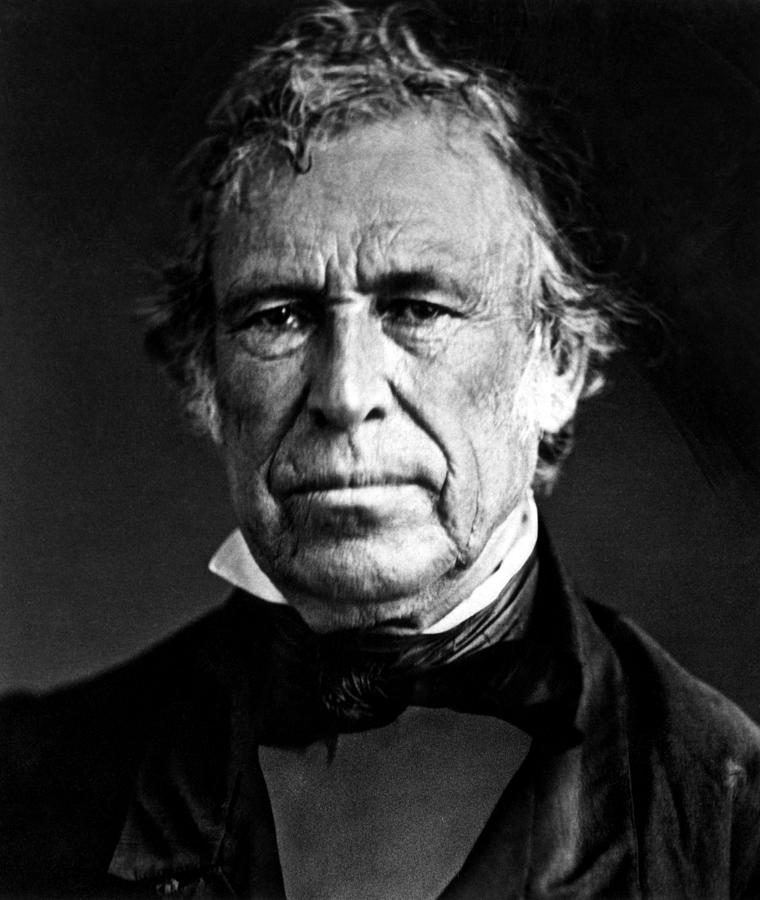
Zachary Taylor

zachary-taylor

General Taylor, who was pursued by both the Whigs and the Democrats who both wanted to nominate him for President, was a great experiment  He was not a member of any political party, had never held public office prior  to becoming President, and had never even voted before becoming Chief Executive. He was also nearly illiterate. We often long for an apolitical President, a true, rather than a pretend, “outsider.” Taylor would have been an interesting test case, though the pre-Civil War political and social chaos was hardly the most promising period to try out the theory. Unfortunately he died of cholera less than half-way into his administration.

And he wasn’t even elected in a year ending in a zero! Continue reading →

Ethics Quote of The Month: Fired Sony Executive Amy Pascal

Good for you, Amy.

Good for you, Amy.

“Here’s the problem: I run a business. People want to work for less money, I’ll pay them less money. I don’t call them up and say, ‘Can I give you some more?’ Because that’s not what you do when you run a business. The truth is, what women have to do is not work for less money. They have to walk away. People shouldn’t be so grateful for jobs. … People should know what they’re worth.”

—Recently fired—because of those hacked e-mails—Sony Pictures chief Amy Pascal, in an interview with journalist Tina Brown at the Women in the World conference in San Francisco. She was addressing her e-mails revealing that actress Jennifer Lawrence was paid less than her male co-stars in “American Hustle.”

Take that, “77 cents for every dollar”!

My least favorite deceitful statistic took it on the chin with Pascal’s candid and accurate statement, and she ranks Ethics Hero status not just for saying it, but saying it in front of an audience full of women who have supported the lie while cheering and voting for politicians who repeat it.

A large chunk of the disparity between the salaries of men and women for the same jobs is not the product of bias or discrimination, but the natural consequences of females being raised to be less assertive, with lower self-esteem, and their resulting poor negotiating skills. Pascal is placing responsibility squarely where it belongs. This has been one more example of a traditionally mistreated group relying on victim-mongering rather than focusing on personal responsibility, accountability and honesty to address what is well within their power to fix.

Brava, Amy Pascal!

If Sony had any sense or principals, it would give you your job back.

The Sixth Annual Ethics Alarms Awards: The Best of Ethics 2014

abstract door grand jury room

The Ethics Alarms Awards for the Best in Ethics 2014—sorry for the tardiness— are about 30% of the length of the Worst. Does this mean that the nation and the culture, not to mention the world, are doomed?

Not necessarily. I am well aware that most of the country is ethical, substantially fair and honest, diligent, and embodies ethical values in their every day dealings with you and me, and the world. We primarily hear, and to some extent, take note of, the corrupt, the irresponsible, the manipulative, the untrustworthy and the foolish. The Best Ethics list is smaller in part because only exemplary ethics gets publicity. I also should note that calling attention to unethical conduct and discussing it often does more to advance the mission of Ethics Alarms than confirming that right is right, though I sure wish there was more exemplary ethics to celebrate. Maybe the dearth of award winners here is my fault, and the result of my biases.

Boy, I hope so.

Here are the 2014 Ethics Alarms Awards for the Best in Ethics:

Most Important Ethical Act of the Year:

The Ferguson grand jury resisted public and media pressure to deliver a verdict of no indictment against police officer Darren Wilson, upholding the integrity of the justice system despite the injection of emotion, politics and race into a tragic incident where none of these belonged. Though the available evidence could never have supported a guilty verdict, it would have been easy and popular for the grand jury to make Wilson stand trial anyway, just as George Zimmerman did. Their reward has been to be attacked as fools and racists, but they did the right thing, when the wrong thing must have seemed very attractive.

Outstanding Ethical Leadership

The New York Yankees. (Bear with me now.) The Yankees are the most famous team in professional sports in the biggest sports market in the world. They make money without even trying. Yet when the team had a bad year and missed the play-offs in 2013, it committed nearly a billion dollars to re-building the team, a move that only makes sense in the quest to win games, not to maximize profit. Thus they prominently chose loyalty, mission and sportsmanship over greed. (The Yankees still missed the play-offs in 2014, too.) Then all year long the team placed a spotlight on Derek Jeter, their retiring hero, whose career and character single-handedly refutes the cynicism of sports critics fed up with the lack of character displayed by the Armstrongs, the Rices, the ARods, the Belichicks, the Winstons, the Paternos, and so many, many others. Finally, when two New York City police officers were assassinated after Al Sharpton, and the “Hands Up!” protestors, with the city’s own mayor’s support, had vilified the profession as violent, racist and untrustworthy, who will pay for the fallen officers’ children to go to college? The New York Yankees’ Silver Shield Foundation.  Add charity, compassion, civic duty and gratitude to the list of ethics values the New Your baseball club modeled for us. I know it seems odd and even trivial to follow up last year’s winner in this category—the Pope— with a sports franchise, but to paraphrase Babe Ruth’s famous rejoinder when the Yankees balked at his salary demands in 1930, saying he wanted to be paid more than then-President Herbert Hoover (“I had a better year that Hoover!”), the Yankees has a better year than the Pope.

Outstanding Sportsmanship

Jose Altuve, Houston Astros secondbaseman and American League batting champ….the right way. He began the final day of the 2014 season hitting .340, three points ahead of the Tigers’ Victor Martinez. If Altuve didn’t play in Houston’s meaningless last game, Martinez would have to go 3-for-3 to pass him, giving the DH a narrow .3407 average compared with Altuve’s .3399. By playing, Altuve risked lowering his average, providing Martinez with a better chance of winning the batting championship. Many players in the past have sat out their final game or games to “back in” to the prize, rather than give the fans a chance to watch a head to head battle injecting some much-needed drama into the expiring season.  Altuve, however, gave Martinez his shot. He played the whole game, had two hits in his four at-bats, and won the American League batting title on the field, not on the bench, as Martinez went hitless. The conduct, simple as it was, embodied fairness, integrity, courage, respect for an opponent, and most of all, respect for the game.

Best Apology

JESSICA_URBINA

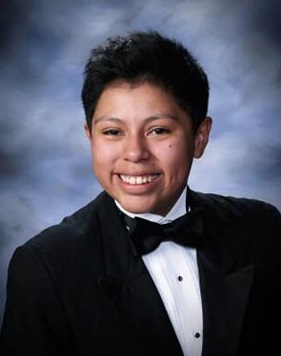
 The Level #1 apology, according to the Ethics Alarms Apology scale, issued by Sacred Heart Cathedral Prep in San Francisco.The school had cruelly and needless embarrassed graduating senior Jessica Urbina (above), rejecting her inclusion in the yearbook because she chose to be photographed in a tuxedo rather than a dress, as the school’s dress code, which had not been previously made clear, demanded. I wrote…

“The rule is sexist, archaic, unthinking, prejudicial, arbitrary, cruel and wrong. The best way to change a rule that is sexist, archaic, unthinking, prejudicial, arbitrary, cruel and wrong is to break it, and see if those in charge have the sense and compassion to do the right thing. The administrators of Sacred Heart Cathedral High School flunked. I doubt that Jessica was even trying to provoke a confrontation: like any normal student, she wanted her image in the most important piece of memorabilia of her high school years to accurately portray her as she was, not as some alien ideal dictated by the Catholic Church. There was nothing to be achieved by banning the photo.”

The school reversed itself with grace and compassion. The apology is long, but a more humble or complete one would be unachievable. It achieved an ethical end to an ugly episode. You can read it here. Runner up: Writer Henry Rollins‘ lovely and wrenching apology for his initial reaction to Robin Williams’ suicide.

Hero of the Year

Michael DeBeyer.  De Beyer has decided to sell his restaurant, which he opened more than 15 years ago and is worth an estimated  $2 million, to pay for whatever medical treatments are necessary to save the life of Brittany Mathis, 19. Brittany works for De Beyer at his Kaiserhof Restaurant and Biergarten in Montgomery, Texas, and  learned, in December 2013, that she has a 1.5 inch brain tumor.  She couldn’t afford the operation to find out whether the tumor was benign or malignant, and didn’t have health insurance. “I couldn’t live with myself; I would never be happy just earning money from my restaurant knowing that she needs help,” Michael told local reporters.

That’s what makes ethics heroes; really, really loud ethics alarms, combined with courage and caring.

Parent of the Year

NBA Star Kevin Durant’s Mom.

Most Ethical Celebrity

Matthew McConaughey. In a field notably sparse on exemplary ethics by celebrities, the 2013 Oscar winner for Best Actor stands out for a speech that was inspirational, thoughtful, and rife with ethics wisdom. It is worth recalling. Here it is:

Thank you. Thank you, thank you, thank you, thank you to the Academy for this—all 6,000 members. Thank you to the other nominees. All these performances were impeccable in my opinion. I didn’t see a false note anywhere. I want to thank Jean-Marc Vallée, our director. Want to thank Jared Leto, Jennifer Garner, who I worked with daily.

There’s a few things, about three things to my account that I need each day. One of them is something to look up to, another is something to look forward to, and another is someone to chase. Now, first off, I want to thank God. ‘Cause that’s who I look up to. He has graced my life with opportunities that I know are not of my hand or any other human hand. He has shown me that it’s a scientific fact that gratitude reciprocates. In the words of the late Charlie Laughton, who said, “When you’ve got God, you got a friend. And that friend is you.”

To my family, that who and what I look forward to. To my father who, I know he’s up there right now with a big pot of gumbo. He’s got a lemon meringue pie over there. He’s probably in his underwear. And he’s got a cold can of Miller Lite and he’s dancing right now. To you, Dad, you taught me what it means to be a man. To my mother who’s here tonight, who taught me and my two older brothers… demanded that we respect ourselves. And what we in turn learned was that we were then better able to respect others. Thank you for that, Mama. To my wife, Camila, and my kids Levi, Vida and Mr. Stone, the courage and significance you give me every day I go out the door is unparalleled. You are the four people in my life that I want to make the most proud of me. Thank you.

And to my hero. That’s who I chase. Now when I was 15 years old, I had a very important person in my life come to me and say “who’s your hero?” And I said, “I don’t know, I gotta think about that. Give me a couple of weeks.” I come back two weeks later, this person comes up and says “who’s your hero?” I said, “I thought about it. You know who it is? It’s me in 10 years.” So I turned 25. Ten years later, that same person comes to me and says, “So, are you a hero?” And I was like, “not even close. No, no, no.” She said, “Why?” I said, “Because my hero’s me at 35.” So you see every day, every week, every month and every year of my life, my hero’s always 10 years away. I’m never gonna be my hero. I’m not gonna attain that. I know I’m not, and that’s just fine with me because that keeps me with somebody to keep on chasing.

So, to any of us, whatever those things are, whatever it is we look up to, whatever it is we look forward to, and whoever it is we’re chasing, to that I say, “Amen.” To that I say, “Alright, alright, alright.” To that I say “just keep living.” Thank you.

Most Principled Politician
Thomas Menino

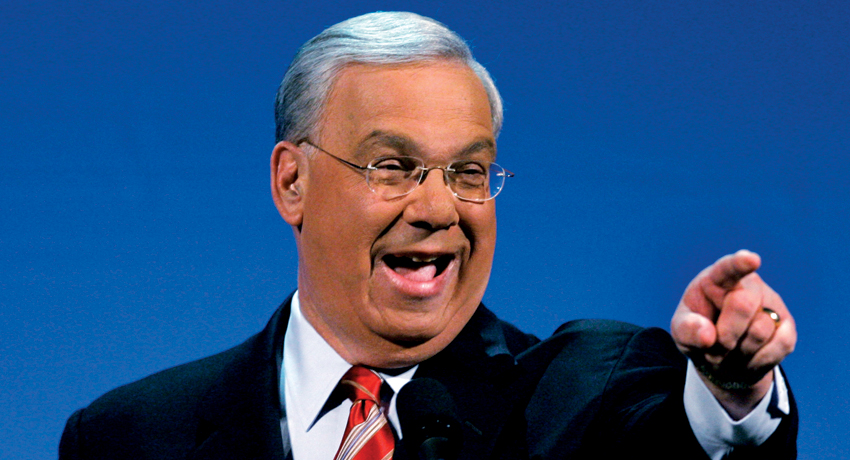
The late Thomas Menino, Boston’s beloved Democratic mayor for two decades (the longest in tenure in the city’s history), who retired last January and  died of cancer nine months later. Somehow I missed giving him the ethics send-off he deserved. Amazingly, he was the first Italian-American mayor in Boston’s history: the job has always been won by the city’s Irish machine. While mayors around the nation were embroiled in scandals and embarrassments, Menino undeniably improved the city, led it admirably in the aftermath of the Boston Marathon bombing in 2013, and left office with the admiration of conservatives as well as liberals despite being an aggressive agent of progressive policies.  His passion caused him to make some ethical missteps, such as joining other liberal mayors in telling Chick-Fil-A that it “wasn’t welcome” in Boston because of its owner’s anti-gay marriage sentiments. He joined Michael Bloomberg in creating Mayors Against Illegal Guns, and must share responsibility for some of the dubious tactics and misrepresentations of that organization. He also had a scandal or two involving political favors, but in 20 years, by my count, he had fewer than most Boston mayors had every year. In 2012, polls found that he had an approval rating over 80%, and left his position more popular than he entered it.  Boston is liberal, but it isn’t that liberal.

Most Ethical Company

Don’t ever let me do that again.

I just reviewed over a hundred posts about businesses and corporations from last year, and not one of them celebrated ethical conduct. The closest was, believe it or not, the Washington Redskins, for having the guts, orneriness and principles to stand against the forces of censorship and political correctness to refuse to change the name of their team and organization. It has been targeted as a symbolic scalp that race-baiters, grievance-hucksters and progressive bullies are determined to have hanging from their belts; the opponents of the team have recruited the U.S. government, and the pressure is tremendous. It would be so easy to change the name now, when support for the perpetually rotten team is at low ebb in Washington, D.C., but the principle is worth the battle. However, my gag reflex will not allow me to give this award to an NFL team, since by definition it must be engaged in so much else that is wrong.

So for a second straight year I’m going to send you to Ethisphere’s list of the most ethical companies in the world. Their criteria isn’t mine, but there’s got to be a genuinely ethical company of two on there somewhere. Let me know if you find it. Continue reading →
Ethics Hero Emeritus: Irena Sendler (1910-2008)

Sendler

I missed learning about the death of Irena Sendler (Irena Sendlerowa) in 2008, and this occurred because the mass news media barely took note of it. Lots of celebrities died that year whose passing prompted extended mourning in the press and examinations of their legacies: Paul Newman, Heath Ledger, Sir Edmund Hillary (a member of the Ethics Alarms Heroes Hall of Honor), Charlton Heston, Aleksandr Solzhenitsyn, and many others. There was no room for a final appreciation of the life of Irena Sendler, apparently. Today, the website Bio.com doesn’t list her among the notable deaths of that year, though it finds room for Fifties stunt singer Yma Sumac—remember her? She had a four octave range! And Arthur Showcross: he murdered 11 women from 1988 to 1990 in upstate New York, earning the nickname “The Genessee River Killer.”

All Irena Sendler did was save 2500 children from the Treblinka death camp. Continue reading →

Ethics Hero: Montgomery County, Md. Police Chief Tom Manger

"Cops": Chaz Pando as the doomed perp; Nello DeBlasio as the hostage.

“Cops”: Chaz Pando as the doomed perp; Nello DeBlasio as the hostage.

My theater company is performing the 1976 Terry Curtis Fox drama “Cops” as we wind down this season after 20 years. I chose the show, and its companion piece in an evening called “Crime and Punishment in America,” William Saroyan’s classic one-act “Hello Out There,” in direct response to Ferguson, the growing controversy over police violence, the increased racial divide in the U.S. and the gun control debate. Both dramas, as cast, involve African American victims of violence in a law enforcement setting. “Cops,” in particular, features openly biased Chicago police (at least based on their choice of words) and the police execution of a disarmed and surrendering cop-shooter. As the lights fade, the police are discussing what their cover story should be.

I invited the Chief of Police in Montgomery County, Maryland, Tom Manger, to come to the production and field questions from the audience regarding its relevance to current controversies in Ferguson, New York City and across the nation. [Full disclosure: I have known Chief Manger and his wife for many years, and consider them friends] You might recognize him: he was a major figure in the apprehension of the D.C. Snipers, and has been seen and interviewed on the national news and on issue talk shows several times, most recently on CNN’s “State of the Nation” with Candy Crowley. Not only did Tom agree to come, but he let me schedule him twice, said the sessions could be videotaped, and that no question would be off limits.

The first of the talkbacks took place last week (I am moderating another this Sunday), and Tom was as good as his word—candid, blunt, open, and frank.  He was quizzed, hard, by our diverse, astute and always combative audience members about police training, police force diversity, bad cops, police who lie and cover-up misconduct, and racism in the ranks, as well as the details of specific shootings including the local one I have referred to here more than once, in which an unarmed white man, John Geer, was shot and killed by police as he stood in his doorway negotiating with them over a domestic dispute.

Since the episode in Ferguson, Chief Manger said, he has been meeting with community groups two or three evenings a week, doing everything he can to bolster community trust. Among his comments in response to questions: Continue reading →