Ethics Heroes: The Massachusetts Supreme Judicial Court

Michael Robertson: pervert, creep, outrageous abuser of women who deserves to be shunned, despised and condemned by all decent people. But a criminal? Not yet...

Michael Robertson: pervert, creep, outrageous abuser of women who deserves to be shunned, despised and condemned by all decent people. But a criminal? Not yet…

The degree to which our media pundits fail to grasp the essential nature of the rule of law remains confounding, and this is another in a long line of examples. Worse, the lower court in this weird case failed to grasp it as well.

You see, there is conduct that is obviously wrong, which we call unethical. Some of that conduct is so wrong, so harmful, and so difficult to discourage with social opprobrium and informal enforcement alone that we pass laws against it, both to signal strong disapproval but also to add serious negative reinforcement, in the form of tangible punishment, to the mix. Then the wrongful conduct becomes both unethical and illegal. If we skip the essential intermediate step of writing and duly passing the law that designate the conduct as illegal, however, we have established a dangerous, indeed frightening precedent. Then we have created a society where one can be imprisoned or fined for conduct that is regarded as unethical without a law in place that empowers the state to take such actions against citizens who engage in it. Ethics, unlike law, especially on the margins, is never etched in stone. Once society starts imprisoning individuals based on ethics alone, none of us are safe.

Yet this morning I was subjected to the protests of one TV commentator after another who derided the absolutely correct decision of the Massachusetts Supreme Judicial Court to uphold this principle by throwing out the conviction of Michael Robertson, a sick sleaze-ball who was arrested in August 2010 by Boston transit police who had set up a sting after getting reports that he was using his cellphone to take photos and video up female riders’ skirts and dresses: Continue reading →

Government Ethics: Luxury On The Taxpayer’s Dime

And the best part is, those poor suckers in coach are paying for all of this! Bwahahahaha!!!

“And the best part is, those poor suckers in coach are paying for all of this! Bwahahahaha!!!”

The Washington Examiner acquired records of federal agency travel through the Freedom of Information Act, and made an interesting discovery:

“The federal government spent millions of dollars on thousands of upgraded flights for employees in 2012 and 2013, paying many times more for business and first-class seats than the same flights would have cost in coach or the government-contracted rate. Premium travel reports from 14 federal agencies documenting the flights show these agencies alone spent an estimated $8.7 million on 1,903 upgraded flights in those two years. That was about $6.4 million more than the same coach and government-rate flights would have cost. The agencies spent $5.7 million in 2012, almost double the $3 million they paid for premium travel in 2013. The cost of coach and government-rate flights is approximate because several agencies either reported estimates for some coach fare or didn’t report them at all.”

There is just no excuse for this. None. I can conceive of some rare situations when first class travel would be called for, but not many. The accommodations in coach for most international air travel is perfectly endurable, and the huge difference in price isn’t justified unless you have serious back problems or some other malady. The basic ethical question every public servant should ask himself or herself is this: would I fly First Class if I had to pay for it? Almost always, the answer will be “no,’ and even if the answer is yes, the standard for buying luxury seating on the public’s tab should be more stringent.  It’s not their money. That’s really the answer to the threshold “What’s going on here?”  ethics query in this instance. What’s going on is that the public’s trust is being abused by officials casually using scarce taxpayer resources for their own comfort and convenience. Continue reading →

Being Fair To College Student Ideological Idiocy

Luckily for him, the bank president who wrote this foolishness in 1969 didn't sign his name to it...

Luckily for him, the bank president who wrote this foolishness in 1969 didn’t sign his name to it…Ah, my old college days!

My attention has been drawn recently to two essays by college students, both presumably sent to me on the theory (or hope) that reading them would kill me. The first, published in the Drexel Triangle (the student paper), argues that stage directors should be prevented from casting actors who look the way the playwright envisioned them. The second, published in the Harvard Crimson, makes an even more disturbing assertion: its author asserts that Harvard should stop guaranteeing professors and students the right to advocate controversial views or pursue research that challenges liberal views and assumptions.

I don’t want to devote the bulk of this post to rebutting these two essays, which are, I think self-rebutting. In the theatrical essay, student actress Alyssa Stover argues that a stage director shouldn’t have the right to decide that, say, casting an Asian dwarf as black boxer Jack Johnson in “The Great White Hope” would lead to a less effective production (that is my example, not hers—she objects to a director of “Cabaret” refusing to cast African-Americans as a matter of historical accuracy):

“These arguments are fundamentally flawed. What the audience wants is almost impossible to measure because the “audience” is composed of anyone who can get a ticket. A director or producer’s right to deny someone a role due to their appearance is debatable because this is a judgment based on one person’s preferences and may not actually create something that is stage worthy. The current status quo allows people to be barred from the stage due to physical “flaws,” as determined by the direction. These judgments are not harmless, and when the issue of race is involved, the problem only gets bigger.” Continue reading →

Ethics Blindness: The Pro-Abortion Ethical Disconnect

To anyone who is capable of compassion and objectivity, the abortion controversy represents a classic ethics conflict: two ethically defensible positions based upon undeniable ethical principles that are in opposition. Both factions have their absolutist wings which would deny the other side’s interests, holding that either the life of the unborn ( abortion opponents) or a woman’s autonomy (abortion advocates)  is such a societal priority  that nothing should be permitted to compromise its primacy in any way. Yet the best solution to most ethics conflicts, if possible, is balancing, resulting in acceptance of a  reasonable middle position that acknowledges the validity of both interests.

Recent comments from prominent pro-abortion advocates are ethically troubling, because they suggest a complete denial that any valid interests on the other side exist at all. This signals a retreat from reason and fairness into zealotry and fanaticism, and it makes balancing not merely more difficult, but unimaginable.
In an interview on the cable station Fusion, Planned Parenthood president Cecile Richards had this revealing exchange (video above): Continue reading →

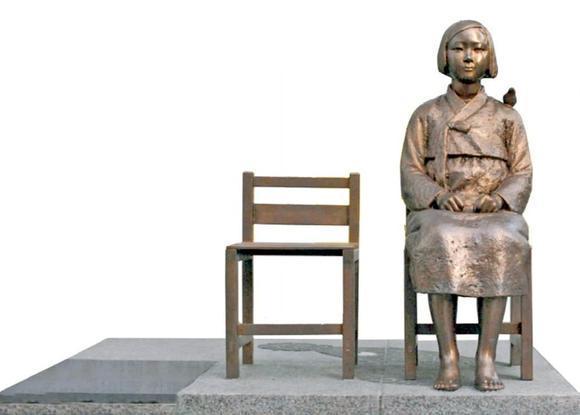
The Comfort Women Memorial Lawsuit: A “Disgusting” Legal Argument, Perhaps…Unethical, No

The Glendale Comfort Women Memorial

The Glendale Comfort Women Memorial

The large and respected law firm Mayer Brown has taken the ugly case of some Japanese-American clients who want the city of Glendale, California to remove a memorial to World War II “comfort women” from a public park. In doing so, and in the way it is proceeding, the firm has inspired harsh condemnation from two estimable legal commentators, both First Amendment champions: Marc Randazza, and Ken White. Their objections, which caused Randazza to call the firm “the least honorable law firm in the world,”and White to conclude, “This lawsuit is thoroughly contemptible. It should fail, and everyone involved should face severe social consequences,” are heartfelt, but, I think, misguided. Their argument, beside arguing that the lawsuit is frivolous, is best articulated by Randazza: Continue reading →

Comment Of The Day: “It’s Time To Play The Exciting New Broadcast Media Ethics Game…”

pop-gun

Steve-O-in NJ, commenting on the post about President Obama’s weak response to the invasion of the Ukraine by an emboldened Russia. raises the broader ethical point of America’s duty to be militarily strong, one of the persistent areas of disagreement between liberals and conservatives, and one area where the right has it right, and the left is out in left field. It should be noted, however, that this problem is a direct consequence of the even greater one hanging over us: the relentlessly expanding National Debt, and the irresponsible lack of political courage and resolve to do anything about it other than let it get worse. This was most recently demonstrated by what we have learned about the President’s new budget proposal, which raised the ethical question, “Did Obama ever mean what he said about entitlement reform and serious debt reduction?”

Wrote Washington Post editorial chief Fred Hiatt—a liberal Democrat, like virtually all of his colleagues— last week:

It’s a relatively small thing, really, a fix to the calculation of cost-of-living benefits that would have helped save Social Security. But President Obama’s decision to drop the reform from his proposed budget hints at a bigger question: What does he believe in enough to really fight for?

To hear him in 2009, you would have thought that safeguarding Social Security was one such goal. “To preserve our long-term fiscal health, we must also address the growing costs in Medicare and Social Security,” he said. In 2010, he was even more determined: “Now, even after paying for what we spent on my watch, we’ll still face the massive deficit we had when I took office. More importantly, the cost of Medicare, Medicaid and Social Security will continue to skyrocket. . . . I refuse to pass this problem on to another generation of Americans.” Now the winds have shifted — his party wants to woo older voters by promising richer benefits, not reform — and Obama has moved on, too. Someone else will have to fix Social Security.

His turnabout on foreign policy has been even more dizzying. Three years ago, he was promising to support democracy movements throughout the Middle East and protect their advocates from government violence.

Hiatt, whom I generally respect, seems to be uncharacteristically slow on the uptake here. Many of us figured out way back in 2008 that Obama was a politician who would use whatever soaring rhetoric he thought would please the maximum number of voters, and that he had no idea how or whether to make his words reality….and does not yet.  Meanwhile, the Post’s fairest and most astute conservative pundit, Robert Samuelson, explained why Obama’s inaction on entitlements guarantees weakness in the world:

We are spending more and getting less, and — unless present trends are reversed — this will continue for years. It threatens the end of government as we know it.

The cause is no mystery. An aging population and higher health spending automatically increase budget outlays, which induce the president and Congress to curb spending on almost everything else, from defense to food stamps. Over the next decade, all the government’s projected program growth stems from Social Security and health care, including the Affordable Care Act. By 2024, everything else will represent only 7.4 percent of national income (gross domestic product), the lowest share since at least 1940, says Douglas Elmendorf, head of the Congressional Budget Office.

This is the central budget story, and it’s largely missed — or ignored — by political leaders, the media, political scientists and the public. The welfare state is taking over government. It’s strangling government’s ability to respond to other national problems and priorities, because the constituencies for welfare benefits, led by Social Security’s 57 million, are more numerous and powerful than their competitors for federal support. Politicians of both parties are loath to challenge these large, expectant and generally sympathetic groups.

With this as the depressing backdrop, here is Steve O’s excellent Comment of the Day on the post, It’s Time To Play The Exciting New Broadcast Media Ethics Game, “Biased, Lazy, or Incompetent!”: Continue reading →

It’s Time To Play The Exciting New Broadcast Media Ethics Game, “Biased, Lazy, or Incompetent!”

Time to play

Ready to play, contestants?

All right! For your first test, consider President Obama’s recent statement in response to signs that Russia is preparing to invade Crimea in the Ukraine as an opportunistic territory grab made possible by the collapse of the Ukrainian government. He said in part…

” …we are now deeply concerned by reports of military movements taken by the Russian Federation inside of the Ukraine. Any violation of Ukraine’s sovereignty and territorial integrity would be deeply destabilizing, which is not in the interests of Ukraine, Russia, or Europe… The United States will stand with the international community in affirming that there will be costs for any military intervention in Ukraine.”

For background in answering this question, President Obama has often made sweeping threats regarding foreign oppression and military adventurism, but has established a pattern of doing little or nothing when the actions he warned other governments against taking occurred anyway. His “red line” warning about Syria was the most egregious example, but there have been others. Reporting on the most recent “warning” by the President, CBS stated that his credibility in such situations was “somewhat shaken” by the Syria debacle. [LAUGH SIGN FLASHES] I know, that’s a good one, isn’t it? “Somewhat” shaken! Elsewhere, conservative columnist Charles Krauthammer pronounced Obama’s statement as flagrantly weak: Continue reading →

Seth Rogen’s Celebrity Hissy Fit And Congress’s Celebrity Cynicism

"How dare the Senators not take me seriously?"

“How dare the Senators not take me seriously?”

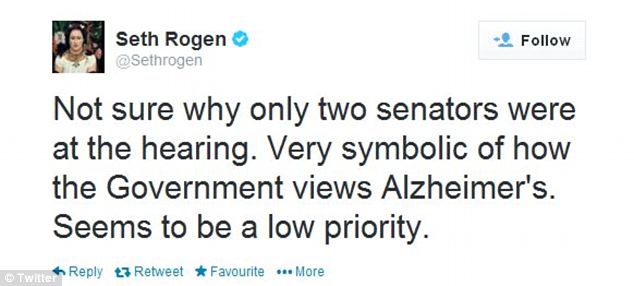
Actor Seth Rogen, who specializes in playing likable, though often stoned, shlubs in Hollywood comedies (except when he was cast as the Green Hornet, which everyone would rather pretend never happened), came to Capitol Hill to testify about the need for more research into the causes and prevention of Alzheimer’s Disease. His testimony was to the point and heart-felt—his late mother began showing symptoms of the illness in her fifties—and read from prepared text in a flat and formal tone rather than actorly flair. Rogen, however, was apparently seething was anger: after he was introduced, only two Senators on the committee stuck around for the show. Later he tweeted peevishly:

Rogen Tweet

Get the hook: Continue reading →

Twelve Post-Veto Ethics Observations On The Arizona “Religious Freedom” Bill

veto2

1. As we now know, Governor Brewer vetoed AZ SB1062, the so-called “religious freedom” bill that was widely (and accurately) interpreted as support for discrimination against gays. In the previous post, I suggested that her delay in doing so sent a message that was as hostile to gays as the law itself: if she felt the law was ethically wrong, then she should have and would have announced that she would not sign the bill long ago. Instead, she waited to see how much economic damage the law would do to the state, and then vetoed it, not because this was the right ting to do, but because it was the pragmatic thing to do. (As the satiric Borowitz Report put it, “The state of Arizona found itself in the middle of a conundrum today as it awoke to the awkward realization that gay people have money and buy stuff.”) USA Today noted that, to the contrary,”Some political insiders believe Brewer has allowed furor over the legislation to build to thwart social conservatives’ attempts to push a similar bill later.” I doubt it, but if so, Brewer allowed her state and her fellow Republicans to be represented nationally as homophobic for as long as possible to spare herself the inconvenience of vetoing a second bill.

2. Despite the extravagant debate over the bill, almost no commentators actually published the bill’s text in the commentary. The reason appears to be that since the bill is really an amendment of an existing law, it takes a modicum of intelligence to figure out what’s going on. Here it is (the original law is in black; the new text is in blue; what has been removed in the amended version is struck through): Continue reading →

Ethics Dunces (Bigotry Division): Arizona Republicans

Message received.

Message received.

I don’t know what Arizona Republican legislators are running from now: they have accomplished their mission. They’ve made it abundantly clear that they don’t like or respect the rights of gays, bi-sexuals and transsexuals, and want to leave no question in the minds of anti-gay bigots (or good and gentle religious people  across the state who want to discriminate against gays because they thing doing so is “moral”) that the nationwide cultural shift to approval of gay marriage, a.k.a, equal rights under law, hasn’t changed this: Arizona Republicans back your dislike of these perverts’ sinful, corrupting lifestyle, whatever the law is.

The disingenuous and offensive argument being made by Republican supporters of the modifications of  an 1999 Arizona law called the Religious Freedom Restoration Act (RFRA) is, in essence, that Arizona businesses can already discriminate against gays, and so can those of lots of other states. This isn’t an anti-gay law! It’s a religious freedom law! Yes, and the Civil War was about States rights. The new bill’s clear motivation—Timing! Timing!— is to strengthen the hand of businesses, organizations, corporation and non-profits that object, allegedly or actually on genuine religious grounds, to serving, employing, or dealing with gays. More than that, however, the goal is to line up the legal, moral and ethical authority of the state behind those who want to treat gays in this fashion, whatever the reason, rather than behind the rights of the LBGT community to be treated like all other citizens. Continue reading →