First, the moral: Cultural literacy is a life competence obligation both at home and abroad. Now the tale:
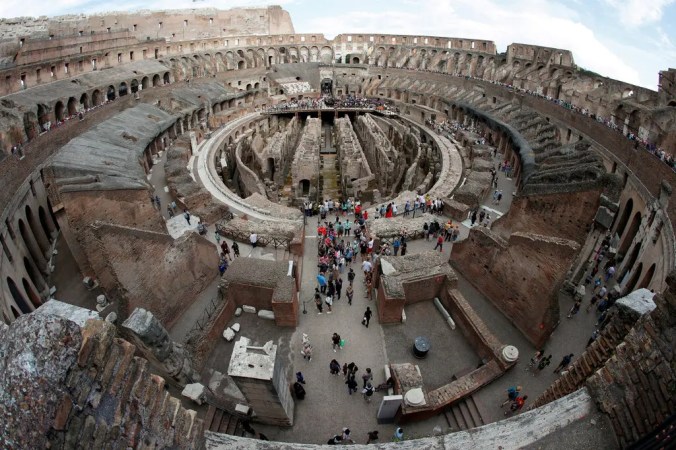
I had been planning on a post about the manhunt in Rome for the unethical tourist caught on video carving “Ivan + Hayley 23/6/23” into a brick on a wall of the Colosseum. Authorities went looking for “Ivan;” meanwhile, not only is destruction of natural and historical sites an occasional Ethics Alarms theme, but in this case the video-taker’s conduct was also questionable: he was more interested in taking a viral video than he was in stopping the vandalism.
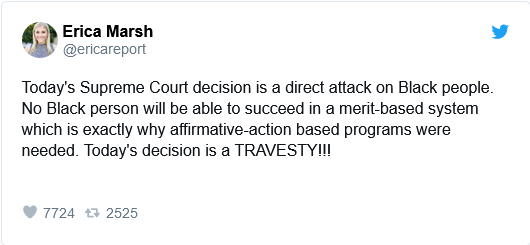
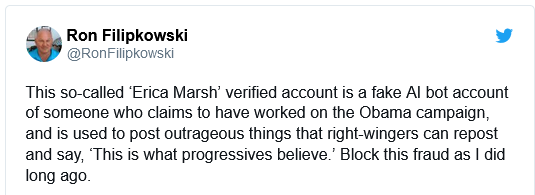
The tweet above has “gone viral” with its seemingly approving statement of the underlying arguments being raised in protest of yesterday’s SCOTUS decision ending affirmative action in universities. Conservative pundits and wags are using it to mock the hypocrisy and racism of progressives, some apparently believing the tweet is sincere, others believing it is satire but treating is as genuine anyway. The low-IQ quadrant of Woke World like the tweet because its denizens can’t detect its glaring idiocy; the smarter segment is outraged at the tweet’s blood-drawing power, and reacting like this:
Before I pose today’s ethics quiz question, here are a few things to consider:
[ Rose’s breast-baring at the White House will serve as the regular graphic accompanying this topic in the future, because it perfectly symbolizes the attitide of these activists toward the public,
The Tran Ethics Train Wreck was made official back in February, and in retrospect Ethics Alarms should have designated it much earlier. An ethics train wreck is a continuing and evolving situation involving ethics issues and dilemmas that entice anyone becoming involved in them to end up looking foolish at best, misguided at worst, and in between, subject to anger and abuse. Latest developments:
The University of Wyoming’s Kappa Kappa Gamma sorority is being sued for allegedly changing the definition of ‘woman’ to accept a trans member, a biological male with equipment intact who is 6’2″ and 260lb. She has been accused of ogling her “sisters” with a full erection, among other issues. The suit alleges that the sorority’s leadership bullied and intimidated member to accept Artemis Langford. The current and altered sorority rules only require that a member “identify” as female. KKGs lawyers argue that the definition of “woman” has evolved since the sorority’s founding 150 years ago”The term (woman) is unquestionably open to many interpretations,” the sorority’s filing claimed. I question whether a law suit can prevail here, as clear as it seems that the complaining members were subjected to a bait-and switch. If they cannot get the sorority to agree to a policy they find tolerable, and if they really have been subjected to bullying, I suggest that they quit.
AMC Theaters canceled screenings of a documentary film showcasing the experiences of de-transitioning transsexuals following an aggressive campaign by a group called the Queer Trans Project which sends “Build-a-Queer kits” to “transitioning” LGBTQ+ individuals. The kits include chest binders and tucking tape The online activist group encouraged protesters to send letters to AMC executives to block the screening of the documentary titled “No Way Back: The Reality of Gender-Affirming Care.” The film shares the stories of five young transsexuals regretting their decision to cross gender lines as well as critical commentary from medical experts. Once AMC announced that it would not show the film, the group posted: “We did it! Our community’s swift action is a testament to the power of advocacy and the importance of raising our voices against harmful content. Your collective efforts have made a significant impact, and the decision to pull No Way Back from AMC theaters is a step towards fostering a more inclusive and respectful environment. Thank you for your dedication and commitment to creating positive change.” AMC claims that the decision was based entirely on poor advance ticket sales. And absent leaked documents or emails, there is no way to determine which story is true, or if reality is some mixture of both. The activist group would try to take credit regardless the actual impact of its lobbying, and AMC would never admit to suppressing speech and art because of political pressure.
This doesn’t help: New Hampshire’s first transgender state representative, Stacie-Marie Laughton has been arrested and charged with multiple counts of distributing child sexual abuse images. Laughton’s girlfriend was also arrested on the same day on one count of sexual exploitation of children, and one count of distribution of child pornography. She was working at a daycare called Creative Minds and is accused of taking pictures of the children in her care.
That’s quite a role-model you have there, Trans World! Continue reading →
On a rainy June 1st in1975, President Gerald Ford slipped while walking down the Air Force One boarding stairs after landing in Salzburg. The caught-on-camera incident became a PR problem for an already controversial and unelected President seeking a full term the old fashioned way. The writers for newly-minted late night satirical skit comedy show on NBC, Saturday Night Live, know comedy gold when they saw it, turned Ford’s alleged clumsiness into a signature gag, with break-out show star Chevy Chase playing Ford and including elaborate pratfalls in many of the SNL “cold opens.”
Exactly 43 years after Ford’s fall, Joe Biden, who makes Ford look like one of the Flying Wallendas by comparison, took a Chevy Chase-like face plant on stage at the U.S. Air Force Academy graduation ceremony in Colorado yesterday. This poses an immediate integrity test for SNL, or would, if the show had not completely abandoned integrity when it decided to leave Barack Obama essentially unscathed for eight years. If I were producing SNL, I’d bring back Chevy and have him introduced as Biden in the cold open…and that would be enough (and it would be all that would be realistically possible, as Chase ruined his back by all those falls as Ford.
What are the odds? I’m not curious enough to watch the show, as I have not since it became a full-time Democratic Party attack machine, but Joe’s tumble had me thinking about it.
But I digress. There is plenty in the ethics jungle to talk about, so get to it.
Amazingly, this is the first time New York’s communist wacko Congresswoman, Rep. Alexandria Ocasio-Cortez, has been designated an Incompetent Elected Official of the Month. Since her election, re-election and re-re-election, she has been honored here with (let’s see…) two Ethics Dunces, two Unethical Quotes, three Unethical tweets, and an over-all assessment as an ethics villain when she could have scored an Unqualified Elected Official, Ethics Dunce, Unethical Tweet, Unethical Quote, and a KABOOM! with a single blazingly moronic tweet. Ethics Alarms did award her a special Incompetent UNelected Official Of The Month in July of 2018 when she was first running for office. This was after she uttered the kind of brainless nonsense we are now accustomed to, saying that “Unemployment is low because everyone has two jobs.”
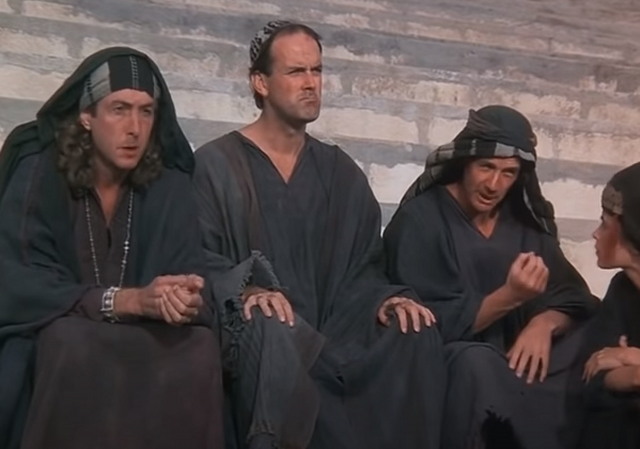
When the Monty Python satire “The Life of Brian” was released in 1979, conservative groups, calling it blasphemous, called for protests and boycotts in the U.S. and Great Britain. Now, as two of the living and not-completely-senile members of the comedy troupe, Eric Idle and John Cleese, prepare to launch a stage version of the movie, conservatives are complaining that they aren’t willing to make the adaptation edgy enough.
In one scene that has taken on more significance lately than it seemed to have 40 years ago, a discussion between “People’s Front of Judea” members Stan (played by Idle, on the left above) and Reg (Cleese) involves Stan saying that he wants to be known as Loretta and to have babies. ‘It’s every man’s right to have babies if you want them,” Stan insists. When Reg points out that, as a man, he can’t have babies, Stan protests, “Don’t you oppress me.”
To hear conservatives describe the scene now, one would think it was the funniest scene in the film. It wasn’t even the funniest scene involving the People’s Front of Judea. But I digress: apparently after trial readings of the script for the stage version, Idle and Cleese decided that they should cut the bit.
The good news is, as we are periodically reminded, this isn’t the U.K. (Thank-you, George, Tom, John, Paul and Ben!). The bad news is that the totalitarian virus embedded in The Great Stupid is contagious, and far greater threat to civilization than any pandemic. Great Britain has reached a level of unethical literary censorship—for the greater good, to eradicate “WrongThink,” you know—that would have been unimaginable just a few years ago.
I thought the effort by British publishers to re-write the works of Roald Dahl and Ian Fleming was just a temporary outbreak, and that the miscreants had received so much ridicule and criticism that the madness had been contained. As is so often the case, I was tragically wrong. Now these ethics villains have come for…I can’t believe I am writing this…P.G. Wodehouse.
I can understand one dim bulb not realizing that this was a vulgar, juvenile, and offensive promotion. But an entire tourism organization? Nobody stepped up and said, “Wait a minute! Are you people nuts?”?
Wow.
Experience Regina, the tourism organization in Saskatchewan’s capital city of Regina, came up with an oh-so-clever idea for new tourism campaign slogan: “Show us your Regina.” They really did that. They had a second slogan too: “The city that rhymes with fun.” Get it??
Venus is a town in Texas, by the way. Just thought I’d mention it.
Back to Regina: oddly, many people found the two slogans inappropriate. Actually, just about everyone did, which again raised the question of how these locker-room level gags got past the first brain-storming session. So, because nobody involved possessed either good taste, the sense God gave an oyster, or the guts to stand up and make the tourist promotion equivalent of, “Uh, General Custer? I don’t think going down into the valley is such a good idea,”Experience Regina’s CEO had to release a quick abject apology. groveling,
“I want to start by apologizing, on behalf of myself and our team, for the negative impact we created with elements of our recent brand launch. It was clear that we fell short of what is expected from our amazing community with some slogans that we used.”
Now he needs to resign for assembling such an inept and sophomoric staff.
Incidentally, there is a Delores, Colorado. Maybe he can start over there…
Curmie’s typically erudite and perceptive Comment of the Day below made me happy and sad at the same time. Happy, because it is the kind of superb commentary Ethics Alarms readers excel at producing, making the site unique in the blogosphere whether a significant numbers of people take advantage of the resource. Sad, because I should have authored its equivalent in the first place, and might have come closer if I were not forced daily into squeezing posts into randomly distributed periods during the day that I don’t have to devote to earning enough money to keep the Marshalls from a future living in a cardboard box in the woods.
Curmie’s analysis also alerted me to something I had missed in the video, the mysterious statement “Not again!” from one of the anchors. This reminded me of the just-created whale in “The Hitchhiker’s Guide to the Galaxy,” hurtling to Earth through space (along with a pot of petunias) that similarly thinks, also inexplicably, “Oh no, not again!”
I find this one fascinating for a variety of reasons. One of those is that I no doubt had a different reaction to seeing the event under the headline “BREAKING: CBS LA Weather Forecaster collapses live on air.” So I can’t say how I would have responded had I simply been watching that news show.
Part of my response is also based on the initial movement, the slow bend forward toward the desk. That seemed almost choreographed, as if she was going to pound her head on the desk as some sort of statement on the imminent forecast, described by the co-anchor as “the calm before the storm.” It’s the slide out of the chair that changes the dynamic. That’s definitely unstaged.
More importantly, I’d read your statement that she’s recovering at home before I viewed the video. This takes us very close to the notion of aesthetic distance, that unspoken understanding that what we are watching isn’t actually happening. Hence, we don’t run for cover when the bad guy in a play or a movie appears with a gun and looks threatening, and we’re not confused when the actor who played Hamlet is miraculously alive to take a curtain call even though the character is dead. Or, in this case, that she suffered an episode, but is on her way to recovery.