What America Has Learned From Sarah Palin

Thanks for the enlightenment, Sarah!

When Ethics Alarms last left Sarah Palin, she had delivered a description of Paul Revere’s famous ride on the evening of the 18th of April in 1775 that would have earned her an F in speech class and, at best, an Incomplete in American History.  Incredibly, however, Palin and her indomitable supporters have tried to turn the tables on her critics, aided by several history pedants, by claiming that her collage of words and thoughts was really a sophisticated account of Paul’s evening that her historically ignorant critics failed to appreciate.

Uh huh. Let’s revisit her statement, shall we? She said:

“[Revere] warned the British that they weren’t going to be taking away our arms, by ringing those bells and making sure as he was riding his horse through town to send those warning shots and bells that we were going to be secure and we were going to be free.”

This was, by any standard, an eccentric representation of Paul Revere’s ride, and a spectacularly inarticulate one. In assessing whether Palin’s statement can, by any stretch of the imagination, be said to indicate that she either said what she meant to say or has the vaguest idea of what Revere’s ride was all about, we answer these questions: Continue reading


Should Rep. Weiner Resign?

Well, at least Weiner got THAT off his chest. Now all he needs to do is resign.

I was giving a seminar on building an organizational culture free from sexual harassment today, and happened to mention Rep. Anthony Weiner’s Twitter misadventures. “Allegedly!” shouted out one of the participants. “Allegedly,” I conceded. “But I’m pretty sure we’re going to find out that he behaved inappropriately; I knew that the minute he said that the crotch in the picture might have been his. Might have been his? What kind of guy his age takes photos of his crotch?” By the time I left the seminar at about 4 PM, Rep. Weiner was already engaged in his excruciating press conference, confessing, apologizing, and taking the full brunt of the media’s onslaught.

A woman had come forward to reveal more photos the Congressman had sent to her over social media…sad, embarrassing photos for any man over the age of 16 that hinted at untreated emotional problems in a man with a new wife, a high-profile job, and so much to lose. Rep. Weiner had to come clean, not that he had been doing a very convincing job of lying over the past week.

Give him credit for a forthright capitulation to the truth, once he changed his story. Continue reading

The John Edwards Indictment

Cornell law professor Michael Dorf makes my heart leap in admiration by bucking the popular trend—especially among Democrats and soft-hearted media types who 1) only like seeing Republicans and conservatives get in trouble for sex scandals and 2) think Edwards “has suffered enough” —of arguing that the prosecution of John Edwards for campaign fundraising violations is based on a weak legal case. On his blog, Prof. Dorf  argues persuasively to the contrary:

“At its core, the indictment alleges that Edwards knowingly: 1) in violation of federal campaign finance law, accepted money well in excess of the individual campaign contribution limits; 2) spent that money to hide his extramarital affair with Rielle Hunter; and 3) in violation of federal campaign finance law, failed to disclose either the donations or the expenditures….

“…The real question with respect to the government’s point number 1) is whether the hundreds of thousands of dollars were given to Edwards ” for the purpose of influencing any election for Federal office.”  Subject to a whole lot of irrelevant exceptions, that’s the statutory definition of a “campaign contribution.”  It is nearly inconceivable that the money for hiding the Hunter affair was not “for the purpose of influencing” the 2008 Presidential primary.  What other possible purpose could it have served? Continue reading

“Grow Your Own Marrow Donor” Ethics and Consequentialism: The Ayala Family Saga

Anissa Ayala and her custom-made bone marrow donor

Once again, the fans of that ethically corrosive twin of  “the ends justifies the means,” consequentialism, were holding court in the mass media, as the “Today Show” revisited a two-decade old ethical outrage to declare that it was all perfectly fine after all…because it worked.

Thus does television, itself dominated by ethically-dim writers, producers and stars, corrupt the public. So here we go again:

Does the fact (if it indeed is a fact) that Osama bin Laden capture and execution was facilitated by torture make torture less ethically wrong?

No.

Do the fortuitous results of any action that was unethical from its inception change the nature of that conduct from unethical to ethical.

Again, no.

Is conceiving a child solely to provide donor bone marrow to her cancer-stricken older sister ethically acceptable as long as the sister’s cancer is cured?

Absolutely not!  But to listen to the “Today Show,” and revoltingly, the “Today Show’s” resident medical correspondent Dr. Nancy Snyderman, it is not only ethically acceptable but laudable. Because it worked.

Twenty years ago, Abe and Mary Ayala were desperate because Anissa, their 16-year-old daughter, had been diagnosed with leukemia. Chemotheraphy proved ineffective, and neither the Ayalas nor their son was a compatible bone marrow donor. The Ayalas had long before decided that two children were enough; Abe had a vasectomy. But then Mary came up with the idea of having another child in the hopes that it would be a bone marrow donor who could save Anissa’s life. Continue reading

Setting the Fairness Alarm For Congressman Weiner

Set alarm to "Unfair".

Rep. Anthony Weiner (D-NY) is embroiled in a strange and distasteful controversy arising from the receipt by a young woman of a tweet from Weiner’s Twitter account including a photograph of a man’s provocatively bulging underwear–with both the garment and the bulge-producing contents allegedly belonging to the Representative.  Such situations require the media, the public, political allies and foes alike to set their ethics alarms to “Fairness,” because being unfair is so easy and seductive.  If your ethics alarms are properly calibrated, here is what should feel fair and unfair to Congressman Weiner.

Unfair: Assuming he sent the photo. He is a Congressman, an elected representative of the nation’s legislature. Just because other Congressmen (now ex-Congressmen) have, within memory, sent shirtless photos of themselves over the internet to troll for sex and giddily described having “tickle fights” with staff members does not have any probative value regarding what Rep. is or is not capable of doing. He claims his account was hacked as a prank. He deserves the benefit of the doubt until there are legitimate reasons to question his credibility on this issue. Even then, I think we owe it to him and our faith in democracy to begin with the assumption that a member of the U.S. House of Representatives couldn’t possibly be so crude, irresponsible and stupid as to send a photo of his crotch to a young woman. Continue reading

The Death of Raymond Zack: No Heroes, Only Bystanders

50-year-old Raymond Zack waded into the surf on an Alameda, California beach and stood calmly in the 54-degree water, apparently waiting to die. His suicide took nearly an hour, but eventually he drowned, with no rescue attempts from any of the 75 San Franciscans who gathered on the shore to watch the entire tragedy.

Why didn’t anyone try to rescue the man?

Apparently it was because nobody was paid to do it. You see, stopping Zack from killing himself wasn’t anyone’s job.

The media’s focus in reporting yet another disturbing incident with echoes of the murder of Kitty Genovese has been exclusively on the inert Alameda police and firemen who witnessed Zack’s suicide. “Fire crews and police could only watch,” wrote the Associate Press.

What does the AP mean, “they could only watch”?  Were they shackled? Held at gunpoint? Were all of them unable to swim? They didn’t have to watch and do nothing, they chose to watch and do nothing, just like every one of the bystanders who weren’t police or firemen chose to be passive and apathetic when saving a life required action and risk. Continue reading

Ethics Dunces: Joe Klein and Chris Matthews

John Edwards agrees with Chris Matthews

Journalist Joe Klein has been a candidate for an Ethics Dunce award for a long time, because he has been ethically suspect or worse for a long time. His defining integrity moment came when he lied about his authorship of the Bill Clinton roman-a-clef, “Primary Colors.” Since that time, Klein has gradually evolved into a shamelessly biased and ethically muddled political commentator from the left. Too bad. He’s a perceptive guy and a wonderful writer, but he makes his living now shooting from the hip, so we seldom get the benefit of his best qualities.

It was inevitable that the Chris Matthews Show would allow Klein’s ethical blindness to reach full flower.  Matthews has been on his own journey of self-diminishment since MSNBC decided to become the anti-Fox; where once he could be counted on to treat the issues of the day fairly and avoid partisan cheerleading, the Obama years have seen him abandon any effort at objectivity or even-handedness. Matthews’ Sunday morning panel show now eschews ideological balance and has Matthews posing questions to a rotating group of reliable conservative-bashers, with an occasional straight journalist mixed in who at least pretends to be neutral.  On Sunday, Matthews asked his panel about the appropriateness of the Justice Department’s prosecution of uber-cad John Edwards for violations of the federal election laws. It’s not a bad question, and reasonable people can disagree about the answer. The charges against Edwards stem from solicitation of large cash gifts from two long-time friends and supporters while he was simultaneously running for president and trying to cover up the existence of his love-child with Rielle Hunter and the adulterous affair that spawned her.  The money was given directly to Hunter, raising a legal question as to whether it was really a campaign contribution at all. Continue reading

When An Apology Proves You’ll Say Anything: Ed Schultz’s Amazing Mea Culpa

"Hey Ed! Your masks are showing!

After MSNBC had announced that it was suspending Ed Schultz for a week without pay for calling conservative talk-show host Laura Ingraham a “slut” on his syndicated radio show, its boorish left-wing star delivered an on-air apology. Schultz certainly seemed sincere and contrite, saying solemnly that his “vile and inappropriate language” was wrong and uncalled for.  “I am deeply sorry, and I apologize,” he said. “I apologize to you, Laura, and ask for your forgiveness…It doesn’t matter what the circumstances were. It doesn’t matter that it was on radio and I was ad-libbing. None of that matters. None of that matters. What matters is what I said was terribly vile and not of the standards that I or any other person should adhere to…..And I have been in this business since 1978, and I have made a lot of mistakes. This is the lowest of low for me. I stand before you tonight in front of this camera in this studio in an environment that I absolutely love. I love working here. I love communicating with all of you on the radio and the communication that I have with you when I go out and do town hall meetings and meet the people that actually watch. I stand before you tonight to take full responsibility for what I said and how I said it, and I am deeply sorry.

“My wife is a wonderful woman,” Ed continued, getting emotional. “We have a wonderful family. And with six kids and eight grandkids, I try to set an example. In this moment, I have failed. And I want you to know that I talked to my sons especially about character and about dignity and about the truth. And I tell you the truth tonight that I am deeply sorry and I tell them every day that they have to live up to standards if they want to be a successful human being in life. And I have let them down. I have never been in this position before to the point where it has affected so many people. And I know that I have let a lot of people down…. Continue reading

Comment of the Day: “Schadenfreude, Ethics, and Those Fanatics Inside Us All”

Maybe "The Broadcaster" was all Harry had inside...

Rick elaborates nicely on the theme of my post on handling those fanatic personas that reside in each of us, and in the process takes the ethical measure of an iconic baseball broadcaster whose charms always escaped me…the late Harry Carey.

“It strikes me that there’s another part of the equation, which you only hint at here, but which you have mentioned in other posts. That’s the “ethics alarm” (to coin a phrase) that goes off, or should, when the director or the Red Sox fan or whoever That Guy is says or does something unethical. Part of it is “heat of the moment” stuff: the egoism that slips out in a moment of excitement. No, of course you didn’t want Thurman Munson to die, but yes, he did play for the hated Yankees, and their team just got worse. You’re forgiven the fist-pump. Once. And provided you (Jack, as opposed to Red Sox fan) didn’t mean it.

“I was watching a Cubs game on WGN sometime in the mid-1980s when news came over the wire that Montreal Expos infielder Hubie Brooks had suffered a season-ending injury. Brooks had been a favorite of mine when he’d played for the Mets (“my team”), and I continued to follow his career with some interest, so the news was doubly sad for me: a player had been seriously injured, and that player was Hubie Brooks.

“In contrast, Cubs announcer Harry Carey proclaimed “well, if it helps the Cubs win, it’s OK by me.” I remember the exact words 25 years later. What struck me was not that they were uttered, but that no one—not Carey himself, not his broadcast partner, no one—made the slightest attempt to walk them back. That was the official verdict: a season-ending injury (Brooks was never the same again, by the way) was a good thing if it happened to somebody in a different uniform. I mentioned the incident to a couple of friends—Cubs fans—and they laughed and said “oh, that’s Harry.”

“Everyone understood that Carey was a Cubs fan first and an announcer second. That was, I am told, part of his charm—I never saw it, but others did. Still, I was sort of hoping that there would be a human being in there somewhere. On that particular day, at least, I was disappointed. We lived in WGN country for another seven years. I never watched another Cubs game without turning off the sound.”

Ethics Malpractice from “Dear Margo”: The Tale of Witchy, Tubby and Sue

"Well sure---his inner qualities are much more important to me now that he's so hot!"

I read a lot of advice columns, which often involve ethical issues and very often expose the ethical incompetence of the supposed experts who write them. Some advice columnists are ethically spot-on with regularity, like The Washington Post’s Carolyn Hax. Some, like the past and present”Ethicists” of the New York Times, are off-base almost as often as they are on. Then there are the advice mavins like “Margo,” in the Boston Globe. I don’t know how such people get to be advice columnists, but I suspect it either involves picking names out of a hat or the exchange of sexual favors. [Full disclosure: I give out personal ethics advice myself over at AllExperts.com, when a legitimate questioner can find me—ethics isn’t listed as one of the site’s topics—and when the question isn’t a thinly veiled homework question, which it usually is.]

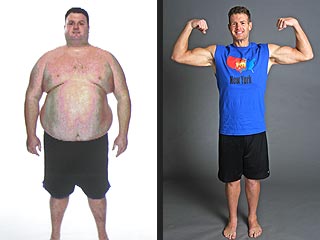
As an example of ethics malpractice, consider this question posed to Margo. “Sue” wrote that she had broken up with her ex-boyfriend over arguments about his weight and eating habits, which “grossed her out.” Eight months later, he’s fit and fabulous, and has a new girlfriend.  “I really would like him back because he’s hot and slim,” Sue writes, plaintively. “How can I step on his witchy new girlfriend so I can get him back?” Continue reading