This video, from Garland’s testimony before the House Judiciary Committee, tells you everything you need to know, but I have a bit to add…
Observations:
This video, from Garland’s testimony before the House Judiciary Committee, tells you everything you need to know, but I have a bit to add…
Observations:
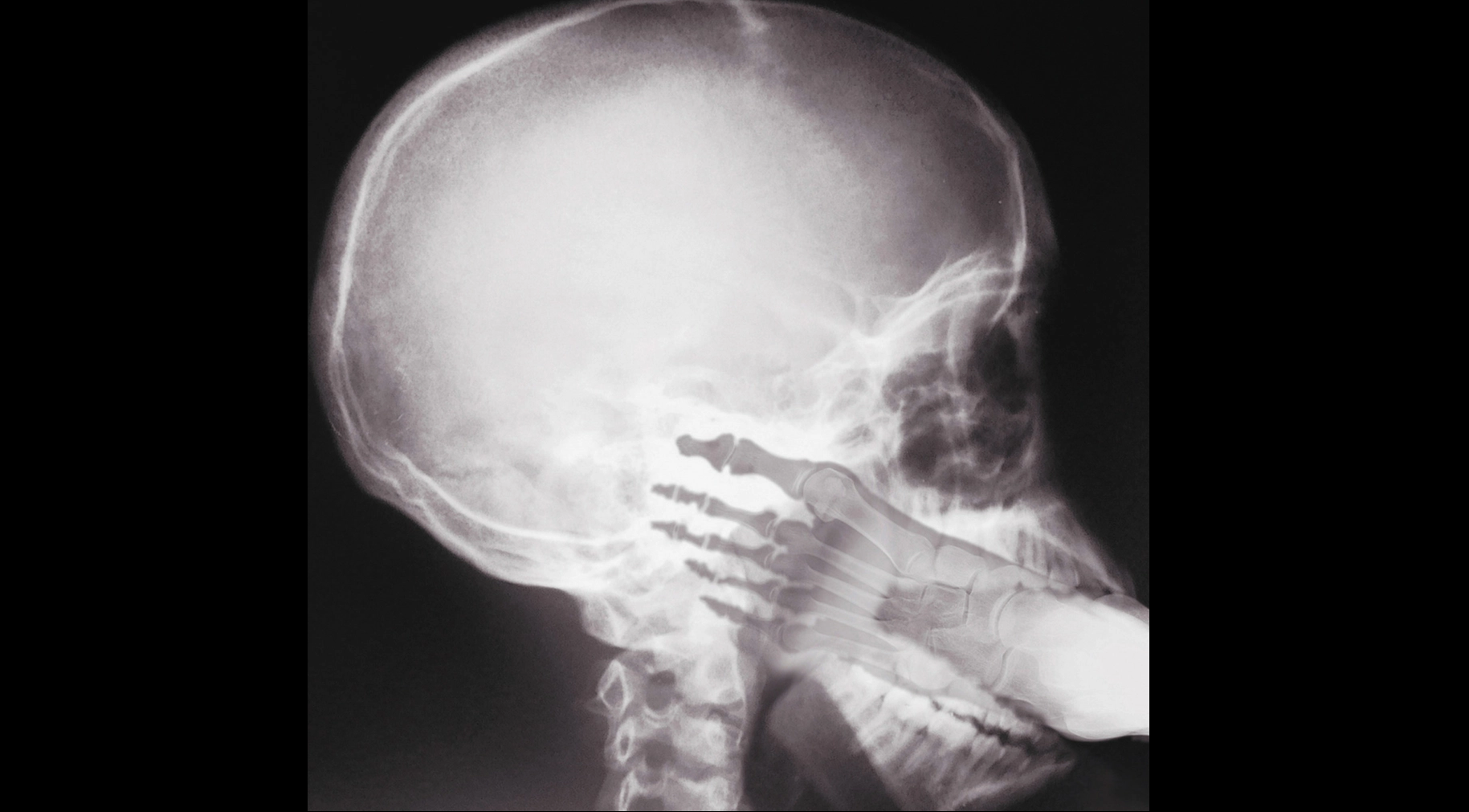
Wow! People sure are saying some stupid things lately!
1. A David Manning Lie of the Month from Joe Biden! The David Manning Liar of the Month was a feature of the old Ethics Scoreboard honoring public figures or corporations that made obviously dishonest statements that they had to assume were harmless because nobody could possibly believe them. Thus Joe Biden really told reporters that he hasn’t gotten around to visiting the illegal immigrant mobs at the southern border because he’s just been too darn busy. All year. And, he added, it’s OK because Dr. Biden has been there. He also implied that he didn’t need to go to the border to see the utter mess his immigration policies have wrought because he’s seen the border
Let’s unpack this, shall we?
2. Shut up, or start a blog. The dim-bulb royals in exile decided that we need to hear their opinions on two issues. Prince Harry pronounced the First Amendment “bonkers”—yes, Harry, that attitude on the part of your relatives is why England doesn’t govern us any more—and his wife, Meghan Markle, received publicity for advocating paid leave for parents. Neither of these two people famous for being famous have done or said anything that should endow their opinions with any more persuasiveness or newsworthiness than the typical dogwalker’s. Harry was born well; Meghan married someone who was born well. It doesn’t matter what they think, or what they say. It’s not news. Continue reading
As regular readers here know, there are a lot of typos, too many, on Ethics Alarms, mostly because I have to write posts more quickly than I’d like, I’m often interrupted, I can’t spell and I can’t type. Thankfully readers alert me to the most egregious (two generous readers particularly), and whenever I catch a typo in an old post, which is often, I fix it (and think “One more down, 701, 566, 211 to go!”). Fortunately, very few typos over the years have resulted in a post saying something other than what I intended, though the occasions where I have left off a “not” or an “un-” have been embarrassing. It all weighs heavily on my conscience and self-esteem, which is why this revelation, regarding a consequential typo in a Supreme Court opinion, was a welcome one.
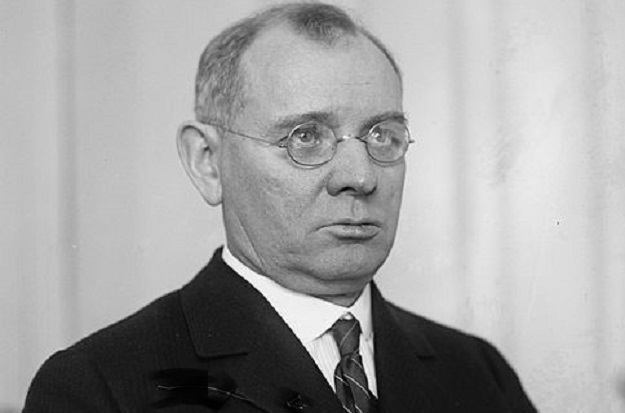
A slip opinion (in other words, a preliminary opinion subject to revision before publication) was issued in 1928 regarding a zoning dispute. The author of the opinion, Justice Pierce Butler (above), had written, “The right of the trustee to devote its land to any legitimate use is properly within the protection of the Constitution.” But the opinion was misprinted as “The right of the trustee to devote its land to any legitimate use is property within the protection of the Constitution.” That was a sweeping statement about the constitutional stature of property rights, and not what the opinion was intended to stand for. But the slip opinion typo slipped under the Court’s radar for a while.
SCOTUS eventually fixed the mistake, so the final version of the opinion published in book form in United States Reports, contains what Butler intended. But the Court negligently and irresponsibly did not draw attention to the change (which was typical at the time), so most judges, lawyers and law professors assumed that the typo version was the law of the land. The mistaken version, which appeared to declare a vastly expanded interpretation of property rights, has appeared in at least 14 court decisions, including one was issued in 2020. It was cited in at least 11 appellate briefs, in a Supreme Court argument, and in countless books and articles.
A new study published in The Washington University Law Review traces the carnage and confusion created by the nearly century-old typo. Michael Allan Wolf, the law professor at the University of Florida who discovered the mistake and wrote the article, believes that while it is impossible to measure how much impact the typo has had in court decisions, there is little doubt that it has served to advance an interpretation of property rights that was never supposed to have Supreme Court support.

Advance copy from Katie Couric’s soon-to-be-released memoir “Going There” reveals her to be an unethical human being: manipulative, vindictive, mean and disloyal. A section of the book, however, that she doubtless thinks will endear her to readers and her colleagues really shows how unethical the “profession’ of being a mainstream news media has become.
Couric writes that she edited out part of the 2016 interview with U.S. Supreme Court Justice Ruth Bader Ginsburg in which the liberal icon said that football players who were kneeling during the National Anthem were showing “contempt for a government that has made it possible for their parents and grandparents to live a decent life … which they probably could not have lived in the places they came from….And that’s why education is important.” Couric says that she wanted to protect Ginsburg, then 83, who was “elderly and probably didn’t fully understand the question.”
In the portion of the interview that did air, Ginsburg said: “I think it is really dumb of them. Would I arrest them for doing it? No. I think it is dumb and disrespectful. I would have the same answer if you asked me about flag burning. I think it is a terrible thing to do. But I wouldn’t lock a person up for doing it. I would point out how ridiculous it seems to me to do such an act. But it is dangerous to arrest people for conduct that doesn’t jeopardize the health or well-being of other people. It is a symbol they are engaged in….If they want to be stupid, there is no law that should prevent that. If they want to be arrogant, there is no law that prevents them from that. What I would do is strongly take issue with the point of view that they are expressing when they do that.”

1. William Shatner didn’t die. It doesn’t matter. People really don’t get moral luck, do they? Of course, only a tiny percentage of the public reads Ethics Alarms. 90-year-old William Shatner flew into space yesterday aboard a ship built by Jeff Bezos’ Blue Origin company. The former “James T. Kirk” and three fellow passengers boldly went to an altitude of 66.5 miles over the West Texas desert in the fully automated capsule, then safely parachuted back to Earth. The flight lasted just over 10 minutes. I had previously and correctly pointed out that Bezos had violated basic Kantian ethics, the Categorical Imperative, by exploiting Shatner and placing the old egomaniac at risk in order to promote Blue Origin. “But Shatner consented!” Bezos apologists kept telling me. So if someone consents to being used as a means to an end, that makes using a human being as a means to an end ethical?
Well, sometimes—Kant was an absolutist, and there are no absolutes. However, Shatner’s exploitation doesn’t qualify as an exception. What if the stress of the flight had killed him? Then many would be questioning Bezos’s motives, but the ethical problem is the same whether Shatner survived or not. That the flight didn’t end up looking like an elaborate grand suicide for an iconic actor who knew his time had almost run out anyway was pure moral luck.

Oh, probably not, but there are some hopeful signs.
After the death by ambiguous causes of an African American petty hood resisting arrest at the hands, well, the knee, of a habitually brutal cop who should have been kicked off the force long before, absent any evidence whatsoever that the death was intentional or that it was motivated by race, police officers across the nation have been vilified, fired, prosecuted and generally abused virtually every time an African-American, and sometimes even a white citizen, died or was wounded in a police-involved shooting. This insanity, hysteria, freakout, deliberate exploitation, what ever you choose to call it, resulted in law enforcement around the nation being weakened, black communities being made more vulnerable to crime, a mass exodus of police officers, and an unprecedented spike in murders nation-wide. There were other horrible effects too, like the sudden acceptance of anti-white racism and discrimination as “restorative justice,” and the ascent of Kamala Harris to the office of Vice-President, but this is just an introduction.
Last week, however, two decisions in police-involved deaths showed that sanity might be creeping back.

Mrs. O’Leary’s cow may be the most unethically maligned animal in U.S. history. On October 8, 1871, something caused flames to spark in the Chicago barn of Patrick and Catherine O’Leary. The resulting two-day conflagration killed 200-300 people, destroyed 17,450 buildings, left 100,000 homeless and caused about $4 billion of damage in today’s dollars. While the fire was still raging, The Chicago Evening Journal reported that it all started “on the corner of DeKoven and Twelfth Streets, at about 9 o’clock on Sunday evening, being caused by a cow kicking over a lamp in a stable in which a woman was milking.” Then a verse to a popular song was added; pretty soon it was the only verse anyone remembered:
Late one night, when we were all in bed,
Mrs. O’Leary lit a lantern in the shed.
Her cow kicked it over,
Then winked her eye and said,
‘There’ll be a hot time in the old town tonight!’
There was never any convincing evidence that a cow started the blaze. The O’Learys had five cows, and they didn’t have names. It’s not even a sure thing that the fire started in the barn, but Mrs. O’Leary was a Catholic woman and an Irish immigrant, and Chicagoans were eager to have a scapegoat, or rather scapecow. One prominent historian who has studied the inquest transcripts believes that the true culprit was an O’Leary neighbor named Daniel ‘Pegleg’ Sullivan, who hobbled into the O’Leary barn to smoke a pipe, which then fell into a pile of wood shavings and subsequently started the fire. Nonetheless, Catherine O’Leary was ostracized, and became a recluse. In 1997, the Chicago City Council officially exonerated Mrs. O’Leary and her cow, which did just about as much good for Mrs. O’Leary as for the cow.
1. A new book shows that I have not lived in vain! Yesterday, a line from a depressing movie called “Kodachrome” sent me into one of my funks. During one of the many arguments between a dying artist and his middle aged son who hates him, the father (Ed Harris) sneers that he may have been a neglectful father, but at least he would leave something of importance when he died, unlike his son, a failed rock band recruiter for a record label. By purest luck, today I received a complimentary copy of “Reginald Rose and the Journey of 12 Angry Men,” a fascinating and thoroughly researched account of how the TV screenplay and the film came to be the iconic works they are. Author Phil Rosenweig also tells the weird story of how Rose lost control of the stage version of his work, and how for years the only script one could legally perform was a hack adaptation of the movie by a writer who didn’t understand it. Well, I’m part of that weird story, as is my old theater company, “The American Century Theater,” which became the first professional theater in the U.S. to present the screenplay on stage. Many were involved in the success of that production, including my wife,Grace, who produced the script by meticulously typing the screenplay from a recording of the movie (this was before the internet), and NPR critic Bob Mondello, who traveled by bus, in the rain, to a converted school auditorium to see the production, which he gave a sensational and much circulated review. There were many twists and turns after that, but eventually Rose’s version of “12 Angry Men” became the play most theaters produce. He got the respect he deserved, the endurance of the play, which is a genuine classic (I directed it four times) is assured, and yes, I was part of the reason why. Rosenweig, who interviewed me, accurately relates my role in the off-stage drama. You can find the book on Amazon, and here.
Now I can die in peace.

New technology that is called “unethical” because of how it might be used unethically in the future, or by some malign agent, illustrates an abuse of ethics or, more likely, a basic misunderstanding of what ethics is. Technology, with rare exceptions, is neither ethical not unethical. Trying to abort a newly gestated idea in its metaphorical womb because of worst case scenarios is a trend that would have murdered many important discoveries and inventions.
The latest example of this tendency is facial recognition technology. In a report by Kashmir Hill, we learn that Clearview AI, an ambitious company in the field, scraped social media, employment sites, YouTube, Venmo—all public—to create a database with three billion images of people, along with links to the webpages from which the photos had come. This dwarfed the databases of other facial recognition products, creating a boon for law enforcement. The report begins with the story of how a child sexual abuser was caught because he had inadvertently photo-bombed an innocent shot that had been posted on Instagram.
This episode resulted in wider publicity for Clearview, which had attempted to soft-pedal its database and methods because it was afraid of the typical “unethical” uproar.

I have at least 57 posts languishing…
1 Now this is “shouting ‘Fire!’ in a crowed theater!” Christopher Perez, 40, is heading to prison for falsely telling his social media followers that in 2020 he had paid someone infected with the Wuhan virus to lick food products at multiple grocery stores in Texas. His motive was to “scare people away from visiting the stores,” the Justice Department said in a news release.
The FBI launched an investigation that ultimately determined the claims were a hoax; Perez did not pay anyone, and nobody licked any groceries at his behest. A jury found him guilty of violating a federal law that criminalizes false information and hoaxes related to biological weapons. He was sentenced this week to 15 months in prison and was ordered to pay a $1,000 fine. His defense lawyers argue that the sentence is too harsh. Perez shook and trembled and wept in court, shouting, “I am not a terrorist!”
No, you’re an idiot, but you behaved like a terrorist, and under the law, that makes you a terrorist. The sentence is completely appropriate.
2. And while we are on the topic of criminals…We might be turning the ethical corner on looted antiquities from other lands. Nancy Weiner, the owner of a prominent Manhattan noted for its expertise in ancient Asian artifacts, pleaded guilty to charges of conspiracy and possession of stolen property in connection with the trafficking of looted treasures from India and Southeast Asia. She sold items to major museums in Australia and Singapore, and others were auctioned off by Christie’s and Sotheby’s. The items ranged in value from $100,000 to $1.5 million, and they were stolen. But Weiner had created fake documents stating that they had all been purchased from private collections. Her rationalization: it was standard practice. “Everybody Does It.” “For decades I conducted business in a market where buying and selling antiquities with vague or even no provenance was the norm,” she said during her appearance in Manhattan Supreme Court. “Obfuscation and silence were accepted responses to questions concerning the source from which an object had been obtained. In short, it was a conspiracy of the willing.” Right. That doesn’t mean you had to join in, but we understand: $$$$$$.
The Times quotes Clinton Howell, a New York-based antiques dealer and president of the Art and Antique Dealers League of America, as stating that the tactics used by Wiener and others in past years “are not pardonable,” but that “the dealer of today is not the dealer of 40 years ago — there’s a very different attitude now.” We shall see. Most professions with unethical cultures just devise new ways to accomplish the same ends.

The duty of communication is both a fiduciary duty and, for lawyers, a professional one. American Bar Association Model Rule 1.4, one rule that every jurisdiction has adopted nearly verbatim, holds that
(a) A lawyer shall:
(1) promptly inform the client of any decision or circumstance with respect to which the client’s informed consent, as defined in Rule 1.0(e), is required by these Rules;
(2) reasonably consult with the client about the means by which the client’s objectives are to be accomplished;
(3) keep the client reasonably informed about the status of the matter;
(4) promptly comply with reasonable requests for information; and
(5) consult with the client about any relevant limitation on the lawyer’s conduct when the lawyer knows that the client expects assistance not permitted by the Rules of Professional Conduct or other law.
(b) A lawyer shall explain a matter to the extent reasonably necessary to permit the client to make informed decisions regarding the representation.
The last part is, much of the time, a fictional standard. I have been hammering at this in my recent ethics seminars, much to attendees alarm: clients often, perhaps even most of the time, don’t comprehend what’s going on on many levels.

