Last month, on March 14, 11-year old Tysen Benz read text messages saying that his 13-year-old girl friend had committed suicide. In apparent grief, the 11-year-old boy from Michigan’s Upper Peninsula hanged himself. In reality, the girl had sent the fake news as a joke. Or as a cruel trick. Or because she was 13.
In the Shakespeare play, to fake her death Juliet took a sleeping potion that made her seem dead. (They didn’t have text messaging then.)
Now, if this was really “Romeo and Juliet,” Juliet would have killed herself too after learning that her boyfriend was dead. Instead, she is facing criminal charges. Marquette County Prosecuting Attorney Matt Wiese says that she is responsible for Tysen’s death, so he is charging her with malicious use of telecommunication service, punishable by up to six months in juvenile detention. He is also charging “Juliet” with using a computer to commit a crime, which carries a sentence of up to a year.
Once again, a Hollywood film has political correctness furies attacking its casting. This time, it’s the sci-fi “Ghost in the Shell,” starring Scarlett Johansson.
The sad fact is, movie makers can’t win. If a black actor isn’t cast to play a white character in the source material, Hollywood is engaging in bias by eschewing “non-traditional casting,” which is necessary to remedy de facto segregation and prejudice in movies. If Charlton Heston is cast as a Mexican, as in “Touch of Evil,” it’s “whitewashing”—prejudicial and racist casting of whites to play non-whites. Of course, when Morgan Freeman, an African American, is cast to play a dark skinned Semitic character in “Ben Hur,” nobody calls that “blackwashing,” for there is no such thing as blackwashing. Casting Denzel Washington as a white character from “The Pelican Brief”: great! Who doesn’t like Denzel? Casting Denzel as the white hero of “The Magnificent Seven” in the remake, when the white hero was non-traditionally cast with the sort-of Eurasian Yul Brenner in the original, was also great, because—who doesn’t like Denzel? Casting Andy Garcia, a Cuban-American, as member of the Italian Corleone family in “Godfather III” was also fine and dandy, but not the casting of sort-of Eurasion Brenner as the King of Siam in “The King and I,” (even though he won the Tony and the Academy Award for an iconic performance)—, especially with all those great Thai musical comedy stars available. So that was–what, “sort-of-whitewashing”?
All right: how about a musical conceived with the novel conceit of having the Founding Fathers played by young black and Hispanic performers? Is that non-traditional casting? Minority-washing? Is it racist to stay with the original (brilliant) concept and tell white actors they can’t audition to be Hamilton, Jefferson, and Aaron Burr? Of course it’s not racist. After all, those actors are white. Screw ’em.
Are you seeing a theme here? Neither am I. What matters in casting a play, film or writing an adaptation is whether the final result works: How well do the actors play their roles? Is it entertaining? Does it make money?
Now the casting of Johansson as an originally Japanese character in a Japanese manga comic and animated film is being attacked as racist. Whitewashing, you know. No, in fact the words applicable here are “adaptations,” “movies,” “cultural cross-pollination” and “commerce.” In this case, not always, but in this case, the accusation of “whitewashing” is pure race-baiting.
More than forty years ago, the real life German prison camp escape engineered by captured WWII British fliers was made into the film “The Great Escape.” Brits were annoyed as production got underway, however, by the presence of heroic American prisoners in the cast, the characters played by U.S. stars James Garner and Steve McQueen. This was, British critics and veterans said, an outrage: Americans had nothing to do with the real escape. The answer by the producers contained three segments:
1. We own the film rights, and can do whatever we think will make the best movie.
2. The film is fictionalized, and makes no representations to the contrary.
3. Garner and McQueen will ensure that the film makes a profit in the U.S, plus they are both great and entertaining young stars.
Good justifications all. “The Great Escape,” as we now know, is a classic, still honored the real event, and made lots of money. Somehow, British self-esteem recovered.
The Brits also didn’t complain when Japan’s great film auteur director, Akira Kurasawa, made an all-Japanese cast adaptation of “King Lear,” which is about a Celtic king. Wasn’t this–what, “yellow-washing”? Don’t be silly: all good stories can be told in myriad ways, in many cultural contexts. “Ghost in the Shell” is a science fiction fantasy. It is not about real people, and the characters were Japanese because the author and intended audience were Japanese—you know, like the original “King Lear” was in Elizabethan English.
“Ghost in the Shell” director Rupert Sanders cast Johansson as the cyborg assassin named Motoko Kusanagi in the original and renamed the character “Mira Killian.” It is the “Who doesn’t like Denzel?” non-traditional casting principle, except the even more understandable “Who doesn’t like Scarlet, especially when she looks naked for much of the movie?” variation. The perambulations of critics trying to find something racist about the most obvious box office casting choice imaginable border on hilarious. At some point, actress Johansson decided it was more lucrative and fun being the next female action movie star than starring in solemn costume drama bombs like “The Girl With The Pearl Earring” and “The Other Boleyn Girl.” Since then, she has been rising as a bankable star in blockbusters like “The Avenger” films and “Lucy.” Quick: name another hot (I mean, of course, popular and bankable) female action star?
Everyone—almost literally everyone— involved in the Jeff Sessions flap has beclowned themselves and revealed that a gerbil running around in a wheel is powering their ethics alarms.
Attorney General Jeff Sessions, who couldn’t or wouldn’t answer a simple question clearly….
Democrats, who continue to act like spoiled siblings trying anything to make mommie get mad at the one she likes best, embracing conspiracy theories, smearing former colleagues, and generally morphing into walking, talking rectums before America’s eyes, to appeal to their deplorable hard core base made up of people who completed that mutation long ago…
Senator Chuck Schumer, displaying a partisan double standard so blindingly, throbbingly obvious than anyone can identify it….
Senator Claire McCaskill, engaging in perhaps the best timed hypocrisy and inexplicable amnesia of all time….
Deranged Trump-haters, determined to expose their legal ignorance to the world, who proclaimed Sessions guilty of perjury, when he obviously was not…
Every reporter, editor and news source who rushed into the trap of declaring that having contact with the Russian ambassador justifies being “linked’ to Russia, when any dolt should have known that by that formula, anyone in Washington could be “linked” to Russia or be accused of having “Russian ties.”
To paraphrase Michael Corleone, every time I think I’ve gotten away from having to comment on the extraordinary unethical performance of the national media toward the President, they puuuull me back in.
What is the correct and fair reaction to the latest media cheap shot on the President of the United States? This one would have been contemptible to inflict on a candidate before the election; now, almost three months after it, the feature is something to behold. Godwin’s Law is invoked far too often, but in this case, it tells the tale.
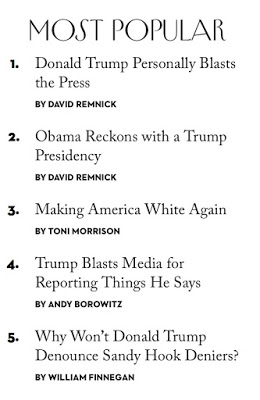
Esquire’s embarrassing article is called “20 Essential Books to Prepare You for What’s Next:A handy reading list featuring not-so-speculative dystopian fiction, political memoirs, and cautionary tales from Nazi Germany.” The point being made, of course, though already hackneyed, dishonest and thoroughly debunked, is that the President is Hitler. This contention requires ignorance of the United States culture and institutions, Germany, world history, Hitler and the President, but never mind: hate and fear is all the article is intended to generate, not perception or understanding. Taking it seriously requires blocking out the fact that it is the President’s opponents who are flirting with totalitarian methods, using violence to stifle dissent, trying to overthrow lawful elections, calling for coups, and co-opting the news media. The list is an insult without substantiation or justification; Esquire might just as well have published a full page reading: “The President of the United States is a Poopy-Face, and We Hate Him!” There is no substantive difference.
For anyone who has read the books and is not deranged regarding the President to the point of delusion, Esquire’s book list is kind of hilarious. “1984,” for example, is a vision of Soviet-style totalitarianism, with a news media that distorts facts to support a political party similar to the way our current news media manipulates it against the current administration, but previously did to bolster the Obama. Indeed, Esquire’s book list itself is Orwellian, using mass communication to control public opinion with deception, emotion and fear.
Sinclair Lewis’s “It Can’t Happen Here” was considered hysterical when it was written in the Thirties. Including “The Handmaiden’s Tale” as a guide to “what happens next” is about as silly an example of fearmongering as one could imagine: Continue reading →
I love this story! Just when I was despairing over the widespead ignorance in the U.S., Canada steps up.
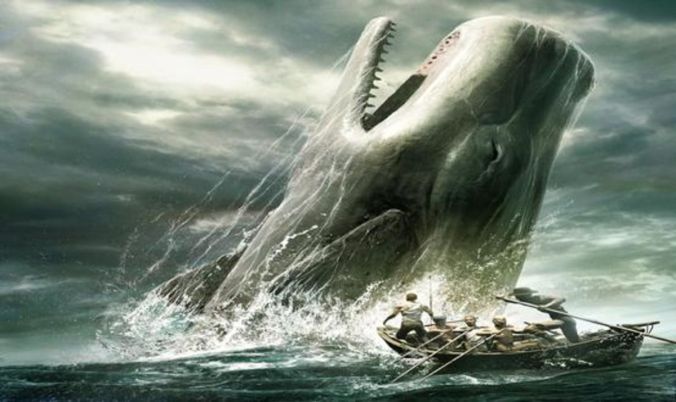
In Vancouver, Mengfa International owns a commercial building, and in May 2015, agreed to lease it to Moby Dick Restaurant, a fish-and-chip franchise. The building council won’t allow it, though. They feel that the restaurant’s name is offensive, and its offensive sign would lower property values.
I googled “Christmas ethics” yesterday, and guess what came up first. This Ethics Alarms post, from December 25, 2010.
I fix a couple of things, but it is basically the same. If I were writing it anew, I might not use the loaded term “war on Christmas,” which those who are trying to shove Christmas out of the national culture indignantly deny. It isn’t a war, exactly, just a relentless, narrow-minded and destructive effort to take something that has been enduring, healthy, unifying and good, and re-define it as archaic, offensive, divisive, and wrong. Call it the suffocation of Christmas, or perhaps the assassination of Christmas. Whatever one calls it, the process has progressed since 2010.
We’ve discussed on various comment threads quite a bit about how Christmas music has almost vanished from radio. It has also been effectively banned from public schools, who are terrified of law suits in era when parents might sue over their child being warped by learning “Rudolph the Red-Nosed Reindeer.” “Here Comes Santa Claus!”, another one of Gene Autry’s liveliest Christmas hits, one he wrote himself(unlike “Rudolph”), has been declared musica non grata everywhere but on nostalgia satellite radio. It is such an up-beat song; Bing Crosby sings it with the Andrews Sisters on his iconic “Merry Christmas!” album. Why is it unwelcome today? It is unwelcome because the lyrics say we are “all God’s children,” and ends with “Let’s give thanks for the Lord above.” Can’t have that.
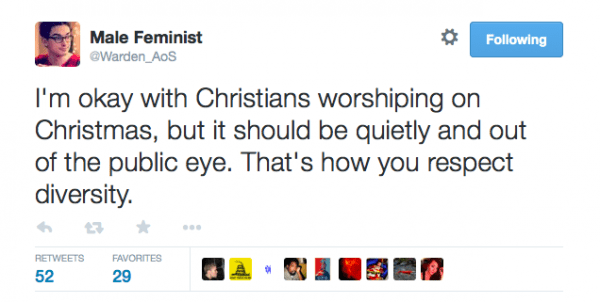
The ascendant attitude toward Christmas is both anti-religious and non-ethical. In my neighborhood, there are far more Star Wars Christmas figures, including Yule Darth Vader ( though thankfully not the 18-ft. Hammacher-Schlemmer version pictured above) and Christmas Storm Troopers, than any suggestion of peace, good will or love. Even these non-sectarian displays are too much for the Diversity Fascists, like this guy:
Such people believe that a healthy national culture embracing love, charity, generosity and kindness is disrespectful, and their society-rotting ideology is as much of a threat to our nation as terrorism. I don’t know how to reverse the damage already inflicted on our society, but I do know that we have to try. Reinvigorating Christmas and the ethical values it stands for would be a good start.
She’s right: what a relentlessly negative and divisive way to welcome a new President. The New Yorker is supposed to be the flagship publication for sophisticates and intellectuals. The better term for the audience appears to be “bitter snots.” The flagship is playing to the mob, Althouse suggests. Is that all the media has become? Clickbait purveyors and the reinforcement of pre-existing biases, fears and prejudices?
I’ve been around a long time. I have never seen those on the losing side of any election behave so nastily, defiantly and unfairly. It reflects poorly on the nation, its politics, and its journalism, but it really reflects badly on Democrats and liberals. I’m embarrassed for them.
Ann tags this “Trump derangement syndrome.” That is too kind.
From the chess term “zugzwang,” describing a board where the player with the next move worsens his position regardless of which move he chooses. Ethics Zugswang occurs when all the opportunity to choose ethical options has passed. Any course of action will have unethical consequences.
I often talk about ethics zugswang in my ethics seminars as well. It is a situation where no ethical decision is possible, because of poor choices and a failure to play competent ethics chess, not thinking ahead, not anticipating worst case scenarios, and thereby creating a situation where ethical options are unavailable. All that is left are options that do tangible harm. The idea is to avoid such messes by not blundering through life being governed by non-ethical considerations, emotions, rationalizations, recklessness and ignorance. Sometimes, however, despite all of one’s best efforts, ethics zugswang arrives anyway.
Such is the plight of the American citizen on Election Day, 2016. For months, thoughtful voters who care about democracy and want to participate in choosing their President responsibly have been trying to decide which of several unethical decisions is the best—the most ethical, or rather least unethical– of the available options. Being angry or indignant, or holding one’s breath until one turns blue, will not do. A decision has to be made, and refusing to make a decision is still a decision. (In chess, the most common response to ethics zugswang is to resign, to quit. But one cannot quit being a citizen in a democracy.)
In past posts, mostly in the comments, I and others have exchanged proposed analogies to describe the choice between choosing Hillary Clinton or Donald Trump to lead the country. Arguing that it was a binary choice that could best be compared to having one’s commercial airline flown by an untrustworthy pilot of questionable skill, motivations and objectives or, in the alternative, a seven-year old, a monkey or a spaniel, my position was that one choice was terrible and the other was infinitely worse, but the terrible one as at least survivable, with luck. Classical literature provides another useful analogy: the myth of Scylla and Charibdis.
In Greek mythology, they were two immortal and deadly monsters who lived on opposite sides the narrow waters in the Strait of Messina, between Italy and Sicily. Odysseus, trying to return home after the Trojan War, faced the dilemma posed by having to choose between them in Homer’s Odyssey, Book XII. Scylla had been a lovely a sea nymph who was loved by the sea god Poseidon, but Poseidon’s jealous wife Aphrodite treacherously cursed the waters in which Scylla bathed. The god-poisoned water turned Scylla into huge and vicious monster with twelve legs, six heads on long, snaky necks, with each head having a triple row of shark-like teeth. The transformed Scylla’s loins were also covered by the heads of baying dogs. (Note to self:don’t mess with Aphrodite!) When ships passed close to her, Scylla’s six heads would each snatch one sailor, then devour them in her cave.
Charybdis was also once a nymph, a daughter of Poseidon, who angered Zeus, Poseidon’s brother. Zeus turned her into an even worse monster than Scylla. The transformed nymph lurked under a fig tree on the opposite shore from Scylla’s rock, drinking down and belching out the sea three times a day, causing fatal whirlpools no ship could survive. Odysseus managed to get the worst of this dual monster dilemma, sailing close enough to Scylla to doom six of his sailors (who he never warned about the threat) and still seeing his chip wrecked by Charybdis, with him being the only survivor. The shipwrecked Odysseus barely escaped her clutches by clinging to a tree until the improvised raft that she swallowed floated to the surface again after many hours. To be “between Scylla and Charybdis” means to be caught between two equally horrible alternatives.
As today loomed and this metaphor appeared more and more accurate, I sought wisdom from various versions of the story, only to gradually realize that I was not as certain as I once had been which candidate was which monster. Continue reading →
As everyone knows by now, the Nobel folks awarded iconic folk/rock troubadour Bob Dylan its prize for literature, setting off an international debate and also cementing Dylan’s status as a cultural giant, whatever you decide to call him.
Dylan, however, has not deigned to respond to the committee, or to acknowledge the honor in any way other than a brief reference on his website (“Winner of the Nobel Prize in Literature”) that he removed once it was noted in news reports.
What a jerk.
Dylan fans are making excuses for him—he’s shy, he’s always been strange, he doesn’t like honors, it’s a mark of integrity, and so on—-but there is no excuse for such rude and gratuitously arrogant behavior. All they really want to do, Bob, is be friends with you.
In the Washington Post’s weekly crank section “Free For All,” a reader chastised the paper for not quoting more extensively from Bob Dylan’s works in its piece about his Nobel Prize, writing:
“It may come as a shock to the young people who now write and edit the paper, but there are many of us who are not familiar with the lyrics of “popular” music.”
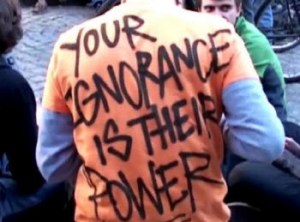
Granted, in respect to Dylan, the complaint makes no sense. “Blowin’ in the Wind” was written in 1963; I’d expect “young people” to be more unfamiliar with Dylan than seniors. How old IS this guy? Still, the letter raised a crucial ethics point related to life competence, an ethical obligation for all of us. Being willfully ignorant of current popular culture is as much of an ethical lapse, and as great a threat to societal cohesion, as young people not bothering to learn about “Moby-Dick,” minstrel shows, Will Rogers, Stephen Foster, Babe Ruth, Charlie Chaplin, Fred Astaire or Lee Harvey Oswald.
In 1987, University of Virginia English professor E.D. Hirsch wrote “Cultural Literacy,” making the argument that nations require common cultural reference points for generations to communicate with each other. He argued—correctly— that teaching this cultural vocabulary was a primary duty of the schools, in part because cultural literacy is an inextricable element of individual autonomy and power. Since then, the problem of the fracturing of society and the breakdown in communications between segments of the population has worsened considerably, its deterioration propelled by the loss of common information sources and the rise of the internet. Continue reading →





 Ethics Alarms