Ethics Verdicts: The Georgetown Law Professor’s Comments Were Careless But Not “Reprehensible,” And The Law Center Dean’s Statement Implying Her Comments Showed “Systemic Racism” Is Reprehensible…And False

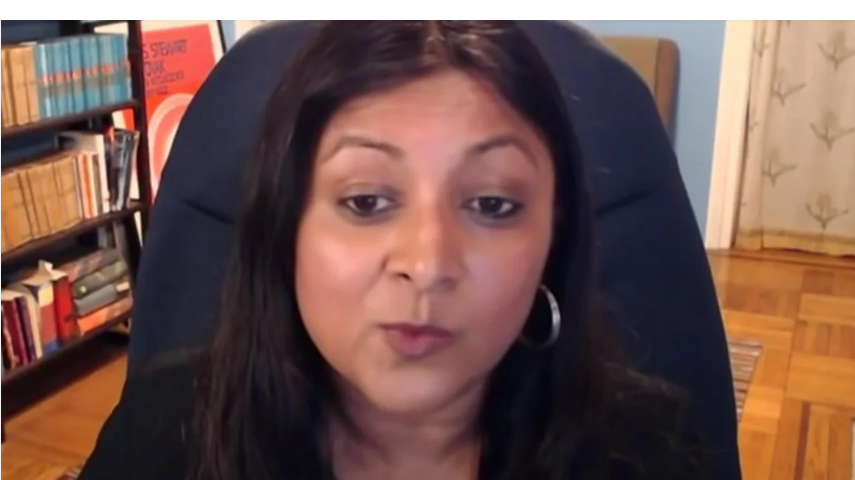
This, I would remind you, is why the emphasis of the first Ethics Alarms post on this mess involving my former employer and alma mater was that GULC adjunct professor Sandra Sellers was culpable for the inevitable results of her unintentionally public candor for incompetently broadcasting her private observations over an online conferencing platform. I predicted that she was a goner once the school’s black student organization saw a grandstanding opportunity (and if it wrecks a lawyer’s reputation and career–so what? After all, she’s just another racist white bitch…), and I was right, in part because I know what the Law Center has become in recent years.

I also predicted a groveling apology from Sellers rather than the ringing defense of her observations that might have been helpful in both clarifying her comments and exposing the Law Center’s spectacular embrace of Rationalization #64, “It Isn’t What It is.” Poor, weak, technologically inept–but not wrong!–Sellers sent the Washington Post a copy of her grovel, which could have been drafted by a computer. She apologized for the “hurtful and misdirected remarks,” carefully chosen words indeed. Her remarks were “misdirected” because they were intended only for another professor, not the universe, and they were “hurtful” because they created a student relations crisis for Georgetown—which it has thoroughly botched. Sellers also said in the letter

“I would never do anything to intentionally hurt my students or Georgetown Law and wish I could take back my words. Regardless of my intent, I have done irreparable harm and I am truly sorry for this.”

Well, I give her some credit for declining to say that she didn’t mean what she said, or that what she said was untrue. Some. In essence she apologized for what I had written was the problem with her statement: it was careless to let it be witnessed by people who would—mostly deliberately— misinterpret it. Her carefully composed non-apology was clever, but it doesn’t help. The school’s statement, through GULC second-in-command Dean Trainor, was despicable—unfair and cowardly. It called the episode indicative of “structural issues of racism” (Translation: Sellers is a racist) and “explicit and implicit bias.”

Yes, a dean of a major law school declared on behalf of that law school that accurate observations involving student education are racist, presumably because they don’t advance a convenient but false progressive narrative. He also suspended the law professor Sellers was talking to because he didn’t meet his “bystander responsibility” and confront her over her non-racist statement as if it were racist.

Continue reading

When Ethics Fails, The Law Steps In, And Often Makes An Ass Of Itself…

Greg-Abbott

There is no excuse for this:

Abbott tweet

Well, let me clarify that a bit. Anger, frustration, outrage at the open attack on democracy and a level playing field in the marketplace of ideas are all legitimate reasons for someone to default to “there ought to be a law!,” but there is no excuse for elected officials like Abbott and Texas legislators displaying such ignorance of the Bill of Rights.

Stipulated: what Big Tech and the social media platforms are doing right now, deliberately and brazenly attempting to slam their fists down on the scales of democracy to make it as difficult as possible to communicate opinions, news and other expression that our rising woke dictators find inconvenient, is a genuine threat to the nation’s values and existence. However, those same values will be weakened if laws mandating companies to be fair and ethical undermine the First Amendment. As the giddy AUC and my Trump Deranged Facebook friends immediately reply to any criticism of the growing censorship of conservatives and especially President Trump, a private company has a nearly absolute right to decide who has access to its free services. As the social justice crusaders don’t say, but prove every time they make this kneejerk observation, they are thrilled to see their fellow citizens muzzled this way, since it advances their own interests. Big Tech and the social media companies have the right, but it is not right for them to abuse it this way when they have so much control over public debate and information.

Continue reading

The 1776 Report: Addendum

Declaration

I noted the rapid memory-holing of the Trump Administration’s 1776 Commission’s report yesterday. Then I read this article about the report by the New York Times’ “culture reporter’ whose beat is intellectual life and “the world of ideas.” It is a useful barometer of the biases the Times’ staff has against core American values as well as the Left’s thinly-veiled contempt for much of what our culture is built upon. It also reveals the paper’s assumption about its readership’s biases.

Right at the start, the article thinks it is smearing the report and its authors by asserting “its claims derive from arguments that have long circulated on the right.” Ooooh, “the right.” THOSE demons and troglodytes. In truth, most of the “ideas” have represented majority historical and philosophical thought in the U.S. until the ascent of race conflict as the defining feature of the nation became the cant of the increasingly anti-American educational establishment.

Here are some of the report’s conclusions that the Times mocks:

Continue reading

Once Again, America’s Best-Known Scientist Demonstrates Why We Can’t Trust Scientists, Especially If They Are Progressive, Pandering, Political Correctness-Obsessed Jerks Who Apparently Get Their Information From Cartoons [Corrected]

Not for the first time, astrophysicist Neil deGrasse Tyson, the anointed successor to the far more serious and reliable Carl Sagan, abused his reputation as the nation’s most-recognized scientist by grandstanding for the progressive mob, his allies and pals.

On Christmas Eve, he tweeted,

“Santa doesn’t know Zoology: Both male & female Reindeer grow antlers. But all male Reindeer lose their antlers in the late fall, well-before Christmas. So Santa’s reindeer, which all sport antlers, are therefore all female, which means Rudolf has been misgendered.

One of the annoying things about Tyson is that he is a know-it-all, and like most know-it-alls, he doesn’t know as much as he thinks he does. When someone sporting the mantle of scientist is delving into the accuracy of the alleged features of Santa’s reindeer, he should be aware of the origin of the assertions he is debunking. Tyson obviously isn’t. Indeed, he is apparently illiterate.

The first mention of Santa’s reindeer is in the 1822 poem “A Visit from St. Nicholas,” better known today as “The Night Before Christmas.” He refers to “eight tiny reindeer.” Reindeer aren’t tiny, at least the reindeer we know about. If Santa’s reindeer are indeed tiny (in the poem they are pulling a “miniature sleigh”) , then they must be a species unknown to us and science, and thus the male members of the breed might retain their antlers. We have little information on this question. Scientists are supposed to investigate such things, not leap to conclusions. Tyson just assumed tiny reindeer are the same as the usual kind, or, more likely, he didn’t consider the issue at all. That’s sloppy, agenda-driven science, and malpractice by Tyson.

Continue reading

Tree Day Ethics Warm-Up, December 22, 2020

Tree needles

I’ll be writing this between bouts with the lights. The Marshall Tree was supposed to go up a week ago, then it rained, so the thing had to dry out. Then last week was consumed with an expert witness report, and now this weird tree with long needles and soft branches is standing in my living room, and none of my usual decoration techniques, and probably only 30% of our ornaments, will work with the damn thing. Yesterday I was supposed to hang the lights, and I was so stressed out I couldn’t do it. But today is the day…

1. Anyone surprised at this? A December survey by the international organization More in Common seemed to show that citizens on the far left are the most likely to report negative feelings about the United States.. Only 34% of the group More in Common calls “progressive activists” agreed with the statement “I feel proud to be American.” It was the only ideological group in the survey that agreed with that statement at a rate below 60%

All other respondent groups, including minorities and Americans identifying as politically conservative, strongly agreed with the statement, including 70% of black Americans and 76% of Hispanic Americans. Whites registered a 75% proportion asserting patriotic pride.

100% of the group categorized as “devoted conservatives” said that they take pride in being Americans. 80% of all respondents surveyed said they were thankful to be American, with more than two-thirds reporting a connection to their local communities and fellow Americans. The weakest sense of belonging to the culture and community came from progressive activists and younger respondents.

2. On priority for vaccines...I have read a lot of unethical nonsense being framed as ethics about the question of who should get the vaccine first. I expect to read a lot more. A Times article on the topic says, “Ultimately, the choice comes down to whether preventing death or curbing the spread of the virus and returning to some semblance of normalcy is the highest priority.” Is that really a difficult choice? Obviously the top priority for society in both the long and the short run is to get back to normal as quickly as possible, not to prioritize trying to delay the mortality of citizens who don’t have that long to live anyway. I haven’t heard the “if it saves just one life” rationalization yet, but I’m sure it is coming.

Then there is this: “To me the issue of ethics is very significant, very important for this country,” Dr. Peter Szilagyi, a committee member and a pediatrics professor at the University of California, Los Angeles, said at the time, “and clearly favors the essential worker group because of the high proportion of minority, low-income and low-education workers among essential workers.”

There it is: let’s prioritize by race, because not prioritizing by race is racist.

Continue reading

Comment Of The Day: Ethics Quiz: The French And Indian War Remains

This Comment of the Day by reliably thoughtful commenter JP is exactly what I hoped this particular Ethics Quiz would inspire. Unlike some ethics quizzes, and reminding everyone that an issue isn’t presented as an ethics quiz unless I have doubts about the ethically correct answer, this one has me torn right down the center. The usual ethical systems for approaching a problem are at odds here, making it a true ethics conflict.

Here is JP’s Comment of the Day on the post, “Ethics Quiz: The French And Indian War Remains”:

I think the simple answer is that depends.

There any a lot of laws in the context of digging up graves that often vary between state and context. The United States pretty much has a statue of limitation on 100 years for excavation (not to be confused with common graverobbing). I imagine this is because it is far outside any claim a family member might have. Jack alaudid to the Native American Graves Protection and Repatriation Act which protects remains on federal or tribal lands. These rules were essentially created to protect the living. The purpose of their creation is what I believe is at the heart of understanding if the act is ethical or not. The first question I would ask: who does it hurt?

Continue reading

Ethics Quiz: The French And Indian War Remains

Fort Henry

Nearly 70 years ago, Fort William Henry, the fort overcome in 1757 battle portrayed in the film (and novel) “The Last of the Mohicans,” was reconstructed on the banks of Lake George in New York.

There, French forces led by General Louis-Joseph de Montcalm defeated the British, who were then, in many cases, slaughtered by the Indian tribe allies of the French as they attempted to retreat. Whether Magwa really ripped out the heart of the British commander, I do not know.

But I digress. Over the decades, the remains of many British combatants have been discovered in and around the site of the fort. Some of the remains have never been reburied, and were displayed for decades. Eventually the bones were studied by anthropologists, and yielded many details about colonial life in the era of the French and Indian War.

260 years after the fall of Fort William Henry, some of the bones are still at Arizona State University, where they are available for research. Other bone fragments unearthed by anthropologists in the 1990s and sent for study at the University of Waterloo in Canada were returned to the fort eight years ago, and lie in a box in a storage area. The company that owns the fort, known as the Fort William Henry Museum, says the bone fragments are being properly cared for, and that it is trying to balance the value of scientific research with respect for the remains of the dead.

Continue reading

On Masks, I Get The Message…

face-masks-chart

The New York Times has been a primary offender in fearmongering and hyping the pandemic, while trying to bolster the efforts of power-abusing mayors and governors to make life miserable for the public in order to show they are “doing something.” Thus when the Times published this article, with the sub-head, “The accumulating research may be imperfect, and it’s still evolving, but the takeaway is simple. Right now, masks are necessary to slow the pandemic,” I assumed that I would read an unequivocal, full-throated, air-tight brief for mask-wearing.

Well, it wasn’t. In fact, there is so much equivocation and doubt in the article, which announces itself as pro-mask, that it reinforces the conclusion that the case for masks is being overstated, which is to say dishonestly reported. The takeaway is “simple” if one is inclined to blindly follow orders without good reason. I’m not.

The thing is rife with red flags. “May be imperfect” is a euphemism for “it might turn out that this is all wrong.” “It’s still evolving” is another dodge. One section of the article is headed, “Over time, recommendations on masks have changed. That’s how science works.” Wait, aren’t we always being told that challenging conventional scientific “consensus” is being a science denier? Skepticism is just a caution that what is being pronounced as the absolute answer isn’t as certain as its advocates claim. Here, the Times is saying that science being proved wrong is “how science works.” This is obviously a procrustean standard at best. “Believe what we say, because we are scientists, but when it turns out we were wrong, that just proves how trustworthy we are.”

Continue reading

Comment Of The Day: “The Pandemic Creates A Classic And Difficult Ethics Conflict, But The Resolution Is Clear, Part II: The Amazing Vanishing Johns Hopkins Study”

Coronavirus_H

If Ethics Alarms has ever had more useful, substantive and valuable Comment of the Day than what Rich in Ct submitted in response to “The Pandemic Creates A Classic And Difficult Ethics Conflict, But The Resolution Is Clear, Part II: The Amazing Vanishing Johns Hopkins Study,” I can’t recall it. I’m going to dispense with my usual introductory remarks to let Rich take over. From here on it’s all him.

***

So I watched Dr. Briand’s webinar; it’s only 40 minutes if anyone else wishes to. (Disclaimer, I am not a medical nor public health professional, but neither is Dr. Briand).

I am not convinced by her analysis. I checked her original data sources, and found serious issues. Dr. Briand states that there is no evidence in the data that COVID is causing “excessive deaths”, but a chart I developed from the same data shows hundreds of thousands more deaths in 2020 compared to prior years. While COVID may not be the immediate cause of all these deaths, it appears to be a significant contributing factor.

The first chart in the PDF of the article about her work shows that the relative ages of people who died are consistent week to week from before and through the pandemic. I don’t take any issue with that conclusion. She states in the webinar there is an average of roughly 60K deaths week-to-week; this average seems reasonable.

However, this chart is misleading; while the percentage week-to-week is not changing, the total numbers of deaths do change considerably week-to-week, as I will show in a chart of my own developed from the same data.

Continue reading

The Pandemic Creates A Classic And Difficult Ethics Conflict, But The Resolution Is Clear, Part II: The Amazing Vanishing Johns Hopkins Study [Corrected]

open-up-protest

Update and Introduction

The record shows that way back on May 5, Ethics Alarms published the post titled “The Pandemic Creates A Classic And Difficult Ethics Conflict, But The Resolution Is Clear, Part I: Stipulations.” That resolution was that the lockdown was wrong, indeed tragically wrong, and that a clear-eyed, unbiased examination of the facts made that conclusion inescapable. This, I note again, was in May. Nobody believed that we would still be strangling American society, commerce, education, culture and life as December approached.

I knew the analysis had to be lengthy, so it was planned as a two part post. One reason for this was that the information, data and scientific analysis was contradictory and still coming in as I began the post, and I needed time to review and sort it all out before beginning Part II. Incredibly, after seven months, the information, data and scientific analysis is still contradictory and still coming in. It is also, as this most recent episode demonstrates, still being unethically manipulated to mislead the American public. This is happening even now, after the election, although much of the manipulation of facts was designed and executed by the Axis of Unethical Conduct—Democrats, the “resistance” and the mainstream media– to derail the Trump Presidency, and ensure his defeat on November 3. (Congratulations, by the way! It worked!)

In Part I, I listed ten stipulations that drove my analysis. I assumed, being a fallible human being, that some would prove mistaken; I definitely assumed that some of them would no longer be accurate by now. I was wrong. Here are the ten:

  1. This is an ethics conflict, not an ethics dilemma.
  2. Many, too many, of those involved in the problem are going to approach it as an ethics dilemma…
  3. It is a cruel trick of fate…that this crisis is occurring in an election year…
  4. We still do not have adequate information to make a fully informed decision.
  5. Making important decisions without perfect information is what effective leaders have to do.
  6. No one can rely on “experts.”
  7. Experts have the biases of their own field and its priorities.
  8. The projections and models have been wrong more often than not, but are still being hyped as a valid basis for planning.
  9. The news media has politicized the lock-down, and most of it is actively lobbying for the lock-down to continue.
  10. We have to accept that the ethical system we have to employ here is Utilitarianism, the most brutal of them all.

As you can see, these haven’t changed.

While waiting for both some more definitive data and the time to do a competent analysis before completing Part 2, I posted a Prelude to Part 2. the next day, on May 8, the date Nazi Germany surrendered. It was a thorough fisking of a New York Time op-ed that perfectly represented the AUC’s arrogant and dead wrong attitude toward the pandemic, and that also pointed to the sinister un-American and totalitarian-leanings underlying the Left’s enthusiastic embrace of the lockdown and its consequences. The last paragraph of the “Prelude” pointed the way to what would be (and will be) the principle underlying the conclusion of the argument I started to unpack in May:

Freedom has always had a price. On this 75th Anniversary of V-E Day, it shouldn’t be hard to understand that lost lives can be acceptable when the most rational, responsible policies involve unavoidable risk.

As attentive readers noticed, Part 2 never appeared. (Kudos to long-time commenter Michael Ejercito for repeatedly chiding me on this.) I have been constantly revising a draft, changing directions many times as new data arrived, followed by newer hype and distortions. Then came the Johns Hopkins report, the discussion of which today becomes Part 2, because it is a “smoking gun.”

And that means that what was Part 2 is now Part 3, still in progress, but I promise, Michael, coming soon.

Now here’s the post….

***

Continue reading