Your Weekend Ethics Update

Sure, it's touching..but is it sincere?

Here’s what you may have missed if your attention was focused on non-ethical considerations over the weekend:

  • A Washington, D.C. Charter school has been using scenarios out of horror movies to teach math—to third graders.
  • Saturday Night Live gave fallen child star Lindsay Lohan a chance to be something other than an addict and scofflaw again. Was it exploitation or was it kindness? Kind exploitation, perhaps?
  • Rush Limbaugh became a victim of his own mouth, attacking a Georgetown Law student’s advocacy of insurance-covered contraceptives not by questioning her logic—which is questionable—but her character, and in crude and degrading terms. Indefensible.
  • At least two NFL team, it was revealed, put bounties on the heads of opposing teams’ stars, offering thousands to players for knocking them off the field and into hospital beds. Unethical, a violation of league rules, cheating, and criminal…and the reaction of players is, “What’s the big deal?” A culture problem perhaps?
  • While conservatives were rending their garments in grief over the sudden death of conservative web warrior Andrew Breitbart (and too many liberals were disgracing themselves by applauding an early demise that left his young children fatherless), a far more influential and infinitely more ethical conservative voice left us: scholar, author, social scientist, philosopher, historian…and Ethics Hero Emeritus… James Q. Wilson.
  • Rush apologized after his sponsors began to flee. With great power comes great responsibility, and Limbaugh has more power than he can possibly be responsible for. He still is accountable.
  • Finally…Is a forced apology a “real” apology? It depends.
On Apologies: the Sincere, the Forced, the Cynical and the Harmful

"Apologize! SINCERELY!"

On February 17th, Washington Post political commentator Dana Milbank wrote a column disparaging what he called “forced apologies.” Although the context of his column and the apology he was refusing to make was too silly to bother with* (yes, there really are things too silly for Ethics Alarms to bother with) something told me I should keep his column handy, and indeed, the perfect time to consider Milbank’s argument has arrived. Forced apologies are flying all over the place.He wrote:

“…one of the most annoying components of our decaying political culture [is] false umbrage. Liberals created this form of identity politics, in which an underrepresented group claims persecution, but conservatives have embraced it. One of its most common expressions is the demand for an apology. It’s phony by definition — an apology can’t be sincere if it’s answering a demand — and the reflexive demand (like a demand for a resignation) serves only as an excuse to keep a news story alive. Sorry, but it’s time to put this tired gimmick to rest.”

Milbank’s essay included an impressive catalogue of recent demands for apologies, and since it was published there have been many more, the most recent example, of course, being Rush Limbaugh’s mea culpa for his outburst against Sandra Fluke. His central thesis, however, is wrong.

Here is the hierarchy of apologies, their function and their motivation, 1-10, from most admirable to despicable: Continue reading

Rush’s Apology, His Power, and His Responsibility

They're coming, Rush!

The Sunday morning talk shows had a real Rush Limbaugh bash-fest this morning, and that’s fine: he earned it, with his ill-considered and vicious attack on Sandra Fluke for stating her opinion. This is a real career crisis for Limbaugh, I think, and he knows it. His initial reaction to the furious criticism of his offensive comments about the Georgetown Law student was to refuse to back down, as has been his response to controversies his entire remarkable career, and it has served him well. Then he realized that this controversy was different. He had crossed a line of decency, fairness and civility that the culture as a whole, not just political adversaries, would not tolerate. He apologized, saying.

“For over 20 years, I have illustrated the absurd with absurdity, three hours a day, five days a week. In this instance, I chose the wrong words in my analogy of the situation. I did not mean a personal attack on Ms. Fluke.

“I think it is absolutely absurd that during these very serious political times, we are discussing personal sexual recreational activities before members of Congress. I personally do not agree that American citizens should pay for these social activities. What happened to personal responsibility and accountability? Where do we draw the line? If this is accepted as the norm, what will follow? Will we be debating if taxpayers should pay for new sneakers for all students that are interested in running to keep fit? In my monologue, I posited that it is not our business whatsoever to know what is going on in anyone’s bedroom nor do I think it is a topic that should reach a Presidential level.

“My choice of words was not the best, and in the attempt to be humorous, I created a national stir. I sincerely apologize to Ms. Fluke for the insulting word choices.”

Was it a “real” apology? I’m going to discuss the issue of apology ethics in the next post, but yes, it was as real as most apologies. If one’s definition of apology is ” a statement of contrition and regret freely and sincerely given,” the answer is no. Very few apologies meet that high standard, if only for the reason that few of us will apologize unless an apology benefits us in some way or is unavoidable. Rush’s reputation is based on daring, outrageousness and his refusal to back down from the ‘truth” despite assaults from the “drive-by” media and the politically correct; he, of all people, would never apologize for anything he said on his show if he had any choice in the matter. In this case, I assume that Limbaugh was hearing from his affiliates, his sponsors, other talk show hosts, and political figures that he was courting disaster if he didn’t back down. Continue reading

Weekend Ethics Catch-Up

If you took an ethics break this last weekend of February, here’s your Ethics Alarms make-up assignment:


Charles M. Blow’s Bigoted Anti-Mormon Tweet, Chapter 2: Ironies, Regrets, and Hypocrisy on the Left

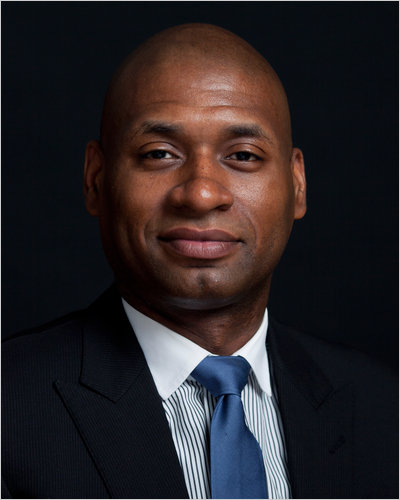
Charles M. Blow, trapped in regret-apology hypocrisy. Fortunately for him, his paper doesn't care.

Charles M. Blow, the New York Times columnist who sent his followers an uncivil, unprofessional and bigoted tweet regarding Mitt Romney and his faith during Wednesday’s debate [“Let me just tell you this Mitt ‘Muddle Mouth’: I’m a single parent and my kids are *amazing*! Stick that in your magic underwear.”] issued a fascinating…something...today in response to criticism, which did not come from the supposedly bigotry-sensitive left. He tweeted:

“Btw, the comment I made about Mormonism during Wed.’s debate was inappropriate, and I regret it. I’m willing to admit that with no caveats.”

It is fascinating to me that this is being called an apology by Blow’s supporters and conservative critics alike. If it is an apology, and that is open to dispute, I’d like someone to explain to me how Blow can use “regret” as a stand-in for “I apologize,” and yet the same commentators who are interpreting the word that way have insisted that President Obama’s repeated use of “regret”to refer to past U.S. foreign policy actions was not the equivalent of apologizing, and have in fact stated that this interpretation by conservative critics is “a lie.”

Among those who have defended the President in this way, I believe, is Charles M. Blow. Continue reading

Thanks and Mea Culpa

The discussion on Ethics Alarms has been especially lively, diverse and interactive this week, and I want to thank all who participated for their time, passion, reason and civility. My goal has always been to foster better ethical analysis through dialogue, and I consider what I read the past several days to be a significant advance. I am grateful to everyone, especially so because it has been a hectic and difficult period for me.

I also am aware that the typos have been proliferating again, and I apologize to all. It is irritating, not to mention confusing, to have to read posts with errors, and it is unprofessional for me to allow the errors to occur. There can be no excuse for it, and I am truly sorry. Unfortunately, I can’t type, I have always been a poor speller, and I am an even worse proof-reader of my own work. Believe it or not, I proof each post at least four times, and use two different spell-check programs. I have begun to re-proof every day’s output before I go to bed, and it is astonishing how often I find typos that slipped through. Skipping a word that I heard in my head (and then read when it isn’t there) is the most common mistake, followed by typing “ed” instead of “es” at the end of words. The typos are more common when I am on the road, like this week, and have to work on my old, small, netbook with the missing keys.

I will continue to make improving this long-time flaw a top priority, and I remain very grateful for those of you, especially the two Jeffs and my old editor Patrice, who have been especially alert and kind enough to  flag my mistakes. Meanwhile, I continue to return to past posts—all 2, 232 of them, and search for typos to fix. And, dammit, I find them, too.

Once again, thanks, everybody, both for your contributions and your patience.

The New York Times Asks: “Should We Be Truth Vigilantes?” Ethics Alarms Answers: “No, Because You Can’t Be Trusted.”

Should Times reporters be like Wonder Woman's lasso of truth?

In an appeal to New York Times readers that is at once alarming, naive, arrogant and ominous, Arthur Brisbane, the Times’ “public editor” (Translation: ombudsman) asks whether the paper’s reporters should be “truth vigilante(s)… should challenge ‘facts’ that are asserted by newsmakers they write about.”

The answer is no, no, no, and for the obvious reasons. Times reporters are biased, and not inclined to challenge dubious statements they agree with or that come from political figures they like, and are inclined to find statements “non-factual” because of their own preferences and biases. Helpfully, the two examples cited by Brisbane are exactly the kinds of statements the Times, and most of the press, are completely incapable of handling fairly. Here’s the first: Continue reading

Ethics Hero: Police Officer Robin Parker

The ethical way to take your medicine.

Officer Robin Parker, a Maine state police officer, was pulled over for drunk driving while off-duty and arrested, as he should have been, but as many officers in similar circumstances are not, due to “professional courtesy.”  Parker was put on administrative leave pending an investigation. His arrest was beginning to cause discord at the station, as some of Parker’s colleagues but some of his fellow officers were ostracizing the officers who arrested him.

Parker sent a mass email to all the officers. It read…

Dear Fellow Troopers,

I’m not sure I’m able to articulate exactly how I feel,  but I will try to put into words my thoughts.

Most if not all of you know by now what happened with me last Sunday evening. I was pulled over on the turnpike for suspicion of driving under the influence. I was subsequently processed and charged with that offense by Troopers within Troop G.

 I want to first thank all of you for your tremendous support and prayers. I will continue to graciously accept them as I move forward in this process. One thing I want to make perfectly clear to everyone. My decisions and choices were mine and mine alone. I have made some mistakes and I’m prepared to answer for them. I appreciate the kind words expressing sadness that I will have to deal with this in the courts and within the department. But these are the consequences for MY ACTIONS. I’m not saying this is not painful, because it is. I’m not saying this is not going to be hard, because it will be. I’m not saying I’m not ashamed and embarrassed, because I am. But, what I am saying is I own this and I’m prepared for the consequences. Continue reading

The Third Annual Ethics Alarms Awards: The Worst of Ethics 2011 (Part 2)

The 2011 Ethics Alarms Awards for the worst in ethics continues (you can catch up with Part I here) with the large and depressing…

 Shameless Bad Character Division

Jerk (defined as an individual who habitually places his personal benefit and ego gratification above the welfare of everyone and everything else) of the Year: Donald Trump

The Dennis Rodman Award, (Awarded to a professional athlete for a career and lifetime of  behaving like a jerk): Jose Canseco. Jose’s done it all, from being baseball’s Typhoid Mary of steroids, to getting arrested for various assaults, to writing a series of tell-all books designed to rat out the very players he corrupted, not as a service to his sport, but as revenge for it rejecting him. In 2011, he hit a new low, accepting money to appear in a celebrity boxing match (the 21st Century version of becoming a circus geek to pay the bills) and sending his less-talented, equally dim-witted, identical twin brother Ozzie to perform instead, hoping to fool the fools who hired him. This, of course, was fraud. It takes quite a jerk to take this award from Manny Ramirez, who became eligible in 2011, but Jose was up to the task.

Asshole (defined as an individual who intentionally and maliciously causes pain and harm to others because he can) of the Year: Rev. Terry Jones, the publicity-seeking leader of a tiny rural church, who caused riots and deaths abroad and ramped up political tensions between America and Muslim nations by threatening to burn, and finally burning, the Koran as a demonstration of contempt for Muslims and the Islamic faith. Continue reading

Ethics Quiz: Apologies For A Sandusky Joke?

My uneasy relationship with the TSA continues.

Yes, I've sunk so low that I actually seek this out...

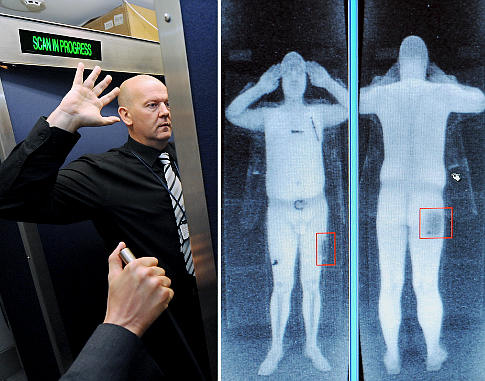
Today I was returning home from Atlanta, and its monster of an airport has one the cattle pen systems for going through security–a long, ling, line to all gates that keeps dividing and dividing, ultimately sending you down one of about 20 chutes to be scanned, stripped and yelled at. It is difficult to pick your chute, but in my case, it is crucial: Atlanta doesn’t have the full-body scanning devices in every line, and without it, I get gated, beeped, and sexually molested, thanks to my artificial hip.

It took ducking under a couple of barriers, but I finally got to an x-ray conveyor belt near a scanner, and had removed my laptop (separate bin) belt, jacket and shoes (not allowed in a bin in some cities, allowed in others) and lined them all up with my bag and brief case when an agent (none too politely) told me that they were closing that line, and directed me to another one, two lanes over. I lugged the three bins, bag and brief case over to that line, only to discover that it didn’t have a scanner.

That did it. I erupted at one of the agents, telling her that I did not care to be felt up at 8 in the morning, thanks, and had made a good faith effort to direct myself to a scanner, being foiled by the agent and by the fact that there are no signs warning people like me where a testicle massage is the only option.

“Why aren’t there signs?” I asked.

“I don’t know. There should be,” she said, as she helped me move my stuff to a scanner accessible line. “You should write the TSA and the airport.”

I laughed bitterly. “I’m sure that will do a lot of good. Do you all jsut like feeling up passengers? Is that the reason?”

A woman behind me laughed and said, “It sure seems like it!”

“Well, you know,” I said to her, “I hear Jerry Sandusky is trying to get a job as a screener!”

Her guffaw was interrupted by 7’8″ TSA agent, who said, loudly, “No he’s not, and I’m offended by that statement.”

My response, after a second’s consideration, was this: “I’m sorry I offended you. But I’m not apologizing.”

Your ethics quiz of the day: Should I have apologized? Continue reading