Ethics Heroes: The Al Ittihad Soccer Team

Spontaneous  sportsmanship  broke out in a recent international soccer match between Al Nahdha, an Omani soccer club, and Al Ittihad, a Saudi soccer club. I’ll take my encouragement from wherever I can get it these days.

Al Nahdha’s goalkeeper was about to make a clearance early in the second half of a 2-2  tie, but hesitated because his shoelace was untied, and seemed worried that his shoe would fly off. An opposing player, a Brazilian striker named  Jobson, noticed the goalkeeper’s dilemma  and  instead of taking advantage of the soccer equivalent of a wardrobe malfunction, tied his opponent’s shoelace for him. The surprised and grateful goalkeeper slapped Jobson on the back and gave him a high-five as the crowd cheered its approval, then he kicked the ball.

A ref, however, spoiled the moment by signaling that the goalie had delayed the game by taking too long with his clearance. He awarded an indirect free kick to Al Ittihad , and Al Nahdha lined up to defend.  Then, after talking the situation over, the Saudi team took what could have been its shot at a game-deciding goal.
The team just kicked the ball harmlessly past the goal, refusing  the penalty (and rebuking the referee), while also making certain that its earlier good sportsmanship wasn’t rendered pointless by a gratuitous ruling.

The crowd loved it.

I bet I would have too, if I would let myself be caught dead at a soccer match.

[Disclaimer: The title on the video above is the opinion of the video poster, and does not necessarily represent the views of Ethics Alarms.]

__________________________

Pointer: Jonathan Turley

Unethical Quote Of The Week: Attorney Lee J. Danforth

“If this trial prevents one little girl or one mother or father from reporting suspected abuse then this is profoundly sad for our society.”

 —-Lee J. Danforth, attorney,making a lightly veiled argument that his clients should suffer no penalties for ruining a teacher’s career and reputation with a false accusation of “inappropriate touching,” because such penalties would discourage future legitimate accusations.

"Oh, you all were lying when you got John Proctor hung as a witch? Well, that's okay---we wouldn't want to punish you, because it might discourage a real victim, in case there really IS a witch one of these days...

“Oh, you all were lying when you got John Proctor hung as a witch? Well, that’s okay—we wouldn’t want to punish you, because it might discourage a real victim, in case there really IS a witch one of these days…

Mr. Danforth was defending a San Jose, California family in a defamation suit by a former Catholic school physical education teacher, John Fischler,  who claimed that they methodically destroyed his reputation with a campaign of rumors and lies, led by his main accuser, an 11-year-old girl right out of “The  Children’s Hour” or “The Crucible.” Danforth is a lawyer (Danforth was also the name of the judge in the Salem witch trials, speaking of “The Crucible” and false accusations) , and it is sometimes necessary, and thus ethical, for lawyers to make otherwise unethical arguments in the zealous representation of their despicable clients. Remember, legal ethics does not allow Danforth to temper his advocacy out of concern for future, genuine victims, unlike his clients. They are not his concern, and even bad people have a right to vigorous legal representation. Nonetheless, his statement embodies an unethical rationalization for letting diabolical and vicious false accusers escape the just consequences for their actions. Continue reading

NOW Do You Agree That Congress Should Read Bills Before It Passes Them?

runaway-train

The Obamacare meltdown should not be cause for joy anywhere, although I can understand why the Republicans are giddy and conservative pundits are searching for ways to say “Didn’t I tell you?” in unobnoxious ways. There are no obnoxious ways. There is no worse feeling than knowing that a leader, a movement or a cause that you fervently believed in and defended against doubts and criticism was not worthy of your trust. For the politically and socially committed, comparing this experience to losing a loved one is no exaggeration. Are you in the habit of pointing at your neighbor and shouting, “Haha, your mother died! I told you she looked sick!”? Mocking and razzing the Democrats or progressives in your life is not much better.

We all, however, share responsibility for running this republic, and lessons must be learned. Back in 2010, I wrote of the process whereby the Affordable Care Act was passed…

“…Once the bills began to emerge, though, things got worse. They were far too long and convoluted to read and understand; this was incompetent and irresponsible. None of the Senators or Representatives (or the President himself) who advocated the bills in the most emphatic terms had read them, which is a breach of diligence, and many frequently made statements in public that misstated the provisions of the bill, sometimes egregiously. Not reading a technical bill on a well-understood or narrow matter and still voting for it may be common (though, I would argue, outrageous), but doing so with a massively expensive and complex bill affecting the life of every American is irresponsible and an abuse of power. This has continued. Politicians who the public should be able to trust are still making assertions of fact that are not facts they have independently confirmed, and they are insufficiently familiar with the details to either make fair arguments or inform the public.

“Since nobody could read the bill, this allowed the President and his allies to make general arguments that were often half-truths devised to mislead the public or avoid raising sensitive subjects. President made many “promises” about what would and would not be in the bill, knowing that they were promises he might well not be able or willing to keep. Indeed, the bill now being voted on fails to fulfill many of those pledges.  Important policy trade-offs that might erode support were not discussed, or misrepresented.”

This isn’t a partisan point, you know. I am sure that Republicans don’t read bills before voting for them either, but the practice is unconscionable, professional negligence and reckless, and if nothing else good comes out of this miserable blot on democracy, if the public finally demand that its law-makers read, understand and be candid about the laws they make, then something of value may lie beneath the rubble. Continue reading

Ethics Quiz: Michael Wilbon’s Politically Incorrect Confession

mike_wilbon

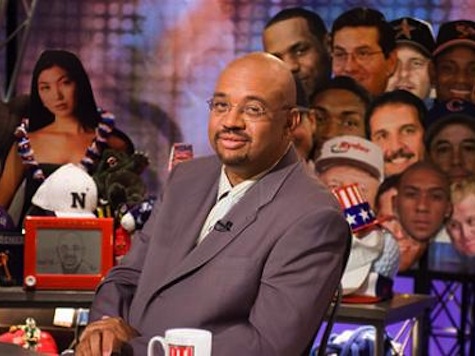
Sportswriter Michael Wilbon, Tony Kornheiser’s African-American foil on the fluffy ESPN show “Pardon the Interruption” and hardly a rabble-rouser, shocked his audience this week when he announced that he is an aficionado of the word “nigger” (but not in public), and objects to being told that there is something wrong with that, especially by white folks. The issue came up regarding an uproar over a tweet, since deleted, from an NBA player using the word to criticize his team mates. [ Aside: It is funny how frequently a single post on Ethics Alarms  about a topic—say political correctness, word censorship, civility and the morass of related ethical issues—seems to trigger an explosion of news stories in the same area. Undoubtedly it is because the proximity of the post itself influences my judgment regarding which events deserve comment, but it sure doesn’t feel that way. This is similar to the phenomenon where you think you have heard a word or phrase for the first time, and suddenly you’re aware of it everywhere.] Wilbon said, unapologetically,

“People can be upset with me if they want, I, like a whole lot of people, use the N-word all day, every day, my whole life … I have a problem with white people framing the discussion for the use of the N-word.”

Your Ethics Alarms Ethics Quiz this weekend is this:

Is Wilbon’s defense of using the word “nigger”ethical? Continue reading

Ethics Heroes: The Mourners of Harold Jellicoe Percival

It’s a simple story.

Thanks Dad. Thanks, Harold. Oh, shut up. Justin!

Thanks Dad. Thanks, Harold. Oh, shut up. Justin!

From the Los Angeles Times:

When Harold Jellicoe Percival died last month, the British World War II veteran’s obituary mentioned that he had no close family to attend his funeral. But after the obituary went viral, hundreds of people showed up to honor him Monday. Percival, who served as a member of the Royal Air Force’s Bomber Command, died on Oct. 25 at the age of 99. His obituary requested that “any service personnel who can attend his funeral service would be appreciated.” It spread across social media brought it to the attention of service members and veterans organizations in Britain, They, in turn, rallied people to attend his funeral and honor his memory on Armistice Day.

There were reportedly 100 mourners in the church, and another 400 standing outside.

The ethical virtues demonstrated here are respect, gratitude, kindness, and citizenship. Somebody please explain this to Salon’s clueless, obnoxious, ungrateful and ethically, historically, logically and rhetorically-challenged writer Justin Doolittle, who argues that there is no reason to thank veterans for doing the dirty work of democracy and putting their lives on the line to protect his. Continue reading

Ethics Quiz: The Case Of The Reasonable Gun Nut

A voice of moderation in the gun control debate?

A voice of moderation in the gun control debate?

“Guns and Ammo Magazine,” a stalwart of gun rights advocacy,  fired contributing editor Dick Metcalf after he penned, and the magazine published, an editorial advocating moderate gun control.

In his opinion piece titled “Let’s Talk Limits,” Metcalf wrote in part,

“Way too many gun owners still seem to believe that any regulation of the right to keep and bear arms is an infringement. The fact is, all constitutional rights are regulated, always have been, and need to be….All U.S. citizens have a right to keep and bear arms, but I do not believe that they have a right to use them irresponsibly.”

The Horror. You would have thought he had come out for legalized cannibalism. Readers attacked the editor and the magazine on social media, and threatened to cancel subscriptions. “Guns and Ammo” editor Jim Bequette posted an apology to readers on the magazine’s website, saying he should never have run the column:

“In publishing Metcalf’s column, I was untrue to that tradition, and for that I apologize. His views do not represent mine — nor, most important, ‘Guns & Ammo’’s. It is very clear to me that they don’t reflect the views of our readership either. I made a mistake by publishing the column,” he continued. “I thought it would generate a healthy exchange of ideas on gun rights. I miscalculated, pure and simple. I was wrong, and I ask your forgiveness.”

Bequette not only announced that “Guns & Ammo” had fired the author, but also that he was leaving as well.

Your Ethics Alarms Ethics Quiz for today is…

Was “Guns and Ammo” unfair to fire Dick Metcalf for writing a moderate and thoughtful opinion piece advocating some gun controls? Continue reading

Ethics Dunce: Virginia Democratic Lieutenant Governor Candidate Ralph Northam

Democratic Party candidate Ralph Northam cannot possibly lose the Virginia Lieutenant Governor race today; in fact, he should win by a landslide. His Republican opponent, African-American minister E. W. Jackson, is so conservative he makes his running mate, gubernatorial candidate Ken Cuccinelli, look like Saul Alinsky, and I’m only exaggerating a little bit. From the pulpit, he has made statements that sound like they were ghosted by Pat Robertson in one of his crazy moods, like when he seemed to be suggesting that children with birth defects were being punished for their parents sins. Jackson doesn’t believe in evolution, thinks that government programs have done more harm to blacks than slavery, and could fairly be described as homophobic.

Still, he is a citizen, a candidate and a human being, so when he offered his hand to his soon-to-be victorious opponent Northam following a TV debate, there was only one decent, civil, ethical, statesmanlike response for Northam: take it, and shake it. That is traditional, civilized, and polite, and for Northam to do what he chose to do instead—ignore Jackson and his hand and snub the Republican, refusing even to look him in the eye—on live TV, no less!— shows him to be an arrogant, unmannered, uncivil jerk of the breed that has brought American politics, government and discourse to a new low. Continue reading

Workplace Ethics: 62 Things That Are Legal, But 22 Of Them Are Unethical

"Oh, sure, he's hell to work for, but he never breaks any laws, so you'll be fine."

“Oh, sure, he’s hell to work for, but he never breaks any laws, so you’ll be fine.”

I have been remiss in not adding the terrific blog Evil HR Lady to the Ethics Alarms links, and will finally do so as soon as I post this entry. No profession deal s with ethical nuances and dilemmas more frequently than human resources professionals, and they can be very difficult, even gut-wrenching. In a recent post, EHRL searched through the archives of questions she has answered over the past years, and compiled an eye-opening list, especially for non-lawyers, of the conduct employers could engage in legally, which is to say, get away with and not be successfully sued, to employees, together with some questionable kinds of conduct that are legal for employees to do to each other.

She listed 62 of them, many of which are reasonable ( it’s okay to fire an employee for “being a jerk”) and some are obvious, or should be;  it is legal to quote the Bible in the office, for example. What is legal is not always good, fair, or right, however, and I perused the list with an eye out for legal workplace conduct that was legal but still unethical. About a third of the types of conduct on the Evil HR Lady’s list made mine. What follows is the sub-list of the 62 things it is legal to do at work, the 22 things it may be legal to do at work, but which are still unethical. The reasons for my unethical verdict follow Evil HR Lady’s items.

Here’s the list of the unethical 22 workplace practices: Continue reading

Can A Prostitute Be Raped?

On Nov. 5, we'll find out if W.C. Fields' low opinion of Philadelphia was justified...

On Nov. 5, we’ll find out if W.C. Fields’ low opinion of Philadelphia was justified…

An unethical and incompetent judge in Philadelphia doesn’t think so, thus making a powerful argument against electing judges, being a prostitute, and living in Philadelphia.

Philadelphia Municipal Court judge Teresa Carr Deni ruled that the 2007 rape of a prostitute at gunpoint was merely “theft of services.”The  woman had agreed to meet a man have sex with him for the bargain fee of $150. He asked her if his friend could join in the fun for an additional $100, and she agreed. When these two sterling citizens arrived for the appointment, however, they held her at gunpoint and forced her to have sex with them free of charge.

If this isn’t rape when a prostitute is involved—forced, unconsented intercourse, through the threat of deadly force—then any prostitute can be raped at will, with the worst charge being “theft.” Selling sex doesn’t convert sexual battery into nothing, a non-crime, once consent for that sale is withdrawn. If you know someone is preparing to sell blood to a blood bank, and you attack him, subdue him, and drain his blood to sell yourself, is this merely theft, or a crime of violence? If he was going to be an organ donor, and you rip out his kidney, is that just theft? There is no route through law or reason that allows us to ignore the fact that a woman was forced to have sex with two men without her consent. Judge Deni clearly has a monstrous bias against prostitutes, and thus believes that they shouldn’t receive equal protection under the law. When criticized, her rationalization was that prosecuting the men for rape “minimizes true rape cases and demeans women who are really raped.” Continue reading

New York’s Stop And Frisk Ethics Train Wreck

Free speech, Brown University style.

Free speech, Brown University style.

On the CBS Tom Selleck drama “Blue Bloods,” fictional New York police commissioner Ryan (Selleck) must deal with a court-mandated monitor to prevent police abuse of the city’s stop-and-frisk tactics. The show might as well just sketch out its season following parallel developments in the real stop-and-frisk drama in the city, which has already taken some strange twists and turns and is bound to take others. It is now officially an Ethics Train Wreck, involving questionable ethical conduct by police, the city government, a former mayor, Fox News, a judge, college students, and an Ivy League college: Continue reading