Brief Notes: Healthcare.gov’s Contractor, Netanyahu, and Charles Blow

life-preserver

I am drowning in important ethics topics and short of time, so I’m reluctantly employing the rarely-used (here) flotation device of briefly noting three stories that would normally warrant full posts. I’ll reserve the right to change my mind and fully explore one or more of them later.

1. Wait: who’s the journalist here?

Six days after Ethics Alarms noted the ridiculous fact that the IRS has hired—for about 5 million dollars of taxpayer money— the same group of incompetents who botched their 800 million dollar job of getting Healthcare.gov up and running, the Washington Post ran the story (on page 18). The new contract itself dates from August: I regard my nausea over it as late, but I regard the Post’s failure to report the story until now a) suspicious, b) incompetent and c) indefensible.

2. Netanyahu lobbies Congress Continue reading →

Bias Check

Confirmation bias

Detecting and overcoming one’s own biases is one of the most important features of being ethical. “Bias makes you stupid,” after all, and stupidity can make you unethical. As the author of an ethics blog, this is of special concern to me, as I am constantly making choices that bias could seriously affect. Some of those choices include what issues and events have ethics components, which are most important to publicize, how should the ethical issues be analyzed, what conclusions are fair and reasonable, even how long a particular post should be, what authorities and references should be included, and what style—scholarly? humorous? bemused? indignant? outraged?—will best illustrate a point.

As regular readers here know, I can be harsh, often too harsh, when a commenter dismisses my commentary as partisan or ideologically motivated. First of all, it isn’t, and I resent the accusation. Second, it’s a cheap shot, essentially attacking my motives, objectivity and integrity rather than presenting substantive arguments. Third, it is a simpleminded approach to the world in general, and democracy in particular, and life, presuming that “there are two kinds of people,” and one type is always wrong, while the other type is always right. There is nobody I agree with all the time, and I am far from alone in that trait. People who agree with the same people all the time are not really thinking. They are just taking the easy route of picking sides, and letting others think for them.

Obviously, my approach to controversies, problems and ethical analysis are influenced by thousands of factors, including my parents,  my upbringing,  where I have lived,  teachers, friends, and family members, experiences, books, plays, movies and popular culture, interests  and passions (like leadership, American history, and baseball), what I’m good or successful at and I’m not, and so much else. These are not biases: once such influences mold your way of looking at the world and passing through life, they are, in fact, who you are. I’m comfortable with who I am. I just don’t want biases making me me stupider than I am.

Thus I am always interested in trying to identify where I stand on a the ideological scale. Some of my conservative friends think I’m liberal; all of my liberal friends think I’m conservative. Two sides again: I am confident that it is their place on the scale that leads to those perceptions. Today I encountered another test that supposedly divides liberals and conservatives sharply.  It comes from political scientist and philosopher James Burnham’s  1964 book “The Suicide of the West.” Burnham was one of those radical leftists who did a complete reversal in middle age and became an influential conservative theorist. You are asked to agree or disagree with these 39 statements, and the result reveals your ideological bent.

Here are the questions: Continue reading →

Comment of the Day: “Ethics Alarms Encore: ‘Aesop’s Unethical and Misleading Fable: The North Wind and the Sun”

AESOPSFABLNever let it be said that we aren’t eclectic on Ethics Alarms! Today’s Comment of the Day is a thoughtful response to my objections to Aesop’s “The North Wind and the Sun,” a 2011 post that I republished this week in fascination over how it continues to draw traffic. The thread here and on the original has touched on many diverse topics, including theology; commenter Rich (in CT), however, just submitted the most interesting analysis yet.

Here is his Comment of the Day on the post, Ethics Alarms Encore: “Aesop’s Unethical and Misleading Fable: The North Wind and the Sun:

”The comparison of God and Satan in Job to the Sun and Wind is an apt comparison, because the fable relies on “divine privilege”. An exercise of divine privilege should not be taken as an example of behavior that non-divine entities should emulate. Rather, they are external parameters that set up a hypothetical environment to illustrate the lesson of the story.

I specifically say “lesson”, because the objective of the story need not be a superficial “moral”. The “moral” that was selected here was a lazy plot device by an author who attempted to pigeon-hole the fable into his limited definition of a fable. While the particular moral in the version you share is useless, the fable perhaps might better illustrate both the use of strategic thinking and well as illustrate the role of moral luck in one’s success. A more apt “moral”, if any, might be to be clever, but acknowledge the limit of cleverness.

Ethical behavior never takes place in a vacuum, but must balance certain principles with the current circumstances. In the fable, an arbitrary task is selected, and the two actors use the tools at their disposal to attempt to achieve the task. The wind has two tools: blow hard or soft; the sun has analogous tools: beat hard or soft. Given the task, arbitrarily set up as a competition, only one had tools that could creatively solve the task.

The tale here thus illustrates a few important principles that are of value to a child; creative use of ones tools can lead to success, and that not everyone has a every tool available. A non-lazy author might use the fable to teach the value of cooperation, pooling a group’s tools to complete a task.

The particular task is irrelevant, and is set up as an exercise of divine privilege. Mere mortals have no right to manipulate the weather, but the fable’s embodiment of the solar rays and moving air manipulate these elements in an ethically neutral manner. The selection of a mere mortal as a target of task, might be to lead the reader indirectly, through empathy, to the conclusion that some circumstances are arbitrary and beyond one’s control. The objective might be to teach humility, that one is never entirely responsible for one’s success, no matter how clever one might be.

I thus agree that the particular version of the fable shared is unethical. This is, however, the result of a lazy author. The premise, if used wisely, is ethically neutral; Aesop, or some other interpreter, could use the premise of the story to teach a valuable lesson if so desired.


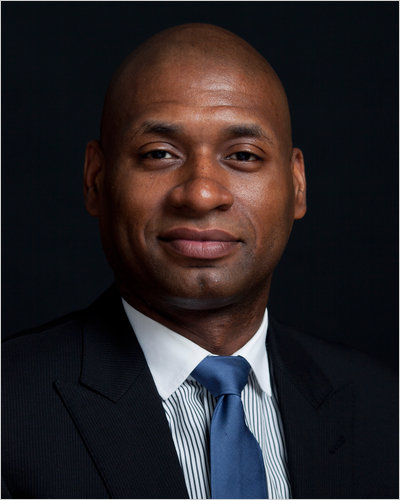
Ethics Observations On Charles Blow’s “At Yale, the Police Detained My Son”

The esteemed columnist. If Yale police had known it was his son, they would have backed off: this is why it's important for the elite to teach their kids "Do you know who I am?" at a young age.

The esteemed NYT columnist. If Yale police had known it was his son, they would have backed off: this is why it’s important for the elite to teach their kids the phrase “Do you know who I am?” at a young age.

Charles Blow is a talented info-graphic op-ed columnist for the New York Times. he is also and African American who repeatedly pushes the narrative that the U.S. is a racist society hostile to blacks and black men in particular. Afew days ago, he authored an accusatory op-ed piece after his son, a Yale student, was detained at gunpoint by a campus police officer. Apparently Young Blow fit the description of a campus burglar, and was subjected to the indignity of being forced to the ground, identifying himself, and answering questions. Blow immediately decided to use his position of prominence with the Times to air a family grievance. Announcing that he was “fuming,” Blow questioned the officer’s procedure—

“Why was a gun drawn first? Why was he not immediately told why he was being detained? Why not ask for ID first? What if my son had panicked under the stress, having never had a gun pointed at him before, and made what the officer considered a “suspicious” movement? Had I come close to losing him? Triggers cannot be unpulled. Bullets cannot be called back.”

…and then concluded thusly:

“I am reminded of what I have always known, but what some would choose to deny: that there is no way to work your way out — earn your way out — of this sort of crisis. In these moments, what you’ve done matters less than how you look. There is no amount of respectability that can bend a gun’s barrel. All of our boys are bound together.”

“What you’ve done matters less than how you look.” Charles Blow is nearly engaging in code here, but his meaning is clear. His son was treated prejudicially because of the color of his skin. His son, the accomplished, Ivy League-going offspring of a distinguished journalist was treated like a criminal—how dare they!— because of how he looked, because he was black. “Some would choose to deny it” —you know: racists, conservatives, whites, Republicans—but “all of our boys are bound together.” Translation: we all look the same to racist white cops.
Continue reading →

Ethics Alarms Encore: “Aesop’s Unethical and Misleading Fable: The North Wind and the Sun”

north-wind-and-the-sun-story-oil-painting

[ I vowed that the next time I got a comment on this post, I would publish it again. It hails from four years ago, when  Ethics Alarms got a quarter of the traffic it gets now. I confess that I wrote it on a whim, having been talking with my wife about how Aesop’s Fables were joining Mother Goose stories,  Edward Lear limericks and American folks song in the Discarded Bin of our culture and then stumbling upon a fable I had either never read before or forgotten about.  To my surprise the post attracted intense criticism from fans of the story—I even had to ban a commenter who got hysterical about it—and the post joined a very eclectic group of early essays here that get considerable and consistent readership every week. Apparently there are a lot of Sun-worshipers out there. Anyway, since you probably missed it the first time, here it is.]

Today, by happenstance, I heard an Aesop’s Fable that I had never encountered before recited on the radio. Like all Aesop’s Fables, at least in its modern re-telling, this one had a moral attached , and is also a statement of ethical values. Unlike most of the fables, however, it doesn’t make its case. It is, in fact, an intellectually dishonest, indeed an unethical, fable.

It is called “The North Wind and the Sun,” and in most sources reads like this:

“The North Wind and the Sun disputed as to which was the most powerful, and agreed that he should be declared the victor who could first strip a wayfaring man of his clothes. The North Wind first tried his power and blew with all his might, but the keener his blasts, the closer the Traveler wrapped his cloak around him, until at last, resigning all hope of victory, the Wind called upon the Sun to see what he could do. The Sun suddenly shone out with all his warmth. The Traveler no sooner felt his genial rays than he took off one garment after another, and at last, fairly overcome with heat, undressed and bathed in a stream that lay in his path.”

The moral of the fable is variously stated as “Persuasion is better than Force” , or “Gentleness and kind persuasion win where force and bluster fail.”

The fable proves neither. In reality, it is a vivid example of dishonest argument, using euphemisms and false characterizations to “prove” a proposition that an advocate is biased toward from the outset. Continue reading →

The Murderer and The Unethical Powerpoint

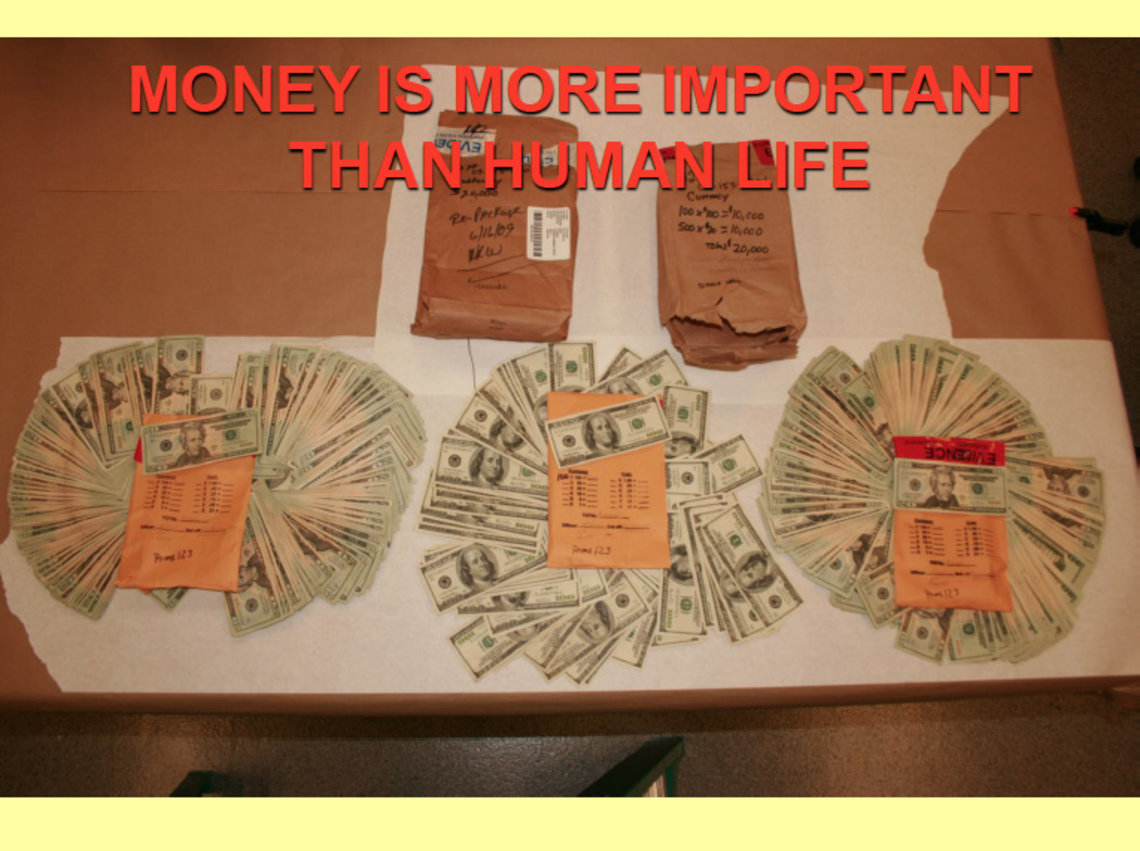
Powerpoint slide

Why didn’t I see this coming? The Washington Supreme Court overturned the conviction of Odies Walker for murder and other crimes in the slaying and robbery of an armored car guard because the  prosecutor’s PowerPoint presentation during his  closing argument constituted “flagrant, pervasive, and prejudicial”  prosecutoral misconduct. While lawyers “may use multimedia resources in closing arguments to summarize and highlight relevant evidence,” the court ruled, “advocacy has its limits.”

The  prosecutor presented a whopping 250 PowerPoint slides to the jury during the summation, including 100 with the caption “defendant Walker guilty of premeditated murder.” The slide above with the caption, “Money is more important than human life,” was typical of the problem assailed by the justices: it was never alleged that Walker said this, or even thought it. Continue reading →

STUPIDITY SATURDAY Bonus: The Deflategate Deniers, Excusers, Rationalizers and Corrupters

dumb football fan

[This post took so long to write that I am posting it on Sunday. Pretty stupid.]

Every few months an ethics story erupts that convinces me that I’m wasting my time. I started writing about ethics online in disgust over the Clinton-Lewinsky scandal, which revealed to me that no politicians, few journalists and a tiny minority of the public understood the difference between, right, wrong, and a desperate rationalization. I was aghast at the vigorously nodding heads on talk shows when some ethically-challenged dolt would say that “everyone lies about sex” (so it’s okay), or that because other leaders may have had illicit sex, that made it acceptable, or that Clinton deserved special dispensation because he was an effective and popular President, or that he and Lewinsky were consenting adults, or that personal conduct was irrelevant to the job, or that other Presidents had done worse. These were all just lazy, poorly reasoned and culturally corrupting rationalizations, but nobody except a derided few seemed to know it.

So I’ve been writing about these and other ethics issues, including rationalizations, for about 15 years, and nevertheless, when something like the Patriots cheating scandal arises, I hear the same unethical, ignorant crap, as if nothing has changed. And, of course, nothing has. All I can hope to do, in conjunction with others who don’t want to see society devolve into a Hobbesian Hell, is to try to convince enough rational people that we can, by constantly explaining, arguing, and pointing the way, just keep things as barely endurably corrupt as they are now.

I got depressed just writing that last sentence.

The issue regarding the New England Patriots giving their quarterback an edge by cheating—deflating the balls so he could throw more accurately–isn’t controversial or hard to understand. If the team broke a rule that relates to sportsmanship, the fairness of the competition and the integrity of the result, and it is hard to see how it didn’t, then the NFL should punish the team severely. [ The NFL, true to its black heart, has made it clear that its investigation will not allow a resolution of this until after the Super Bowl, meaning that it hopes the controversy will deflate. I’m sure it could resolve all questions and identify the accountable parties faster if it wanted to—it doesn’t want to.] To do otherwise essentially endorses cheating. Moreover, since the team involved has a head coach who has made it clear that he is willing to cheat (having been caught before), that coach must be held accountable for the unethical culture he has nurtured whether he was directly involved in this particular episode or not. This is truly Ethics 101, Management 101, Culture 101, Sports 101—let’s just call it “101.” Yet so many, from the elite among sportswriters to the public that devotes an obscene amount of their passion, time and money to following football just don’t get it. Continue reading →

The Anti-De Blasio

No de Blasio he!

No de Blasio he!

The mayor of Norwood, Ohio, Thomas F. Williams, did exactly the opposite of besieged New York Mayor Bill de Blasio in response to activist attacks on the integrity of his police department. He sent this letter to his police:

Letter racebaitingIts substance reads…

“I feel compelled to express my thoughts in writing as police officers across the country are under attack by race baiting black leaders and cowardly elected officials. Now is the time to be extra cautious while performing your duties. Back each other and take nothing for granted. Let it be known that, God forbid, something controversial would happen, I WILL NOT ABANDON YOU. As I have always said, your number one goal is to go home to your family after your shift…”


Now, instead of being under fire from his own police like his Big Apple counterpart, Williams’ declaration of support for his own police is being called “appalling” and racist. Bishop Bobby Hilton, president of the Greater Cincinnati Chapter National Action Network, released a statement saying,

“It is appalling that Mayor Thomas Williams would stoop so low as to call black leaders “Race Baiters”.  It is unfortunate he has a problem with blacks and citizens of every group demanding full and fair investigations of the killings of unarmed black men.

“I strongly suggest that blacks stay out of Norwood.  Do not shop there. When a Mayor feels the only way he can encourage and show support for his police department is by making disparaging remarks about black leaders, it is time to stay away for your own safety.”

Jasmine Coaston-Foree, an organizer with Black Lives Matter Cincinnati, demanded, “We want a public apology. We want him to retract the inflammatory statement. The letter was irresponsible for someone in his position given the events that have happened recently.”

For his part, the Mayor, a Democrat, is not backing down. “It’s one of those things where everybody knows, or most people know or can see what’s going on, but they won’t say it,” Williams said. “And there are individuals across the country who earn a living or raise funds by getting involved in something before any of the facts are known. (People) who come in, raise doubt, raise issues, when they don’t know the facts and then they leave. That’s a fact.”

What’s going on here? Continue reading →

And Now, How A RIGHT Wing “Watchdog” Views The World…

PRinc_rm_photo_of_jaundiced_eye

In commenting on today’s early post about Mediaite inexplicably neglecting to mention that the “ethics watchdog”now accusing Rep. Louis Gohmert of skimming off his campaign funds is in fact part of the Media Matters left-wing hit squad, commenter Steve-O-in-NJ observed…

“As has been pointed out many, many times on this site both by yourself and others, most Americans have some shade of partisan goggles on that makes it harder to see ethical violations by those they are sympathetic to and easier to see them by those they are not. It doesn’t help that there are any number of partisan dyes (racism, sexism, patriotism) we can release to further cloud the waters we swim in with these goggles on. Eventually there’s so much dye in the water and the lenses become so tinted that everyone forgets what clear water actually looks like.”

Truer words were never uttered. To prove Steve’s point from the other side of the political spectrum, I present Newsbusters, which holds a higher level of esteem from me than CREW by being transparent about its skewed perspective: the site, part of arch conservative Brent Bozell’s empire, acknowledges that it exists to show liberal bias in the news media, and Lord knows, there is plenty to show. Unfortunately, Newsbusters is addicted to the same silly routine its counterpart Media Matters employs, the “X spent this much time on this story but only this much time on this story that exposes the rank incompetence and corruption of a politician/program/party we hate” bit. The complaint has legitimacy when the news media is deliberately burying an important development and hiding facts from the public, as the mainstream media has done with the IRS scandal and attempted to do with Jonathan Gruber’s revelations, or as Fox did with results of the Congressional investigation of Benghazi. More often, however, the real complaint is “Why don’t the biased news sources adopt our biases instead of their biases?”

Today brings a classic example on Newsbusters: Continue reading →

Ah, Mediaite? CREW Is NOT An “Ethics Watchdog Group,” It’s A Partisan Media Matters Hit Group

See, Congressman, it works this way: if you were a Democrat, CREW would ignore your junket to London, and so would Mediaite. Fox News, however, would be all over your ass...

See, Congressman, it works this way: if you were a Democrat, CREW would ignore your junket to London, and so would Mediaite. Fox News, however, would be all over your ass…

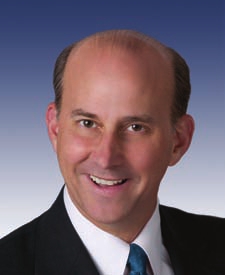
Did Rep. Louis Gohmert (R-Tx)*, one of the prominent conservatives in the Republican-led Congress, misuse over $6,000 in campaign funds on a speaking trip to London? Maybe; it sounds like one of those typical gray election law controversies, and one of the lesser ones, except that Gohmert is on a lot of partisan hit lists. If he did misuse the funds, I’d want to see him fined, or whatever the violation warrants, and chastened too.

That’s not my concern right now, though. What interests me is that the alleged misuse of funds was flagged by Citizens For Responsibility and Ethics in Washington, and in reporting it, Mediaite said, in a story headlined, Ethics Watchdog Accuses Gohmert of Misusing Campaign Funds:

“An ethics watchdog group has filed a complaint against Rep. Louie Gohmert, accusing the Texas Republican of misusing campaign funds to foot the bill for a trip to England that included a 5-star hotel and a $200-plus taxi ride.The complaint, filed by Citizens for Responsibility and Ethics in Washington (CREW), was addressed to the staff director and chief counsel of the Office of Congressional Ethics and demands an investigation into whether Gohmert violated House rules by using campaign money for a trip that seemingly had nothing to do with his campaign.”

CREW, as I have repeatedly pointed out for years, is no “ethics watchdog.”  Continue reading →