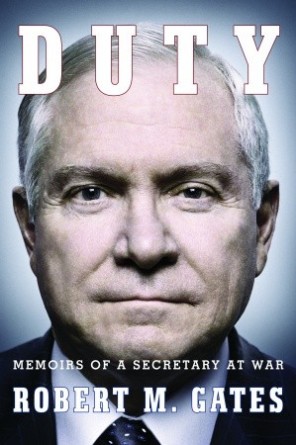
Betrayal: Robert Gates Gets Even

dutygates

When General George Marshall, World War Two military leader, former Secretary of State, and architect of the Marshall plan, was offered a million dollars to write his memoirs in the 1950s, he demurred, saying that there was no way he could write a truthful memoir without undermining people still at work in the government and military.

And then there was David Stockman…Paul O’Neill

…and Robert Gates.

Bottom line: these people betray their colleagues for money, and often, as is Robert Gates’s case, out of spite. Former Defense Secretary Gates, like the others, was given an opportunity to serve his country in a high executive branch position. He was privy to policy discussions and the inner workings of the administration. He was trusted. To reveal details of his tenure while the administration he worked for is still in office, done in a way designed to provoke criticism and embarrass his former associates and boss, is the height of disloyalty, and a breach of implicit confidentiality.

The honorable and ethical way to write such a book would be to wait until it could not actively interfere with the work of the Executive Branch. The people may have a right to know, but they do not have a right to know everything immediately. People in high policy-making positions must be able to be themselves, express opinions, and have productive meetings with the confidence that those they work with are not collecting notes for a future Book-of-the-Month sellout. Books like Gates’s undermine that trust, make it more difficult to get candid and controversial opinions and ideas into the decision-making process, and ultimately hurt all of us. The former  Secretary and those who appreciate the additional ammunition for administration-bashing can assemble a lot of rationalizations for the  book, but they all boil down to “Everybody Does It,” the most threadbare and cowardly rationalization of all.

The ethical thing would have been for Gates to write the book in a few years, or not to write it at all. The ethical conduct for the reading public is to discourage betrayals, no matter who is the one betrayed, by sending such books to the remainders bin.

I suppose I should mention that except for the substitution of Robert Gates’ name for that of Paul O’Neill, and replacing “Treasury” with “Defense,” every word above was written in 2004, when I condemned the sell-out of fired Bush Treasury Secretary O’Neill, who had just provided the information used in a Bush-bashing tell-all called “The Price of Loyalty: The Education of Paul O’Neill.” (Yes, the old Ethics Scoreboard is coming in handy today.) Every word applies with equal force to the new memoir by Gates, who was President Obama’s Secretary of Defense and whose current tell-all attack has set Washington buzzing, except that Gates’s conduct is ethically far worse. Continue reading
Ethics Dunce: Dallas Cowboys Wide Receiver Dez Bryant

Bryant quits

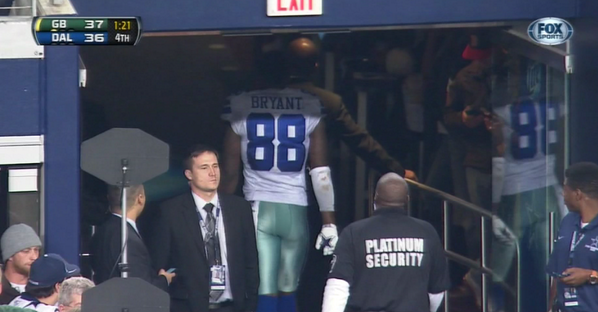
The NFL appears to be having a collective values breakdown. First the Miami Dolphins lose two players in an alleged bullying scandal, and last Sunday, star Cowboy wide receiver Dez Bryant walked off the field with more than a minute left to play in the game. After Dallas quarterback Tony Romo threw the last of his two second-half interceptions to virtually ensure a humiliating come-back defeat at the hands of the Green Bay Packers, cameras followed Bryant as he left his team for the locker room with 1:21 remaining on the clock. Later, he apologized and explained his actions by tweeting:

“I walked back to the locker room because I was emotional…it had nothing to do with my teammates we had it…We fought and didn’t finish”

Oh. What?

That’s no explanation. To reporters, he said that he didn’t want the cameras catching him crying. On the professionalism scale, this is minus 1000. He’s emotional? So what? Suck it up! He doesn’t like to lose? Who does? He couldn’t take it any more? Tough—he’s paid to take it, and damn well too. Continue reading

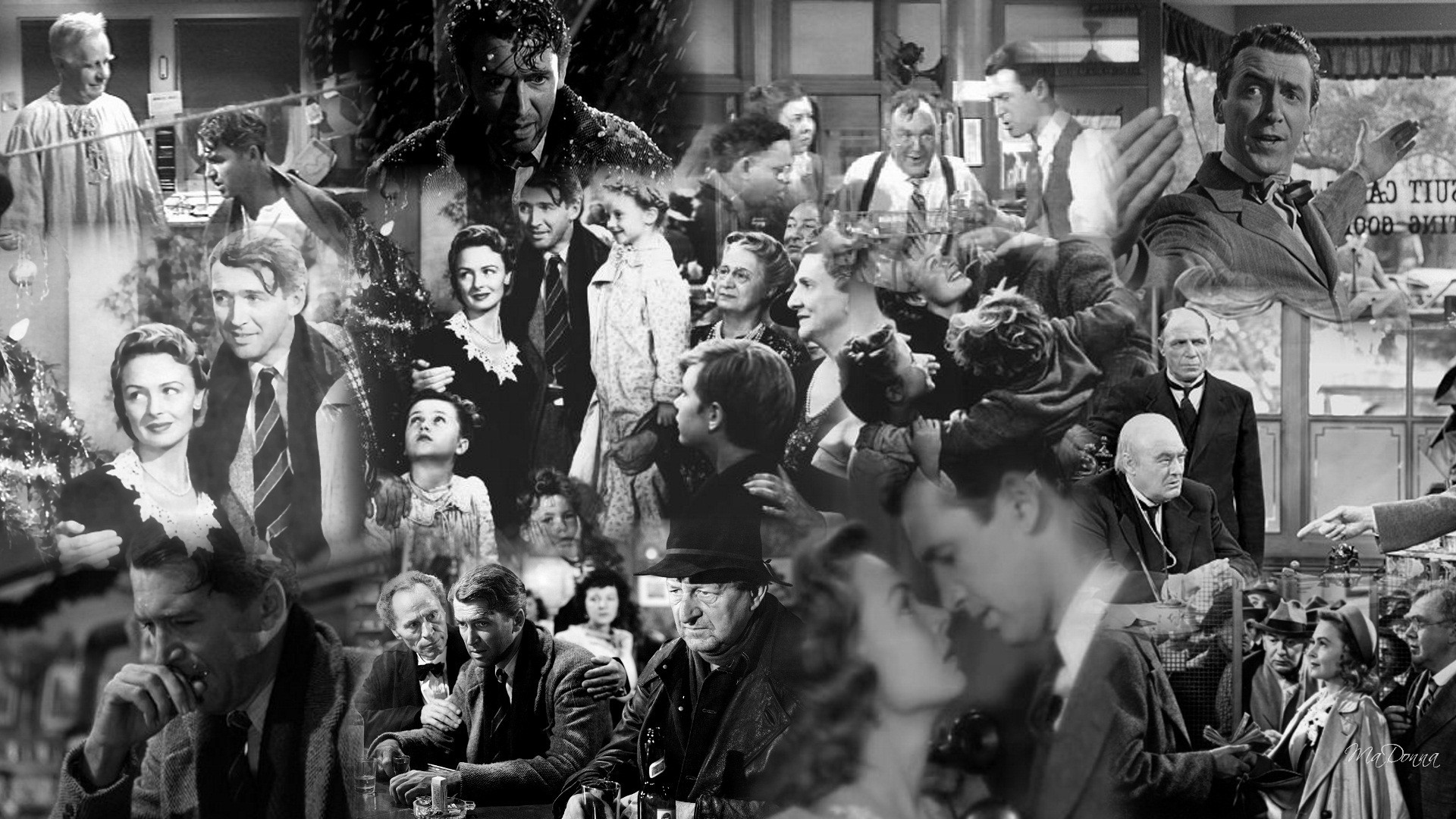
To Get Your Christmas Ethics Off To The Right Start…

its-a-wonderful-life-collage-73136

…the Complete Ethics Alarms “It’s A Wonderful Life” Ethics Guide is here.

Just in case you forgot!

Ethics Dunces: 33% of the U.S. Public

Gumbies

Today’s headlines shout out that the public’s faith and trust in President Obama has turned sharply down.  From ABC:

“The president’s job approval rating has fallen to 42 percent in a new ABC News/Washington Post poll, down 13 percentage points this year and 6 points in the past month to match the lowest of his presidency. Fifty-five percent disapprove, a record. And 70 percent say the country’s headed seriously off on the wrong track – up 13 points since May to the most in two years.Other ratings of the president’s performance have tumbled as well. He’s at career lows for being a strong leader, understanding the problems of average Americans and being honest and trustworthy – numerically under water on each of these (a first for the latter two). His rating for strong leadership is down by 15 points this year and a vast 31 points below its peak shortly after he took office. In a new gauge, just 41 percent rate him as a good manager; 56 percent think not.”

Wow. Not only that, but a whopping 63% of the public—“by nearly 2-1, 63-33 percent”—disapprove of Obama’s handling of implementation of the new health care law! And…wait, what???

33% of the public approves of the implementation of Obamacare? Continue reading

In Search Of Ethical Pop Songs

It was around this time last year that Ethics Alarms expanded its list of the top Hollywood movies with ethical lessons and themes to 25. (You can find the complete collection here, here, here and here.) I am researching a similar list for popular songs, and this task is far more difficult. Most pop songs, if they have a story at all, convey unethical lessons and cautionary tales: exemplary ethics are not, apparently, the stuff hits are made of.

I am soliciting nominations. To get you started, here are two on my list, both oldies. The first is “Ringo,” one of those talking songs like Jimmy Dean’s “Big John” (also a candidate for the list), performed by Pa Cartwright himself, Lorne Greene. The ethical values shown in this Western tale are kindness, reciprocity, loyalty, and gratitude:

My second nomination is one of several sound-alike hits from Gary Puckett and the Union Gap. In this song, Gary illustrates an understanding of Restraint Bias—none of us is as resistant to temptation as we would like to believe. The song is about responsibility. (I don’t think Roman Polanski was a fan of the Union Gap).

I await your playlists.

Ethics Dunce: “Saturday Night Live” Cast Member Jay Pharoah

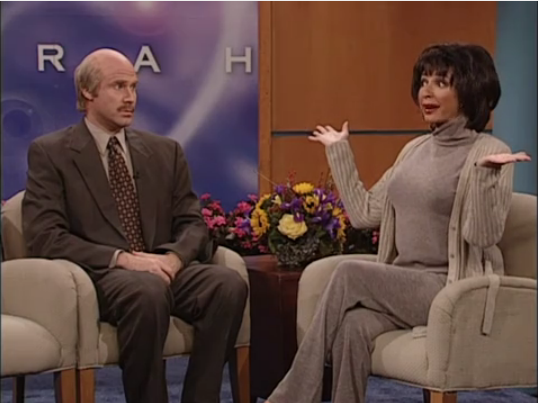
Maya Rudolph being Oprah, being funny, and nothing else should matter.

Maya Rudolph being Oprah, being funny, and nothing else should matter.

In a spontaneous call for more black cast members to be added to NBC’s long-running late-night satire show, “Saturday Night Live,”  veteran cast member Jay Pharoah told an entertainment reporter that he wanted the producers to add actress Darmira Brunson. “Why do I think she should be on the show? Because she’s black first of all, and she’s really talented,” Pharoah said. “She’s amazing. She needs to be on ‘SNL.'”

By logic, rights and justice, Pharoah should be fired for such a statement. He is pushing his show, and therefore his producers and his bosses, into a controversy that they neither want, need, nor deserve. Sure enough, his comments have already ignited debate and commentary in major dailies and in the blogosphere. He can’t be fired, of course—no producer in Hollywood would dare fire a black performer for advocating politically correct causes like diversity and affirmative action, no matter how inappropriate and unfair his comments were—and Pharoah knows that. Breaking reasonable rules of the workplace—criticizing your own boss in public and causing trouble for your employer are pretty basic taboos—because you know you’re immune from punishment doesn’t make the conduct any better.

He’s not the producer, and casting isn’t part of his job. To announce his own candidate for a hire is as outrageous and out-of-bounds as for a Pentagon general to tell reporters who President Obama should appoint as his Secretary of Defense.

Then there is the  statement itself, which in the context of entertainment and show business, is an endorsement of racial bias and discrimination, even more than with most workplace diversity and affirmative action advocacy. “Because she’s black first of all?” First of all must only be “because she’s funny, and the funniest female comic available.” Saturday Night Live’s goal, which it fitfully achieves, is to make its audience laugh. If Brunson is the best performer to accomplish that, then it makes sense to hire her. Her skin color is irrelevant, except to the extent that it opens up comic opportunities for the show. Otherwise, Brunson is pressuring his employers to hire Brunson over  superior white, Hispanic or Asian performers because of some theoretical diversity formula.

The resulting media focus on the imaginary problem to which Pharoah’s comments alluded is full of reflections, names and statistics, but the basic facts are these:

  • Professional performance comedy is completely utilitarian: if a cast entirely made up of black performers of any gender mix could be shown to be the optimum way to get laughs, ratings and make money for the network and SNL’s producers, that’s what we would have.
  • A funny, talented, improvisational skilled black actress has obvious benefits for a weekly satire show, as the reign of Maya Rudolph amply demonstrated.  There is no reason to presume that the producers would not immediately hire such a performer if one was available.
  • The pool of top-rate improvisational comic actors in general isn’t large (if it were, SNL would be funny more often), the pool of such performers who are African-American is much smaller, and the number of female black improvisational comics is tiny. When the African-American Wayans brothers wrote and produced their own satire show (Jim Carrey was the token white), they included only one full-time black female in the cast, and she was their sister (also the weak link in the cast.)

We can argue about the general principle of affirmative action at another time and place, but applying them to entertainment, sports or any field that must be a pure meritocracy is irresponsible and unfair. Saturday Night Live “needs” funny, talented performers who its audience finds funny…like, say, Eddie Murray. It does not need any black performer, male or female, just to have more black performers, and to take away performing and career opportunities from superior performers whose sole deficit is skin color or ethnicity while simultaneously getting fewer laughs and lower ratings.

Oddly, nobody has ever argued that Saturday Night Live discriminates against improvisational comic actors over the age of 35. Only once has it cast an actor of that age—Randy Quaid, in 1985. 1985 was also the most disastrous and unpopular season in the show’s history. Why no middle age or senior cast hires?  The reasons are legion: 1) Improv comedy is demanding physically and psychologically. Few older performers practice it, or are capable of doing it on a regular basis. 2) SNL’s audience is very young (as well as very male and white). Comedy is generational. 3) Older performers are seldom “new faces.” The ensemble’s called the “Not Ready For Prime Time Players” for a reason. 4) Young actors playing older real life figures and comic characters can be funny; old actors playing younger celebrities or characters is seldom funny, and often creepy. Age diversity, in brief, would not improve Saturday Night Live. Diversity is only an asset to the extent that it allows more comic opportunities. The U.S. does not require, not should ikt ask for, a contemporary satire TV show that “looks like America.” What  it needs is a show that is good.

All of which makes Pharoah’s comments irresponsible, unfair, disloyal, and racially offensive.

And not funny.

______________________________________

Sources: Washington Post, Policy Mic

Graphic: Hello Giggles

Ethics Hero: Sid Bream

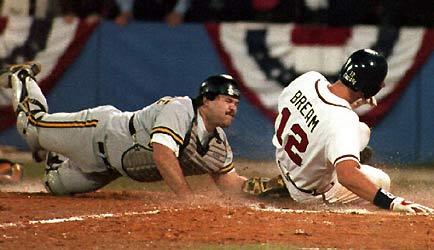
sid_breamYou all remember Sid Bream, don’t you? Well, probably not: he was a mediocre first baseman about 20 years ago who played for the Pittsburgh Pirates and the Atlanta Braves. He hasn’t been heard from in a long time, being quietly retired, but the Braves may be hosting the Pirates in an upcoming National League Division Playoff Series as the baseball post season gets underway, and they invited Bream to throw out the first pitch in Game #1 if that is the case—-Pittsburgh has to win a wildcard play-off game with Cincinnati first. You see, the one thing in his career that Bream is remembered for, at least in Atlanta, is scoring the run that won the National League Championship Series over the Pirates in 1992, in a close play that also lives in Pirates’ fans nightmares.

Throwing out the first pitch is fun: the team flies you in and pays for your hotel, gives you a prime ticket, and then announces your name as you trot on the field to cheers. If you have kept your arm in shape, you might even get off a throw to the catcher from the pitcher’s mound that doesn’t embarrass you, and that will acquire more cheers. from the packed stadium. Wait…this is Atlanta, not Boston. OK, from the two-thirds filled stadium. Even then, what’s not to like?

But Sid Bream turned the Braves down. Remember that I began by saying that he played for both the Braves and the Pirates. He said,

“Whatever their motive (for the invite) was, I don’t want to be involved. I wasn’t surprised (by the offer). Whether their motive was to rub it in the Pirates’ faces, I don’t know. I think it was just more of a gesture to commemorate those two teams getting back together in the postseason. But I’ll stay neutral. I’m not going to do anything to tell the fans in Atlanta or Pittsburgh that I’m (rooting) one way or the other.”

Oh, I think it’s fair to say that rubbing the Pirates’ faces in their last loss to the Braves in a postseason game was exactly what the Braves had in mind. This kind of voodoo has been a standard part of baseball gamesmanship for a long time: nobody believes that the Yankees had Bucky Dent throw out the first pitch when the Yankees had a crucial playoff game against Boston (which they lost) in 2004 “to commemorate those two teams getting back together in the postseason.” It’s psychological warfare, and more or less good-natured; there’s nothing wrong with it, and there would have been nothing wrong with Bream agreeing to play along.

But Sid Bream is, it seems, loyal. He was a Pittsburgh Pirate for a long time, a Brave only for a couple of years, and he doesn’t feel like being part of one of his former teams’ effort to unsettle the other one, even though its’ no big deal, and even though his old team won’t hold it against him. It just would feel right to him.

This is called integrity.

Good for Sid Bream.

_______________________

Pointer, Graphic and Facts: NBC Sports


No, It’s Actually Allison Benedikt Who’s A Bad Person

Hang in there--the schools will be better in a few generations...

Hang in there–the schools will be better in a few generations…

There may be some persuasive arguments to be made for sending your child to a public school system you don’t trust. The obvious one is that you have no choice, which is true for many Americans. There are also some good reasons to write a “manifesto” called “If You Send Your Kid to Private School, You Are a Bad Person,” the best of which is to cause people to focus on the problem of the failing and unacceptable public school system, and what should be done about it. However, Allison Benedikt, who actually wrote an article with this title and presumably this intent, failed so miserably at making a coherent and persuasive argument of any kind that her provocative title amounts to an unethical assertion itself: if you are going to make a blanket indictment of the character of millions of people, you had better be able to produce an ethical argument or two, or at least demonstrate that you comprehend a little bit about ethics. Allison doesn’t. Based on this piece, I not only wouldn’t trust her (oh, by the way, Allison, the core objective of ethical conduct in your profession—any profession, actually—is trust) to provide advice about how to educate my child, I wouldn’t trust her to walk my dog. Continue reading

Ethics Hero: Millikin University

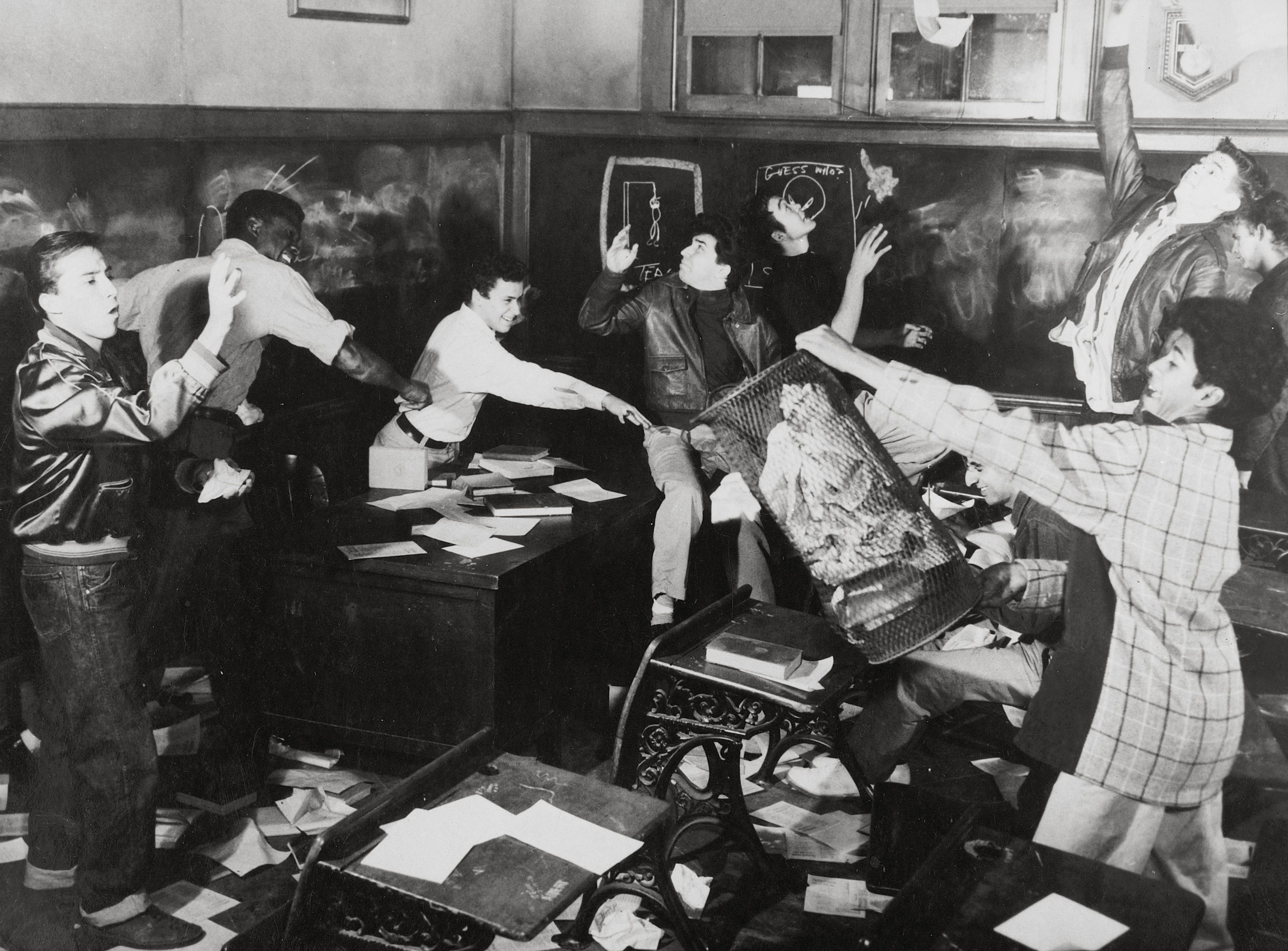
This story sounds like it was dreamed up for joint production of the Lifetime Movie Network and Chiller.

Above: The scene of Wolcott's mothers shooting; below, his father.

Above: The scene of Wolcott’s mothers shooting; below, his father.

Millikin University is a private institution in Decatur, Illinois with approximately 2400 students. It has been thrust into local headlines with the discovery that one of its psychology professors, James St. James, who heads the schools Department of Behavioral Sciences, murdered his parents and his older sister when he was 15. Then he was called James Gordon Wolcott.

He changed his name after being treated in a mental institution, where he was sent after being found not guilty of the crime because he was legally insane at the time of the killings. High from sniffing glue, the brilliant but emotionally disturbed teen grabbed a .22-caliber rifle, walked into the living room and shot his father, then shot his sister and his mother.

Six years after being sent to Rusk State Hospital,  Wolcott emerged apparent cured, and ready to lead a productive life. Ironically, his patricide and his insanity  had greased the way for his rehabilitation: he inherited his parents’ estate and was able to draw a monthly stipend from his father’s pension fund. Changing his name to St. James, he earned a bachelor’s degree, a master’s degree and a PhD, and became an award-winning professor at Millikin. Professor St. James’ secret was undiscovered until this year. He is now 61. Continue reading

The Ethics of Cheering Alex Rodriguez

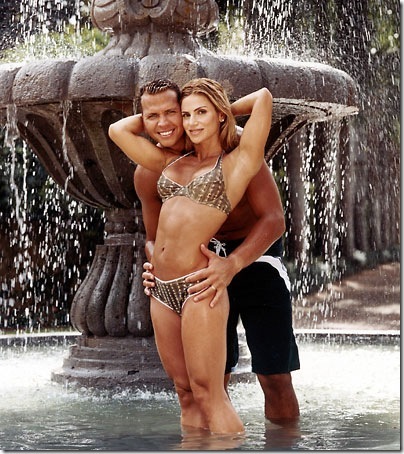
Poor Alex Rodriguez and his wife...

Poor, downtrodden, Alex Rodriguez and his wife…

Baseball’s most embarrassing super-star, the steroid cheat Alex Rodriguez, in playing for the New York Yankees while appealing his long suspension by Major League baseball. As he is unquestionably a repeat liar and a serial violator of the game’s rules against PED’s (performance enhancing drugs), as he signed a contract, in part generated by the results of his cheating, that will both enrich him by millions and handicap his team competitively while conferring few, if any benefits, as he would qualify, by most objective standards, as the antithesis of a sports hero, the fact that Arod, as he is called, still was cheered by a vocal minority in Yankee Stadium when he made his season debut this week is intriguing. What does this mean? Can it be ethical to cheer Rodriquez now?

These are deceptively complex and difficult questions. The threshold  issue is whether cheering or jeering any sports figure, or any public figure at all, is an act with ethical content rather than just a communication of an opinion. Is it conduct, or just “words”? I think, in the context of the Rodriquez situation, a sound argument can be made that it is conduct. Registering group approval or disapproval of prominent conduct by someone of status and influence is a crucial societal function in setting standards, registering disapproval, and prompting shame, regret, apology and reform—none of which, so far at least, seem to register with Arod.

That is pretty clearly what the boos convey, but what about the cheers? If the boos are ethical—they are if the disapproval is proportionate, rational, fair, and just—then are the cheers automatically unethical? Not necessarily. Here are some of the things those cheers could be expressing: Continue reading