Comment of the Day: “Unethical Blog Post of the Week: ‘But What About Caylee?”’

As comments, accusations and retorts featuring the Ethics Alarms All-Stars were flying around on the blog in reaction to the Casey Anthony verdict and my reaction to some of those reactions (here, here, here, and here), Lianne Best came through with an  especially measured take, one that was immediately cheered by other commenters.

There is nothing wrong with feeling deeply, and emotions are important; after all, Mr. Spock had limitations as a leader. When emotion rather than analysis drives public opinion, however, there is a risk of real harm: those attempting objective analysis may be vilified, marginalized or ignored, and rash, reckless decisions and consequences can result.  (I could, but won’t, argue that the 2008 presidential election was a classic case in point.)  Lianne cuts to the real issue deftly. Here is her Comment of the Day:

“I too often find myself embroiled in emotional opinion, with no basis in facts. It’s easy here: an adorable and completely innocent, dependent little girl was killed. Virtually every human, particularly parents, want to see that vindicated, justice found and brought. That somehow makes it better. But you know what? It doesn’t make it better to go racing off on just a blazing gut reaction, not when people’s lives are affected by our lack of thought and analysis. I was a juror in a kidnapping and murder trial. It was an immensely difficult two weeks, and the decision was agonizing. Luckily, it was also popular; it would have been awful to suffer through loud, manic public criticism of our reasoned decision on top of the process … loud, manic public criticism by people who weren’t there, who knew less (or at least differently) than we did. We have a jury system for a reason, 12 people found Casey Anthony not guilty (13 if you count the alternate juror) and we have to trust them.

“Personally, I appreciate Jack’s cooler head prevailing when my mother’s heart is shrieking.”

Marcia Clark, Exploiting the Anthony Verdict for Her Own Sake

Marcia Clark. OK, this really isn't Marcia, but the real picture of her doesn't look like her either.

Marcia Clark’s article on the Casey Anthony verdict is so tainted with obvious conflicts of interest that it should have been rejected by The Daily Beast…or rather would be rejected by any website more selective and less shameless than the Daily Beast. This would be any fair site that does not deal in over-the-top opinion as a matter of course.

Marcia, like her colleague Chris Darden, is a rather tragic figure these days. The former lead prosecutor in the O.J. case is struggling to make it as a pundit, freshly botoxed and rendered almost unrecognizable so as to be fetching in those close-ups. After she sold the inevitable cash-in book about the Trial of the Century, she has wandered in the C-List celebrity wilderness, and will soon join Newt Gingrich and William Shatner as a celebrity novelist. She will be remembered, quite correctly, as the prosecutor who botched the O.J. murder trial, even if we give Darden an assist for the gloves debacle. (Why cable news shows insist on recycling failures as experts is an enduring mystery, the mystery being “how can the producers look themselves in the mirror after choosing recognizable flops over less well-known but more accomplished authorities?”)

But Clark apparently saw an opportunity in the Casey Anthony verdict to rehabilitate her tarnished reputation, and grabbed it. The result is “Worse Than O.J.!”, a new low in self-serving analysis. Continue reading

Unethical Blog Post of the Week: “But What About Caylee?”

Sad but true: the trial's purpose was not to find justice for Caylee.

If I responded to even one out of a hundred ethically muddled, logically addled posts by the hoard of bloggers in cyberspace, I’d have time for nothing else. Now and then, however, I am directed to a post that typifies the kind of free-floating, fact-starved gut sentiment that rots public discourse in America and that helps keeps the public confused and panicked.

In this case, I was directed to the post by the blogger herself, who managed to annoy me by accusing my post on the Casey Anthony jury of being callous to the victim in the case, two-year old Callie. I re-read my post; there wasn’t anything callous toward the child in any way. Puzzled, I went to the blogger’s page, a blog by someone who calls herself wittybizgal, and called Wittybizgal. Sure enough, there it was: an anguished lament about the verdict in the Casey Anthony trial entitled, “But What About Callie?”

The post is frightening, because I am certain that this kind of non-reasoning is epidemic in the United States, nourished by touchy-feely bloggers, pundits and columnists and made possible by the ingrained habit of having opinions without knowledge. Since their opinions are not supported by facts or reasoning, they can’t be debated. If you aren’t persuaded, you’re just mean, that’s all. That’s no way to decide what is right and wrong, but it certainly a popular way. Here is wittybizgal’s argument, one fallacious step at a time: Continue reading

Fick Sighting in Prince George’s County

Leslie Johnson, fick.

Ethics Alarms recently coined the useful term fick to describe the especially shameless individual who violates society’s ethical norms openly, publicly and flagrantly, without remorse or apology. It takes a certain kind of anti-social arrogance to be a true fick, with the gold standard established by Michigan lottery winner Leroy Fick, a millionaire who happily continues to collect food stamps because of a statutory loophole despite howls of indignation from his neighbors in one of the most fiscally-challenged states in the nation.  Other ficks who have come to light include Hugh Heffner despicable ex-fiance Crystal Harris, who plotted to humiliate him at the altar to launch a reality show. Of course, there is  longstanding Octo-fick Nadya Suleman, and celebrity fick Charlie Sheen.

Now lucky Prince George’s County in Maryland has a bona fide fick of its own.  Continue reading

Ethics Quote of the Week: “Ethics Bob” Stone

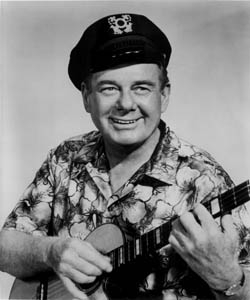
Is Joe Scarborough the new Arthur Godfrey, as in "nice guy" revealed as "unethical creep"?

“It’s always upsetting when one of your heroes turns out to be an unethical creep.”

Ethicist and business ethics professor Bob Stone on his blog “Ethics Bob,” expressing his disappointment in the conduct of MSNBC talk show host Joe Scarborough, who persuaded guest and colleague Mark Halperin to “go for it” when Halperin suggested that his description of President Obama’s press conference was not appropriate for public broadcast, and then did nothing to accept responsibility for the uproar when Halperin referred to Obama as “kind of a dick.” Halperin was suspended indefinitely by MSNBC, following a complaint from the White House.

Bob had expressed hope, in a comment to the Ethics Alarms criticism of Scarborough’s role in the incident, that Scarborough would do the right thing by the next day. He did not. And Bob is correct: this is proof positive that Scarborough is an unethical, cowardly creep.

What should “Morning Joe” have done? Several things: Continue reading

Ethics Train Wreck on “Morning Joe”

Coincidentally, the previous VICE President was frequently called a "Dick"

Time Magazine editor Mark Halperin, a frequent contributer to MSNBC’s “Morning Joe” program,  took one more chunk out of the tradition of gentility and civility in public discourse, not to mention broadcast journalism, by referring to the President of the United States as “a dick” Thursday morning. He was promptly suspended by the network, which was also the scene of Ed Schultz referring to conservative talk show host Laura Ingraham as a “right wing slut.”

Obviously the inhibitions supposedly bred into Americans about vulgar language in inappropriate places—like live TV—are crumbling fast, along with the tradition of respect for the office of President. What is more interesting about the incident, however, is how Halperin was egged into his gaffe by co-host Joe Scarborough, with an assist from Mika Brzezinski. Scarborough then took no responsibility for the incident at all. Continue reading

The Despicable Nadya Suleman and Ethics Estoppel

Nadya Suleman, a.k.a. Octomom, strikes a dignified pose

From the beginning, the only thing keeping Nadya Suleman from being unequivocally despicable has been the lingering suspicion that she was mentally ill. It might be more than a suspicion, to be fair: having octuplets by artificial insemination when one already has six young children and no viable means of support could be called “proof.”  Now even that malady is an insufficient defense: the issue is settled, and she is despicable beyond redemption. One cannot call her the worst mother on the world, sadly, because every day brings the story of another infant thrown down a laundry chute or left in the care of a six-year-old while mom goes partying or looking for drugs. She may be, however, the worst mother ever to become famous for being a mother.

In the latest issue of InTouch magazine—the rag is one full step down from Us magazine, and one half-step up from The National Enquirer—Suleman confesses that she now reviles her octo-brood. “I hate the babies, they disgust me,’ she says. “My older six are animals, getting more and more out of control, because I have no time to properly discipline them.” Elsewhere in the article she bellyaches about how hard it is being a single, unemployed, narcissistic, absurd, irresponsible mother of fourteen children. “The only way I can cope is to lock myself in the bathroom and cry. Sometimes I sit there for hours and even eat my lunch sitting on the toilet floor. Anything to get peace and quiet,” she laments. Yes, Octomom says she regrets having all the children. Continue reading

How the Lack of Ethics Cripples Democracy, Reason #1: Ethical Leadership Is Neither Encouraged Nor Rewarded


How many elected leaders will be responsible when it means risking THIS?

Washington Post Metro columnist Robert McCartney relates the cautionary tale  of Fairfax (Va.) School Board member Liz Bradsher.  The school board, like others across the nation, was required to make some tough choices with its resources scarce and stretched to the breaking point.  The costs of renovating a high-achieving elementary school in the Fairfax County countryside  didn’t pass an objective, cost-benefit analysis, so the board voted to close it. Bradsher, whose district includes Clifton, the neighborhood served by the school, was expected to vigorously oppose the move.  But after studying the costs and enrollment forecasts, she reluctantly concluded that it made more sense to shutter the facility so the county could spend scarce renovation dollars where they would benefit more children.

She did what was best for the Fairfax community as a whole, which, as an elected official, is her duty. But rather than appreciating the courage it took to agree to close a beloved institution in her district for the greater good, she is being attacked. Anonymous postings on a popular local website have spread false rumors that she has a drinking problem and that her marriage is on the rocks. She is receiving threatening letters, and obscene e-mails.   Continue reading

Trapped in “The Ethics Zone”

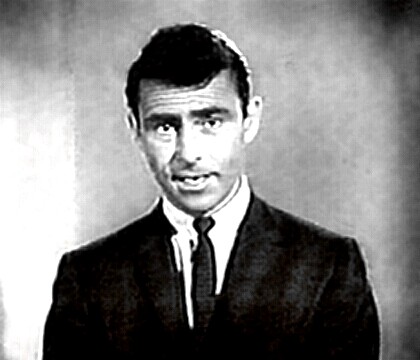
Rod Serling is your guest host for this episode.

We are traveling in a realm beyond time and space, to a dimension where right and wrong are vague and indistinguishable. Witness the strange case of Roy Thomas, a Houston man trapped in a hostile maelstrom of illogical laws and imaginary daughters. He is a victim of an ethics deficit, nourished by greed and desperation, the kind that sometimes lurks in the dark corners of….

The Ethics Zone!

Submitted for your consideration, the saga of Roy Thomas, who has been forced to pay child support for a daughter he supposedly fathered  more than two decades ago, though he always maintained that the child wasn’t his. Continue reading

Sorrell v. IMS Health: Legal, Ethical, and Unjust

The case of Sorrell v. IMS Health, which the Supreme Court decided yesterday, sharply focuses the philosophical disagreement over the role of the courts in public policy. The legal question was rather straightforward; the ethical issues are complex. Is it the Court’s duty to make bad—but constitutional— laws work, or is its duty to follow the laws, and leave it to the legislature to fix their flaws?

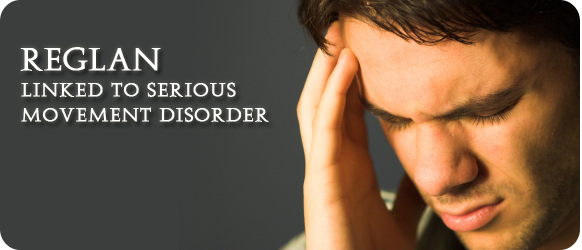
This was a case about incompetent  lawmaking. Gladys Mensing and Julie Demahy had sued Pliva and other generic drug manufacturers in  Louisiana and Minnesota over the labels for metoclopramide, the generic version of Reglan. The drug, used to treat acid reflux, had caused them to develop a neurological movement disorder called tardive dyskinesia. None of the generic drug’s manufacturers and distributors included warnings on the labels about the danger of extended use of the medication, even though the risk was known to them. Neither did the manufacturers of the brand-name drug. The problem was that the state statutes required generic drug manufacturers to included warnings about dangerous side effects, while federal regulations required generic drugs to carry the exact same label information as their brand name equivalent.  Continue reading