Weekend Ethics Catch-Up

If you took an ethics break this last weekend of February, here’s your Ethics Alarms make-up assignment:


Unethical Headline of the Month

From the Scientific American website:

“Should Global-Warming Activists Lie to Defend Their Cause?”

"Hmmm... that's a real brain-teaser!"

The fact that this question can even be asked in seriousness, or be deemed worthy of debate in scientific circles, tells us all we need to know about why climatologist Peter Gleick decided to use deception and theft to try to discredit the Heartland Institute, a vocal critic of global warming research. It also makes it impossible to know who to trust and when, in the global warming debate and others.

Great.

Nice job, everybody.

Obama’s Latest Apology

Not that it worked, but...

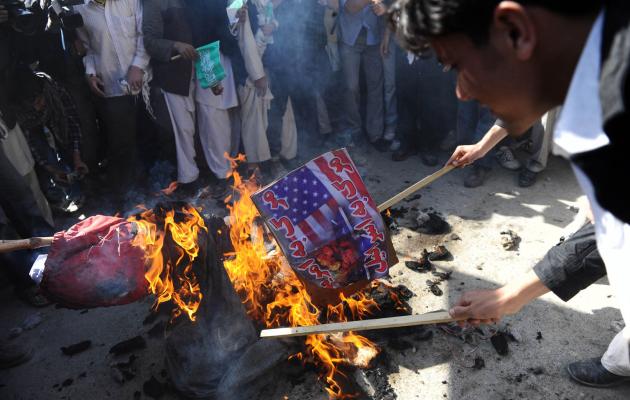
Regardless of where one stands on accusations that President Obama has been too generous with apologies (regrets, acknowledged mistakes, etc.) to foreign nations, there should be no argument over whether his apology to his Afghan President Hamid Karzai for the inadvertent burning of copies of the Quran by American soldiers was appropriate. It was,  it was also responsible and necessary, and it required a measure of political courage for which the President deserves praise, not criticism.

As properly explained by Lisa Curtis, a senior research fellow at the conservative Heritage Foundation specializing in South and Central Asia (who is obviously not running for the Republican presidential nomination), “It was an important demonstration of respect for the Afghan people and their religious faith.” President Obama was attempting to defuse a potentially explosive situation, protect the fragile situation in Afghanistan and avoid American deaths.

This was responsible diplomacy. The Republicans who are taking cheap shots at President Obama for this should be ashamed of themselves.

Unethical Quote of the Week: The Washington Post Editors

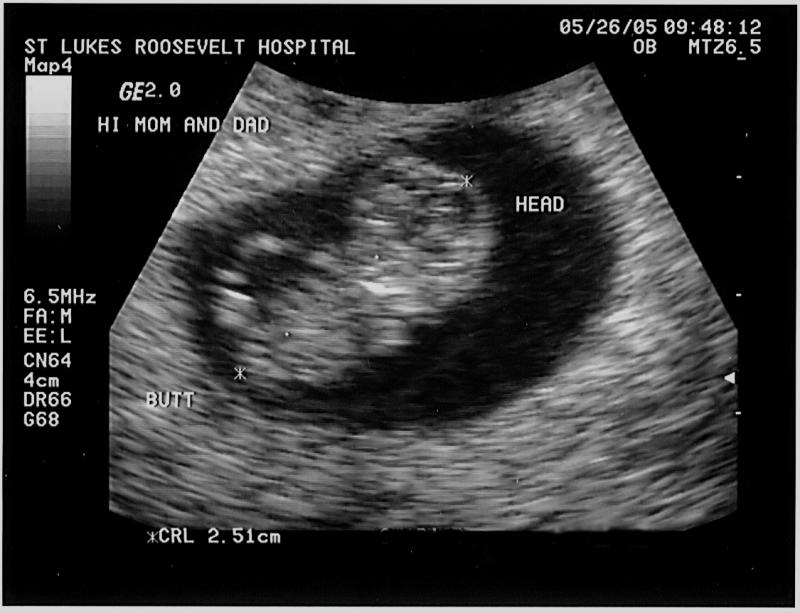
“In their anti-abortion fervor, they thought that requiring ultrasounds, even transvaginal ones, was justified if it would change the minds of some women who’d considered ending their pregnancies”

—The Washington Post, in an editorial condemning the efforts of Virginia’s Republicans to pass a measure requiring an ultrasound scan of the fetus before a woman could get an abortion. The bill, which had been poised for passage, evaporated after it was revealed that women in the earliest stages of pregnancy would be required to suffer an invasive procedure, and Republican Governor Bob McDonnell announced that he would not sign it in its current form.

Seldom has an editorial managed to be so frighteningly dismissive of human life while being entirely correct on the issue it was discussing. Continue reading →

Ethics Dunce: NY Times Columnist Charles M. Blow, and the Times, If It Doesn’t Do Something About Him

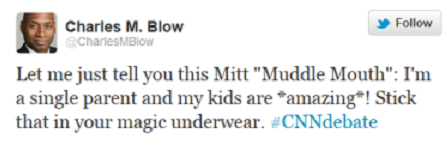
Behold the above tweet from last night, appearing on the Twitter feed of Charles M. Blow, a regular New York Times op-ed columnist. And note:

  • This is supposed to be a respected and respectable journalist of the preeminent U.S. newspaper, and he is sending gutter-level messages via social media, plus
  • …his tweet immediately descends to crude name-calling (“Muddle-Mouth”) aimed at a Republican presidential candidate, and
  • …goes lower still, making first a crude reference to underwear, and
  • …making the reference a religious slur as well. Continue reading →

“Forget Jobs, It’s You Passing Out In Public, Stupid!”

Well, maybe there’s something wrong with Wisconsin after all.

Mayor Ryan, behaving irrelevantly

In Sheboygan, Mayor Bob Ryan, is about to face Terry Van Akkeren in the first mayoral recall election in that Wisconsin city’s history. It was prompted after Ryan was caught on tape passed out in a bar after a drinking binge last summer. More than 4,000 Sheboygan voters signed petitions to force the recall.

As one would expect, the mayor who humiliated his community, set a wretched example for his public (and their kids), showed that he has allowed his alcohol problem to render him unfit to serve, and violated a pledge he had made in 2009 (when he was running for office) that he had given up drinking for good, now argues that the incident is irrelevant. He says that what matters is who can bring the most jobs back to Sheboygan. Continue reading →

Ethics Alarms Recap: A Long Weekend of Ethics

If the long Presidents Day weekend took you hither and yon and away from ethical dilemmas and controversies, welcome back! Here is what went on here in a lively three days:

The Most Ethical President

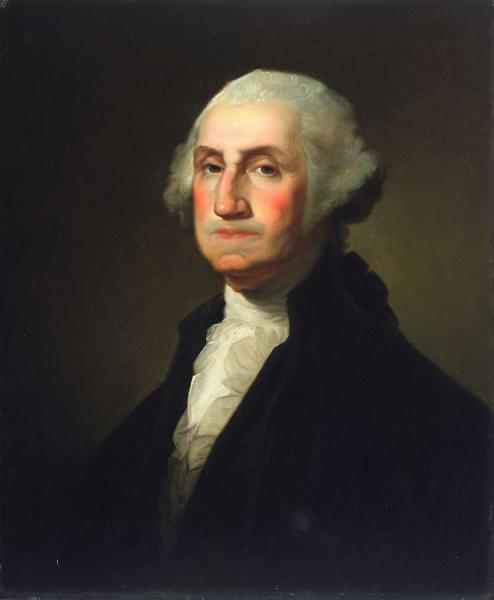
When I am asked who I think was the most ethical President of the United States, my answer is the man whose birthday President’s Day preempts: George Washington. He was not our most brilliant or eloquent President, and it often took him a while to find his way to the right thing to do, slavery being the most important example. Still, the United States was extraordinarily fortunate to have such a principled and instinctively wise leader as its first. He created the template that, though weakened by time and inferior successors, continues to exert a powerful influence over our choice of Presidents. He was honest. He was civil. He was dignified and insisted on respect, but never worship: his simple decision that America’s Chief Executive be called, humbly, “Mr. President” had immense consequences for the nation’s attitudes toward executive leadership. Perhaps most important of all, Washington was a gifted leader but a reluctant one. He believed that a citizen should heed the nation’s call when needed, but he was a reluctant public servant, and condemned those who sought power for its own sake.

I am always amazed, when I return to Washington’s writings and speeches, how sure, persuasive and perceptive his statements remain, so long after they were made.

Here are some of my favorite quotes from our most ethical President.

Happy Birthday, approximately, General Washington. Continue reading →

The Flag and Whitney Houston

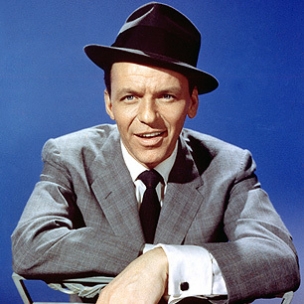
If Ol' Blue Eyes was worthy, why not Whitney?

New Jersey Governor Chris Christie  ordered New Jersey’s flags flown at half-staff in official mourning for Whitney Houston, and a lot of people are outraged. The critics of the honor fall into two categories: those who believe that the honor should be reserved for military heroes and high government officials, and those who believe that Houston is especially unworthy because of her well-documented substance abuse problems.

For his part, Governor Christie defiantly declares that Houston, as a daughter of New Jersey, deserves the state honor because of her contributions to the culture.

Technically and officially, Christie is out of line. Federal law is very specific about the proper treatment of the flag, including when it can be flown at half-staff. Simply put, celebrities don’t qualify, no matter who they are. A state governor can proclaim that the flag be flown at half-staff in his or her state for fallen soldiers, but not for non-military individuals. But governors ignore the law routinely, and have for decades. Tennessee’s governor lowered the flag when Elvis died. Massachusetts did the same for Red Sox great Ted Williams, though he was also a war hero, so no one was going to object. The law, in terms of custom and enforcement, is a dead letter, and probably should be.

True, some governors have abused the spirit of the law, including Christie, when he lowered the flag for Clarence Clemons, the saxophonist for Bruce Springsteen’s E Street Band—a great musician, but hardly a figure of transcendent national significance. If 4 USC Section 7 isn’t going to be followed or enforced, then we need some new standards, or before we know it they’ll be lowering the flag for Joan Rivers. Continue reading →

Ethics Quote of the Week: Chris Matthews

“Loyalty is the heart of Pat’s being. He is loyal to country, to church, to neighborhood to heritage. To Pat, the world can never be better than the one he grew up in as a young boy. Blessed Sacrament Church and Grade School, Gonzaga High School, Georgetown University. No country will ever be better than the United States of America of the early 1950s. It’s his deep loyalty to preserving that reality and all its cultural and ethnic aspects that has been his primal purpose and is what has gotten him into trouble. Not just now but over the years.”

—MSNBC talking head Chris Matthews, in his wistful on-air tribute to Pat Buchanan, who was fired from his long-time role as the left-wing network’s token hard-right conservative.

"Pat, I may disagree with what you say, but I will defend to the death your right to say it...on some other network."

Matthews’ quote helps explain why loyalty is the most corrupting of the ethical virtues. Loyalty is important and admirable, but when it is divorced from the other values, it can lead to rigidity, stubbornness, and corruption. When a person, organization or cause no longer embodies the qualities that justified the loyalty in the first place, loyalty can undermine ethical conduct as strongly as any vice.

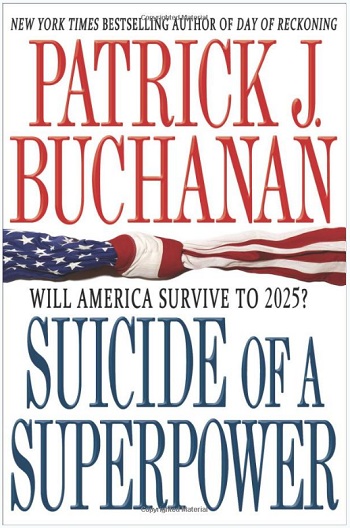
The right is attempting to frame Buchanan’s dismissal as part of a conspiracy to silence conservative voices. I never understood why Pat was on MSNBC anyway, unless it was to have a particularly Jurassic conservative around to make MSNBC’s extreme liberal bias look reasonable by comparison. It was Buchanan’s latest book, “Suicide of a Superpower: Will America Survive 2025?,” that finally triggered his ouster. I haven’t read it, but I’ve heard Buchanan on this topic sufficiently already. He may not be a racist, xenophobe, homophobe and anti-Semite, but his confusion of the need to hold on to American cultural values, with which I agree, with the need to keep America as white, Christian, heterosexual and Anglo-Saxon as possible is hard to distinguish from racism, homophobia, xenophobia and anti-Semitism. If I were running a news network, I wouldn’t employ him. Continue reading →