The Death of Raymond Zack: No Heroes, Only Bystanders

50-year-old Raymond Zack waded into the surf on an Alameda, California beach and stood calmly in the 54-degree water, apparently waiting to die. His suicide took nearly an hour, but eventually he drowned, with no rescue attempts from any of the 75 San Franciscans who gathered on the shore to watch the entire tragedy.

Why didn’t anyone try to rescue the man?

Apparently it was because nobody was paid to do it. You see, stopping Zack from killing himself wasn’t anyone’s job.

The media’s focus in reporting yet another disturbing incident with echoes of the murder of Kitty Genovese has been exclusively on the inert Alameda police and firemen who witnessed Zack’s suicide. “Fire crews and police could only watch,” wrote the Associate Press.

What does the AP mean, “they could only watch”?  Were they shackled? Held at gunpoint? Were all of them unable to swim? They didn’t have to watch and do nothing, they chose to watch and do nothing, just like every one of the bystanders who weren’t police or firemen chose to be passive and apathetic when saving a life required action and risk. Continue reading →

Ethics Dunces: Joe Klein and Chris Matthews

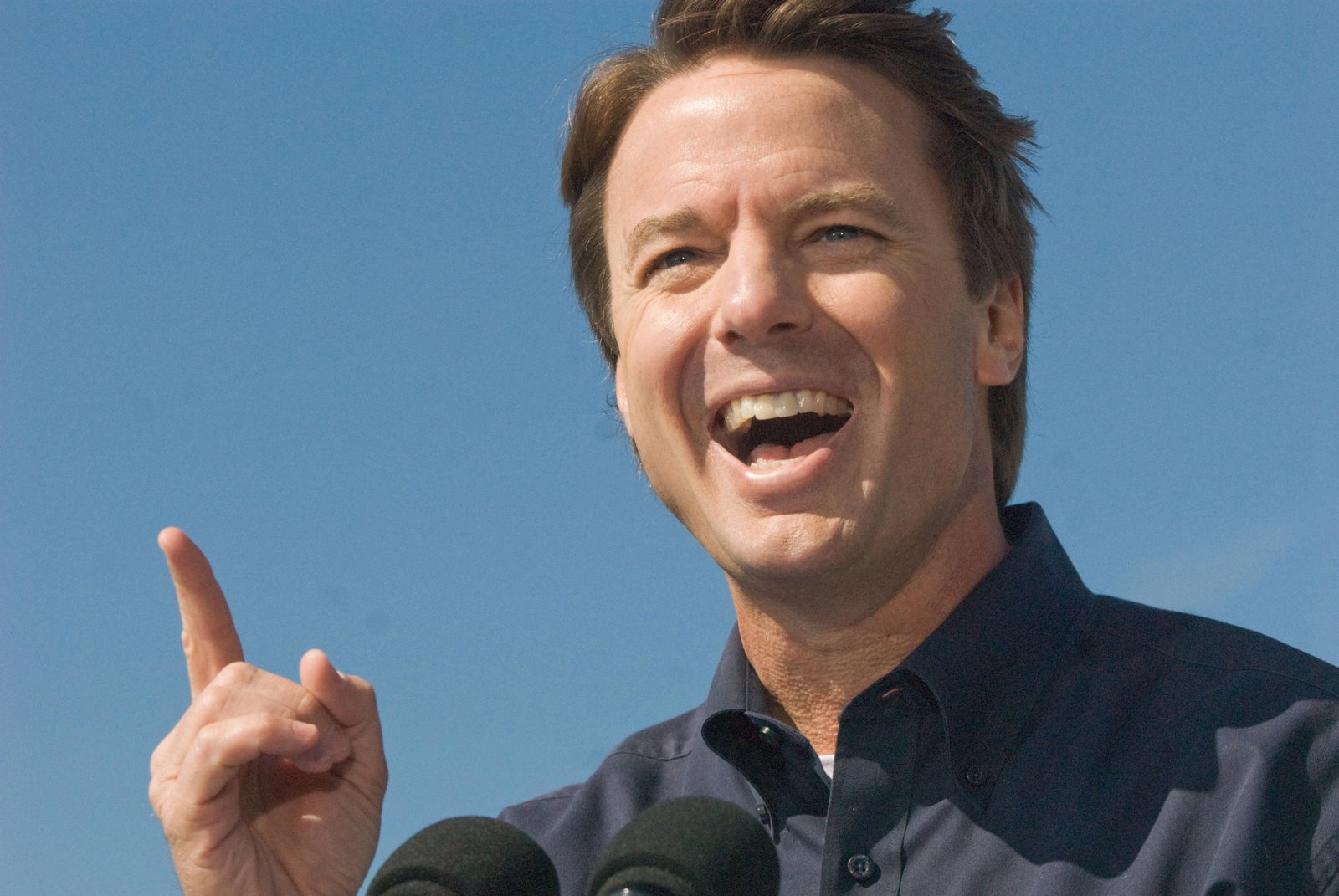
John Edwards agrees with Chris Matthews

Journalist Joe Klein has been a candidate for an Ethics Dunce award for a long time, because he has been ethically suspect or worse for a long time. His defining integrity moment came when he lied about his authorship of the Bill Clinton roman-a-clef, “Primary Colors.” Since that time, Klein has gradually evolved into a shamelessly biased and ethically muddled political commentator from the left. Too bad. He’s a perceptive guy and a wonderful writer, but he makes his living now shooting from the hip, so we seldom get the benefit of his best qualities.

It was inevitable that the Chris Matthews Show would allow Klein’s ethical blindness to reach full flower.  Matthews has been on his own journey of self-diminishment since MSNBC decided to become the anti-Fox; where once he could be counted on to treat the issues of the day fairly and avoid partisan cheerleading, the Obama years have seen him abandon any effort at objectivity or even-handedness. Matthews’ Sunday morning panel show now eschews ideological balance and has Matthews posing questions to a rotating group of reliable conservative-bashers, with an occasional straight journalist mixed in who at least pretends to be neutral.  On Sunday, Matthews asked his panel about the appropriateness of the Justice Department’s prosecution of uber-cad John Edwards for violations of the federal election laws. It’s not a bad question, and reasonable people can disagree about the answer. The charges against Edwards stem from solicitation of large cash gifts from two long-time friends and supporters while he was simultaneously running for president and trying to cover up the existence of his love-child with Rielle Hunter and the adulterous affair that spawned her.  The money was given directly to Hunter, raising a legal question as to whether it was really a campaign contribution at all. Continue reading →

When An Apology Proves You’ll Say Anything: Ed Schultz’s Amazing Mea Culpa

"Hey Ed! Your masks are showing!

After MSNBC had announced that it was suspending Ed Schultz for a week without pay for calling conservative talk-show host Laura Ingraham a “slut” on his syndicated radio show, its boorish left-wing star delivered an on-air apology. Schultz certainly seemed sincere and contrite, saying solemnly that his “vile and inappropriate language” was wrong and uncalled for.  “I am deeply sorry, and I apologize,” he said. “I apologize to you, Laura, and ask for your forgiveness…It doesn’t matter what the circumstances were. It doesn’t matter that it was on radio and I was ad-libbing. None of that matters. None of that matters. What matters is what I said was terribly vile and not of the standards that I or any other person should adhere to…..And I have been in this business since 1978, and I have made a lot of mistakes. This is the lowest of low for me. I stand before you tonight in front of this camera in this studio in an environment that I absolutely love. I love working here. I love communicating with all of you on the radio and the communication that I have with you when I go out and do town hall meetings and meet the people that actually watch. I stand before you tonight to take full responsibility for what I said and how I said it, and I am deeply sorry.”

“My wife is a wonderful woman,” Ed continued, getting emotional. “We have a wonderful family. And with six kids and eight grandkids, I try to set an example. In this moment, I have failed. And I want you to know that I talked to my sons especially about character and about dignity and about the truth. And I tell you the truth tonight that I am deeply sorry and I tell them every day that they have to live up to standards if they want to be a successful human being in life. And I have let them down. I have never been in this position before to the point where it has affected so many people. And I know that I have let a lot of people down…. Continue reading →

Comment of the Day: “Schadenfreude, Ethics, and Those Fanatics Inside Us All”

Maybe "The Broadcaster" was all Harry had inside...

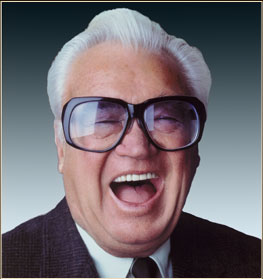
Rick elaborates nicely on the theme of my post on handling those fanatic personas that reside in each of us, and in the process takes the ethical measure of an iconic baseball broadcaster whose charms always escaped me…the late Harry Carey.

“It strikes me that there’s another part of the equation, which you only hint at here, but which you have mentioned in other posts. That’s the “ethics alarm” (to coin a phrase) that goes off, or should, when the director or the Red Sox fan or whoever That Guy is says or does something unethical. Part of it is “heat of the moment” stuff: the egoism that slips out in a moment of excitement. No, of course you didn’t want Thurman Munson to die, but yes, he did play for the hated Yankees, and their team just got worse. You’re forgiven the fist-pump. Once. And provided you (Jack, as opposed to Red Sox fan) didn’t mean it.

“I was watching a Cubs game on WGN sometime in the mid-1980s when news came over the wire that Montreal Expos infielder Hubie Brooks had suffered a season-ending injury. Brooks had been a favorite of mine when he’d played for the Mets (“my team”), and I continued to follow his career with some interest, so the news was doubly sad for me: a player had been seriously injured, and that player was Hubie Brooks.

“In contrast, Cubs announcer Harry Carey proclaimed “well, if it helps the Cubs win, it’s OK by me.” I remember the exact words 25 years later. What struck me was not that they were uttered, but that no one—not Carey himself, not his broadcast partner, no one—made the slightest attempt to walk them back. That was the official verdict: a season-ending injury (Brooks was never the same again, by the way) was a good thing if it happened to somebody in a different uniform. I mentioned the incident to a couple of friends—Cubs fans—and they laughed and said “oh, that’s Harry.”

“Everyone understood that Carey was a Cubs fan first and an announcer second. That was, I am told, part of his charm—I never saw it, but others did. Still, I was sort of hoping that there would be a human being in there somewhere. On that particular day, at least, I was disappointed. We lived in WGN country for another seven years. I never watched another Cubs game without turning off the sound.”
Ethics Malpractice from “Dear Margo”: The Tale of Witchy, Tubby and Sue

"Well sure---his inner qualities are much more important to me now that he's so hot!"

I read a lot of advice columns, which often involve ethical issues and very often expose the ethical incompetence of the supposed experts who write them. Some advice columnists are ethically spot-on with regularity, like The Washington Post’s Carolyn Hax. Some, like the past and present”Ethicists” of the New York Times, are off-base almost as often as they are on. Then there are the advice mavins like “Margo,” in the Boston Globe. I don’t know how such people get to be advice columnists, but I suspect it either involves picking names out of a hat or the exchange of sexual favors. [Full disclosure: I give out personal ethics advice myself over at AllExperts.com, when a legitimate questioner can find me—ethics isn’t listed as one of the site’s topics—and when the question isn’t a thinly veiled homework question, which it usually is.]

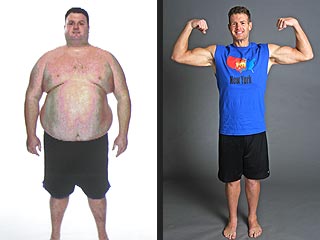
As an example of ethics malpractice, consider this question posed to Margo. “Sue” wrote that she had broken up with her ex-boyfriend over arguments about his weight and eating habits, which “grossed her out.” Eight months later, he’s fit and fabulous, and has a new girlfriend.  “I really would like him back because he’s hot and slim,” Sue writes, plaintively. “How can I step on his witchy new girlfriend so I can get him back?” Continue reading →

No Excuses and No Mercy For Lance Armstrong

Sorry, Lance…good guys don’t cheat.

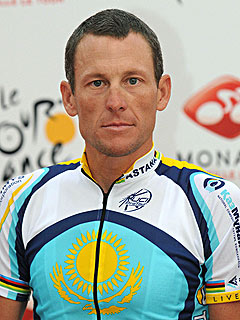
Back when Barry Bonds was still playing baseball, a sportswriter mused about why it was that everyone assumed  Bonds was a performance-enhancing drug cheater despite his protestations to the contrary, while most Americans and sports journalists brushed away similar allegations regarding Lance Armstrong. Both competed in sports with acknowledged steroid abuse problems; indeed, the problem in bicycle racing was presumed to be more pervasive than in baseball. (A few years later, with the banning of multiple Tour winners, the presumption became a certainty.) Both athletes had improbable late career improvements in their performance to reach previously unimaginable dominance in their respective sports. Both had to explain or deflect multiple credible accusations of cheating and circumstantial evidence that suggested that they were doping. Both claimed they had never failed drug tests, and there were good reasons to doubt the denials.

So why was Bonds a villain by consensus and Lance an untouchable hero? The sportswriter explored many theories (Apologies: I cannot locate the article. If someone can, please send it), among them the greater popularity of baseball over cycling, Bond’s startling physical transformation into a behemoth while Armstrong remained cyclist-sinewy,  Armstrong’s inspiring story as a cancer survivor, Armstrong’s philanthropic work,and the fact that Bonds, unlike Armstrong, was black. The biggest difference, however, and to the writer the key one, was that Armstrong acted the role of a hero, while Bonds refused to. Armstrong was friendly and accommodating, while Bonds was angry, intimidating and antagonistic. Armstrong seemed like someone who played by the rules, and who lived his ethical values. Bonds seemed like a rebel, one who wouldn’t hesitate to break the rules for his own benefit. In short, the public wanted Armstrong to be the hero he seemed to be, so they ignored the evidence linking him to performance-enhancing drugs.

After last Sunday, the disparate public perception of Bonds and Armstrong, always illogical, became unsustainable. Continue reading →

A Faint Cheer For MSNBC, and A Search for Civility Standards

MSNBC class act Ed Schultz

When I learned that MSNBC’s human hate-machine Ed Schultz had called conservative radio talk-show host Laura Ingraham a “right wing slut” on his syndicated radio show, I wondered if the cable network would take any action. It did, suspending Schultz for one week while issuing a statement that “Remarks of this nature are unacceptable and will not be tolerated.”  It’s good that MSNBC has some standards of discourse, however low, though having some one like Schultz on the air dispensing his crude, angry, frequently mistaken and dishonest rants is pretty intolerable as it is. But what does it mean by “of this nature”?

MSNBC’s action does distinguish it from HBO, which took no action at all against Bill Maher when he called Sarah Palin a “dumb twat.” What are we to take from this disparate treatment? That at HBO “dumb twat” is acceptable and will be tolerated?  Apparently so. Is the difference because HBO is a premium channel, and MSNBC is not? That’s a strange definition of “premium”: “HBO, where political commentators can call women twats!” Would “slut” have gotten Maher in trouble? Should Ed have called Ingraham a “twat” instead? Continue reading →

Unethical Quote of the Month: Tim Gannon

The choice came down to Greg Anderson or Jack the Ripper...

“Some parents have a problem with him being a coach, but it’s not like he was caught stealing or did some bad things with children.”

— Tim Gannon, a real estate broker and father, explaining why he has no problems with Barry Bonds’ steroid-pushing trainer, Greg Anderson, serving as an assistant coach for his son’s Capitol Electric team in the Burlingame Youth Baseball Association, according to an article in Sunday’s New York Times.

It’s seldom that one sees in print a more perfect example of my least favorite rationalization for unethical conduct, “It’s not the worst thing.” This popular and despicable rationalization seeks to excuse bad conduct by comparing it to worse conduct, an intellectually dishonest device that can be used to try to minimize the seriousness of literally any behavior, no matter how heinous. (“Sure, Jack the Ripper did some bad things, but he was no Hitler!” ) It is the ethics embodiment of the dishonest rhetorical technique of the false choice. Continue reading →

Ethics Heroes: The U.S. Supreme Court

To be more accurate, the heroic component in this instance is the liberal wing of SCOTUS ( Justices Sotomayor, Kagan, Ginsberg, and Breyer) plus the swing vote, Justice Kennedy, who wrote the majority opinion in Brown v. Plata.  The decision upheld a court order requiring California to release a staggering 46, 000 inmates of its prisons, more than a fourth of the those sentenced there. The majority concurred with the lower court’s assessment that California prisons were so obscenely over-crowed that conditions amount to a human rights violation and a breach of the constitutional prohibition on “cruel and unusual punishment.”

Some Supreme Court decisions come down to ethics as much as law, and this was certainly one of those times. At issue from a legal standpoint was  whether federal judges had the power to order the release of state prisoners as a necessary means of curing a constitutional violation. But the brilliant legal minds on the conservative side of the Court’s divide had no problem answering that question in the negative, and persuasively too.  The dilemma is that California’s least sympathetic citizens, its residents of the state’s penal institutions, are being kept in conditions that violate their constitutional rights, and despite many years of knowing about the problem, the state hasn’t found a way to rectify it. Continue reading →

Ethics Quote of the Week: Salon Columnist Joan Walsh

Apparently I'm the pigeon in the lower left box.

“No one can be given credit for speaking from genuine moral or political conviction anymore; everyone can be dismissed or derided with a nod to their personal background. This may be the logical end of identity politics, where ultimately we’re each locked inside whatever little box we check, tiny caucuses of one, and common ground is impossible.”

—-Joan Walsh in Salon, bemoaning the accelerating tendency in public debate to discredit all beliefs, assertions and opinions, no matter how sincere or well-supported, as the product of bias and narrow self-interest.

Her comment could not be better timed, from my point of view. How tired I am of having readers demonstrate the trend Walsh describes by reflexively attributing every post I write as being proof of bias and a pre-existing agenda. If I criticize an atheist, I am a religious zealot; if I find fault with Obama, I must be a racist; if I point out that a production of “The Mikado” doesn’t really call for Sarah Palin to be beheaded, I’m a Left-winger. The problem is, unfortunately, that many prominent positions in the public square and blogosphere are driven by agendas and biases. It is so common that the concepts of independent judgement, an open mind and objectivity seem quaint and unrealistic.

I don’t know how to combat the problem, which is as serious as Walsh suggests. Recognizing it is a start.