Ethics Quiz: Jury Nullification For A Molestation Victim

Really?

A San Jose jury acquitted William Lynch of criminal assault, despite his admission that he had beaten a former priest who had molested him as a child. After the acquittal, Lynch was cheered outside the courtroom.

Lynch told reporters he fully expected to be convicted, but had hoped that his testimony would call more attention to the child abuse problems in the Catholic Church. He visited his victim, Rev. Jerold Lindner, at the retirement home where he now lives.  The 65 year-old who allegedly molested Lynch and his younger brother in 1975 was confronted by Lynch, and when he told Lynch that he didn’t remember him, Lynch attacked him and “beat him almost to death” according to witnesses.

Your Ethics Alarms Quiz question:

Was the jury verdict ethical? Continue reading →

The Economic Meltdown: Accountability Check

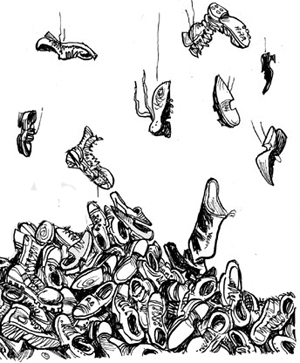
The shoe fits both Parties.

The ethics story of week was the dropping of the missing shoe in the “Friends of Angelo” scandal that helped drive Democratic Senator and party leader Chris Dodd into retirement. (More here.) It fell like this:

WASHINGTON (AP) — The former Countrywide Financial Corp., whose subprime loans helped start the nation’s foreclosure crisis, made hundreds of discount loans to buy influence with members of Congress, congressional staff, top government officials and executives of troubled mortgage giant Fannie Mae, according to a House report.

What the report indicates is that the bribery of regulators and members of Congress to allow the sub-prime mortgage con-game to continue was far worse and for more widespread than anyone realized. Countrywide offered special loan deals to dozens of influential government officials to stave off regulations that might have avoided or greatly lessened the mortgage collapse that triggered the current long-term economic crisis: 

“Documents and testimony obtained by the committee show the VIP loan program was a tool used by Countrywide to build goodwill with lawmakers and other individuals positioned to benefit the company,” the report said. “In the years that led up to the 2007 housing market decline, Countrywide VIPs were positioned to affect dozens of pieces of legislation that would have reformed Fannie” and its rival Freddie Mac, the committee said.“

More: Continue reading →

Ethics Dunces: Half of the U.S.A.

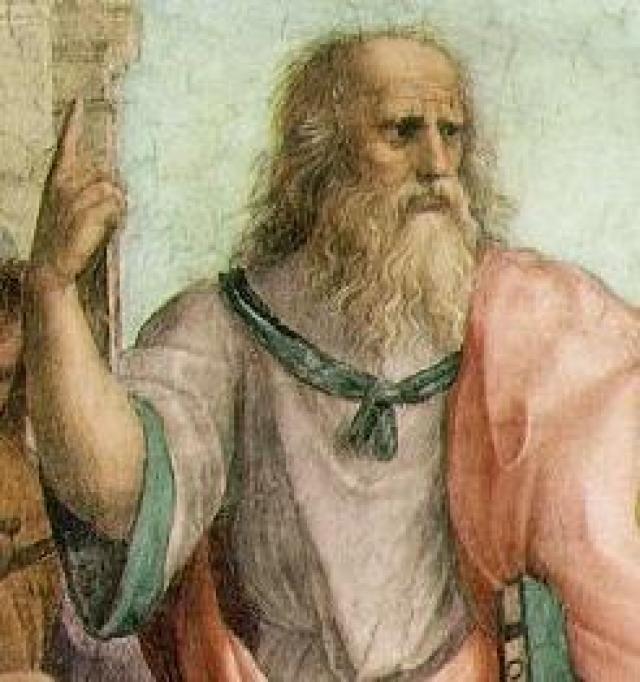
“Who’s Plato?”

According to a recent  Pew poll, almost half of the U.S. is still unaware of last week’s landmark Supreme Court decision upholding the Affordable Care Act, limiting Congress’s power to control private choices through reliance on the Commerce Clause of the Constitution, and flagging the Democrat deceit in passing a substantial tax on the middle class while hiding the fact in public and political discourse. 15% of the public must have been watching Fox and CNN the way listeners of Orson Welles “The War of the Worlds” listened to the 1938 radio broadcast, turning the dial before misinformation was clarified. These trusting or lazy souls still think the ACA was over-turned. This is, admittedly, better than thinking the world has been conquered by Martians.

The poll means that as we head into a watershed election that challenges the nation to make hard choices about its future course in tax policy, addressing the debt and deficit, foreign policy, commitment to national defense, entitlement reform, immigration, education, infrastructure renewal, employment, financial regulation, and equally vital matters that could have a decisive impact on America’s success, stability and even survival, one half of the public lack the interest and initiative to  stay current with crucial national developments. Continue reading →

Unethical But Irresistible: The Trouble With Anonymous Sources

“Hello, CBS? Jan Crawford, please. Jan? I can’t talk too loudly because I’m on Justice Roberts’ wall…listen, I’ve got a…DAMN! Lost the signal again! That’s it, I’m dumping Sprint…”

The reverberations of Chief Justice Roberts’ surprise parsing of the Affordable Care Act continue unabated. He is, according to which pundit or analyst you read, a patriot, a fool, a traitor, a Machiavellian, a genius, a coward, a patsy or a hero. Now CBS reporter Jan Crawford has the Washington, D.C. elite chattering from their Manassas hotel rooms, where they have fled to find electricity and air conditioning, with a story that is headlined: “Roberts Switched Votes To Uphold Health Care Law.” Her story begins…

“Chief Justice John Roberts initially sided with the Supreme Court’s four conservative justices to strike down the heart of President Obama’s health care reform law, the Affordable Care Act, but later changed his position and formed an alliance with liberals to uphold the bulk of the law, according to two sources with specific knowledge of the deliberations. Roberts then withstood a month-long, desperate campaign to bring him back to his original position, the sources said. Ironically, Justice Anthony Kennedy – believed by many conservatives to be the justice most likely to defect and vote for the law – led the effort to try to bring Roberts back to the fold”

It is attributed to two anonymous “sources with specific knowledge of the deliberations.”

In the absence of named sources whose credibility can assessed for their own motives and reliability, Crawford’s report should be treated as no better than rumor. It is not being so treated, however. The story is headlined as fact, and the media is treating it as fact in many cases, though more responsible media sources are using the headline, “CBS: Roberts Switched Votes To Uphold Health Care Law.” Although all newspapers and legitimate news organization have ethical guidelines urging “caution,” “retraint”and “circumspection” in the use of anonymous sources to support a story, they are also addicted to them like crack. Most anonymous sources have good reasons to stay anonymous, prime among them the fact that they are breaking laws, regulations, professional ethics codes and bounds of trust by talking to reporters. Others have axes to grind and personal objectives served by planting stories. We can’t assess any of these things without knowing the identifies of the sources, and, of course, the targets of anonymous stories can’t defend themselves against ghosts. Continue reading →

Yet Soon We Will Be Missing Ann Curry On The Today Show

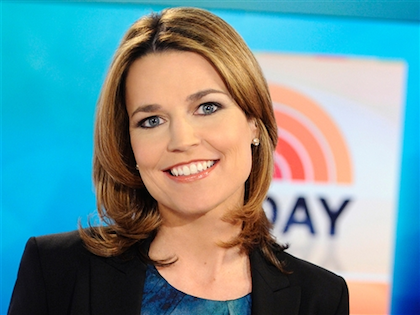
Pretty, perky, biased and incompetent—yup, perfect for NBC.

Fresh from highlighting the lack of professionalism exhibited by Ann Curry as she was booted off the Today Show, I was jostled by another blog’s link to this one reminding me that I already had an ethics run-in with her replacement, the fresh-faced, cute as a button, proudly biased and ignorant Savannah Guthrie, who continues the devolution of the female liberal mouthpiece co-anchor position on the show that began with Barbara Walters.

The hard conservative site Freedom Report alerted me that I had blown the whistle on Guthrie’s incompetence in an April, 2011 post, after she tried to “gotcha!” Donald Trump and exposed her own Constitutional illiteracy instead. I had forgotten the episode, perhaps because it forced me to defend The Donald, which was and is about as appealing to me as snorting skunks. You can read the post here. A quick summary: Guthrie attempted to argue against Trump’s pro-life views by asking the Constitutional equivalent of the automobile-tuning query asked of expert witness/hairdresser Marisa Tomei in the climax of  the classic,”My Cousin Vinnie,” to which she replies, “It’s a bullshit question!”: Continue reading →

The Homophobic Counselor, the Ethical Bigot, and the One-Legged Tarzan

Jennifer Keeton was expelled from the graduate program at Georgia’s Augusta State University in 2010 because her Christian religious convictions dictate that homosexuality is sinful and voluntary conduct, rather than an innate sexual orientation. A court upheld the school’s right to expel her on the basis that her beliefs made it impossible for her to meet their counseling standards, which the court ruled were neutral, and did not discriminate against her speech or religion.

The case may raise legitimate constitutional issues. The Alliance Defense Fund (ADF), a conservative legal group, and Constitutional Law professor Eugene Volokh (of Volokh Conspiracy fame) are assisting Keaton as she attempts to get reinstated. Ethically, however, I don’t think she has a leg to stand on.
In fact, I think her position resembles the old Dudley Moore-Peter Cook comedy routine where Moore is one-legged amputee who cries foul at being “discriminated against” by a film director who refuses to consider him for the role of Tarzan:

Similarly, how can a counselor claim to be able to provide full and competent services when her attitude toward gays dictates an unsympathetic, hostile and scientifically discredited point of view? Continue reading →

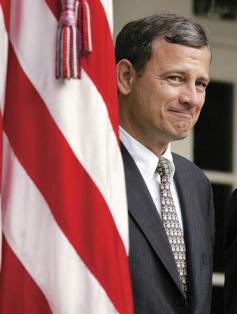
Ethics Quote of the Month: Chief Justice John Roberts

“We do not consider whether the Act embodies sound policies. That judgment is entrusted to the Nation’s elected leaders. We ask only whether Congress has the power under the Constitution to enact the challenged provisions…Members of this Court are vested with the authority to interpret the law; we possess neither the expertise nor the prerogative to make policy judgments. Those decisions are entrusted to our Nation’s elected leaders, who can be thrown out of office if the people disagree with them. It is not our job to protect the people from the consequences of their political choices.”

—-Chief Justice John Roberts, in the introduction to his majority opinion in the case of National Federation of Independent Business et al. v. Sebelius, which upheld the Affordable Care Act on the grounds that the so-called “individual mandate” was a tax, not  government-mandated commercial conduct.
The Chief Justice’s statement is what is called dicta, commentary in a Supreme Court opinion that is neither binding on future courts nor a substantive part of the decision. Dicta, however, often has great influence in shaping future cultural consensus, and we can only hope that the Chief Justice’s wise and ethical words stick.

He is talking about process and accountability, and what is necessary for our democratic republic to work, and, frankly, survive. Reading letters to the editor and web site comments about yesterday’s decision, I find the overwhelming civic ignorance and “the ends justify the means” obsession of the vast majority of the writers more than depressing. The Supreme Court decision did not “vindicate” the Democrats and President Obama—only positive outcomes from the law they rammed through the system using every obfuscation and trick in the book could begin to do that, and even then it might be impossible, at least from an ethical standpoint. The Supreme Court’s decision raised the serious question of whether the law was passed under false pretenses, a tax disguised as something else so as not to call attention to its violation of the President’s promise not to raise taxes on the middle class. Once the Affordable Care Act began traveling through the courts, the Administration began suddenly calling the individual mandate a tax—a term that was not used in the 2500 page law itself—because it recognized that its Commerce Clause rationale for the individual mandate was shaky. Some courts found the bait-and-switch cynical and offensive, and refused to consider it. The bait-and-switch was offensive, or should be to citizens who believe that the public should know the truth about the laws Congress passes, but Roberts properly held that it isn’t up to the Supreme Court to protect the public from the curs, liars and knaves they regularly elect to high office because “character doesn’t matter.” In a democracy, this is the public’s job. We are accountable. The Supreme Court doesn’t exist to protect us from our own laziness, lack of principles and stupidity. It exists to make sure that if our elected officials pass lousy, ill-considered and un-read laws that roll the nation ever closer to a national diet of moussaka, at least they did it within the bounds of the Constitution. If We the People decide to tolerate cynical, dishonest, incompetent leaders and representatives and the nation ends up like Stockton, California, well, at least one branch of government did its job to make democracy work.

In the end, it will have been the people who failed to uphold their part of the experiment. That’s what the Chief Justice was saying.

I wonder if anyone is paying attention.

______________________________

Source: National Federation of Independent Business et al. v. Sebelius

Graphic: Linda Life

Ethics Alarms attempts to give proper attribution and credit to all sources of facts, analysis and other assistance that go into its blog posts. If you are aware of one I missed, or believe your own work was used in any way without proper attribution, please contact me, Jack Marshall, at  jamproethics@verizon.net.
The Congressional Black Caucus Walkout: Racial Bias, and Nothing But

Of course, they would also be staging a walk-out if a white AG was being held in contempt.

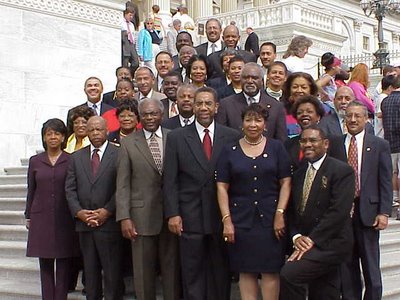
The Congressional Black Caucus  plotted to walk out of Thursday’s contempt of Congress vote regarding Attorney General Eric Holder’s stonewalling regarding legitimate oversight of the deadly Fast and Furious fiasco, and did, taking most of the other Democrats along. In so doing, the CBC, as if there was any doubt, unequivocally demonstrated its virulent racial bias, which interferes with its ability to discharge its duties in a fair, honest and legitimate matter.

The CBC had circulated a letter explaining its supposed rationale, which oddly manages never to mention that Eric Holder is African American. Yet it is unimaginable that the Congressional Black Caucus would stage a walk-out if Holder was the white Attorney General appointed by a white President. This is politics, but it is also dishonesty and naked tribalism. It should not be, pardon the expression, whitewashed, or allowed to proceed without calling it what it is—racial bias in the halls of Congress, where none belongs.

Here is the offensive and disingenuous letter being circulated by the CBC—with some commentary by me in brackets: Continue reading →

The Supreme Court Upholds The Individual Mandate and Obamacare: The Ethics Opinion

This morning the Supreme Court announced its decision upholding the key provision in the Affordable Care Act, a.k.a Obamacare. It is apparently a huge and complex decision, and is now available in text form online here.

The political and legal analysis will be coming soon from others far more qualified than I [UPDATE: The legal dissections have begun, and you can’t do better than to start here] , and while I am deeply interested in them, that’s not my job. I won’t be able to read the opinions and the various concurring opinions and dissents, not to mention digest them, for quite a while, but some ethical verdicts are already evident from what I do know: Continue reading →

Comment of the Day: “Fast and Furious: An Open Letter To Columnist Colbert King”

Glenn Logan scores the Comment of the Day with his answer to the questions I posed in my open letter to Colbert King, the anti-corruption Washington Post columnist who nonetheless regards Congress’s inquiry into a possible Fast and Furious cover-up as trivial. He also penned a worthy candidate for ethics quote of the week: watch for the last sentence, which I bolded. Love it, Glenn!

I’ll have some additions to Glenn’s thoughts at the end; meanwhile, here is his Comment of the Day on the post, “Fast and Furious: An Open Letter To Columnist Colbert King.” Continue reading →