Online Review Ethics: Yelp And The Law Firm

"...and so do our own employees!"

“…and so do our own employees!”

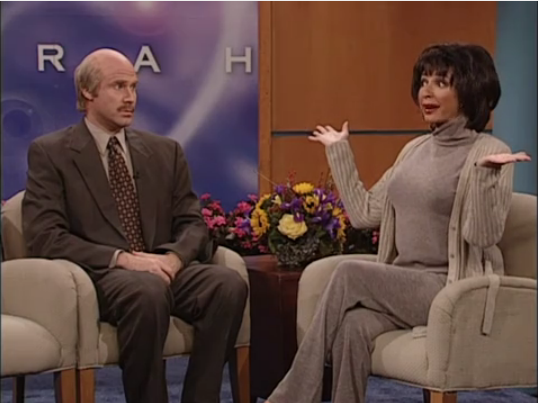
Is it professional misconduct for members of a law firm or the non-lawyer assistants for which they are responsible to post fake reviews of their work to a consumer website? I would argue that could be: it is almost certainly deceptive advertising, which is prohibited to a greater or lesser degree in all state ethics codes, and it is dishonest and misleading communications of the sort that has drawn discipline for some attorneys in other circumstances. Whether or not such a slimy, if common practice (at least among other professions, like wrtiting) is sufficient to raise “a substantial question as to that lawyer’s honesty, trustworthiness or fitness as a lawyer in other respects” will be determined by lawyers themselves, and you would be amazed at what many of them  don’t consider sufficient to do this. I am admittedly extreme on this issue: I don’t think lawyers should lie, and take a dimmer version of even harmless deception than most in my field. This is profession that depends on trust, and the more someone lies—I don’t care about what—the less trustworthy they are.

These issues arise because the online consumer site Yelp appears to have caught employees of the law firm The MacMillan Group posting fake positive reviews about itself, on behalf of fictional clients. Continue reading

Ethics Hero: Minneapolis Dairy Queen Manager Joey Prusak

"Good job, Joey!You made Dairy Queen proud and brought honor to the store, Here's 40 dollars."

“Good job, Joey!You made Dairy Queen proud and brought honor to the store, Here’s 40 dollars.”

It’s a simple story, trivial in a way, but with an important ethics lesson.

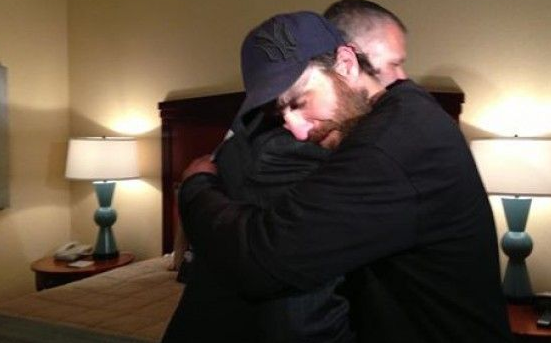
Joey Prusak, the 19-year-old store manager at a suburban Minneapolis Dairy Queen, watched as a female customer with a heart of ice saw a vision-impaired man drop a $20 bill, picked it up, and instead of returning the money to the unaware customer, slipped it into her own purse. When the certifiably awful woman got up to the counter to order, Prusak told her what he had seen and demanded that she return the bill as a condition of service. The woman, as one might expect from someone who would take money under such circumstances, refused, so Prusek reimbursed the visually impaired customer with $20 of his own.

A customer who saw the incident e-mailed Dairy Queen in praise, and now Prusak has become something of a folk hero.

The important ethics lesson is “Fix the problem.” If you are in a position to right a wrong or prevent one, it has become your obligation to do it. Don’t adopt  any of many rationalizations available to persuade you to do nothing— “It’s not my job,” “Mind your own business,” “Who am I to judge?”, “It’s not my fault”, “What if I’m wrong?”—or, in a case like this one, manufacture excuses for the vile miscreant who took the money—–“Maybe she’s desperate,” “Finders keepers”-–and just act. Fix the problem. Continue reading

Comment of The Day…And An Ethics Quiz, Too! : “Ethics Quiz: The United Airlines Give-Away”

"Oh, this piece of junk? Yeah, who knows who its supposed to be---some guy named Veal or Beale or something painted it, I think. It's been in the attic. Make me an offer!"

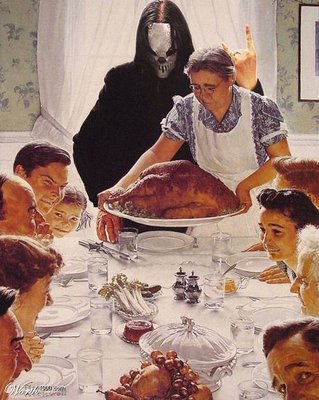
“Oh, this piece of junk? Yeah, who knows who it’s supposed to be—some guy named Veal or Beale or something painted it, I think. It’s been in the attic. Make me an offer!”

The Ethics Quiz regarding whether or not it was unethical to take full advantage of United Airlines’  accidental fire sale on tickets spawned several good hypotheticals, including this one, from Tyrone T., an occasional Ethics Alarms commenter who, I happen to know, thinks about these matters as his occupation. I know the answer to this one (I’ve seen it before), so I’ll hold off until you’ve thought about it a while.

Here is Tyrone T.’s Comment of the Day on the post “Ethics Quiz: The United Airlines Give-Away”:

“So, if you are hired by your client to find the cheapest fare, can you act ethically and refuse to take advantage of the error? Consider the following:

“Alexander Mundy is a lawyer and an acknowledged expert in American painting. He has several clients who regularly retain him to negotiate the purchase of museum quality art. Recently, a client hired Mundy to negotiate the purchase of a portrait of George Washington as a young man.

“The client explained, ‘I saw it on a house tour five years ago and tried to buy it then, but the woman who owned it said it was a family heirloom and wasn’t interested in selling. I heard that she died recently and her husband is having an Estate Sale. You have authority to purchase the painting for up to $500,000.’

“Mundy goes to visit the old widower and asks whether he would be willing to sell ‘that picture of the young man there.’ Continue reading

Your Introduction To “Private Re-Homing”

Puppy, child, what's the difference? The point is make it someone else's problem, right?

Puppy, child, what’s the difference? The point is t0 make it someone else’s problem, right?

Every time you see a national newscast take up valuable time telling us about Miley Cyrus, the Kardashians, Chelsea Clinton or the White House waterdogs, think about Inga, or Quita, victims of the increasingly common practice of underground adoption known as “private re-homing,” in which adopted children are traded around like dogs or kittens, and abused dogs and kittens at that.

I don’t have a lot of commentary about this horrible practice. My life was a little bit happier before it was brought to my attention. In the history of Ethics Alarms, perhaps the most upsetting story I have had to write about was the horrific conduct of Torry Hansen, a Tennessee mother who adopted a Russian child and then, finding that she couldn’t cope with his problems, put him, alone, on a plane bound for Russia with a note pinned to his jacket. I wrote that post with tears in my eyes; it upsets me to write about it now. Yet something very like what Hansen did to her son is being done via the internet, frequently and with little interference from the government or anyone else. I wish I didn’t know about this—no, that’s not quite right. I wish this wasn’t a feature of our society, so I wouldn’t have to know about it, much less write about it. Continue reading

When The Ethics Alarm Fails

tumbledown-jpg

Or, in the alternative, you’re an idiot.

The owner of a Wisconsin golf course has apologized for using a national disaster and the deaths of nearly 3000 Americans as a commercial promotion. Apparently he has done this before and nobody complained. How is this possible? Isn’t this the very definition of exploitive, crass, and disrespectful? Has the golf course owner grown up with fond memories of November 22 sales and December 7 parades?

How could it be that nobody in his family or circle of friends or the golfers at the course alerted him that such a 9-11 promotion was tone-deaf? If I’m about to do something this stupid and wrong, I expect those around me to let me know before somebody, like me, gets hurt. The owner’s associates failed their obligations too: we need to help each other do the right thing, because everyone’s ethics alarms malfunction sometimes.

_______________________

Pointer: Althouse

Facts and Graphic:Channel 3000

The Curse of Michael Steele Lives On

Past-DueDuring the deplorable reign of Michael Steele as chair of the Republican National Committee, the RNC set new lows for deceptive fundraising practices, bordering on mail fraud. Replacing Steele with the superficially less ridiculous Reince Priebus has failed to dispel Steele’s lingering curse, and here is the latest example.

Yesterday, a brown envelope arrived at Chez Marshall with a block red message “Past Due” on it. We get a number of such envelopes—fewer now than a while back—but they are always a cause for alarm. This one, however, was a fake. Back in 2012 when, if you remember, there was a campaign going on, my wife, for the first time in her life, sent a small contribution to the Romney camp. As a result of that wasted gesture, we have received an average of ten phone calls a week from the RNC seeking funds, prompting my wife to tell every caller, futilely, of course, that any party that could not defeat Barack Obama wasn’t worthy for her money or anyone else’s, and to stop with the calls already. Naturally, this has had no effect, leading me to remind her, as when she imprudently ordered some kind of miracle anti-aging cream from Madagascar over the internet, “I warned you!”

It turned out that this urgent letter was also from the RNC, using the “Past Due” stamp to fool us into opening it rather than sending it directly into the trash. Nothing was past due, of course, though the enclosed donor card was falsely labelled a “statement,” and we were asked to “renew” a “membership” we never agreed to, and had no benefits, other than the pleasure of being harassed for money. Continue reading

Twerk Ethics

[The following is blurry, but perhaps that is for the best. It is the only full version of the performance at issue currently available on YouTube, and it may not be there for long. Watch at your own risk.]

To listen to the horrified reaction to Miley Cyrus’s relatively obscene performance at the nationally televised MTV Music Video awards (not so long ago, Miley was that cute tween Hannah Montana on the Disney Channel) , one would think that rock and pop stars intentionally crossing the established lines of symbolic pubic sexual decorum was unprecedented. The furious and shocked condemnations seemed to emanate from some parallel culture, like the alternate universe that implicitly exists on CBS’s updated Sherlock Holmes drama “Elementary” (Sherlock is a precariously recovering alcoholic and drug addict; Dr. Watson is a former Charlie’s Angel) where nobody ever heard of “The Hound of the Baskervilles,” Basil Rathbone or the dancing men cipher, because Arthur Conan Doyle never invented the character. ( The British updated Sherlock, uncreatively titled “Sherlock,” is so far superior to “Elementary” —which isn’t bad–that  it’s unsettling.) Have Isadora Duncan, Josephine Baker, Sally Rand, Elvis, the Stones, Jim Morrison,, Madonna and Christina Aguilera been erased from the past by some music-hating cyborg from a dystrophy future where everyone sings like Matt Munro?

Gross simulated sexual display on television prime time has unethical elements, to be sure. It’s uncivil, to begin with, intentionally placing socially objectionable content before a lot of viewers who don’t want to see it. That’s a breach of respect, but a minor one in this context. Janet Jackson flashed a breast during the Superbowl half-time show, after all: the argument that this was a family event that shouldn’t have been unexpectedly transformed into a peep show was grounded in fact. This week, however, I heard earnest mothers protesting that their delicate pre-teens were watching the MTV awards and had the innocence cruelly seared out of them by the unexpected and horrifying sight of Miley twerking ( simulating sex while dancing—a brand new addition to the Oxford dictionary) on Robin Thicke, dressed as Beetlejuice. Those mothers, not to be excessively cruel myself, are idiots.

What did they expect to see? This is a live show populated by competing shameless self-promoting narcissists who know that the performer who says or does the most outrageous thing will win the publicity game, and be a topic of debate for days or even weeks. Miley won, that’s all. If a child saw something age-inappropriate, the parents can only blame themselves.  This was roughly the equivalent of letting your kid watch “The Walking Dead” and complaining to AMC that the show’s violence is excessive for children. Ethics breach #1 is by any parent who allowed a child to watch this show while wanting to protect the child’s exposure to sexually provocative material. Irresponsible, incompetent, and stupid. Continue reading

Logo Ethics: How Insane Is Campus Political Correctness? A Quiz

Here are four logos from U.S. institutions of learning.  Each was or  is under attack by groups of students or administrators as being “offensive,” and in each case, the school’s administration either spent or is spending time and money to comply with the concerns. You have to guess the reason for the offense in each case.

Ready? Here’s number #1, from Brooklyn College:

Logo1

Give up? Well, back in 2009, we have recently learned, Karen L. Gould, who had just taken over as the first woman president of Brooklyn College, raised $107,000 to replace the old logo (the silhouette of the school’s landmark La Guardia Hall clock tower), because she thought it looked like a giant penis. [An earlier version of the post surmised that she therefore believed the logo was sexist. There is no evidence of that; it was my surmise and my error.]

She would not be happy living in Washington, D.C., clearly.

Ready for the next one? Here’s #2, from the University of Connecticut: Continue reading

The Case Of The Extorted Critic: THIS Is A Good Ending?

"You want to give my store a bad review? Huh? You do? Ok, you do that! And Just wait until you see what I am going to do to YOU!!!"

“You want to give my store a bad review? Huh? You do? OK, you DO that! And just wait until you see what I am going to do to YOU!!!”

Washington Post writer Ron Charles sure has some funny ideas about what constitutes a happy ending, which is especially strange, since his is the Post’s fiction editor. (Insert joke about the role of such an editor at the Post here.)

He tells the story of a Brooklyn writer named D. Foy, who was awaiting the publication of his first novel and also  preparing to be married. He contacted a New York tailor shop, with the intention of having a custom suit made for the big day. The men’s shop wouldn’t accommodate his efforts to make an appointment, and in frustration, he left the following complaint on the consumer site, Yelp, quoting the shop’s promotional boasts:

“This is not ’24-7 white glove service.’ This is not ‘unparalleled service,’ nor anything close. Contract this ‘business’ at your own risk, ladies and gentlemen.”

This aroused the torpid tailor, who sent Foy a ominous e-mail: “I was just made aware of your Yelp review. We wanted to answer your questions but felt you were more interested in a fray. When your book comes out on Amazon, I will personally make sure our entire staff reviews in kind.”

Translation: “You dared to criticize our lousy service, and now we’re going to hurt you!”

Continue reading

A Handbook For Manipulation and Deceit, Rationalizations Included

PreventingGunViolence

This wasn’t considered newsworthy by the mainstream media, and that alone is worthy of some pondering: a 70-plus page how-to guide titled “Preventing Gun Violence Through Effective Messaging” has surfaced, produced last year by the Washington, D.C.-based firm of Greenberg Quinlan Rosner.* The guide is a political strategy lesson for anti-gun advocacy, and its favored tactics involve emphasizing emotional hot-buttons over rational discourse and informative debate. The manual was produced, it appears, for the Seattle-based Washington Alliance for Gun Responsibility (WAGR) before the Sandy Hook tragedy, but its advice tracks in every way with the approach employed by Democrats, including President Obama, during the disgraceful rush to exploit public horror over the shooting in an effort to pass strong anti-gun measures in the states and nationally.

Of course this is newsworthy. The public is the target of manipulation, deception and persuasion tactics that are designed to provoke half-baked opinions and positions based on emotion rather than rational analysis. If the public recognizes such tactics as the cynical ploys they are, such tactics will not be as effective. Such tactics shouldn’t be effective, and should be employed by honest, ethical advocates on any side of any issue. The mainstream media chose not to publicize the manual because 1) most reporters agree with the manual’s objective, and 2) the mainstream media eagerly facilitated the unethical methods recommended, and will probably continue to do so.

“The debate over gun violence in America is periodically punctuated by high-profile gun violence incidents including Columbine, Virginia Tech, Tucson, the Trayvon Martin killing, Aurora, and Oak Creek,” the guide points out. “When an incident such as these attracts sustained media attention, it creates a unique climate for our communications efforts.”  Early on, the document it makes it clear that the “communication efforts” must always concentrate on stirring up emotions, not relying on facts or engaging in substantive debate. “A high-profile gun violence incident temporarily draws more people into the conversation about gun violence. We should rely on emotionally powerful language, feelings and images to bring home the terrible impact of gun violence.”

For example,  the guide addresses Stand Your Ground laws and advises substituting pejorative (and misleading) descriptions like  “Shoot First” and “Kill at Will,” asserting that these terms are “more accurate and persuasive.” At every turn, the guide cautions against getting bogged down in potentially nuanced statistics and facts, and urges anti-gun advocates to overwhelm any efforts at balancing or considering pros and cons with talking points based on  emotion salted with one-sided, group-tested statistics and generalities...”The core frame should be personal and emotional—centered on ‘people’ and not on facts, laws, or legislation.”  The top things to remember, cautions the guide,

#1: ALWAYS START WITH THE PAIN AND ANGUISH THAT GUN VIOLENCE BRINGS INTO PEOPLE’S LIVES

#2: USE STATISTICS TO REINFORCE AN EMOTIONAL ARGUMENT, NOT TO REPLACE IT.

Recommended phrases to use in forums and interviews include,

  • “It breaks my heart that every day in our country (state or city) children wake up worried and frightened about getting shot.”
  • “Just imagine the pain that a mother or father feels when their young child is gunned down.”
  • ” The real outrage – the thing that makes this violence so unforgivable – is that we know how to stop it and we’re not getting it done”

To the authors of the guide, effective persuasion “means emphasizing emotion over policy prescriptions, keeping our facts and our case simple and direct, and avoiding arguments that leave people thinking they don’t know enough about the topic to weigh in.”

That’s right, keep them ignorant and thinking that they aren’t. It’s the American way.

The guide is professional and well-thought out. It is certainly a useful document for any advocate to study before going on a talk show, or before drafting remarks at a rally, and it is obvious that this is exactly what such advocates do, if not with this document, then with similar ones. It is creepy to read line after line that is immediately recognizable as an endlessly repeated “talking point” during the Trayvon Martin uproar and the Sandy Hook aftermath. The manual also could grow cynicism on a rock. There is nothing honest or genuine about the political and policy-making process that the guide presupposes and attempts to control. There is nothing productive either. The objective is only to win—to get a desired policy initiative past the stage where public support is important and into the back rooms where the deals can be cut . You know that there was an equivalent document during the Affordable Health Care Act. These are blueprints for rushing policies into law, not for educating the public or fairly exploring complex issues before taking giant leaps of faith. They are, in short, instruction books on how to exploit the ignorance of the American people and distort the democratic process.

This is a bi-partisan practice, of course. The only difference between this guide and those produced by conservative consultants is that if one of those was found, the mainstream media would have reported it, Media Matters would have announced that it was a smoking gun document showing how evil Republicans corrupt America with their lies, and on MSNBC, Lawrence O’Donnell would have smirked over it for a week.

The number of rationalizations at the ready, therefore, begin powerfully with “Everybody does it” (#1 on the Rationalizations list). So is, as a direct result, #2, “They’re just as bad” and #7, “Tit for tat,” Such a document and the politics behind it also invokes #3, Consequentialism, and #4, Marion Barry’s favorite, “If it’s legal, it’s ethical.”  It employs # 11, the Dissonance Drag, since the reason it will be deemed acceptable by anti-gun types is because they happen to like the people using the strategy; if the same document outlined the NRA’s approach, they would sincerely and passionately feel it was despicable.

It is the very embodiment of The Saint’s Excuse (#12), otherwise known as “It’s for a good cause,” as well as #13, Self-Validating Virtue. #17,  Hamm’s Excuse or “It wasn’t my fault,” is one of the predictable responses to criticism: “Hey, this is how the game is played. We didn’t make these rules; this has been going on for decades. Don’t blame us!”  My least favorite rationalization of all, #22, Comparative Virtue,  “There are worse things,” is also in play; so is “We have no choice” (because the evil NRA keeps buying legislators and rational debate doesn’t work!), # 24#27, “These are not ordinary times!” is a natural, of course.  So is #30, The Troublesome Luxury, usually expressed as “Ethics is a luxury we can’t afford right now!”

Politics being politics, it’s perfect for #31, The Unethical Role Model, as in “Thomas Jefferson/Abe Lincoln/ Jack Kennedy would have done the same thing.” Heck…A new book suggests Jesus might have done the same thing!

Fourteen out of thirty-two possible rationalizations is an impressive arsenal, all right, but they are still rationalizations for what is a Machiavellian, “the ends justifies the means,” “by any means necessary,” unethical strategy that intentionally aims at the weaknesses of democracy and exploits them through the cynical use of psychology, manipulation, and deceit. Yeah, I know, it works, just as so many methods used by governments and interest groups to deceive the public and warp their perceptions have worked and work still.

That’s not really working, though, is it now? Causing a system designed to involve an informed and rational citizenry  to malfunction by exploiting laziness, ignorance and hysteria isn’t working, just because it succeeds. In fact, such tactics result in the kind of politics and government we have right now.

That is called, not working, but failing.

* According to the guide, Quinlan was part of “a team of communicators” with “decades of experience advising organizations on message development and strategic communications.” Other members of this team were Frank O’Brien, creative director and founder of OMP, another Washington, D.C.-based firm, and Jeff Neffinger and Matthew Kohut at KNP Communications, also headquartered in Washington, D.C. Among GQR’s clients are the Mayors Against Illegal Guns, the Joyce Foundation, several state education associations, Defenders of Wildlife, National Public Radio and the Sierra Club. Among OMP’s clients are Planned Parenthood of America and the Natural Resources Defense Council.

_______________________________________

Sources: WSJ, Washington Examiner, Examiner