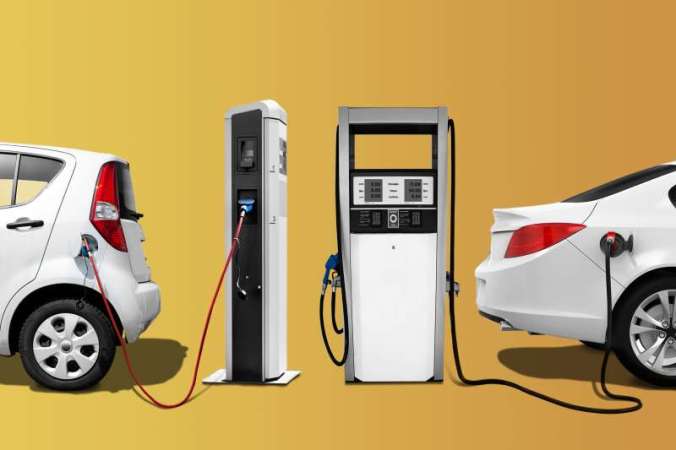
Policy-makers often use science, or perhaps more accurately “science” as dishonest justification for the policies they want to inflict for ideological motives. Climate change is perhaps the most glaring example, though the handling of the Wuhan virus runs a close second. Most government experts allow their political biases to slant their application of science in their advice and recommendations, and few elected officials comprehend science and relevant research sufficiently to make competent policy consistent with the nuances of the scientific matters involved.
Let’s look at electric vehicles, for example, which are currently being encouraged by tax credits.
Ashley Nunes, Harvard Law School’s Labor and Worklife Program fellow, has pointed out that a gas guzzler may, in some circumstance, actually be better for the environment than an electric vehicle. When did you hear anyone in the Biden administration admit that?
Nunes found that many owners of electric vehicles (EVs for short), usually wealthy Americans who take advantage of federal tax credits to purchase one as a second car, are harming the environmental because they aren’t driving enough.
Manufacturers of electric cars need lithium, and finding and mining lithium takes a lot of energy, with more still required to make a functional car battery out of it. Creating a clean-burning EV battery creates twice as much greenhouse gases as making an internal combustion engine.
Because, as Nunes explains, “an electric car is almost always cleaner to drive per mile compared to a gasoline-powered one, you can burn off the emissions associated with manufacturing the car.” Still, it takes 28,069 miles of driving, or about 2.73 years, for the EV to overcome its initial polluting disadvantage to gain a “green lead” on a gas-powered car with its low per-mile emissions. Paradoxically, you need to get people to drive more in order to get an emissions advantage…and all of the climate change propaganda is aimed at getting Americans to drive less. And since EV purchasers tend to be wealthier people who use them as a second cars, it takes about a decade for the electric cars to produce any emissions benefit. How many wealthy household hold on to a car of any kind for ten years?
Thus, Nunes has concluded, some people are “better off driving a gas-powered car if they care about the environment.” EV owners tend to sell the vehicle before it’s reached the green break-even point in miles.
But wait—there’s more. Nunes’ research indicates that people who own both gas and electric-powered vehicles choose to drive the gas-powered one most of the time. It is the people who buy EVs secondhand, the poorer households that drive them for many miles and years as their primary vehicle, who achieve the emissions reductions that electric vehicles are supposed to provide. But government subsidies miss this group entirely! The federal government tax credit of up to $7,500 only accrues to those who purchase new electric vehicles. Even with some states like California offering additional rebates on top of that, new electric vehicles often cost more than the average American earns in a year.
“If you’re a poor American and all you can afford is a $10,000 car, this rebate isn’t going to matter to you,” Nunes concludes. “And by and large, we find that, guess what, the person buying a $120,000 [electric vehicle] would have still gone out and bought the car without a $7,500 subsidy.”
Policymakers’ EV hype is self-defeating, and doesn’t “follow the science,” because the politicians have a shallow understanding, to the extent that they have any at all, of al the relevant factors.
The policies are wasteful and ineffective, no matter how smug and certain the climate-change scolds are about them. The electrical car advocates are assuming expertise and scientific justifications they simply don’t have.
It’s incompetence seasoned with dishonesty, abusing science rather than using it properly.





 Ethics Alarms
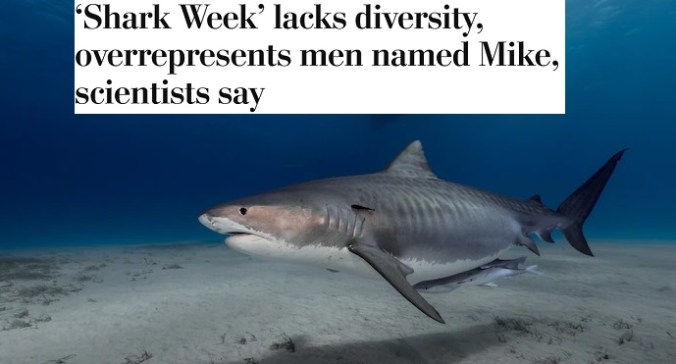
Have any of the researchers currently studying the number of times white males are showcased on these series actually pitched an idea to Discovery? I don’t think Discovery Channel calls guys named Mike to do a show for them about sharks. The only Mike that I am aware of on the series is Mike Rowe who has developed a number of programs for the Discovery Channel, most notably Dirty Jobs. I suppose because I don’t see a lot of women cleaning hog pens or standing next to a blast furnace that too is discriminatory. What that Mike has done for making non-white collar jobs desirable and dignified is what most of us should aspire to emulate.
Yes, most of the shows do focus on the shark’s hunting behavior but the attacks showcased are not about attacks on humans but on prey species. Nothing captures the viewer like an 8-foot, 2000 pound Great White breach the surface as it hunts a seal (or a replica of one). The replicas are scientific instruments that take various measurements such as bite force and jaw size. When the focus is on the hunting behaviors of other pelagic species, the focus on speed and tactics. As a diver, I want to know as much about the behavior of certain species that I may encounter in the wild. One of my most favorite dives was a wreck called the Proteus where I had the privilege of swimming with over three dozen 6-8 foot Sand Tiger sharks. When I tell people about my diving, I often hear women claim they would not attempt to dive with sharks. Men probably think the same but are less inclined to admit it.
Continue reading →